“Stay consistent, and keep quiet about your ideas in development, lest negativity causes you to stumble or pause.”
Quick Facts
Level of Education: Graduate School
Years of Experience: 50 Years
About
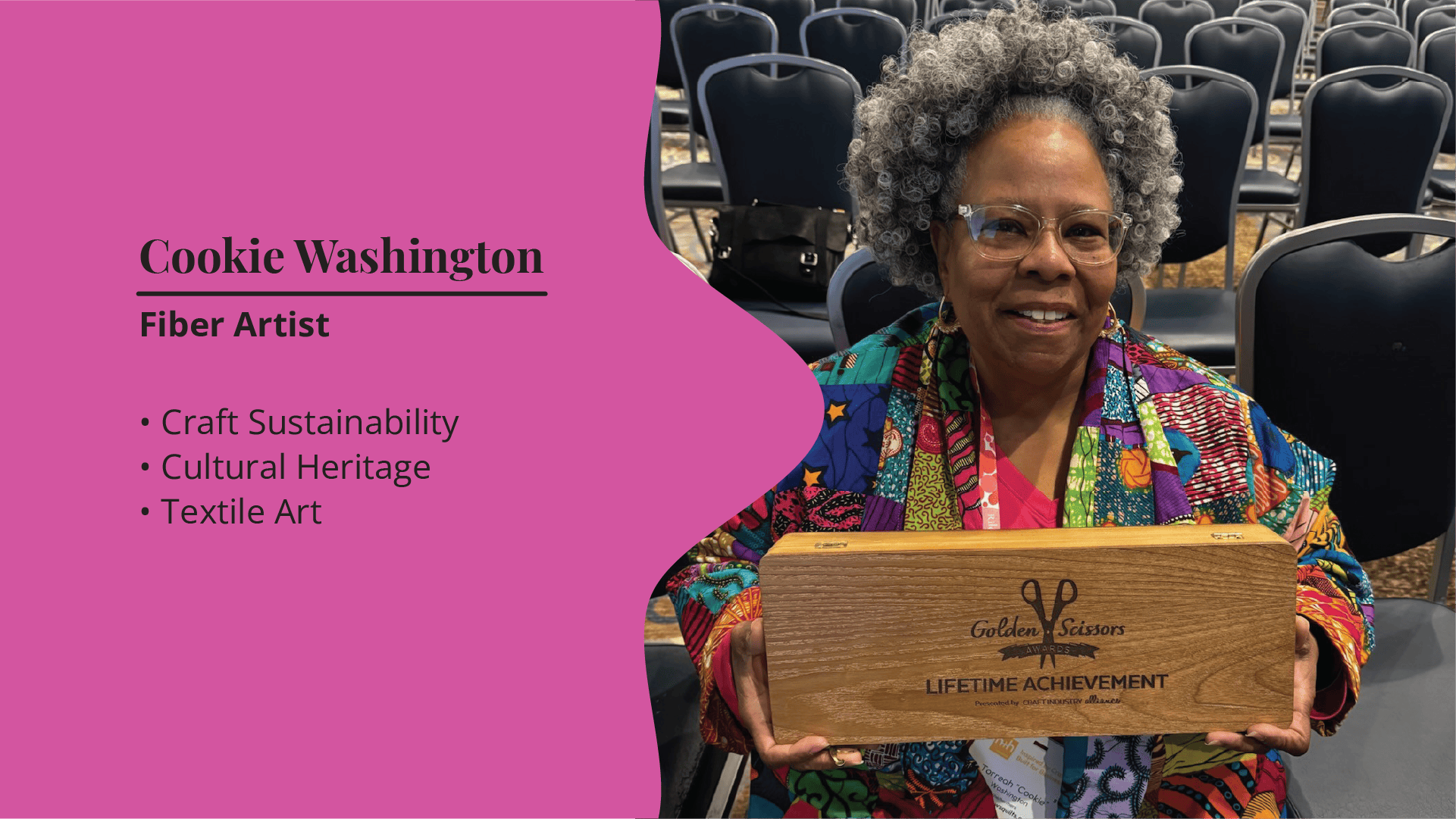
Cookie Washington is a fiber artist whose work centers on art quilting, doll making, and upcycled home décor rooted in cultural tradition and sustainability. She creates and teaches handcrafted rugs, baskets, and home goods using Gullah rag quilting, upcycled fabric coiling, and rag crochet ancestral, no-sew techniques that transform fabric into textured, functional art.
Her journey into the field began within a family tradition of making. Born into a family of multi-generation needleworkers, Cookie started sewing by the age of six. She shares, “By sixteen I was working with my mother, creating costumes for entertainers and making wedding gowns.” This early immersion developed into a lifelong commitment to craft, culture, and teaching.
The foundation of her work lies in cultural preservation and heritage practice. She explains, “Yes, I am teaching and crafting Gullah Rag quilts. This craft centered in the Low Country, has almost died out. The last person known to teach this has retired due to illness. I was taught raggin by her, and though I am not Gullah, I am a heritage crafts keeper.” Her work continues traditions that are at risk of disappearing while adapting them for contemporary audiences.
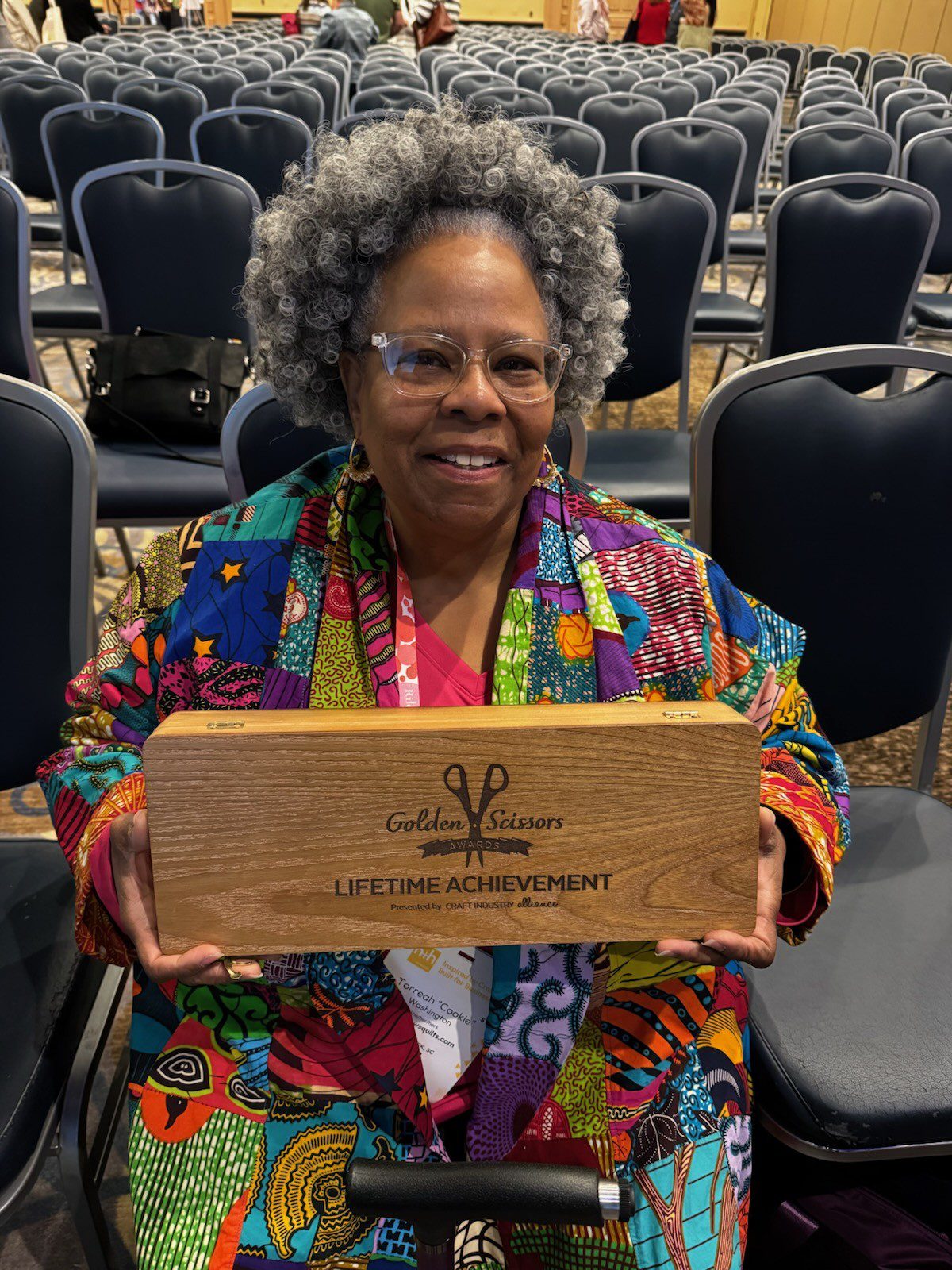
Her contributions to the field have gained significant recognition as she was recently named the 2026 Sam Doyle Artist-in-Residence. The residency is affiliated with the Penn Center National Historic Landmark District on St. Helena Island and recognizes artists working within Gullah Geechee tradition and is committed to cultural preservation and environmental stewardship. Her work has also been featured in major publications, highlighting the growing recognition of fiber arts within national conversations.
Cookie emphasizes the broader cultural and environmental significance of her practice. She explains, “In recent months, my work has also been featured in the Post and Courier here in Charleston, and I have been featured in the Saturday Evening Post. Together, these moments feel like part of a larger shift toward recognizing fiber art, particularly African American fiber traditions, as a vital part of American art and environmental dialogue.”
Through her ongoing work and the development of “Beautility,” she explores the intersection of sustainability, heritage, and design. She examines how sustainability, heritage, and design intersect, turning what has been discarded into objects of beauty, use, and cultural meaning. She believes there is a larger national story about craft as legacy, about Black women’s work becoming more fully visible, and about the role of traditional practices in addressing contemporary environmental concerns.