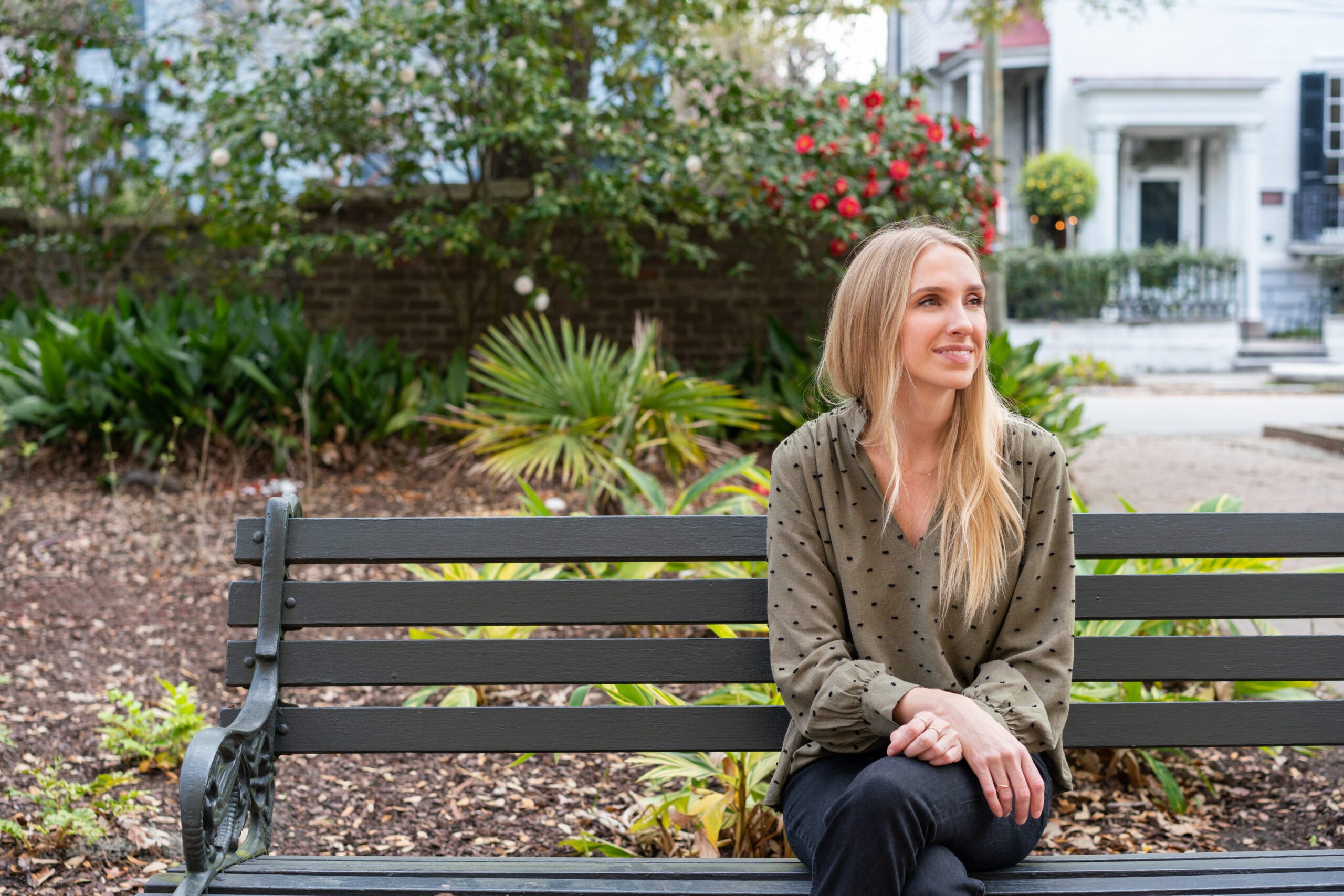
“Art has been a language to me that made sense throughout my life.”
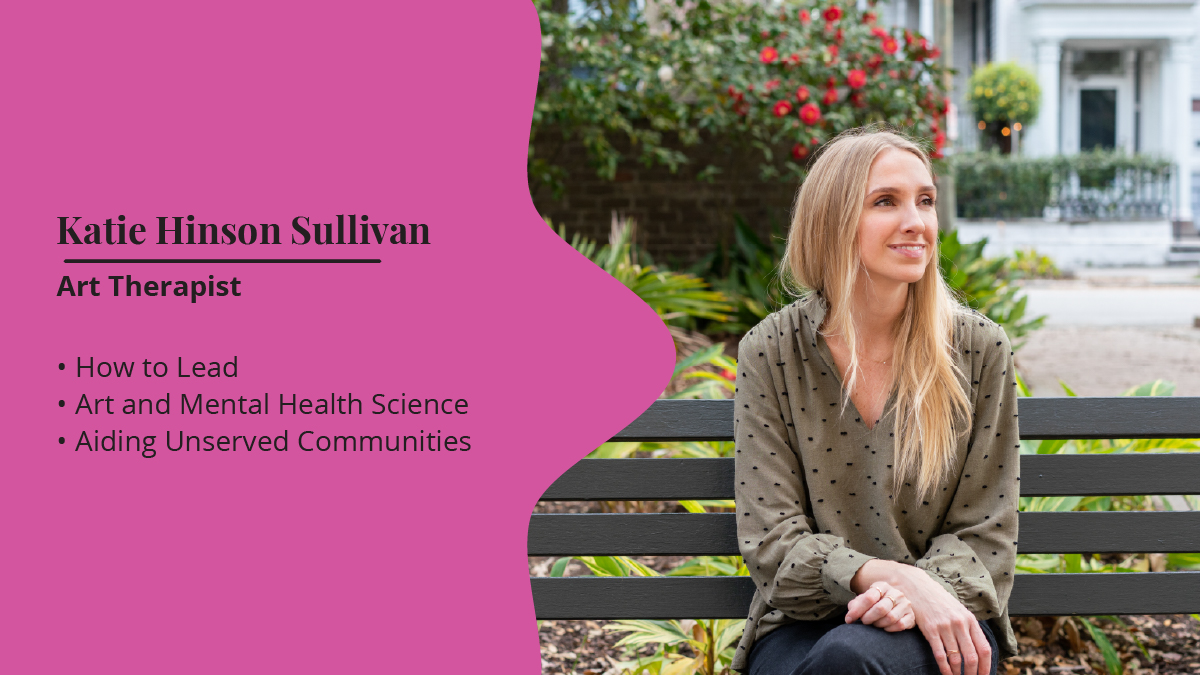
Katie Hinson Sullivan is an Art Therapist and program director of the Arts and Healing program at MUSC Health in Charleston, SC. She holds a degree in Studio Art and Psychology from the College of Charleston and a Masters in Art Therapy from New York.
Katie Hinson Sullivan was born and raised in Charleston, South Carolina, where her art journey and career path in healing began. From a young age, Sullivan was always surrounded by art. Her mother, an art teacher, often left out materials that Sullivan would use to express herself when she was young.
About
Katie Hinson Sullivan was born and raised in Charleston, South Carolina, where her artistic journey and career in healing began. From a young age, Sullivan was immersed in art, as her mother, an art teacher, often provided materials for her to use in creative expression.
Although she was initially unsure about how her passion for art would evolve, Sullivan began her college education at the College of Charleston, where she majored in Psychology while also taking art classes. During her senior year, a professor highlighted potential career opportunities that combined her interests in psychology and art. Inspired, Sullivan began researching these careers and applied to schools for a master’s degree in art therapy.
After completing her graduate studies at the School of Visual Arts, Sullivan worked in New York. She first joined a preventive agency that supported families and children experiencing issues related to child abuse and neglect, and later served as a mental health professional at Rikers Island Jail. There, she established art therapy programs and advocated for increased services for female inmates.
Upon returning to Charleston, South Carolina, she founded the Arts in Healing Program at MUSC Health in 2018. “We are providing access to the arts to impact the health and well-being of patients,” Sullivan states.
A typical workday for Sullivan includes a variety of administrative tasks, such as developing programming, ensuring its sustainability, and offering mental health support to individuals and communities lacking access. Additionally, she is involved in several research studies exploring the effects of art therapy. One collaborative study focuses on enhancing young patients’ engagement in physical therapy, facilitating earlier hospital discharge.
Drawing from her experience establishing a career in art therapy and becoming the program director of the Arts in Healing Program, Sullivan offers valuable advice to aspiring creatives interested in pursuing this career path.