Level of Education: High School; 2-year/Technical College
Years of Experience: Writing since childhood; sharing work since 2016; working professionally for 3 years.
About
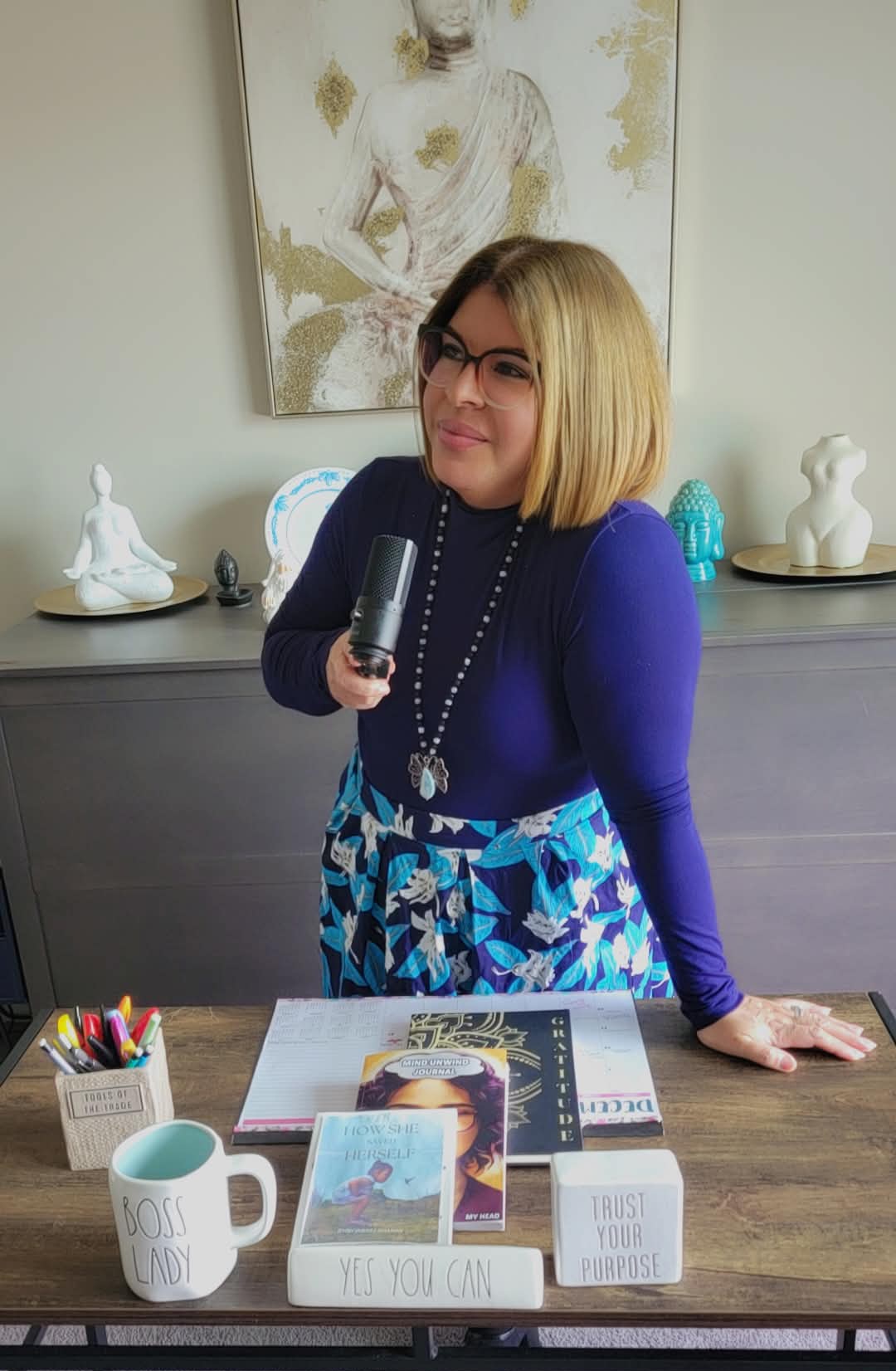
Jenny Jimenez-Sullivan is a podcast host, poet, narrative instructor, writer, and storyteller, among other things, based in the PeeDee and Grand Strand region of South Carolina. Through writing, podcasting, and teaching, she creates spaces where everyday thoughts become meaningful reflections, helping people feel seen and more connected to themselves as well as their communities.
Writing and journaling were Jenny’s tools for survival long before they became her vocation. From childhood, the page was a place that didn’t judge her, where she could pour out her heaviness and walk away lighter. It wasn’t until her forties that she decided those words needed to be shared more intentionally, so that others would know they were not alone. She started her blog in 2016 and launched her podcast in 2024, and what began as a personal act of courage has grown into something much larger. She now teaches through OLLI at Coastal Carolina University, bringing that same message to people her age and older: it is never too late to step fully into your purpose. She insists upon this, saying, “Our voices matter now more than ever. Our pain should not be diminished, and our stories can help others heal.”
Her advice to emerging creatives, especially those who feel they may have started too late, is direct and freeing: begin small, stay consistent, and let curiosity lead instead of pressure to monetize or perfect. You are not starting from scratch. You are starting from a life fully lived, and that experience is your greatest creative asset.
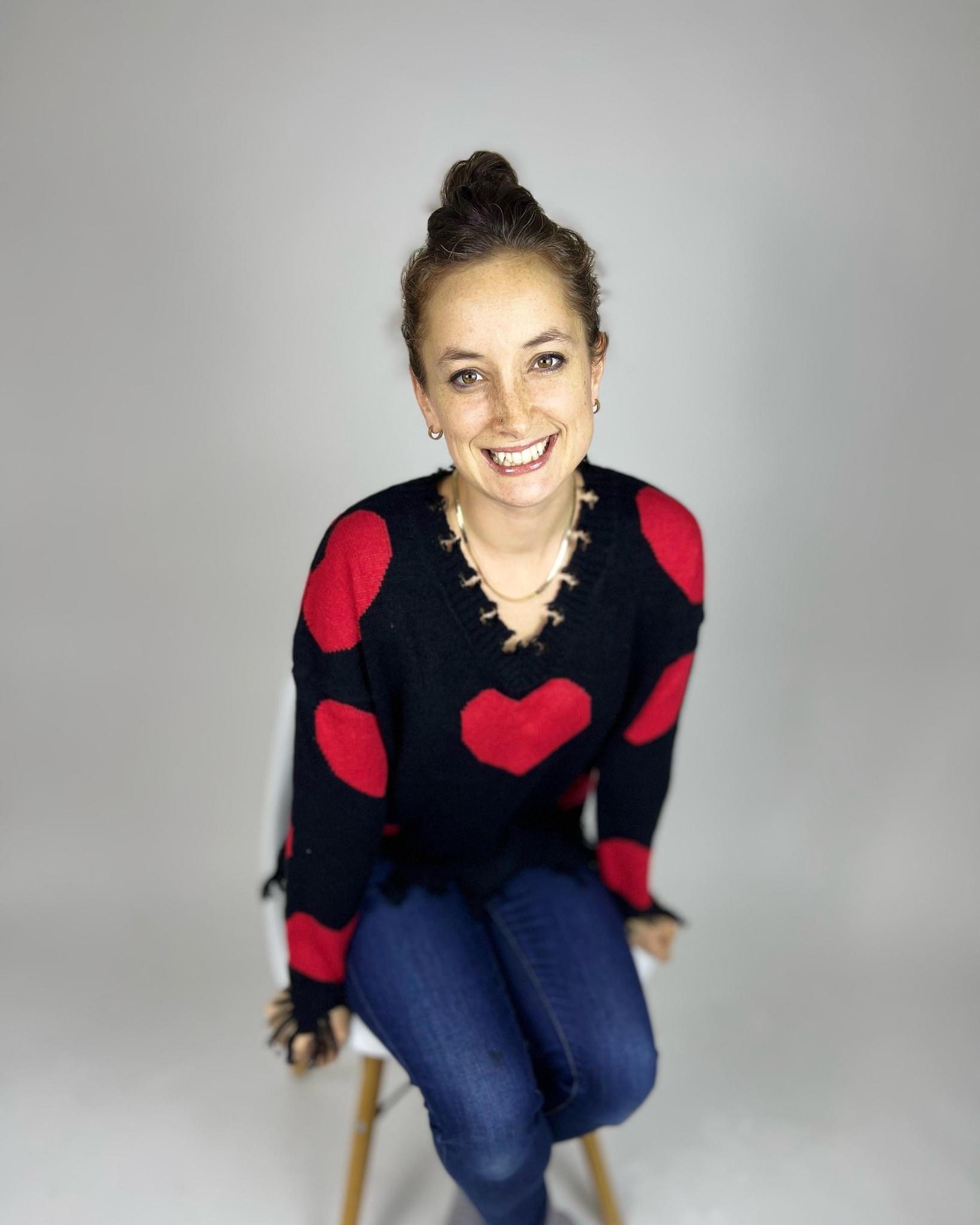
Steph Sneed is the founder and director of an arts education program serving children, teens, and adults across Darlington and neighboring counties in South Carolina’s PeeDee and Grand Strand region. Her path to this work began not in a classroom but in a living room, where she babysat a family of girls and did art with them every day. When they moved away, the realization came quickly: she didn’t want to stop. That impulse became a vocation.
Steph designs all of her own programming and works exclusively in small groups of six, a deliberate choice that allows for the kind of depth and individual attention that traditional art education settings rarely offer. Alongside her after-school classes, she creates specialized programming for teens in foster care and brings a particular dedication to neurodivergent artists, meeting each student where they are.
Before founding her program, Steph trained as a ballet dancer and performed professionally. Letting herself step away from the discipline she had devoted her life to, and permitting herself to draw in her room, to follow an emerging interest, was one of the hardest and most important decisions she ever made. “If I didn’t do that,” she reflects, “I would have held myself back from discovering an even bigger passion.”
Her advice to fellow educators and creatives is simple and hard-earned: stay engaged, stay present, and never phone it in. The students will always know the difference.
“Never be afraid to explore as many mediums as possible, because experimentation is where your voice begins to take shape.”
Quick Facts
Level of Education: Welding, Artist Residency in Italy
Years of Experience: 35+ Years
About
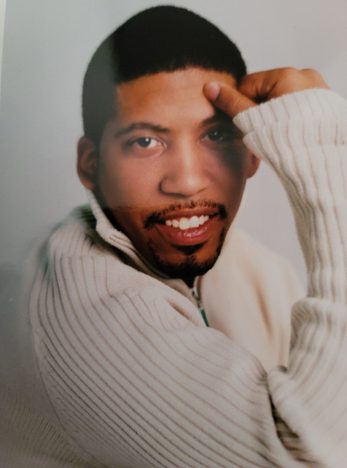
Ismael Valentin is a sculptor, photographer, and multi-medium artist whose work centers on bronze, wax, and traditional foundry techniques. These methods give each piece its own distinct character and depth, allowing him to create across multiple mediums as a way to express how he sees and interprets the world.
His relationship with art began at age eight, when he was encouraged to enter a raffle and won a set of artist supplies. That unexpected moment sparked a lifelong passion that grew alongside the mediums he explored. His artistic journey eventually led him to Italy, where he lived and worked during an artist residency that deepened both his technical skills and creative perspective.
To emerging artists, Valentin offers this advice: “As you follow your journey, you’ll find many people who try to critique your vision or put you in a box. Stay true to yourself and your vision.” To explore more of Valentin’s work, visit his website www.valentinartisticdesigns.com and follow his social media platforms for updates on his journey.
“Stay true to your authentic voice, and don’t be afraid to share your story even if it feels imperfect or unfinished.”
Quick Facts
Education Level: Graduate School
Years of Experience: 6-7 Years
About
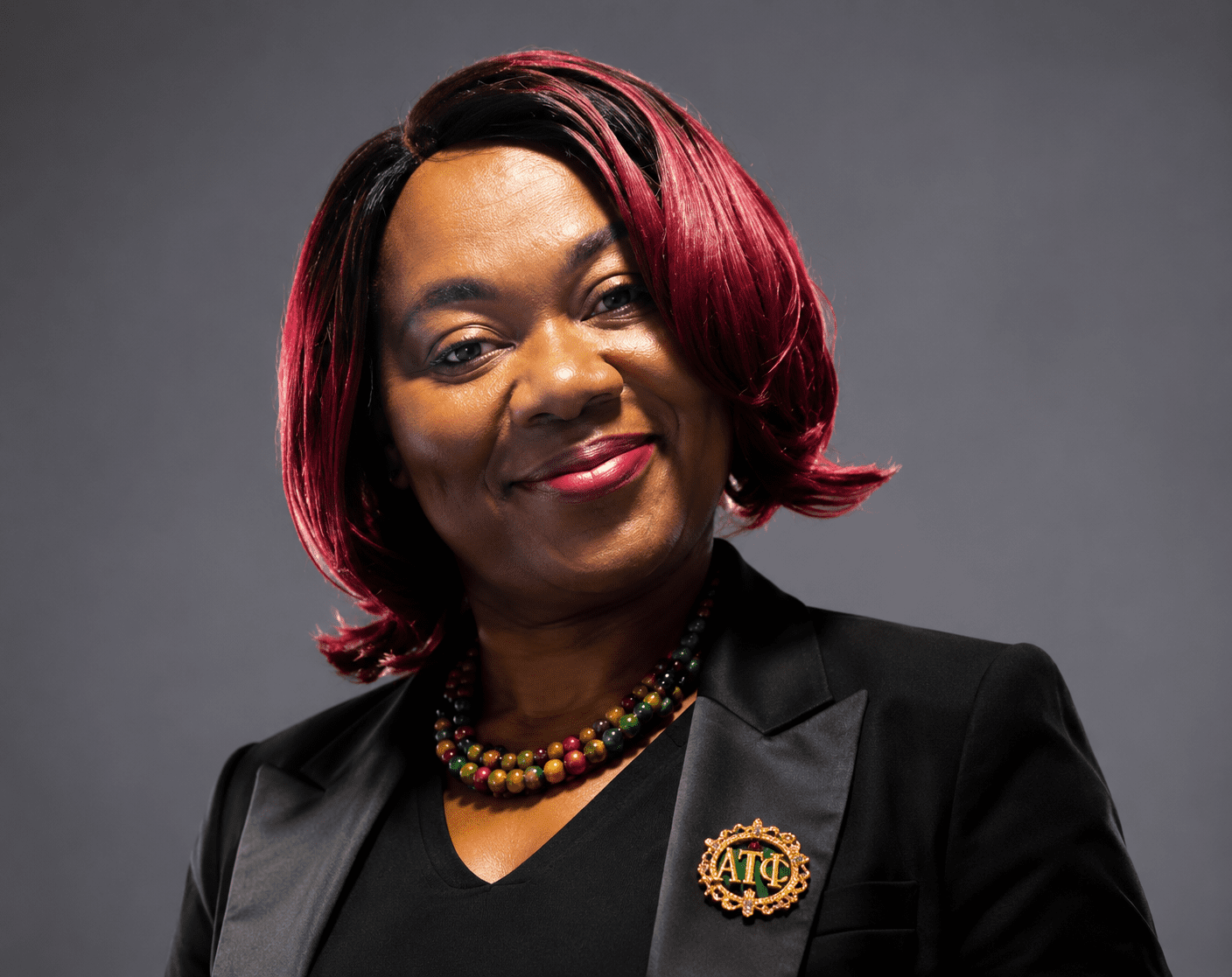
Angela Thomas Smith, CEO and founder of Queen of Collaborations, works across writing, publishing, storytelling, and podcasting to create platforms that empower individuals and amplify underrepresented voices. Her work focuses on connecting people, sharing untold stories, and building spaces where creativity becomes a tool for transformation and community impact.
Her journey into this field was shaped by personal experience and resilience. She shares, “Life experience is what truly led me to this work. After overcoming personal challenges and setbacks, I realized I needed a new beginning…that personal transformation inspired me to help others do the same and set me on the path to empowering, uplifting, and connecting people through my platform.”
The uniqueness of her work comes from how she blends authorship, advocacy, event production, and community-building. She explains, “I blend authorship, advocacy, event production, and community-building to create spaces where overlooked voices are celebrated and empowered. I don’t just publish books or host events; I intentionally connect people…My process is deeply collaborative, spiritually guided, and centered on leaving a legacy of hope and transformation for generations to come.”
Angela emphasizes authenticity and growth in the creative journey. She encourages emerging creatives to stay grounded in their voice, embrace continuous learning, and surround themselves with supportive communities. She highlights the importance of resetting when needed and recognizing that each individual perspective holds value. She also believes strongly in the role of creativity in human expression and development, stating that the arts are essential across all stages of life and that creativity is a fundamental part of who we are.
“Stay connected to your community and honor what came before you”
Quick Facts
Education Level: Graduate School
Years of Experience: 10 Years
About
Joshua L. Shumak, Vice Chief of the Wassamasaw Tribe, works to preserve and promote Native American culture in South Carolina through leadership, cultural education, traditional arts, and community partnerships. Growing up, he recognized the importance of cultural knowledge, art, and storytelling in sustaining identity. He began by engaging in cultural preservation efforts and learning traditional arts from Native artists and cultural leaders, which developed into a broader commitment to advocacy, education, and community engagement.
The uniqueness of his work comes from its intersection of culture, community leadership, and public service. As Vice Chief of the Wassamasaw Tribe of Varnertown Indians as well as the Tribal Liaison for the State of South Carolina, he operates between tribal communities and state institutions, fostering collaboration and mutual understanding. His work emphasizes “the intersection of culture, community leadership, and public service.”
He emphasizes the importance of remaining connected to one’s community and understanding that creativity is not only about producing something new, but also about honoring what came before. For Indigenous artists, creative work carries stories, teachings, and responsibilities. He encourages aspiring creatives to learn from elders and mentors, to understand the meaning behind traditions, and to develop their voice from their cultural roots.
Joshua prioritizes the fact that Native cultures are living cultures. The tribe’s traditions, arts, and stories are not just part of history—they continue to evolve and thrive today. He tries to “help create spaces where Native voices, artists, and communities can share their stories in their own words, and ensure that future generations have the opportunity to learn and carry those traditions forward.”
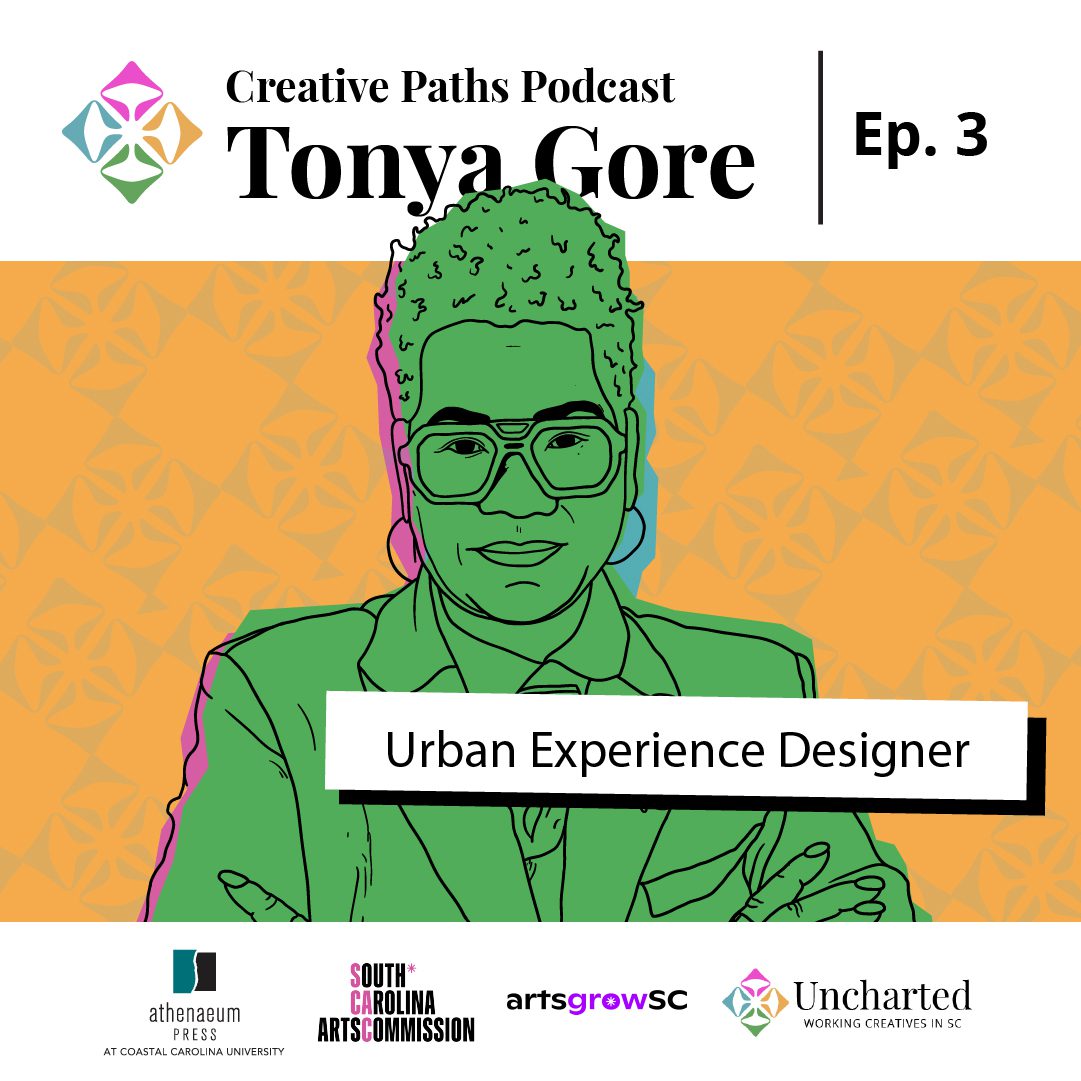
In this episode, we’re exploring resilience in home with Tonya Gore, who’s found a thriving career, make that several careers revitalizing her hometown of Myrtle Beach, South Carolina. She currently works as the Director of Enhancement and Design with the Myrtle Beach Downtown Alliance, Tonya has leaned on her creative thinking to develop our local community.
“It’s just, it’s so gratifying to me to be able to just have that privilege to be able to entertain people like that”
Mystery author Caleb Wygal turns personal tragedy into literary triumph through the Myrtle Beach Mysteries series.
Interview
Transcript
Caleb Wygal Interview Transcript
March 2025
Nora Smith 00:00
Okay, so to start, what do you do for work, and where are you currently working from?
Caleb Wygal 00:06
So, I’m an author. I write mystery novels, Myrtle Beach mysteries. And I work from my office, coffee shops, or breweries, but typically from my home office.
Nora Smith 00:16
And where is that in South Carolina? (Surfside Beach) Cool, cool, great area. How long have you been working there? And your official job title is…
Caleb Wygal 00:28
I have been an author for almost 20 years. Full-time for the past three years. And my official job title is just author.
Nora Smith 00:38
Super cool, awesome. What’s one thing you love about working as a creative in South Carolina compared to other locations?
Caleb Wygal 00:49
Compared to other locations I love… so when I started writing, I lived in the upstate of South Carolina, in Greenville. We moved to Concord, North Carolina for 15 years after that, and we’ve been in Surfside Beach – Myrtle Beach area for about five years now. What I love about being in this area compared to other areas, is that whenever I want to get out of my home office to write, I can go to the beach, pop down a chair, sit by and watch the ocean, and type and make up stuff. Yeah, that’s a big, big, big step up from where I was before, just being stuck inland.
Nora Smith 01:35
I can see that. And what does South Carolina bring to your work? Has it had any sort of influence on your writing at all?
Caleb Wygal 01:45
It’s had all the influence on my writing because I write Myrtle Beach mysteries. They wouldn’t exist if it weren’t for South Carolina. So, I mean, I’ve written before I started the Myrtle Beach mysteries. I’ve written mystery novels, a couple action-adventure novels, and basically, I just did that as a hobby. Well, once I started writing the Myrtle Beach mysteries, and I got to book three, that’s when I was selling enough copies that I was able to make a living off of it. So, if it weren’t for South Carolina and Myrtle Beach, I would probably just be doing social media marketing and website development for small businesses.
Nora Smith 02:27
How did you come up with an idea? What brought you to write about the Myrtle Beach mysteries?
Caleb Wygal 02:33
I’ve always been interested in mystery novels, and when we moved down here, my main job then was to take care of our son. I was a stay-at-home dad, and I would do social media marketing, website development, and whenever he was sleeping, I would write whenever I had a spare moment between all that.
We moved down here. He was three. He needed his afternoon naps, and I needed his afternoon naps to maintain my sanity. So, I put him in the back of the car every day we drive up and down Ocean Boulevard about every day. I could see the ocean and coast to classical music. He would sleep for an hour or so, and I just drove back and forth, back and forth, back and forth. And it was during one of these trips, I had the idea for this mystery series, set there, set here in Myrtle Beach, and we went home. I did some research, came up with the character, pitched it to Paul Bucha, and they told me to stop working on what I was doing and do this instead.
Nora Smith 03:33
Wow, so cool. That’s super interesting. Wow. What a great start. So how would you describe your local professional community down in Surfside?
Caleb Wygal 03:48
Well, I mean, really, there’s authors. I’ve found authors; other authors are scattered all over the Grand Strand from Garden City to Murrells Inlet to Calabash and on into North Carolina. There’s a much stronger author network here than there was where we lived outside of Charlotte, and I’ve found that out. You know? I regularly have coffee, I had lunch with another author earlier today, because it’s a much more supportive community among each other, and we try to help each other out, and I help others where I can.
Nora Smith 04:28
It’s great. That’s a great community to work with. How would you define professional or personal success in your creative endeavors?
Caleb Wygal 04:41
Professional success – I define it, for me in my station in life is being able to pay the mortgage payment and the car payments. If I can sell enough books that I can do that, then that to me, that’s everything. Yeah, we’re not worried about that. But personally, I enjoy being able to just tell stories to give readers an escape from their lives. And I love hearing readers tell me how much they enjoy the characters and stories and how surprised they were when something crazy happens and just their reactions to.
I love hearing readers say that they have never read books before, but they wanted to start reading this series. So, they started reading the series. I’ve had people tell me they’ve used the books to learn English as a second language. I’ve had people tell me that they have been in the hospital for long stays, and they’ve read the book series as a way to make it through their long hospital stays and recovery periods. And it’s just so gratifying to me to be able to have had that privilege to be able to entertain people like that.
Nora Smith 06:04
Yeah, that sounds awesome. That’s so cool using your books to learn a second language. I would be so taken back if someone said that to me.
Caleb Wygal 06:14
I had a woman, I think last year, I think it was her. She reached out to me; said she was from Peru. And she married a guy who lives somewhere in the upstate of South Carolina, and when she moved here, she started trying to learn English. Her husband gave her one of my books, and she read them all, and she said, “Your books helped me learn English.” I’ve had a Russian friend who did some work around our house, and I know he takes English lessons, and he asked me one day, “Can I use your books to learn English? My English teacher told me to read American books.” So, I gave him some books.
Nora Smith 07:01
That’s so cool. What was your biggest fear when you decided to pursue a career in the arts?
Caleb Wygal 07:13
My biggest fear was that nobody would like it, nobody would buy it, and therefore I wouldn’t be able to do what I do. But that’s always the risk you take when you put yourself out there like that.
Nora Smith 07:30
Could you define a sort of defining moment in your creative journey, something that happened and you were like, wow, this is it? Like, “I really did this,” and kind of taken back about it, about what you could create?
Caleb Wygal 07:47
Oh wow. There’s several that pop into mind.
Nora Smith 07:52
Give them all. Give as many as you’d like.
Caleb Wygal 07:59
So, I’ve been on TV probably a couple dozen times by now. And do you know who Greg Rolls is? So, he headlined the Alabama theater for 20 years, and he has his own theater now in North Myrtle Beach. He’s in local commercials. He has a daytime talk show on the local Fox affiliate. And when I started writing the second book, I wanted the victim to be somebody who was well known in Myrtle Beach, was on billboards and TV, and because it was a main character at a large-scale dinner theater show, they were the victims. I based the victim on a younger version of Greg Rolls. I never met the man before, and so about three months after the book came out, I was invited back. I was invited to a media event at a local restaurant that was about to open. They wanted to have people come in, influences in the community, to maybe talk about the restaurant. I don’t know if you’re familiar with 1229 Shine in the Market Common.
Nora Smith 09:31
It sounds familiar to me. I feel like I’ve definitely seen or heard of it before, right?
Caleb Wygal 09:37
If you go, drive past Barnes and Noble down that street, behind it. Okay, yeah, there’s the building that has a big scuba diver mural on it. So, they invited my wife and I to go there for a media event, and there’s 10 people there total, and in the middle of the restaurant, there is this huge bar. My wife and I were on one side of the bar in the middle, and two women over in the far corner. And throughout our dinner, I kept seeing those women looking over at us. And whenever we left, my wife said, “I’m going to use the restroom.” So, my wife goes the restroom, the two women follows her into the restroom, and I’m waiting for like 10 minutes for her to come out. When she comes out, the two other women are behind her, and they’re dying laughing. And it turned out that the Fox TV station is right behind that restaurant, and the two women work for Greg Rolls, and told him the story about how I’d used him as a victim, as inspiration for a victim in one of the books.
So, they invited me to come on the show. And I said, “I will come on, provided you do not tell Greg anything about this story. You can tell him who I am, but don’t tell him the story.” And so, a couple weeks later, it’s a live show. They invited me there for such and such dates. I came into the studio, Greg came up, introduced himself to me, he said, “I just learned your name 10 minutes ago. I don’t know anything about you, but we’ll wing it. We’ll figure it out.” He said, “My producer gave me some notes, whatever.” And so, whenever it comes time for the interview, to interview me. He said we’re on live TV, and he looks down at his notes. He said, “My producer says there’s something about me, to do with one of your most recent books, and what was it?” And I said, “Well, I looked to my wife while I was figuring out who was going to be the victim in this novel. And we were watching television one day, and you came on the screen, I looked at my wife and I said, what if somebody like him?” And I pointed right at him; you wash up dead with a sword plunged through your chest one day.
People kind of came out of their offices to watch this, I guess they knew it was going to happen, and he looked at the camera, “Did you kill me,” like, no, I didn’t kill you. I killed somebody like you, but, but after that, it kind of went viral in the area, and that’s really when the book started to take off. It was after that interview, because you can find it on YouTube. That was a big moment. I’ve been on there probably six, seven or more times. They just liked the way that he and I went back and forth together.
Another one, and probably one of the most rewarding ones, was last year. My son was at elementary over next to Prestwick. I met one of the teachers at a book signing, and she invited me to come speak to her class, her fourth-grade class. Well, the fourth-grade class, there’s four different classes in fourth grade, and they said, once you come in, talk to the students. And so, I go in whenever they want me to come, and they lead me to their small gym. And there’s 150 kids in there just waiting to hear me speak. And it was just so many smiling little precious faces. They were so eager to hear me speak, and I gave my little speech, and we played a little game about using your senses to solve mysteries. They wanted me to sign little pieces of paper so I could give my autograph and that was just the best.
I’ve spoken in front of crowds of, you know, 60 to 100 people and it always just amazes me that people enjoy the series, they want to hear me talk about the books. And it’s just a rewarding thing that I never thought would happen in my life, because 25 years from this past Sunday, 25 years ago, I was in a car accident where I had a severe brain injury. I was just out of high school. I hadn’t started college or anything, and I had to relearn how to walk, how to talk, how to write my own name. Again, I never set foot in a college classroom until a couple years ago, whenever I taught a mystery writing class for Alli at Coastal.
Nora Smith 14:48
Wow, that is so inspirational.
Caleb Wygal 14:52
They told me I would never be able to work a full-time job or do any hard labor or anything like that. If you know me, where I’m coming from, where I’ve been to get to this point where I can go talk to groups of people and entertain people just by just making stuff up. I mean, I couldn’t have asked for more. If the car accident hadn’t happened, I wouldn’t have asked for a better career.
Nora Smith 15:20
Wow. That’s a really cool story. Well going sort of off the last question, in a sense, what was the best and worst advice you’ve ever received in your career?
Caleb Wygal 15:40
Oh, that’s a good one. Instead of writing standalone books, write a series and have the books connect, like each book has its own self-contained story or mystery, but I have a storyline that connects them all together. And so, I went from writing individual books before I came up with this series idea where I had the main character trying to figure out, through the course of the series, what happened to his wife. Because his wife died two years before the series started, and he always thought it was of natural causes, but he learns through the course of the first book that it wasn’t natural causes. And so, he’s spent the next six, seven books trying to figure out what happened to his wife, and that was really what drew readers in, more than just individual mysteries. The best advice I’ve gotten is to write a series.
There’s a lot of bad advice out there. There’s a time where I spent a lot of money on something, I’m thinking about doing this again, because I’m just, I’m just a glutton for punishment. I spent $700 on a billboard advertisement that just got crickets and by that, I mean, that’s a lot of money for somebody like me, because I’m not John Grisham, I’m not some of these really big-name authors. I don’t have a lot of extra money to spend on advertisements like that, so I’ll put down $700 on a billboard ad for a month that did nothing, and then that came off to the advice of another author said, “Hey, I’ve done billboards where I live, and they work.” Well, good for you, probably because there’s so many billboards here in Myrtle Beach, nobody pays attention. They just end up being background noise. That was one of the worst pieces of advice, to get a billboard.
Nora Smith 18:05
Well, that’s unfortunate you spent that much money on that.
Caleb Wygal 18:09
Now you learn, and I am thinking about doing it again because I have another book coming out in May. It takes place at the Legends Theater where you have all these impersonators, celebrity impersonators like Elvis Presley, Dolly, Parton, Tina Turner, The Blues Brothers, and Michael Jackson. So, they go to the theater, and somebody collapses on stage and dies. And that’s what they’re trying to figure out.
Nora Smith 18:35
Exciting! I’m going to have to read these books. I’m from New Hampshire, so I’m not originally from here, so I’ve never heard of them, and I’m very intrigued.
Caleb Wygal 18:47
You can get them at every bookstore in Myrtle Beach.
Nora Smith 18:52
Lovely. I will definitely have to read them, especially the new ones coming out. That’s basically all I have. Are there any questions that you wish I had asked at all?
Caleb Wygal 19:03
No. So when I go and give an author talk, I already know a lot about what I’m going to talk about. I’ve done it so much, and a lot of what I just gave you ends up being in my author talks. It ends in some shape or form or order or whatever. I can’t think of much that you didn’t go over. Oh, maybe, like, how I really started writing books.
Okay, so basically, like I told you, with the car accident, I wasn’t able to work full time jobs, especially the first couple years after that. But my uncle owned a hearing aid office in Greenville, on the upside of South Carolina, and I worked for him for a while. Basically, I would sit in his office, behind a computer or behind a desk. This is 2003 or 2004. I would answer phone calls, schedule appointments for them, change hearing aid batteries and clean out the wax from hearing aids. But it was a really slow job. So, I read a lot of books. And I read so many books, I started to read in front of clients, and he told me one day that I couldn’t read books anymore because it didn’t look good for him or his business if I read books all the time.
So, there’s a computer on the desk, like I said 2003-2004, and it was not hooked up to the internet. There was no such thing as Facebook or social media or anything like that. There were no smartphones and so all he had on that computer was Microsoft Paint, Microsoft Word, and scaling software. So, I started writing short stories and here we are, 20 years later. That’s basically how it all started, out of boredom.
Nora Smith 20:58
Wow, that’s awesome. Well, I’m glad you had that question, because I did not have that written down, but yeah, that’s basically it. Do you have any professionals in the creative field that you’d like to nominate to be interviewed? And if nothing comes to mind right now, I’m going to send an interview press release form later, and there’ll be a little form you can write someone in. So, no worries.
Caleb Wygal 21:25
Somebody that might be interesting for you to talk to, her name is Kelly Burton. Kelly Capriotti Burton, another fellow author who originally moved to the area with her husband. It’s been like 10 to 15 years since they’ve moved here. But they came to start a theater where the Hollywood Wax Museum is, they were going to have a theater there. It was the Pat Boone theater. I don’t know some gospel musician or something like that, there was going to be a theater there. So, she and her husband, upped their family from Chicago, moved to Myrtle Beach, got in to start getting ready to start the theater, and before the theater opened, they shut it down. You must ask her.
She and her husband are both very, very in tune with the arts. He has a band. Her daughters are both in dance school. Performing arts, stuff like that. And she writes books as well. So, she’s somebody who’s multi-talented, and owns a business too. Have you ever heard of the Black Dog Running Company? They have one business in downtown Conway and another one on Farrows Parkway. But she owns that with another friend of hers, and she’d be a good person for you to talk to.
Nora Smith 23:03
Great! I wrote down her name.
Caleb Wygal 23:06
I can whenever we get off here, I’ll send you her email address.
“Especially because right now is a digital world, the world is just an open oyster for creatives so just do it. Otherwise, the dream will just stay in your head.”
Marsh Deane is a filmmaker, photographer, and outdoor educator based in Pawleys Island, SC. Through his business ML & L Media, he captures South Carolina’s hidden stories and landscapes with heart and purpose.
Interview
Transcript
Creative Careers – Marsh Deane
Lexi Raines 00:00
So, first, just give a little introduction of yourself. What do you do for work and where are you currently working from?
Marsh Deane 00:09
So, my name is Marsh Deane. I’m a photographer and filmmaker, and an outdoor educator, and I’m based out of Pawleys Island, South Carolina. I own an independent media company called ML & L Media.
Lexi Raines 00:26
That’s awesome. So how long have you been doing this?
Marsh Deane 00:30
Well, I’ve been into photography since I was in middle school. So, really, probably 20 years as a photographer, but as a career, I only started in 2019 when I graduated from Coastal Carolina, so I’m in my sixth year in this career.
Lexi Raines 00:52
Yeah, that’s amazing. So, you said you work in Pawleys Island. What’s one thing that you love about working as a creative in South Carolina?
Marsh Deane 01:01
Well, for me, it’s definitely the access to nature, the access to the outdoors. Here along the coastline, we have, of course, amazing beaches that everyone knows about, but we also have amazing river systems. We have Cypress forests; we have remote barrier islands. We have a lot of special places that have been conserved and are kind of off the beaten path.
And a big mission of mine as a creative is I try to document, and I try to showcase our heritage. I try to showcase the parts of South Carolina that visitors don’t see and really, as an outdoors enthusiast, it’s a playground for me. I’m a boater, I’m a kayaker, and that’s kind of what I’ve become known for.
Lexi Raines 01:53
I would completely agree on that. I think that a lot of people, whenever they think of South Carolina, only think of the super touristy parts. And yeah, we do have that, but we also have a lot of other stuff. So, what do you think South Carolina brings to your work, and what is its unique influence on you compared to being anywhere else?
Marsh Deane 02:15
Well, I’m born and raised here, and a kind of unique part of my story is that I grew up in historical locations. My parents were antique dealers, and they purchased old plantation properties, and so I was very, very lucky to grow up on 50-acre properties by the river in 150-year-old former plantation houses.
And when you grow up in a place like that, on one side, I had the natural beauty, I had access to that which really shaped my development and my interests. And then there also is a negative side to our history, and I learned about that at a young age. We had slave cabins on the plantation that I grew up in, and so I learned about that history, and I learned about, you know, the dark truth of the South Carolina story. And that also shaped my interests, and it shaped the stories that I wanted to tell. And so, for me it’s a very personal journey as a proud South Carolinian, I hope to tell our story. I hope to share our heritage.
Also, in this area, we have a lot of tourism and a lot of development, and so I see a unique opportunity that as this region changes, part of my job is that I can capture moments in time, and I can tell these stories while we have them, because I know that down the road, this area is going to change so much, and I feel a little bit of a weight on my shoulders that as a South Carolinian, I’m trying to preserve some of our heritage for the future generations to enjoy.
Lexi Raines 04:05
I think that’s definitely an amazing thing to do, for sure. How would you describe your local professional community?
Marsh Deane 04:13
Very giving. I live in Pawleys Island, and we’re a little tourist town, and when I started out, I was with the Georgetown RISE program at Coastal Carolina. And from there, I was connected with the nonprofit world. We have a lot of nonprofits in this region, and I started marketing for the nonprofits. And I found out that this area is just so giving, from churches to school groups, just to community groups.
I mean, there are, I believe now, in Georgetown County there are 90 different individual nonprofits that you know have community missions. And so, I’m heavily involved with that. Southern hospitality, that is alive and well down here. And that can really impact your career, you know, especially as a creative finding ways to share the positive stories and the positive giving nature of this region.
Lexi Raines 05:12
One thing I’ve noticed is that everyone who moved here from the north, their number one thing they always say is everyone’s just so friendly, so like, I’m glad to hear that it’s the same in the professional community as well. So how would you define professional or personal success in your creative endeavors?
Marsh Deane 05:29
For me, it’s really about having a tangible impact that you can see. In the creative industry, there’s many, many different paths you can take. And nowadays we get sidetracked by social media. We get sidetracked by, you know, followers and views and short form media, right? And that gets a lot of attention, you know? So, you can focus on, “I am really going to try to focus on social media, Instagram, YouTube, and get those high views?” And there’s certainly a great career in that, being an influencer, but there’s also other things.
For me, it was more getting involved in local communities, creating short films that were, you know, supported initiatives that I’m interested in. So yeah, as a creative our work is individualized to us. It is an expression of us and our energies and our efforts and our interests. And so, no matter what it is, whether it’s on social media or whether it’s in the local community, there’s so many ways to feel justified and fulfilled in your time spent in this creative industry. And there’s so many different niches. There are so many different things that you can do nowadays, and it’s very rewarding. Once you find that path that’s working out, and you find that that job or that that gig or that niche that satisfies you, it’s just extremely rewarding, in my opinion, more so than any views or really any dollar amount, is just the satisfaction of being an artist and knowing that I’ve done something that has created a ripple.
Lexi Raines 07:11
Yeah, I completely agree with that. I feel more like long form content has definitely been lost with the rise of social media. So, I feel like it’s awesome that you are still finding beauty in that, because I think there is a lot of value in it. What was your biggest fear when you first decided to pursue the arts professionally?
Marsh Deane 07:33
Definitely the biggest fear is, you know, going out on a limb by yourself, not having a boss, not having a company that you’re working for, not having a guaranteed paycheck when you start a business as a creative.
The great thing about it is that you can shape it to what you want to do and have not having a boss is great, right? Setting your own schedule is great. But there’s also immense pressure with that, because you realize you are the one responsible for the income. And so, it definitely is; it’s taking a leap. It’s taking a leap of faith, if you really commit to it, I think anyone that takes that leap is going to find success, especially because right now, it’s a digital world, and so the world is just an open oyster for a creative, you know?
And again, whether you’re going to focus on social media or you’re going to focus on the business side of it, there’s just every company, every industry, every business needs marketing, needs to tell their story. And so, there’s just so much out there you might not even know when you take that leap. You might not have a clue what you’ll be doing next year, but you have got to take the leap to find out.
Lexi Raines 08:47
I think that is definitely one of the most important things. I’ve talked to a lot of creatives, and they have all said that you just got to take that leap. I agree that it’s very important. Can you describe a defining moment in your creative journey? Was there a particular project that made a significant impact on you?
Marsh Deane 09:09
I would say probably my internship with the Village Group started it off for me. I had been doing some real estate photography, and so I knew that I could make money doing real estate photography. I knew that there was some potential there, but it didn’t fulfill a lot of satisfaction. It was a great career to be in.
I started my internship with the Village Group, and I was doing marketing, showcasing what this nonprofit is doing for children in a rural Plantersville community. And through that nonprofit, first I was doing marketing, but then they found out, “Oh, well, you like the outdoors? Hey, would you like to take our students on an outdoor walk? “
And then that outdoor walk began, I brought my cameras along, and I let the students use my cameras. Then that became a Media Club, and we got a grant, and we got 20 cameras for the students. It quickly went from a marketing internship to a teaching opportunity, and it was just this eureka moment, because I loved it. I mean, taking these, these kids, out into the woods on a nature trail, giving them cameras, and kind of teaching them photography, and just seeing how just how interested the kids were, it’s a fun class to teach, and so I get the best out of the students.
And that was the moment where I was like, I definitely want to do this for the rest of my life, if I could just keep doing this, finding an avenue to, you know, combine my camera, the outdoors and people having a good time, and the Village Group having that internship through the Georgetown RISE program. Had I not done that, I have no clue what I would be doing today.
Lexi Raines 10:58
That’s so special, like, I’m sure you made so many special memories for those kids, and you also showed them that you might have given them something they really love too. So that’s actually awesome. So, what’s the best and worst advice you’ve ever received?
Marsh Deane 11:15
I guess the best advice I’ve received in many ways over the years, the Nike slogan, “Just do it”. Just do it!
It’s so easy. Nowadays we’re surrounded by comfort, and it’s so easy to put things off. It’s so easy in the evening to, you know, sit down and turn on the TV. But if you have any goal, you have to just do it. You have to… sometimes you have to give yourself that little kick in the pants to get up and chase that dream, to make that project that you want to make. Otherwise, it’ll just stay in your head. You have to just do it.
You know, action, and especially nowadays, I think a lot of my generation and younger, with all these distractions around us. I think a lot of us do struggle with procrastination. And so, really, the best thing is you have to get up and do it. You know, you got to be moving, momentum.
The worst advice being opinionated online, I tell students, just to be careful with, you know, online right now, there’s so many different things going on in the world, and we’re all very passionate about many things, and online discourse, as we all know, gets very… it’s easy to misunderstand, it’s very easy to misunderstand people, and then it gets Negative pretty quickly, right? And so, I’ve learned just that you put something out there, and you really need to take the time to make sure that your thoughts are understood by the reader in the way you intend.
And let’s say, if they’re not understood the way you intend, don’t take it personally, and don’t get in those comments. And you know, it’s easy to get even a little triggered online. And that goes for all of us, and I admit to that. And you know, sometimes you can turn away viewers. You can turn away the audience you’re supposed to reach, just with online misunderstanding. Not bad advice that I’ve received, but I do just that’s, I know that that’s advice I try to give my students of things not to do is just take a little slower online when dealing with other people and just understand communication. We’re meant to communicate face to face and see each other and hear each other’s tone, I don’t know if that really answers the question.
Lexi Raines 13:49
It does. I think that. I think that is good advice, because I feel like if you don’t listen to that, there is so much that could go wrong in that situation. So, can you walk me through a typical workday? What does your process look like and what is expected of you on a daily basis?
Marsh Deane 14:07
Well, so the cool thing as a creative and owning my own business is that I am my own boss, and so I get to wake up when I like, usually, I’ll wake up between eight or nine, but it depends really, you know what’s on the schedule.
I have set up my business, so that most of the work I like to do after 10am, I like to give myself that extra time in the morning to kind of wake up and have a slower pace. So usually during the day, after 10am it’s meetings, I’m going out into the community to different locations for photo shoots or video shoots, interviews, and then the afternoons and the evenings are usually set aside for editing time and editing as a creative that’s one thing.
Yeah, we work a lot. We work a lot behind the scenes. Often, I’ll be editing until 11 or 12 o’clock at night, and so I’ll tell some people that I work 80 hours a week, but those 80 hours aren’t what you would typically think of as work. You know, because sometimes I’m sitting at the computer, I’m working on a project, but I am also, as the computer is rendering, I’m pulling out my phone and on social media, or I’m multitasking, I’m bouncing around.
My days are very, a little disjointed, you know, I’ll spend an hour working on something, and then I’ll get up and walk around my yard for a little bit, do some yard work. I’ll go inside, you know, make a meal. So, I don’t really have a set schedule. I don’t have a nine to five, and I love that. But also, again, sometimes it is annoying, you know, when you find yourself at midnight still editing and working on that project.
So, for creatives you kind of have the power to be as structured as you want or as unstructured as you want. I’m unstructured by nature. I’m ADHD. But I would definitely say being a creative, you do have that power to structure your life, whatever way you wish. And I think that’s amazing. I tell many people that I get up when I want to, I go to sleep when I want to, and I schedule work when I want to, but of course, you schedule your work around your client and when they’re available, and so really, on a week to week basis, it changes.
I travel a lot for work, which is great, and there’s also a lot of time spent, though people don’t see this as a photographer or any creative, there’s a lot of time spent packing gear, charging batteries, processing data on the computer, and if for painters or other you can translate that into dealing with, you know, the paint or your canvas, there is a lot of unseen It’s not as glorious as you think, being a creative, there’s a lot of time doing busy work in between to get everything lined up so that you can create.
Lexi Raines 17:09
I feel you have already explained this a little bit, but how do you create a work life balance where you’re able to maintain, like your professional creativity, your personal creativity, and what are some habits that you have that you think would be beneficial to others wanting to pursue the arts?
Marsh Deane 17:26
For me, having a work life balance, there really is no, well, it’s unbalanced, but that’s a little bit of a good thing for me, because it is my passion. All my time, every day, I’m working on projects. Some days that’s a project for a paid client, so it’s work. But then there are other days when I’m working on a personal project. And those personal projects, it might be a video going out into the swamp and showing people a really cool tree, right, or YouTube videos.
So, my balance is that I’m balancing the professional work and then personal work. The passion work, right, the work that I want to be known for, the work that I enjoy. I’m not getting paid for it, like the YouTube videos, or the swamp adventure videos. That’s not my career, but I do see it as work, because I see it as my portfolio, I see it as my legacy. And so, for me, it’s having that passion and doing what you love. If I didn’t have the time to do those personal projects that I enjoy, I probably would be miserable.
And so, I think, for any creative just make sure that, yes, you’re doing a lot of work for clients that are going to get you paid but make room for the personal work that you want to do. I feel that most creatives are always working on something, and so just be sure that some of that is giving you enjoyment. It’s for you, it’s for your soul, it’s for your satisfaction as an artist, because you can get burnt out really easily. And I certainly got burnt out about a year or two into my journey, because all I was doing was working for money, working for other people’s vision, and I wasn’t doing things for myself.
Lexi Raines 19:19
I think that’s honestly really, really amazing advice, because, as you’re saying, it is so easy to get burnt out as an artist.
“The money will come and go, but the impact you make on people’s lives that’s the real success.”
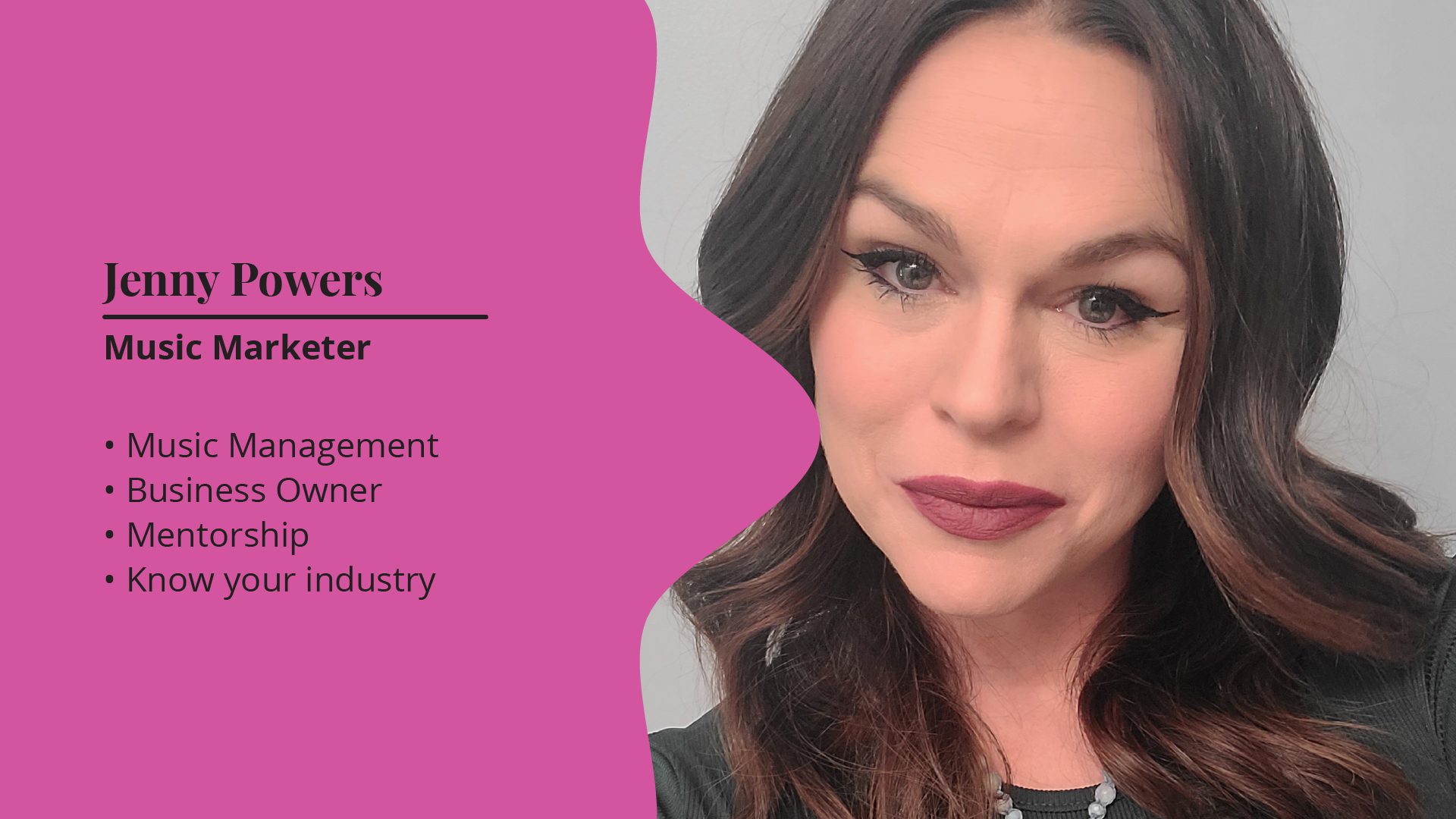
Jenny Powers is a Myrtle Beach-based music marketing strategist and founder of Blue Avenue Music Group, empowering independent musicians to thrive on their own terms.
Interview
Transcript
Emma Plutnicki
Okay, so to start, what do you do for work and where are you currently working from?
Jenny Powers
So I live in Myrtle Beach, South Carolina. My husband is the men’s tennis coach at Coastal and I am here in my office. And I own Blue Avenue Music Group, which is a music marketing and management company, and so I work a lot with artists and musicians from everyone from ground up to Grammy nominated artists
Emma Plutnicki
Cool, and how long have you been doing? That for?
Jenny Powers
I’ve had my company for seven years, and then I’ve been managing a tree house the local reggae rock band for about 15 years.
Emma Plutnicki
Amazing. So what does a typical day look like for you? What kind of responsibilities are expected of you, and what do you get into?
Jenny Powers
Oh, well, it varies from artist to artist. So right now, with Treehouse, we have a new song that will be coming out in a few weeks, and so we’ve been working on their content plans and their tour and making sure everything is uploaded and ready for those releases
Emma Plutnicki
cool and so how do you manage kind of like having a work life balance, because I’m sure, like creativity strikes at different times of day and things like that. So how are you able to kind of manage that?
Jenny Powers
Oh, that’s a good one. Definitely set boundaries. I mean, my clients are on tour, so they are up at all times of the day and night, and so for me, it was really about setting those boundaries that I am available between eight in the morning and five o’clock in the evening, unless there’s an absolute emergency that cannot be taken care of. So definitely setting those work boundaries, especially because I work from home, so making sure that I allocate the necessary time to spend with my family and do the things I love to do like I even like I don’t respond on weekends either. So those are, those are my times, and those are times that I think everyone should be be bound to, yeah, for sure, 40 hours, yeah, and working from home.
Emma Plutnicki
Is it sometimes hard to separate work life from personal life? Or have you been able to kind of overcome that?
Jenny Powers
Oh, I have, even in my family life, it’s, you know, eight o’clock until five o’clock here at home, and if my door is closed, I’m in meetings or I’m actively working on something, but if my door is open, then my kids are always welcome to just come on in and see, see what I’m doing and what’s what we’re what’s going on.
Emma Plutnicki
Yeah, for sure. And so living in Myrtle Beach, does South Carolina play any role in your work? Does it influence your work in any way? Or have you lived in other places where you notice that living in South Carolina kind of has a different influence on what you do?
Jenny Powers
So that’s that’s a really great question. I was born and raised here. I graduated from the academy of arts, science and technology in entertainment technology, my sister is one of the first graduating students from the Governor’s School in Greenville for music and arts, and she went on to found the longest running Girls Rock and Roll camp, and now we have our our nonprofit in Nashville. So South Carolina’s definitely given me and my family a lot of opportunities. My brother’s been a touring musician for 17 years. My sister was a touring musician for 10 years, and and I’ve been doing this for a long time too, and so we’ve always had that philosophy of bloom, where you’re planted. And we’ve, we’ve done so well.
Emma Plutnicki
Yeah, amazing. So coming from such a musical family, have you been given any advice along the way from family members or mentors that kind of helped you in this career path?
Jenny Powers
No, no, no, because think about think about it like the major hubs for music are New York, Nashville and. And LA with Austin having its own central like Texas is like its own music world. Honestly, there’s artists that only tour Texas and never leave it. So being in South Carolina that wasn’t a music hub. I had to learn those things. And I was very lucky to meet Ari Herston, who is, you know, the go to guy for independent music. And what I learned from there, I was able to bring and work with my artists and really elevate them from where they are and take them to where they want to go.
Emma Plutnicki
Yeah, for sure. Did you have any fears when you started in this career?
Jenny Powers
No, no. Like, I didn’t have a choice. Yeah, my brother called me up, and he was like, I need a manager. And I was like, I have no idea how to manage you in your music career. Yeah, we’ll find out. And once I found out, made a plan. We’ve been trucking along ever since.
Emma Plutnicki
So yeah, amazing. So throughout your entire career, have you had one specific project you worked on, or one specific person that you’ve worked with that has really kind of had a significant impact on you, and you kind of see as maybe, like the pinnacle of your career, just something that stands out in in your career so far.
Jenny Powers
I mean, every day is kind of magical, because I love that you never know what’s going to come your way. So I mean, I’ve had some really great people in this industry that I really do lean on. So Ari. Ari was one of them. And I have all kinds of great friends that I lean on, but I think I forgot your question.
Emma Plutnicki
No, it’s okay. How is, how is the local working community in South Carolina? Is there a network that you rely on in South Carolina specifically, or are you kind of just a lone wolf out here?
Jenny Powers
I am probably the lone wolf of South Carolina in the way that I work with artists, and the amount of artists I’ve worked with and the impact that I’ve actually made in the music industry. So one of my other positions is the VP of community of artist hub, which is a music marketing company. And we’ve, you know, we actually changed how you market music. So through those, those deep links, we’ve, you know, revolutionized how you market your music. And right now we’re working on building direct distribution through the blockchain. So that is going to be, you know, taking the way things are right now and looking into the future of how the whole industry is going to be moving forward.
Emma Plutnicki
Yeah, makes sense. And so to succeed in this career, you know, in creative fields, it can be kind of hard to figure out what success looks like, because it’s different. So how would you define success in your career? Is it financial? Is it projects you’ve worked on reaching success? Like, how do you kind of gage your success and your professional life?
Jenny Powers
Well, okay, that’s a that’s a good one. I mean, yeah, it’s hard. That is a hard one because I have been able to literally take everyone else’s platforms that they’re working on and help them succeed, and by helping them succeed, that is my success. So the money will come and go, but the help and the impact that you make on people’s lives is what really is my driving force?
Emma Plutnicki
Yeah, I love that. And what kind of skills do you need to have in your career to find success? Like, what are, what are important qualities to have for someone in your position,
Jenny Powers
One, knowing the ins and outs of how the industry works. So one of the big things in our industry right now is the independent music voice was about 40% of streaming revenue, and they were doing it so well that the major labels but. Up all the independent distributions, and that was a big scary thing for me, because I’ve seen where the major labels would actually use independent artists and take them off of platforms to negotiate with like Tiktok and things like that, so the artist who thought they were independent really weren’t independent. And so now artists have almost no true autonomy over their careers without new independent sectors coming in and giving them that opportunity that they had before. So that’s really where I am, is making sure that, you know, all these artists that I love back here have the ability to have full control over their music business. You know who’s managing their catalogs and who is managing their publishing administration and where they’re just distributing their music on these platforms, because if they don’t know up the chain who owns those they could be giving their rights away without knowing it. That’s my, my biggest concern.
Emma Plutnicki
Yeah, and how were you able to learn those ins and out ins and outs? How were you able to kind of establish your knowledge within that?
Jenny Powers
Oh, definitely. I mean, I read, read a book, not much about the structure of your businesses, like the music business itself has changed, but being able to use the new ways that are implemented to your advantage is really, you know, staying ahead of the curve while everyone is talking about things I’ve been doing for the last year and a half, they’re just now like, this is what you should be doing. And I started doing those things because you can see those trends if you’re paying attention.
Emma Plutnicki
Yeah, makes sense. Amazing. So just as we wrap up, is there anything else you’d like to add, any advice you’d like to give, or anything else you’d like to add about your career?
Jenny Powers
Oh, wow, yeah, if you’re going into you know, if you’re going to be a musician that wants to tour and distribute your music and have, like, a real business and that be your livelihood, then make sure you know the ins and outs of what that means, the contracts, the the everything, because you have all of these rights. And with every step of the way, everyone wants a cut of it. And so by maintaining your rights, gives you the power to have that autonomy over your career. Amazing.
Emma Plutnicki
That’s great advice. Well, thank you so much. I’m going to stop the recording. Okay, bye.
“Be wise where you put your time, money, and effort.”
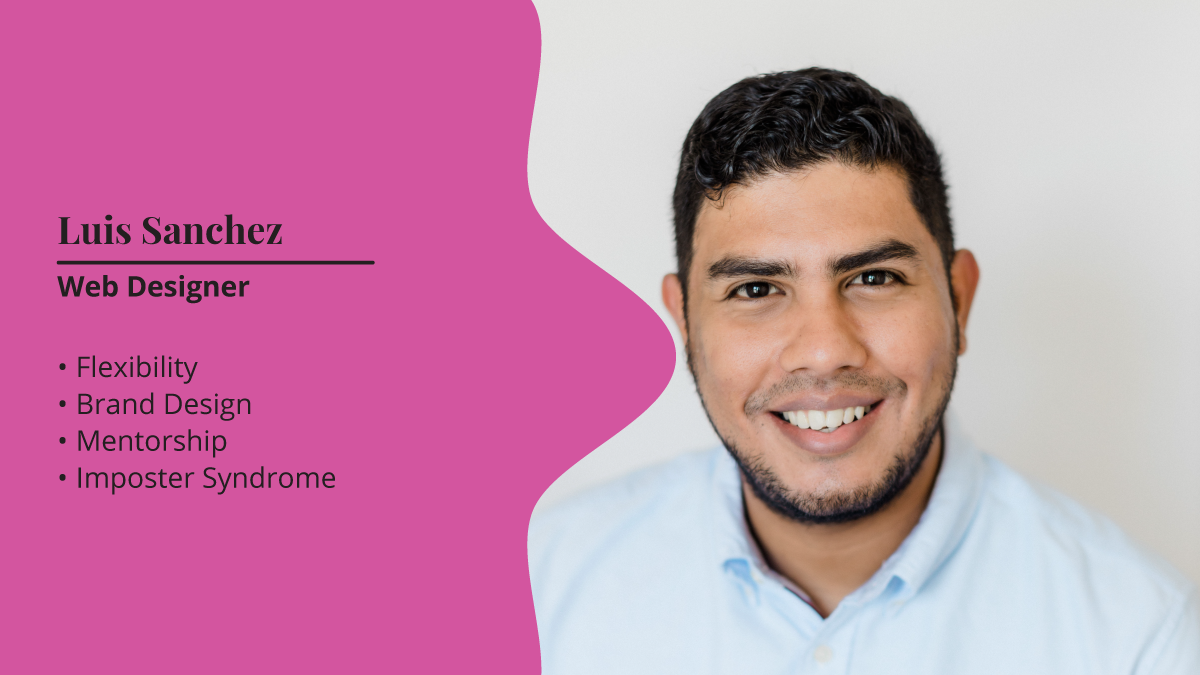
Luis Sanchez is a freelance web designer based in South Carolina.
Interview
Transcript
Emma Plutnicki 00:02
Okay, so to start, what do you do for work and where are you currently working from?
Luis Sanchez 00:09
So, so I, I started a web design business last June. So most of my time is, you know, setting that up, working from home, but you know, my main job is- I work at a church as a Youth Director. So those are the two things I do.
Emma Plutnicki 00:29
All right, amazing. And what would you say your official job titles for each of those will be?
Luis Sanchez 00:36
So, that’s a good question for, you know, small businesses like, am I a CEO? But you know, the main passion is just web designer, brand design, web and brand design. And then for the church, is just the youth director.
Emma Plutnicki 00:52
Yeah, great. And how long have you been doing those four?
Luis Sanchez 00:55
Yeah, so I’ve been working here since at the church, since 2021. August 2021, and the design since June last year.
Emma Plutnicki 01:08
Okay, nice. And so what does a typical day to day look like for you nowadays? What’s expected of you on a daily basis? What do you get into? What are your responsibilities?
Luis Sanchez 01:17
Yeah so it actually works out pretty, pretty well for me, I- so we’re going to church. Most of my stuff is done on the weekends, so I have a chance of putting time on the web design part during the week, you know. So a week when I have, you know, when I’m working with a client, it’s just meeting with them and then spending, you know, you know, four to five hours a day working on, just design, research, designing, testing different things, and then just, depending on the website, it’ll just take a couple weeks or not. So it was either meeting, doing a lot of research and just designing. And then during the weekends, you know, I pivot back to the church. So I was just preparing for Sunday youth group. We have youth group on Sunday, so the main job just preparing, just everything for for that to happen on Sunday. But yeah, during the week is- I’m working from home, just on my computer and then meeting with clients when needed.
Emma Plutnicki 02:25
Yeah, nice. And so having some work on the weekends, I’m sure it could be hard at times to have a healthy work life balance. So how are you able to navigate that with two jobs and making sure you still have time for your own personal creativity?
Luis Sanchez 02:41
Yeah well, I have a six month old baby, so you should have a clock hits me and my wife are just just spending time together with family. But one thing about it is my wife is usually pretty- she wants to take some time off, and so we have dinner together, spend time together, but usually she goes to bed a little bit earlier. So I’ll hit a lot of different things, you know, from like nine to 11pm I like to read books. YouTube’s pretty cool just seeing what other people are looking at and, you know, and every now and then, I mean, I’ll pick a day in the week where I’m just not going to do anything, but just sit there and think about day and relax and do something aside from it. But yeah, I would just just have intentional time of consuming other- from other people who do design. It’s just helpful for me, but it’s always tempting when you hear something, it’s like, “oh, I want to try that”. You grab your computer. I just kind of have some liberty where it’s okay to do that sometimes, it’s okay to just read, It’s okay to just take some time off. But I think my job allows me to be creative too, with the church. You know doing things like running social media, creating graphics, videos, whatever it is. So I still get to do that. So it’s a good way for me to try out things that I maybe not try out with clients. So I don’t know, I just look at opportunities for- to do different things and try different things.
Emma Plutnicki 04:22
Yeah, no, makes sense. And so with both of your careers, sometimes within creative fields it can be hard to measure success, so how do you- is there a difference between what success looks like in both of your roles? And how do you personally define either professional success and then also just personal success?
Luis Sanchez 04:42
There’s definitely, very different, I think, you know, with a business there’s, there’s just numbers, whether you like it or not, whether it’s financial numbers or number of clients. But you know, in working out of church. Which, you know, we’re talking about real people. So you don’t want to treat it just as a number. So that’s not really what I’ve- I have had to learn not to focus on that, which I think helps me with my business, because I mostly care about just interactions, and how I’m interacting with the people around me, you know. So I want to, I want my clients with web design to love their website and love, you know, I want to help their businesses. Ultimately, that’s the goal for me. To make a website for them. Is to help their businesses, their brands and everything. So when I get to just interact with them or interact with their website, see that they’re growing, that people are, you know, visiting whatever, then that, for me, is fulfilling. And same thing in my church job is, you know, if I’m having good interactions with with the students, with the volunteers, then that’s just fulfilling. That’s always going to be, you know, how are people responding to the work that I’m doing? I think it’s just a healthier way to look at things, instead of just a number. And of course, I have goals, but, you know, I keep an eye on those, but those are not ultimately, they’re just determined if I’m going the right way or I need to change something, but not- defines failure or success for me. So.
Emma Plutnicki 06:19
Yeah, no, amazing, yeah. And did you have any fears when you were coming into either of these careers?
Luis Sanchez 06:26
Yeah, the biggest fear is for especially for the web design, is just investing. That imposter syndrome kicks in. Is this really something I can do, or does anyone even want to work with me? Can I- Can I even make a website like this? Weird how these thoughts take over. So it’s just investing. You know, putting that time aside every every day to work is a big deal financially. You know, you want to get the best tools, the best stuff, or whatever. You know, is it worth it if they’re gonna- so I think that’s the biggest fear. I mean, right now, just starting, you know, is finding confidence in what I can do and being wise about where to put my time and money and effort. Well, ideally, I just don’t want to look back, you know, and I messed it all up with making or whatever, so I think. But again, trying to act with the fears, it’s just hard to navigate. Yeah.
Emma Plutnicki 07:34
Yeah and has there been anybody that has helped you navigate those fears or struggles? Any advice that you’ve been given, whether good advice or bad advice?
Luis Sanchez 07:44
Yeah, I would say my professors, when I studied Digital Arts at Horry Tech and graduated last May from that- that’s so, you know, I always had. I always like creative and arts and all that but I needed some, I needed, you know, someone to teach me how to do it right. It’s all self taught and so I think just having people that you know, I graduated in May, but I still talk to them, I send every time I make a website, like, “Hey, can you give it a look? Let me know” and just, you know, just having people that I respect who would look at myself and tell me, you know, whether it’s good or bad, but just letting me have confidence that, hey, like I’m not an imposter, like I did the work, I studied, I graduated, the stuff, whatever looks good. And so I don’t know it’s like a specific advice, but just- having- being able to show stuff to other people, for critique, for ideas, for that’s probably the hardest part of me when I first started the design program, because I always kept my art to myself.
Emma Plutnicki 08:58
Yeah.
Luis Sanchez 08:58
And then once I through my professors, they pushed me to start showcasing that, you know, different ideas and different things, and I started to gain confidence in my creativity and my art. And so the- best, my best advice would be that just be willing to show, show it to other people, and you’ll get rid of the imposter syndrome for sure, because you’ll find out if you’re really a designer or not, you know.
Emma Plutnicki 09:26
Yeah. And throughout your career, you’ve mentioned, you know, struggling with imposter syndrome. Has there been one specific project that has had a significant impact on you, or has kind of been the pinnacle of your career that you can really draw on when you are feeling doubts? And you could say, Yes, I worked on this project and I can do it. Is there anything like that that stands out?
Luis Sanchez 09:49
Yeah, definitely. I think there’s a lot of them. Not that I like-
Emma Plutnicki 09:54
That’s a good problem!
Luis Sanchez 09:56
Every project that, especially in school, every project I did. I taught me something about myself. I think we have a senior showcase where you just have to show off everything you created in the past two years, which is just nerve wracking and very scary. But there’s something about looking back at those nights where you were there 2am freaking out because your design looked horrible, like it’s not going to work, and and then you see the finished product, and you know that you pushed through. It’s just really helpful, just to know that you can do it. But I mean, ultimately, for my business, my- the first website I designed, and the client likes it, and you get paid for it. It’s a little surreal, like I created something for someone. So I would say that would be probably the most meaningful, just the first website, just the full, first whole client process, website design, delivering, and it’s out on the web. So I would say that was just probably the most meaningful for me.
Emma Plutnicki 11:00
Yeah, for sure, that must be incredible to see things come to light and actually being used in a real setting.
Luis Sanchez 11:07
It’s worth it. It’s like, yes, what I want to do.
Emma Plutnicki 11:10
Amazing and how do you like working in South Carolina specifically? Have you lived in other places? Or what kind of, you know, contribution does South Carolina specifically have to your work? Is there any influence?
Luis Sanchez 11:21
Yeah. So I’ve actually, I was born in Honduras,
Emma Plutnicki 11:25
Okay.
Luis Sanchez 11:26
Yeah and then I originally went to school in Spain, so I lived there for five years, studied computer science, but then moving to South Carolina, it’s been a huge impact, because first of all, I went to Horry tech in 2022 and they had free tuition. So I did the whole program for free. So that’s just the best thing ever. Very grateful for Horry county or South Carolina, whoever made that happen, a huge opportunity, just for everyone that you know can take that. And so that was very, very big. And then I think the one thing that I love about working here in web design and church and everything just very relational. Every time- every client I work with that’s like, the goal is to be relational. I think we all have, I just feel the sense of our small businesses or it’s just a community. So, you know, I’m just, like I said, I’m not just making a website so you can pay me. I want to grow your business. I want to grow your brand, because we’re all a community, and so I think South Carolina is just, the southern charm is just very alive, and I want to be part of that. And so, you know, the heart behind what I’m doing is helping out people who want to showcase their business and their brand and grow and- but I want to do it in a relational way, not in a transactional way. And so I lived here for seven years, and everyone’s just been so, so welcoming, so helpful, so everything. So I just want to return that same to, you know, through people, through my art. So.
Emma Plutnicki 13:16
That’s great. I’m glad you found South Carolina.
Luis Sanchez 13:18
I know. Oh this is the best place, I lived a lot of places in the world, but-
Emma Plutnicki 13:22
Yeah.
Luis Sanchez 13:23
-home.
Emma Plutnicki 13:24
Good, amazing. So just as we wrap up, is there anything else you’d like to add about your career? Any advice or anything else?
Luis Sanchez 13:31
I would just add, I just, you know, looking back, you know, I’m 33 and I graduated last year, and I just know high school was a hard time because I just couldn’t figure out what I wanted to do, what I was good at, what I was not. And I studied computer science in school, but I realized that’s not what I- where my passion was. And then, you know, even though it took me a long time to go back to school, I spent that time just trying to find what is it that I was passionate about, and thankfully I had the opportunity to do digital arts. And now I know it’s very fulfilling. I’m just very I just know that was the right place where I needed to be, and this is probably where I need to be doing. So, you know, just just, just trust your passions, your- your skills, your, you know, I think everyone’s creative, and we just need to be able to have opportunities to showcase to the world how we are creative. So just, yeah, just looking back, I know that I feel like there’s a lot of people in that same boat of, like, trying to figure out what they’re called to do. And I just, you know, just go for it and ask people for help and show people what you can do and what you help you figure out and give you confidence. So you don’t feel like, you know. An impostor or anything like that.
Emma Plutnicki 15:02
No amazing. Thank you so much. That’s great advice. I should take that advice myself. So thank you so much.