Career Area: Writing and Storytelling

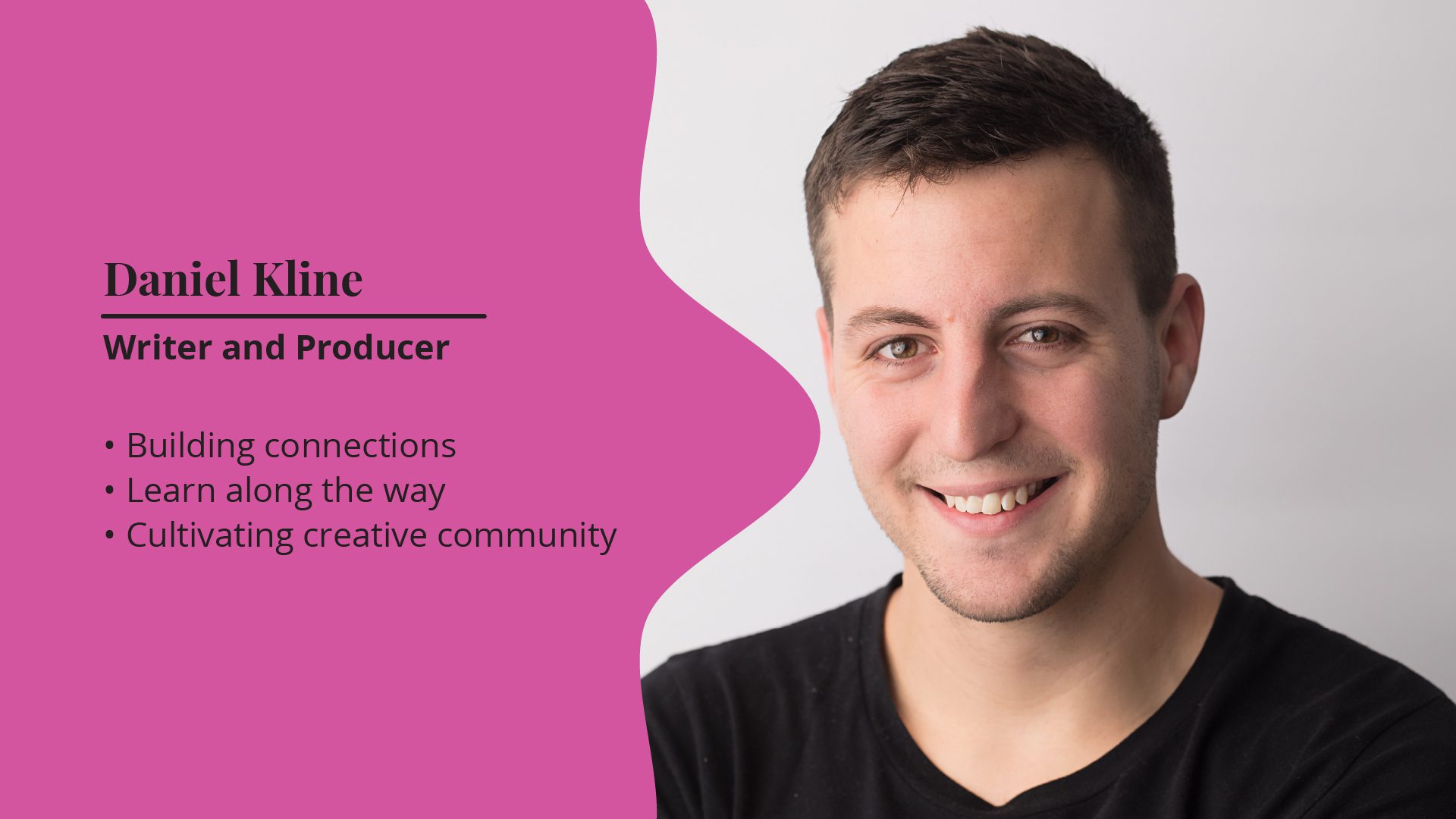
  • Daniel Kline

    Daniel Kline

    “Just jump in and just do it and learn along the way. Don’t wait until you’re don’t. Don’t wait until you feel ready.”

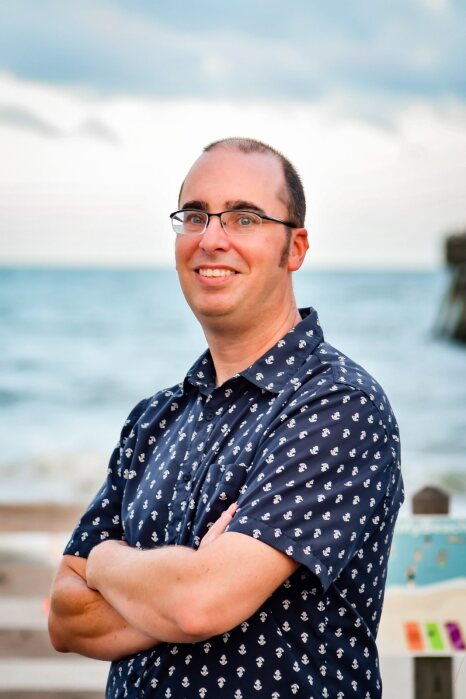
    Daniel Kline is a fitness coach and writer/producer for Starling media in Conway, South Carolina. Daniel has been professionally making films for two years now and offers great advice for those entering a career in the arts. 

    Interview

    Transcript

    Lexi Raines | 00:01 

    First, just give a little introduction of yourself. What do you? Who are you? What do you do for work, and where are you currently working from?  

    Daniel Kline | 00:09 

    Yeah. So my name is Daniel Kline. I am from Conway, South Carolina, and I, as far as work goes, I’m kind of doing two things as most artists are doing. I, my main job is, I’m a fitness coach, but my creative job is, I’m a writer and producer for Starling Media.  

    Lexi Raines | 00:31 

    Yeah, that’s awesome. And, so how long have you been working for, you said Starlight Media?  

    Daniel Kline | 00:40 

    Starling media, like the bird. Yeah, yes. So that’s Starling media is actually it’s my thing. I, I’ve been making films like professionally, both creatively and I’ve done a couple of commercial things, but I’ve been doing film for about two years now, although Starling media was started back in November, so it’s still pretty fresh. But yeah, I’ve been doing film professionally for about two years, but total about four years. First two years was mostly learning.  

    Lexi Raines | 01:14 

    Yeah, that’s awesome. So you said you’re from Conway. So what is one thing that you like working as a creative in South Carolina? Because I know some people, they tend to think that if you want to be a creative professional, you’re going to have to move out of South Carolina. You’re going to have to move somewhere bigger. What does South Carolina give to you that somewhere else wouldn’t?  

    Daniel Kline | 01:40 

    I think South Carolina is actually a really great place to be a filmmaker, because one of the largest hubs in the world for filmmaking is Atlanta, which is practically our back door. I mean, it’s a little bit further for us because, you know, or at least makes them in Conway, but, I mean, it’s, yeah, we got Atlanta right in our back door, which means a lot of, a lot of film companies are, you know, they do kind of like sub out in a bunch of different areas that are nearby. So like, Charleston is close to us, Wilmington is close to us. And actually, most of the work that I do is up in Greenville, which is about an hour and a half from Atlanta, and so we get a lot of, like, Atlanta productions that film in Greenville as well. So I think we’re, like, we’re at a really great position to, you know, have, like, a really affordable living and, you know, also be very close to where the action’s at.  

    Lexi Raines | 02:37 

    Yeah, that’s amazing. So I’ve actually heard a lot of filmmakers and producers, there is a big hub for that in Greenville right now. So how would you describe the professional community up there?  

    Daniel Kline | 02:56 

    Oh, gosh. I absolutely love my filmmaking friends. I mean, I’ve met producers, I’ve met filmmakers that are kind of on both sides, so it’s not 100% but the community that I’ve, I’ve met, and I’ve worked with, and I’ve really, you know, dug roots with, there are some of the kindest, most giving people. Like, they freely give their time. We, we pretty much exchange time, like, I’ll work on your project if you work on mine. And everyone really gives 100%, sometimes 110%, and it’s just a really fantastic community, and I’m just, I love being part of it, and they welcome me as a local, even though I’m three hours away.  

    Lexi Raines | 03:38 

    Yeah, South Carolina really is just like one big community. I feel like, no matter where you’re from, we’re all very close with each other, which is awesome. So kind of moving a little bit, how do you define your professional or personal successes in your creative endeavors?  

    Daniel Kline | 03:58 

    So as far as filmmakers go, there’s a lot of talented filmmakers out there. And, I mean, there’s a lot of talented filmmakers that are way more talented than I could ever hope to be. So I learned pretty early on that my why, my why is, what’s going to make me different. And so like professional success would, would, on the surface, be, you know, like having a successful film, you know, film that wins awards and everything but personal success. I, I’m really passionate about people, and I think if I’ve got an award winning film, but my film was a miserable experience to work on, then I failed. And so that’s, that’s kind of how I am choosing to define my success; is just being a team player, being a, creating a positive work environment, and also just creating a product that shows love. You know, when I say shows love, like you can tell that people loved it when they worked on it. And I think that, and I think that really shows in the final product as well.  

    Lexi Raines | 04:58 

    I completely agree. I- I’ve seen movies in the past that you can just tell the actors, the people on set, they weren’t super passionate or happy about it, but I feel like it always makes the biggest difference.   

    Daniel Kline | 05:12 

    Yeah, absolutely.  

    Lexi Raines | 05:13 

    Yeah, so you said that you’ve been making movies for a while now, seriously, and just outside of that, what was your biggest fear when you first decided to pursue this career?  

    Daniel Kline | 05:30 

    I think the easy answer would be fear of failure. But I’m going to dig a little deeper, and I’m going to say my biggest fear is creating a product that I think is great, and people not liking it. Like, if I look at the final product, I’m like, “alright, this is awesome. This is my best work”, and it just absolutely flops. I think that’s the biggest fear.  

    Lexi Raines | 05:53 

    Yeah, I feel like that is a- that’s a big fear for a lot of people. But, so on a more positive note, like, what’s a defining moment you’ve had in your creative journey? Like, was there a particular project that made a significant impact on you, or was it something you produced that really showcased your creativity?  

    Daniel Kline | 06:17 

    Yeah, so my- I would have to say that the most defining moment was probably my first project, my first short film. It was, it was that big step where I went from wanting to become a filmmaker to actually being a filmmaker. I took I’d been, I had spent like, two years learning. At that point, two years learning and not doing anything. And everyone was just saying, “Just do it. Just do it. Just, you know, just push through. You’ve got stuff, if you’ve got a phone, you can make a film,” and so we just did it. I wrote something that was accessible, that had like a little creative spin on it, and something that we could film like, pretty easily in a weekend, and we just put a lot of effort into it, and it was, it was pretty good. Like, it’s, it wasn’t like the best thing, and you can tell it was like our first thing ever. But I got to show it to our, my filmmaking community up in Greenville, and these are people who, like, work full time in it, and like, they, like, some of them were actually wowed by it. They were like, “wow! Like, who, who did this? Who, you know, who edited them?” Like, it’s, my brother edited it. He’s never edited anything in his life and it was just like, it, it ended up being such a really cool thing, because we just, we just did it, and it’s been entered into film festivals. We just won Best Short and Best Director for it couple months ago. And so it’s like it was a really defining moment, because it was just that moment where I realized, you know, we can do this.  

    Lexi Raines | 07:47 

    Yeah, that is amazing. That’s so special. Congratulations on that.  

    Daniel Kline | 07:52 

    Thank you.   

    Lexi Raines | 07:53 

    So, what is, while you were on this path, was there any like advice you received, like good advice, bad advice?  

    Daniel Kline | 08:05 

    That- the advice, the best advice that I received was, was just do it. There’s a lot of, there’s a lot of creative people, not just filmmakers, but there’s a lot of creative people who are afraid to take that first step, but I mean, really, there’s no reason- there’s no time like the present, and there’s no reason why you can’t, and especially if you’ve got a phone in your pocket, you can do most of your creative work to some capacity. And, so the best advice and the thing I always just tell people who ask me what to do, just do it. Just jump in and just do it and learn along the way. Don’t wait until you’re ready. Don’t wait until you feel ready.  

    Lexi Raines | 08:43 

    Yeah because- I feel that. Like you’ll never feel ready.  

    Daniel Kline | 08:48 

    Yeah, I had about a dozen people tell me that in a day, and I was like, “Okay, I get it. I get it.”  

    Lexi Raines | 08:55 

    Yeah, so along with “just do it” you obviously, you said you were a fitness instructor, so you have another job. How would you- How do you balance your day? Like walk us through a typical work day for you. That is an awesome, an awesome balance. So when you’re shifting into more of like, your creative mindset later in the day, what does your process look like for when like, you’re writing these movies, producing them, what does what does that process look like?  

    Daniel Kline | 09:11 

    Oh my gosh. So my day usually starts at 4am, which is rough. I’m not a morning person, but you know, I have to be, but no, my day usually starts at 4am and I just basically work between four and seven sessions. So my day, usually, my professional day usually ends around 11 or 12- 11am, or 12pm, so I mean, I’ve got the the last half of my day to do anything creative, you know, anything creative that I want and so it does allow for a lot of time, and, but- and the gym that I work at, they know, they know what I do. They know what I love to do, what I want to do and so, like, anytime there’s a project, I can freely take off and, you know, go pursue that. And I- So I, it’s a really awesome job to have, yeah.   

    Lexi Raines | 10:05 

    That is an awesome, an awesome balance. So when you’re shifting into more of life, your creative mindset later in the day, what does your process look like for when like, you’re writing these movies, producing them, what does that process look like?  

    Daniel Kline | 10:22 

    Yeah, you asked about writing and producing. I could, I could talk for hours about either so I’m going to choose one. I’m going to shorten it. I mean, writing, writing is, is just a bunch of planning. That’s all it is. It’s just a bunch of planning. You plan on conversations and everything, and then you write it out. So I’m actually going to shift to producing what my day looks like as a producer. It’s a lot of- it’s a lot of boring office work. It’s phone calls. It’s making sure that people’s schedules align. It’s making sure that money is where it needs to be. It’s filling out spreadsheets, creating spreadsheets. I like to use this website called Milanotes. I know a lot of people use it to, like, take notes and everything it’s, it’s where I like to have, like, a different- it’s basically like a giant virtual cork board that you can, like, put different files and draw different lines between things. It looks like a crazy conspiracy theorist board, but- that’s, but yeah, it’s basically just filling in information and just making sure that everyone’s caught up on everything.  

    Lexi Raines | 11:27 

    Yeah, so, that seems like a lot to juggle. What are some habits that you have, that you’ve developed that you think would be beneficial for others wanting to join this field?  

    Daniel Kline | 11:47 

    I think the- the best habit for people who are wanting to join the field, if they’re starting from scratch, the- probably the best thing that I did for myself, and I, like, I would absolutely recommend, is I keep this, this rolodex spreadsheet. I created- I created this spreadsheet that anytime I, I basically just got on set, anytime I could, like, I volunteered, I like, met people, shadowed people, and I spent, like, two years working on sets, different sets, without getting paid, just to, like, meet people. And so what I did was, every time I worked with somebody that I enjoyed with- enjoyed working with, and that I would want to work with again, someday, I would put their name, put their information in spreadsheet, put how I met them, and then, I also had a line that was like, this is the last date that I talked to them on, and I kept all of those dates within a month. And so, like, if it’s been about a month since I talked to somebody, I would text them say, like, “Hey, what are you working on? How are you doing?” and that spreadsheet quickly grew into, like, 100 lines. And that was 100 different connections that I you know, people that I kept in in contact with, and that, after about a year and a half of investment, that- that became work, like those people started calling me for- for work, and those became paid projects. And so, like, so, I mean, bottom line is, however you want to do it, like, find your community. Write down, write down a list of people that you want to work with and stick with those people.  

    Lexi Raines | 13:26 

    Yeah, that’s actually a really, a really clever idea. I haven’t- I wouldn’t have even thought to do that. That’s so smart. So do you have any questions that you wish we would have been asked- we would have asked you?  

    Daniel Kline | 13:47 

    Oh, no, not really. I think that covers everything.  

    Lexi Raines | 13:50 

    Okay, awesome. And my last question for you today is, do you have a creative that you’d like to nominate to be interviewed?  

    Daniel Kline | 13:57 

    Hmm, well, I’ve got a whole Rolodex full of them. Yeah, I’ve got, I’ve got one. I think she’d be really cool person talk to. But Yasmine Lee.  

    Lexi Raines | 14:11 

    Yasmin Lee?  

    14:12 | Daniel Kline  

    Yeah.   

    Lexi Raines | 14:14 

    Awesome.   

    Daniel Kline | 14:15 

    She’s a filmmaker up in Greenville. She’s an Emmy Award winning person, really, yeah, she’s and she’s really cool. Worked with her several times.  

    Lexi Raines | 14:24 

    Okay, awesome. Yeah, send us, send us her information, and then, yeah, I will hear this if you can. Thank you so much for your time. It was really great interviewing you. I’m going to look into your work. You seem so passionate about everything, I’ll be looking for your name out there.   

    Daniel Kline | 14:46 

    Thanks. Appreciate it.  

    Lexi Raines | 14:48 

    Thank you so much for your time. I hope you have a good. rest of your day, stay safe in the snow. Supposed snow.  

    Daniel Kline | 14:59 

    Alrighty, bye.  

  • Mahoganee Amiger

    Mahoganee Amiger

    “Just love yourself and talk to yourself nicely.”

    Mahoganee Amiger works in Beaufort S.C. as an Interdisplinary artist in the field of music and has been a songwriter for over 30 years. Mahoganee incorporates poetry and photography into her music to produce a form of visual art. 

    About

    Amiger is a Gullah Geechee woman who lives on Saint Helena Island. She explains that Saint Helena Island is a place where she is able to tap into her creative side, “And so being a creative it is, in my opinion, it is a very magical portal, yes, that right, that I can tap into, and because I allow myself to be open to that I am never not creative”. Amiger also reflects on her journey as a musician and explains how her love for art has always overcome her fears, “so, there was the fear of, I think, just being in front of people, you know, and sharing something…now I’m nervous, I’m not fearful, the nerves are always going to be there.”

    Amiger explains the importance of taking opportunities in the creative career field, like a fellowship. She says that “anytime you can find an opportunity to be in a cohort or fellowship or something that is really going to help you grow as a human being, as an artist, as a community leader…look for those opportunities because they have been very instrumental in my growth.” With this, Amiger considers today’s day in age with the noise of the internet and advocated for nurturing oneself away from the media.

  • Megan Koon

    Megan Koon

    “Everything I produce could only come from me, and so it is a personal contribution.” 

    Megan Koon is an editor, coach, and author Megan Koon is on a mission to help others tell the stories only they can write. 

    About

    Megan Koon, who lives in Simpsonville, South Carolina, is a writer, editor, and writing coach passionate about turning her love for writing into a full-time gig. After spending 20 years teaching high school English, she took the plunge into freelance writing in 2023 and hasn’t looked back. With a sharp eye for detail and a love for storytelling, Megan spends her days writing novels, coaching new authors, and helping students with dyslexia and dysgraphia. 

    “Since I was teeny tiny, I have known that I am a writer, it is what I am supposed to do,” she says. “I’m supposed to help other people write.” For her, it’s all about connection, whether she’s working with a client to tweak their manuscript, creating a podcast, or jotting down her own ideas at a coffee shop. She gets a real kick out of seeing others grow through storytelling: “When I’m helping someone with their writing, they come back with a revision, and they’re so excited, because they really have accomplished this big thing, and that is success to me.” 

    Even though she admits it can be scary to leave a traditional job, Megan truly believes in the importance and value of creative careers. She gives a shoutout to her local writing community and her teaching years for boosting her ability to support others while also developing her own writing skills. 

  • Kelly Moran

    Kelly Moran

    “Don’t give up. A reader can’t read a blank page and rejection is just a step toward the story you’re meant to share.”

    Kelly Moran is a hybrid author, small press publisher, and international bestseller living in York, South Carolina. Through her company, Rowan Prose Publishing, she champions emerging writers and tells stories that resonate globally.

    About

    Kelly Moran is a seasoned author and founder of Rowan Prose Publishing, a small press that uplifts underrepresented voices in the literary world. Based in York, South Carolina, Kelly began her professional journey in 2005 as a novelist, publishing over 30 titles in paranormal and contemporary romance, and even light horror. She is a hybrid author having published both independently and through major houses like Penguin/Berkeley and her books have earned international acclaim, particularly in Germany, where she is a household name.

    In 2023, Kelly launched Rowan Prose to support debut authors often overlooked by large publishers. Her goal is to provide a welcoming, professionally rigorous publishing experience that balances author freedom with editorial excellence. With over 50 authors on her roster, she works daily to edit, market, and nurture literary careers from her home office complete with the “commute” past two dogs and a pot of coffee.

    For Kelly, success isn’t measured solely in sales or bestseller status, though she’s achieved both. It’s found in the emotional connection readers form with her work readers who write to say her characters made them laugh, cry, or feel seen. She champions inclusive storytelling, often weaving in themes of disability, anxiety, and social justice into her romance novels.

    Her advice to aspiring creatives is simple but powerful: follow your dream. Whether you’re writing at 5 a.m. before work or querying your 80th agent, keep going. “Rejection will come,” she says, “but so will the right readers and maybe even your dream contract.”

  • Cynthia Ford

    Cynthia Ford

    “Each moment that you’re able to get up again and keep pushing, that’s success.” 

    Cynthia Ford is the Founder and CEO of Cynthia O Writing & Consulting, a South Carolina-based firm specializing in writing services, consulting, and speaking engagements. Her company focuses on three core areas; authoring inspirational literature, providing strategic business consulting, and delivering transformative speaking engagements  

    About

    Cynthia Ford is a South Carolina-based writer, consultant, and founder of Cynthia O Writing and Consulting. After working for 15 years at the Department of Juvenile Justice and in education, she made the leap into full-time entrepreneurship in 2023. Her business includes grant writing, content development, social media management, and author services anchored by her deep love for literature. 

    Cynthia is also an artist-in-residence for literature and a published author with four books to her name. Each day looks different in her world, but her work always blends planning, creativity, and community connection. She sets aside time for writing, client meetings, content creation, and self-reflection, often starting her mornings outdoors or with a podcast. 

    One of the most meaningful moments in her career was launching her second book, Dream Like a Queen, through a collaboration with the Marion County Library. She hosted a tea party for young girls, complete with princess gowns, crafts, photo booths, and story time. That event helped children see the library as a magical space and brought literacy to life in a new way. 

    Cynthia encourages aspiring creatives to prepare thoughtfully before making big transitions. She’s learned to stay focused on her path, resist outside pressure, and build a foundation rooted in her strengths. Whether through consulting, writing, or workshops, Cynthia continues to grow a career that brings value to others and joy to herself. For her, success is not measured by accolades, but by impact and the courage to keep going, even when it’s hard. 

  • Walter Curry

    Walter Curry

    “Stay in your lane. Don’t try to ride somebody else’s, because if you do, you’ll get run over.” 

    Dr. Walter B. Curry, Jr. is an award-winning author, educator, and historian based in Columbia, South Carolina. Through Renaissance Publications, he documents African American family and local history, connecting ancestral narratives to broader historical themes. 

    About

    Dr. Walter B. Curry, Jr. is the founder of Renaissance Publications and a dedicated historian and author focused on preserving African American heritage in South Carolina. A Columbia native, Curry began writing in 2018 and has since published multiple award-winning books that blend family ancestry with local history. His works, such as The Thompson Family: Untold Stories from the Past and The Awakening, trace powerful intergenerational narratives rooted in Orangeburg and Aiken counties. 

    With a background in education and business, Dr. Curry transitioned from teaching to a full-time literary career, driven by a deep calling to uncover hidden histories and share them through exhibitions, books, and public presentations. He also serves as author-in-residence with Aiken Center for the Arts and is a speaker with South Carolina Humanities. 

    Among his proudest moments is the 2020 debut of his first historical exhibition, which drew record-breaking crowds at the Aiken County Historical Museum. Dr. Curry encourages young creatives to guard their minds, focus on growth, and honor their calling with discipline and integrity. His motto: reflect, refine, and remain rooted in purpose. 

    Dr. Walter B. Curry, Jr. is deeply committed to uncovering and sharing the hidden history of South Carolina’s African American communities, especially through ancestral narratives. He believes that growth both personal and professional, is the most important measure of success for creatives, not awards or recognition alone. His grandmother’s wisdom, urging him to “stay in your lane,” shaped his path and continues to guide his approach to writing, teaching, and collaboration. For Curry, storytelling is not only about the past but also about building community, cultivating purpose, and helping others discover their gifts through history. 

    Contact

  • Angela Thomas Smith

    Angela Thomas Smith

    “You determine your worth and set your success. Don’t allow your success to be set on what others think of you and how others perceive you. You determine that, so you won’t have expectations from the world, but you can set your own guidelines and your own expectations.”

    Angela Smith is a Georgia-based entrepreneur, publisher, and podcast host empowering global creatives through storytelling, collaboration, and resilience. 

    About

    Angela Smith is a passionate publisher, entrepreneur, and podcast host who built a global creative platform rooted in resilience and connection. Originally from Anderson, South Carolina, Angela now operates from Georgia, where she leads a vibrant virtual community of authors, educators, and storytellers through her publishing business and multimedia network. 

    Her journey began in 2012 but took flight in 2016, gaining momentum during the pandemic. She publishes books, produces a live-streamed podcast six nights a week, and collaborates with a diverse team of nine hosts across the U.S. and abroad. Her work emphasizes “connection, collaboration, creativity, and community,” values she instills in her signature initiative the 100 Authors Movement. 

    Angela’s days begin at 4 a.m. with prayer and self-care, grounding her spiritually before diving into a range of creative tasks. She defines success not by numbers, but by impact: “Seeing individuals that I’ve worked with go beyond what they thought they could do, that’s success.” 

  • Madison Wu

    Madison Wu

    “The best outcome is when I’m not worried about how it’s going to be professionally, we need rawness, weirdness, and vulnerability.” 

    Madison Wu is a self-employed author based in North Carolina, crafting poetry, fantasy, and contemporary stories centered around inclusivity, vulnerability, and self-discovery. 

    About

    Madison Wu is an independent writer whose creative work spans genres from poetry to fantasy to contemporary fiction. Working from her home in North Carolina, Madison began writing professionally in 2022 and quickly realized that creativity could be both personal expression and a path to purpose. A disabled, Asian-American member of the LGBTQ+ community, Madison brings an intersectional lens to her stories, aiming to reflect voices often underrepresented in mainstream media. “The lack of representation I see around me contributes to my desire to put more representation out there,” she shares. 

    Her self-published poetry collection born from a challenge to overcome fear became a symbol of boldness and healing: “If you’re afraid to get published, write 100 poems and publish it… then you can’t say you’re afraid anymore.” Madison sees creative success not in viral attention but in emotional resonance; “Someone bought extra copies of my book to give to people they meet. That’s success.” 

    Balancing her work through routines grounded in music, pacing, and personal discipline, Madison’s artistic life centers on authenticity. “Don’t let whatever anyone says scare you,” she advises new writers. “When you focus on what feels right, that’s when you reach another level.” 

  • Evelyn Berry

    Evelyn Berry

    “It’s just that when we’re conceptualizing art, we always think of it as something that has happened, but not something you can do in your own life, like in the current moment. So Don’t wait for permission. Just start working and start sharing.”  

    Evelyn Berry, poet and educator from Columbia, SC, uses her voice to champion authenticity and queer Southern storytelling. Through workshops, editing, and her acclaimed poetry, she inspires writers to embrace vulnerability and speak truth to power. 

    About

    Evelyn Berry’s story is one of authenticity, resilience, and artistic devotion. A poet and editor raised in South Carolina, Evelyn began writing seriously at 16, publishing in local journals and never looking back. Today, she is the author of multiple poetry collections, including Grief Slut, and forthcoming Tea for Tea, Evelyn’s writing is deeply informed by her identity as a queer Southerner and her commitment to storytelling that uplifts marginalized voices. Beyond her books, she leads creative writing workshops for festivals, universities, and nonprofits, and works as a freelance editor and library communications strategist. 

    Evelyn’s writing is confessional and political, shaped by her experiences as a queer person in the South. “It’s impossible for pretty much anything I write not to be viewed by others as political,” she said. In a world where many discourage political storytelling, Evelyn insists on honoring the truths of lived experience. Evelyn’s work reflects a deep love for art and advocacy. As she shared, “All of our lives are very political,” and her writing unapologetically reflects that truth. 

    She emphasizes that success is “writing something that people respond to… that might change how they think or how they feel.” Her advice to aspiring artists is simple yet bold: “Don’t wait for permission. Just start making and start sharing.” 

    Through her books, mentorship, and community work, Evelyn creates space for voices often silenced. Her story is a reminder that art is both personal and communal and that creativity, when wielded with courage, can shift culture. 

  • Caleb Wygal

    Caleb Wygal

    “If the car accident hadn’t happened, I couldn’t have asked for a better career for me.” 

    Mystery author Caleb Wygal turns personal tragedy into literary triumph through the Myrtle Beach Mysteries series. 

    About

    Caleb Wygal is a full-time author living in Surfside Beach, South Carolina, and he’s mainly known for his Myrtle Beach Mysteries series. His journey to becoming a successful writer was anything but straightforward. It all kicked off during some quiet moments at a slow office job and took a serious turn after a bad car accident that almost derailed everything. 

    Caleb talks about how a traumatic brain injury made him relearn the basics, walking, talking, and even writing his name. Doctors said he’d never hold a full-time job, but he proved them wrong. Some folks say his stories helped them learn English or get through tough times in the hospital. 

    What started as short stories born out of boredom has turned into a popular book series, thanks in part to the strong author community around South Carolina’s Grand Strand. From writing on the beach to getting featured on local TV, Caleb’s journey is packed with creative twists, small-town inspiration, and some pretty memorable moments, like when he spilled the beans on a local talk show that one of his murder victims was based on the host. For Caleb, success is simple: paying the bills and bringing joy to his readers. With each new mystery, he continues to prove that storytelling is not just an escape.