Career Area: Writing and Storytelling

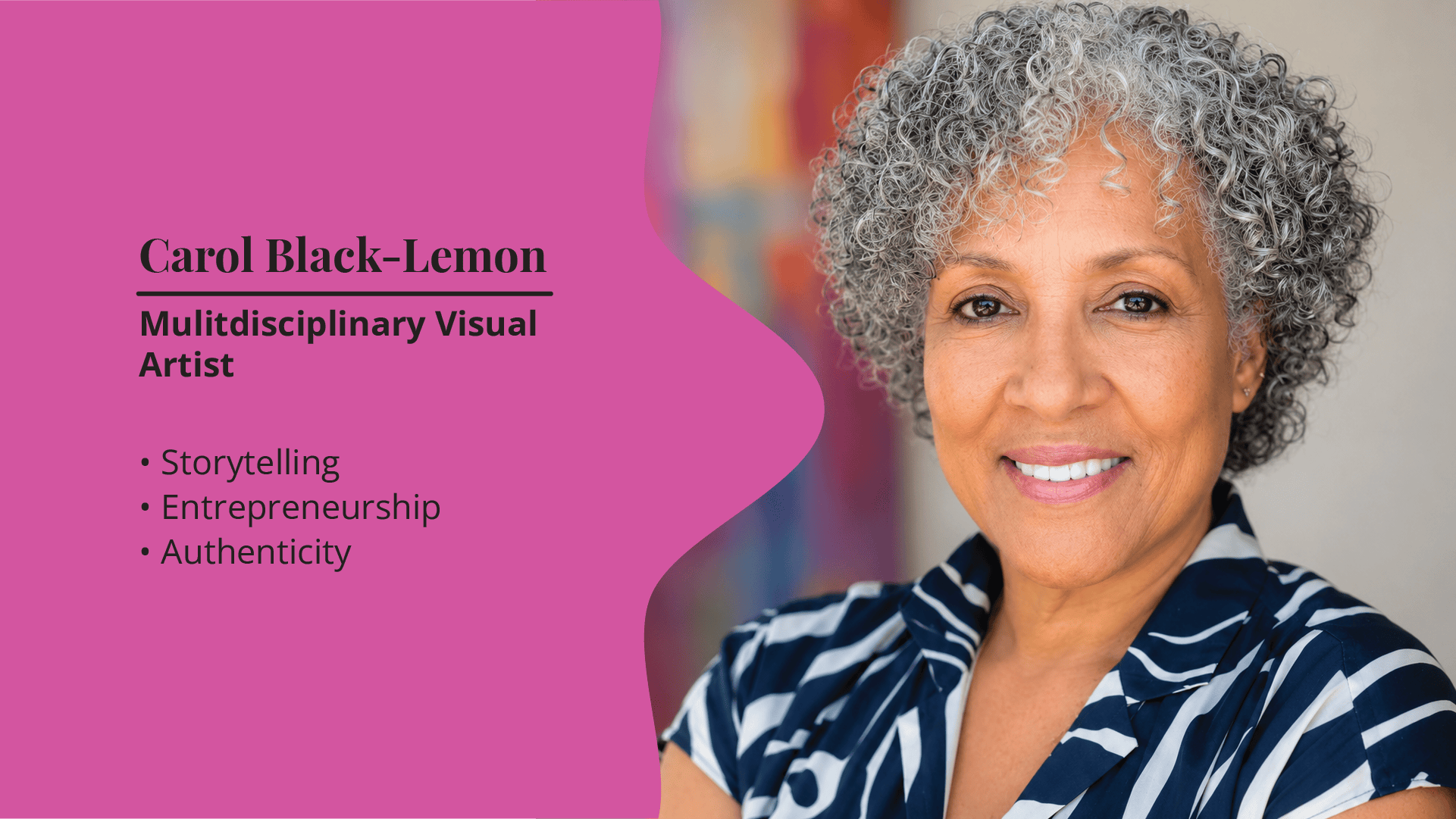
  • Carol Black-Lemon

    Carol Black-Lemon

    Interview

    Transcript

    Carol Black-Lemon 

    Sarah Jane Thomas  00:00 

    Hello, my name is Sarah Jane Thomas, and today we are talking with Carol Black-Lemon, a professional creative working from and within South Carolina. So, as we get started, can you tell us your current career and where you’re from? 

    Carol Black-Lemon  00:12 

    Sure. I’m originally from New Jersey, born in Newark, raised in Brooklyn, and my husband and I retired recently and moved to Florence, South Carolina. 

    Sarah Jane Thomas  00:24 

    Wonderful. Before we go into details of your profession, we have a brief section of the interview called “One Career, Sixty Seconds” where you describe your job in sixty seconds or less, similar to an elevator pitch. And we can start whenever you’re ready. 

    Carol Black-Lemon  00:38 

    Okay. So I consider myself a solopreneur, and that I do pretty much everything on my own. I’ve always been that type of person where I multitask. But four years ago, almost four years ago, I retired, and from my job as a marketing administrator for a law firm. I was there for twenty years, and I built a lot of experiences working on web design and marketing.  

    So now I do that for myself, and my business is Black-Lemon Art, aka Carol Black-Lemon Art, and I am a multidisciplinary artist, where my mainstay is creating artwork and storytelling through my art, and that’s my passion. Always been, always will be, and now I represent a new generation of artists who are at a certain age point, and for me, I’m still becoming, and it’s me letting younger folks know that even when you get a certain age, it doesn’t end. It’s where your passion lies. Just keep going with it, and that’s what life is all about. 

    Sarah Jane Thomas  02:08 

    I love the term solopreneur. I think that’s so fun and exciting. That was perfect. So, what would you consider your official job title? 

    Carol Black-Lemon  02:20 

    Creator. I’m a creator. I just feel very, very blessed to be creating whatever, whatever comes to mind. But painter, for sure, storyteller through my art. I love doing web design. They make it pretty easy today, so I don’t have to get into coding. But I can fiddle around with that as well. And what was the question?  

    Sarah Jane Thomas  02:55 

    I was just wondering what you would consider your professional job title, but creator just sums it all up. So, as a creative creator, is there anything in South Carolina that you feel you bring into your work, as opposed to people who may not live in South Carolina? 

    Carol Black-Lemon  03:17 

    Something that I bring into my work…I would say communicating with other like-minded or other folks that that want to tap into their creativity. I’m all about that. It’s like folks that I know work on nine-to-five jobs and under fluorescent lighting and the watchful eye; they don’t have freedom. They may be in a creative job, which is wonderful, but for a lot of people, they have their jobs that don’t really give them an opportunity to be creative. You have to follow the pattern and the hierarchy and so forth. But tapping into your creativity allows you to find your voice, allows you to be your authentic self. So, I like to help people to do that, and I founded a group called Creative Connection here in Florence, and it was a call out to anyone who wants to tap into that and talk about their creative process. 

    Sarah Jane Thomas  04:33 

    That’s beautiful. Do you think that there was a defining moment in your life that really had an impact on your creative journey? 

    Carol Black-Lemon  04:43 

    A defining moment in my life on my creative journey….it’s a good question. Defining moment….I think I had many defining moments, and which was just letting me know that I can control my creative voice, so I had to find time for that. When I had a nine-to-five and raising a family, it wasn’t just about me. It was about what I have to give to my job, what I have to give to my family. But at some point, I’m like, well, what about me? Who am I? And I tapped into that little girl that was just curious about everything, and so that little girl still lives in me, and I keep reminding myself who she was. And now, I was proud of her, and she would be proud of me that I’m still doing that. 

    Sarah Jane Thomas  05:45 

    You mentioned your own initiative, your own little startup. Do you think that there was a particular project that you worked on that allowed you to express that creativity in a way that hadn’t really been something that you’ve done before? 

    Carol Black-Lemon  06:03 

    I think that might be. There was a point where I was designing my own website, and I went with the DIY. I’m like, okay, I’m that type of person. I’m gonna figure it out, and I really enjoyed it. I had fun with it, and my website was great. And then I thought, “I can do this for other people,” so I looked at some other folks’ websites, some friends, or just people that I knew, and I’m like, “Would you like me to improve your website?” And I did like three of them for free. I’m like, “let me do this so that I can put it on my portfolio,” and that led to a client. So, I said after six months, I’m like, “okay, I’ll help you to navigate it.” Ultimately, and this is going back maybe twenty years now, but that led to fifteen website clients, and for me, that’s why I say I’m a solopreneur. I didn’t have anyone helping me, and by the way, I was doing a nine-to-five job. 

    Sarah Jane Thomas  07:16 

    So, you mentioned this nine-to-five job. So, before you stepped away from that and became a creative strictly in your professional life, did you have any fears about that? 

    Carol Black-Lemon  07:34 

    Yeah, absolutely. I had to learn about just the business setup and taxes, all the accountability what goes with being a legitimate business and calling yourself a business. So, I had to learn all that, and I was always afraid if I was doing that correctly. My fears of starting up is just learning how to prioritize and not getting ahead of myself, and because then I became responsible for other people, and then I learned that people were counting on me. I’ll never forget a call on Easter Sunday because there was something that they wanted on their website, and I was like, “Wait a minute, it’s Easter. I didn’t sign up for that.” But that was when I understood that the criteria that I had to set forth and letting folks know this is a business, and you have to go by these terms and so that was a real learning experience for me to set those guidelines. 

    Sarah Jane Thomas  09:00 

    Was there anything in particular that helped you move beyond these fears? 

    Carol Black-Lemon  09:07 

    Anything in particular that helped me move beyond these fears….what got me moving beyond the fears was this understanding the complexity of ownership and accountability, and that if I were to call myself the boss lady, that I needed to step up and take better notes and just be better at what I was doing, what I was being called to do. So it was that I need to step up. That was like pivoting to the next level of being a professional. 

    Sarah Jane Thomas  09:59 

    Do you have any advice for young adults or students who have an interest in becoming a creative professional and maybe starting up their own business, as you have? 

    Carol Black-Lemon  10:08 

    Yeah, I would say tap into what’s already out there. You don’t have to reinvent the wheel. The information is at our fingertips now. I mean between Google and ChatGPT and Claude, it’s all there. Like, what do I do? They can even build your own website. You know, push the button. There’s your website already. But I’m a hands-on kind of person, and I always want to make sure that if I do use AI to help me, which why not, it’s there. Make sure that it’s at least 80% you and maybe 20% AI, if that makes sense. Yeah, it’s a great tool and it really helps to get things done. But don’t let AI do more of your work than you, and then talking to seasoned professionals and talking to your peers, especially those that are transparent, that are willing to share.  

    There are some folks that they’re not maybe willing to tell you what they use. I’m like, well, those aren’t your people. If I find something that’s working for me, I’m going to tell my friends, “look, don’t waste your time there. This is a better tool.” But talking to seasoned professionals who are doing it, who will give you the real lowdown in terms of what you need? Make good use of your resources. 

    Sarah Jane Thomas  11:50 

    So, you mentioned utilizing AI and utilizing the internet and just like all the information that’s out there now. Do you think that there are any particular skills, either within that or apart from that, that one should practice before trying the same things? 

    Carol Black-Lemon  12:12 

    Right, before trying the same things for sure, and that is having just being more hands-on with your own work in your own occupation, meaning taking notes. Every thought that comes into your mind, some of them are good, and some you need to trash. So, prioritizing your vision for yourself, like what do you need to do right now? And that’s doing your homework. So, and if you’re a student, that’s like the greatest place to be tapping into all the resources available to you. Because at a certain point, those resources and those mentors may go away.For me, it’s organization for sure.  

    Just you know, and there’s a lot of folks [who have it]. I don’t like the term ADHD. A lot of people are like, “I have ADHD.” It’s like if you got a lot going on in your head, there’s a lot of attention deficit because you’re managing so many different things that you are that you have to be accountable for. You’re a student, but you may have a part-time job, and you may have other responsibilities. So, time management is really key. And for someone like me, who’s a multitasker, which I’ve had to tone down. I’m at a certain age right now, and I can’t remember everything, but my mind is still going and going. I wake up with thoughts and ideas, and I don’t want to lose track of it. So having a wonderful calendar, I have this great, beautiful calendar that I use that may even have two years versus an annual calendar and files that I can reference. Organization is definitely key. 

    Sarah Jane Thomas  14:16 

    Well, I want to thank you so much for just sharing your story and your experience and your advice and I really–listening to you talk is it just fills me with happiness for some reason. You have such a way of expressing yourself in a way that’s very genuine, and I really loved it. 

    Carol Black-Lemon  14:36 

    Thank you. I appreciate that. 

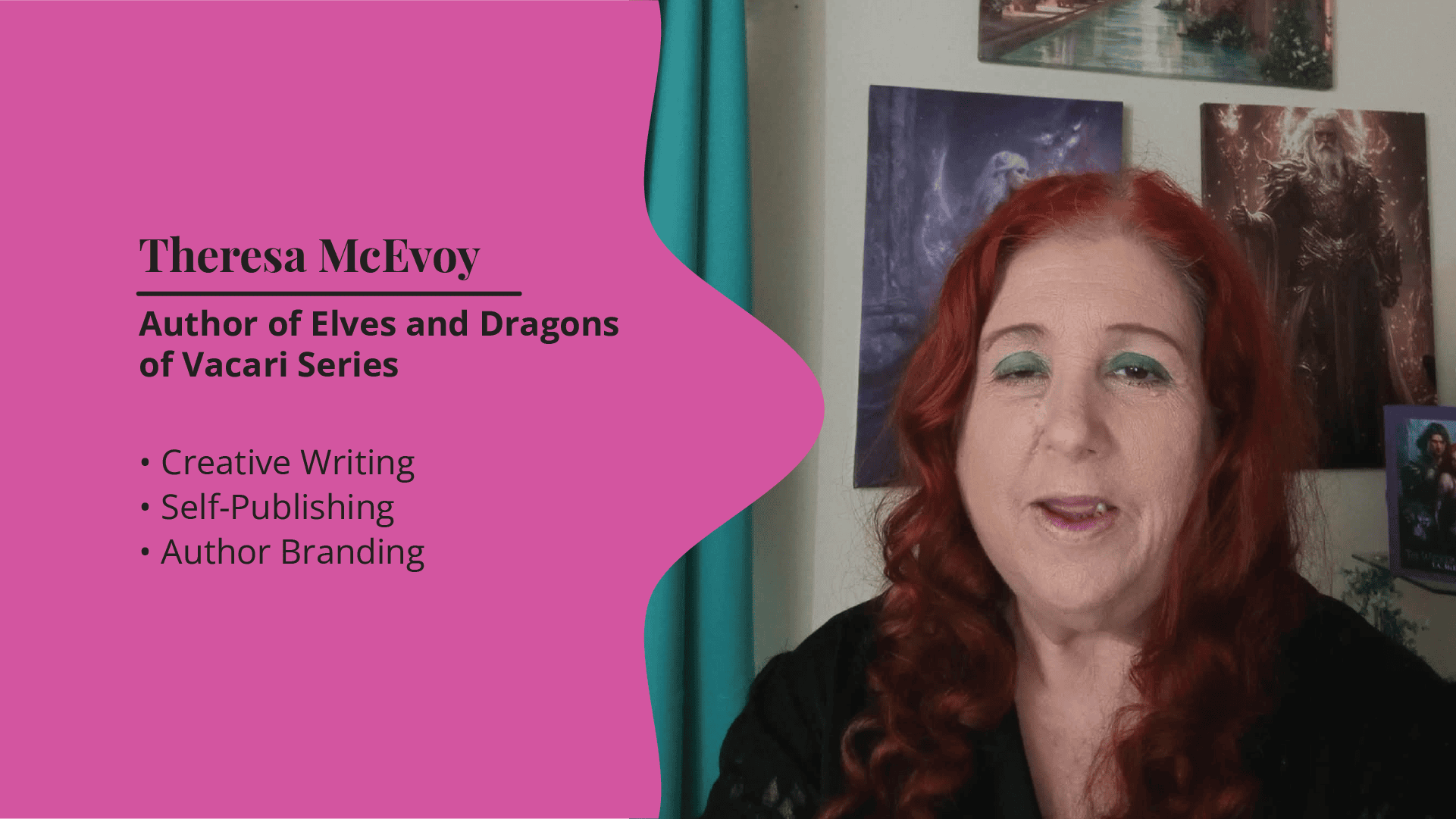
  • Theresa McEvoy

    Theresa McEvoy

    Interview

    Transcript

    00:00 Victoria Bartolotto  

    Hello, everybody. My name is Victoria, and today we are talking with Teresa McAvoy, a professional creative working from and within South Carolina. As we get started, can you tell us a little bit about your current career and where you’re currently located?  

    00:14 T.A. McEvoy  

    I’m in Anderson, South Carolina.   

    I have been writing epic fantasy books for about six, seven years now. I started out as a paralegal and worked, and the legal background helps a lot with your author career.  

    00:33 Victoria Bartolotto  

    Awesome.   

    So, before we get into the details, we have a brief section of our interview called “One Career Sixty Seconds,” where you describe your job in sixty seconds or less, similar to an elevator pitch. Are you prepared?  

    00:46 T.A. McEvoy  

    Yes, I’m ready.  

    00:48 Victoria Bartolotto  

    You can go ahead.  

    00:49 T.A. McEvoy  

    Okay. I am T.A. McEvoy, an epic fantasy author and world-builder , best known for the Dragons of Vicari series. My work combines character-driven storytelling, ancient dragon lore, and interconnected fantasy realms centered on themes of hope, unity, and resilience.  

    Beyond writing novels, I also create audiobook productions, cinematic fantasy content for YouTube, and expanded lore that allows the readers to engage with the world of Vicari.  

    My goal is to create an immersive world where dragons are not simply creatures, but living emotional beings woven into the soul of the story itself. I don’t like them being just beasts.  

    01:42 Victoria Bartolotto  

    That’s great. Thank you so much.  

    01:44 T.A. McEvoy  

    Thank you.  

    01:45 Victoria Bartolotto  

    So as an author, is there anything about South Carolina or Anderson in particular that brings something to your work? I know it’s a fantasy series, but do you ever take some inspiration from South Carolina and implement that?  

    02:00 T.A. McEvoy  

    Sometimes, I do the forest because I have four forests in my books. Of course, they’re not called [the Forest], but they got their own special things like purple fire. But yeah, the forests. I can take the forests or the outdoors. That would be pretty.  

    02:25 Victoria Bartolotto  

    When you decided to start publishing, was there anything that helped you make that decision or was there some sort of defining moment that had an impact on your creative journey?  

    02:38 T.A. McEvoy  

    I’ve always liked writing. When I was in high school, I wrote mysteries and my best friend would read them. She would read all those books, but my dad didn’t think I could make it, so I went into law.  

    But I’ve always loved to write. My mom accuses me of having a vivid imagination. I am a self-publisher because I am very picky on the person who does my covers. Everybody wants these covers like this and that, but I have – no. And if I can’t connect with the cover designer, forget it. But I was very lucky. I’ve had this cover designer I’ve been working with since I started, and she is awesome.  

    03:25 Victoria Bartolotto  

    Can you talk a little bit about the self-publishing industry and why I understand being very picky. I’m a writer myself, so I know how it is to be wanting specific things. Can you talk a little bit more about the decision of self-publishing and how that experience has been for you so far?  

    03:42 T.A. McEvoy  

    For self-publishing, it was easier for me to do it because I knew what I wanted and I knew what I didn’t want. The only thing you can get very aggravated with is KDP [Kindle Direct Publishing] and Amazon because they keep changing their mind.  

    My recommendation is unless you really want to, do not do the KDP Select because they restrict it for ninety days, which means you can’t publish your books anywhere else.  

    I didn’t do that. I went wide. Now, Kobo has it where it’s sort of like KDP, but you can publish it, and people can have a membership there. They can read your book or even listen to your audio book for free, and you still get paid, but they let you do it wherever you want. So, I think Kobo’s a better idea.  

    04:35 Victoria Bartolotto  

    I know you mentioned having a book cover designer. Can you talk a little bit about the process of editing your novel and going to somebody and freelancing people to help you work on your books?  

    04:50 T.A. McEvoy  

    Most of the editing I do myself, but I have like seven stages of editing, so it takes a while. They’re broken down into dialogue, world building, and grammar. That’s what was OK for me.  

    I don’t know about some people. I have a background in legal, so of course I’m very critical. Whenever you’re doing motions and stuff, they have to be critical. So, you’re going to need to be so critical.  

    But you can do it. Now sometimes some people do need an editor because they don’t catch the spelling or the grammar. It’s one thing, but you can do it pretty well on your own. I would, though, except not for a book cover. I would never do it. Never. I don’t know how. My book cover designer is awesome. She’s really sweet. I will give her an idea, and she’ll give me four or five ideas. Then I’ll say, “well, can you take this one and put it over here?” And she’ll say, “let me see,” because she’ll do it.  

    06:00 Victoria Bartolotto  

     That’s great.  Because I know in comparison to self-publishing, traditional publishing, you don’t get as much of a say in your cover or your editor or, you know, the specific nitty gritty details of something that self-publishing would give you. I understand that you have a lot more freedom in it.  

    06:23 T.A. McEvoy  

    It can be, a little. You also have to learn how to do your marketing and stuff. But that’s where I say AI works good for marketing. Do not use it in your books, but you can use it for your marketing. I’m real picky about writing like that. No, that’s where your imagination has to come in, too.  

    06:47 Victoria Bartolotto  

    So, having a legal background, you said you did paralegal work. What was the, I guess, motivation behind wanting to switch from legal work to creative work? And if you had any fears about doing that and kind of transitioning, and if there was some sort of fear, what inspired you to continue beyond it?  

    07:10 T.A. McEvoy  

    Well, partly I stopped working, and we moved from Texas to South Carolina. My mom is bedridden, so I’m a caregiver. A lot of that has to do with making sure she’s comfortable. I can be there whenever she needed me. I’ve always loved writing and she always got mad at me for not writing. But I was afraid when I first started writing that nobody would like my books. My first series was just about the elves. The dragons came into it but, I went into the Dragons of Vicari, and I’ve always loved dragons. Not like how most people want to make the dragons into beasts or, shall we say, glorified mouths that carry on from point A to point B. My dragons have personalities.  

    08:02 Victoria Bartolotto  

    That’s great! Do you have any advice for students or young adults who want to pursue becoming an author? Is there any interest, do you think, that they should have or any kind of programs you think they should look into?  

    08:18 T.A. McEvoy  

    Well, I would definitely tell them to look into critical writing because critical writing will help. Also, you better love to write and find a genre you love to write in. I know some authors go from one genre to another, but I stay with everything. Find something that you really love to do.  

    And then be very careful after you publish your first book, because all these people are going to say, I can do this. I can do this for you. Ninety percent of them are just scammers. So be very careful.  

    08:53 Victoria Bartolotto  

    Thank you so much for talking with me. I really appreciated it.  

    08:56 T.A. McEvoy  

    It was nice meeting you.  

    08:58 Victoria Bartolotto  

    Yes, it was nice meeting you as well. Have a great day.  

    09:00 T.A. McEvoy  

    You too. Bye-bye.  

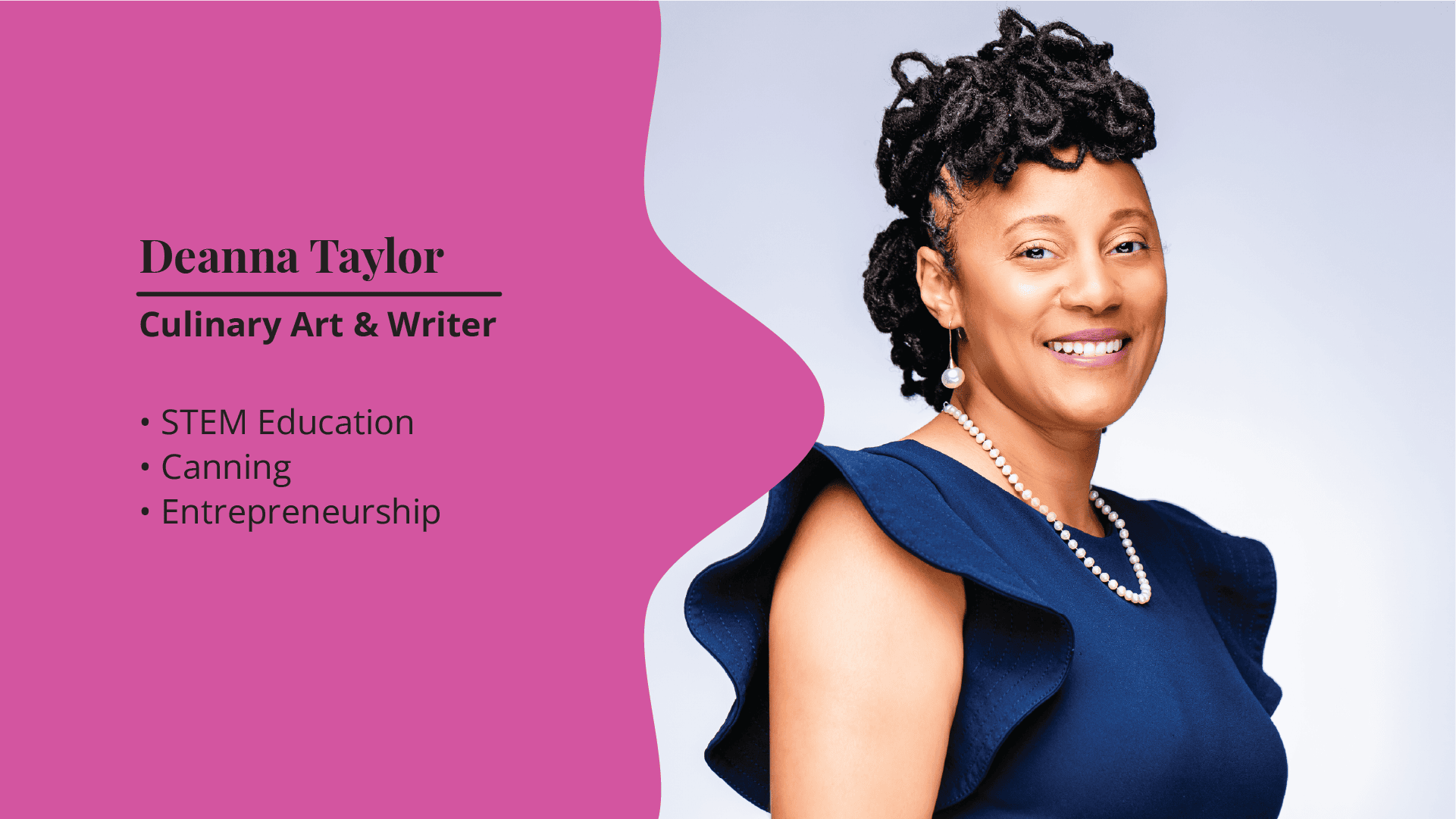
  • Deanna Taylor

    Deanna Taylor

    Interview

    Transcript

    00:00 Victoria Bartolotto 

    Hello everybody. My name is Victoria, and today we are talking with Dr. Deanna Taylor, a professional creative working from and within South Carolina. As we get started, can you tell us about where you’re from and what your current career is? 

    00:13 Deanna Taylor 

    Yeah, so I’m originally from Georgia. I grew up in a little place called Kenneth Hall, Georgia, and I am currently working in out of Camden, Kershaw County, South Carolina. And my career, I am a consultant, and I work in the room of Creative Arts Education and Wellness. 

    00:36 Victoria Bartolotto   

    Before we go into the details of your profession, we have a brief section of the interview called “One Career Sixty Seconds,” where you describe your job in sixty seconds or less in an elevator pitch style. Are you ready? 

    00:49 Deanna Taylor  

    I’m ready. 

    00:50 Victoria Bartolotto 

    All right, let’s start. 

    00:52 Deanna Taylor  

    Okay, so I started in eighth grade, and I really loved science. I moved through my career into science, and so now I focus on STEM learning through creative arts, mostly in the realm of making jams, jellies, and preserves, and attaching that to the way that people move through life and are coached. There’s also a little realm of taste testing in there and adding in the element of matching their taste test and what kind of fruit and preserves they like to what their business career or their coaching style is like as well. 

    01:32 Victoria Bartolotto  

    That’s so interesting!  With working in the culinary arts, specifically with preserving, is there anything about South Carolina, in particular, that is unique to preserving, or does it have some kind of influence on you? 

    01:47 Deanna Taylor  

    Yes, so I actually use only locally grown fruits, and those are harvested from my backyard. The tie to South Carolina is that I use pears, figs, and muscadines, and muscadines are really known for growing in the South. As a matter of fact, some of my clients don’t even know what a muscadine is. So, giving them the cultural piece of how it came to be here in South Carolina is one interesting piece.  

    The other part is I harvest the fruit from my backyard and then the neighbor’s backyard. So, my grandfather got me into looking more at the locally sourced fruit, because he started sharing the craft and everything with the people at his church. So now we harvest the fruit from people’s backyards, mostly his elderly neighbors and folks that aren’t able to get into the backyard, to get the fruit. We salvage it from going to waste, and then I turn that into jams, jellies, and preserves, and we share that with the community. I give some back to the neighbors as well. 

    02:50 Victoria Bartolotto  

    I know you mentioned in the form that you filled out that you started preserving over quarantine and COVID. Can you talk a little bit about that, and how that story puts you on the trajectory to be where you are now? 

    03:04 Deanna Taylor  

    Yes, so I moved to where I am now. I moved to Kershaw County in 2020 during the height of COVID. I was about six to seven months pregnant, and we moved to this space where it was like room for growing all these fruits and things, and I noticed that the squirrels and the birds were having a good time eating up all the fruit.  

    My grandparents taught us, and instilled, you do not waste food. You don’t throw anything away; you do not waste food. I grew up in that era where you know you saved everything; scraps and all of that. I started going back to my roots of asking my mom, my grandma, “Hey, y’all used to teach that canning thing, or y’all used to try to get me to do that, can you teach me again, because I want to pay attention now.” 

    So, I got into it because I wanted to save some of the fruits and not have things to go to waste. Then I just started with taste testing and letting neighbors and friends and family members taste the preserves and things, and then kind of progress from there. Now people request them on a regular. Folks have been asking for new flavors. I’m like, “Yeah, we gotta see about that one.” 

    04:17 Victoria Bartolotto 

    I know you also mentioned that you have a book that you wrote. Can you describe the process of going from doing the physical making of canning and preserving, and how you kind of put that down onto the page, possibly? 

    04:32 Deanna Taylor  

    The canning process, even picking up the fruit, is more about family and community, and bringing all of those elements back into the kitchen. Making it relevant for the generation that we have now.  I mentioned earlier that I was pregnant, and that was our second child in 2020. So, I have little people at the house that are also involved in the process. They help pick the grapes and wash the pears. To me, the book was looking more into those family connections and making sure that the kitchen is a place where it’s a lab. You’re in there experimenting; you’re trying things out. You’re seeing, “Do the kids like this? Do you like this? What kind of herbs things are you going to put in there?” So, the cookbook is actually a cookbook and a text. 

    My colleague and I collaborated on it and worked on it together. Her name is Dr. Regina Seifra, and it’s a cookbook. It’s a text, because we wanted to bring outdoors and like the growing process and bring it and put it on a plate for the children. There’s activities in there where let’s say, for example, in one chapter they’re going to create their own herb garden, and then they kind of plan ahead for the recipes and they grow the herbs that they’re actually going to use in the recipes and the food for later on. So, making a connection for them between growing and what you’re eating on your plate; that you can actually go through the experimenting phase and figure out what it is that you like and what you don’t like, and how things get there. 

    06:14 Victoria Bartolotto   

    I feel like that’s such an important story, even for like adults now just figuring it out. A lot of people don’t know where their food comes from. Learning about that process, I think, is something that a lot more people should know. So, you do this full-time. Was there any kind of moment in your creative journey that solidified that you needed or wanted to do this full time, or was there something that really kickstarted you into this, other than COVID? 

    06:46 Deanna Taylor  

    I would say my children. I have been in education for over twenty years, and I have done all kinds of studies, and I’ve worked in different settings. However, making sure that what I’m doing is bringing me joy, and being able to integrate what I do with what the children do has been one of those things. I’m not going to go the traditional job route, I’m going to move more into this creative space, more into the space where I can bring them to work with me.  

    How many children ask, “Mommy, can I go to work with you?”  My kids really like it. They enjoy being able to even get on a video camera and tell out the process. Like, “Okay, Mommy, first we pick the grapes, and then we do this.”  

    So going through the process and learning the names and being able to teach them is something that I wanted to be able to do. That pushed me, or pivoted me, into the space of being able to bring the real world to life for them and wanting other children to be able to enjoy the same thing, 

    08:02 Victoria Bartolotto  

    Yeah. Wow, that’s really sweet. Before thinking about doing this full-time, did you have any kind of fears about entering a creative industry that isn’t well known as a lot of other industries are? Was there anything that might have held you back from doing it full time? 

    08:19 Deanna Taylor  

    Yes, so I was leaving a position that had state benefits and all the things. So, jumping into it, I will say one of the fears was of failing or not being successful, but I had to learn to define success for myself and what that looks like.  

    Then also learning that just like I learned with my science degree, I may not be explicitly using that right this moment, but just like I learned with that degree, if you try something, you can tweak it and then make it better. Your business, and even with a business, doesn’t have to stay and do the same thing year in and year out. Although some businesses are well known for doing their own thing. On the creative side, if I do the same thing over and over, I don’t think I would have much of an audience.  

    To me, it brings the spice piece in, just like I have spices in my pear preserves, or whatever. I need a little cinnamon, I need a little all spice, if I put the same thing in plant and just pears by themselves, no offense, but in a jar of pears and nothing else, you need a little something to spice it up. I think jumping in scared and also knowing that there’s other avenues and ways and pivots that you can make within a business. That it’s fine, it’s okay, you’re being creative with multiple things, not just your actual medium that you’re using to express. 

    09:52 Victoria Bartolotto  

    Do you have any advice for young adults or students who possibly have an interest in starting their own business or jumping into something new?  Are there any particular skills or knowledge that they should have before entering either the preserving industry or just something creative in general? 

    10:09 Deanna Taylor   

    So, I would say my piece of advice is to stay true to you. Be authentic in what you do, because that’s what sets you apart and kind of makes it. Yes, there are tons of people out there making preserves. There are tons of people out there creating with their hands, creating with their minds, voices, whatever. But there’s something about you that makes you unique. So, focus in on that part and let that part shine through.  

    I don’t think there’s many people, at least I haven’t found any, that has an education and human resources background that now makes jellies and jam, so I kind of blend those things together.  

    Using that unique advantage and using it to your advantage, to speak to the world and to make something that you love and enjoy doing. Family is also very important to me, so sticking to those values and things that are important. Yes, making money is great; it pays the bills, but being happy in what I’m doing, actually bringing joy to other people, and telling my story is something that is priceless, for lack of a better word.  

    I was trying to find something that wasn’t so cliche, but it’s good, I’m going to use it. So that’s the advice I would say: be true to yourself, be authentic, do your thing, and like let that thing that makes you unique kind of make you shine, and go for it with that. 

    11:39 Victoria Bartolotto 

    Yeah, thank you so much. That was amazing, and I appreciate you taking the time to speak with me today. 

    11:46 Deanna Taylor 

    Okay, you’re welcome. Thank you very much. It was great meeting you, Victoria. 

    11:49 Victoria Bartolotto 

    It was nice meeting you as well. Have a great day. 

  • Paul Mento

    “Read, read, read. Novels hold a wealth of knowledge, experiences, and creativity.” 

    Quick Facts

    Education: Undergraduate School

    Years of Experience: 37 Years

    About

    A producer, writer, and director at Silver Hand Productions, Paul Mento has been tinkering with the camera since elementary school. As his passion turned into a career, he primarily works with documentaries, short films, and commercial media. Mento’s documentary, “Howard Pyle, and the Illustrated Story,” was recently accepted by the George Lucas Museum of Narrative Arts in Los Angeles.  

    Originally from Wilmington, Delaware, he initially became interested in shooting Super 8 films, borrowing his father’s equipment. “I was part of Explorers in high school, which had a program that centered around advertising and media,” he says, “I was immediately hooked.” 

    What captivates Mento about filmmaking are its interdisciplinary roles, all working towards one project. In addition, he is inspired by the involvement of multiple skills across the team, from researching to camera operation. He encourages aspiring filmmakers to read and engage critically with literature, for it can serve as a springboard for ideas. 

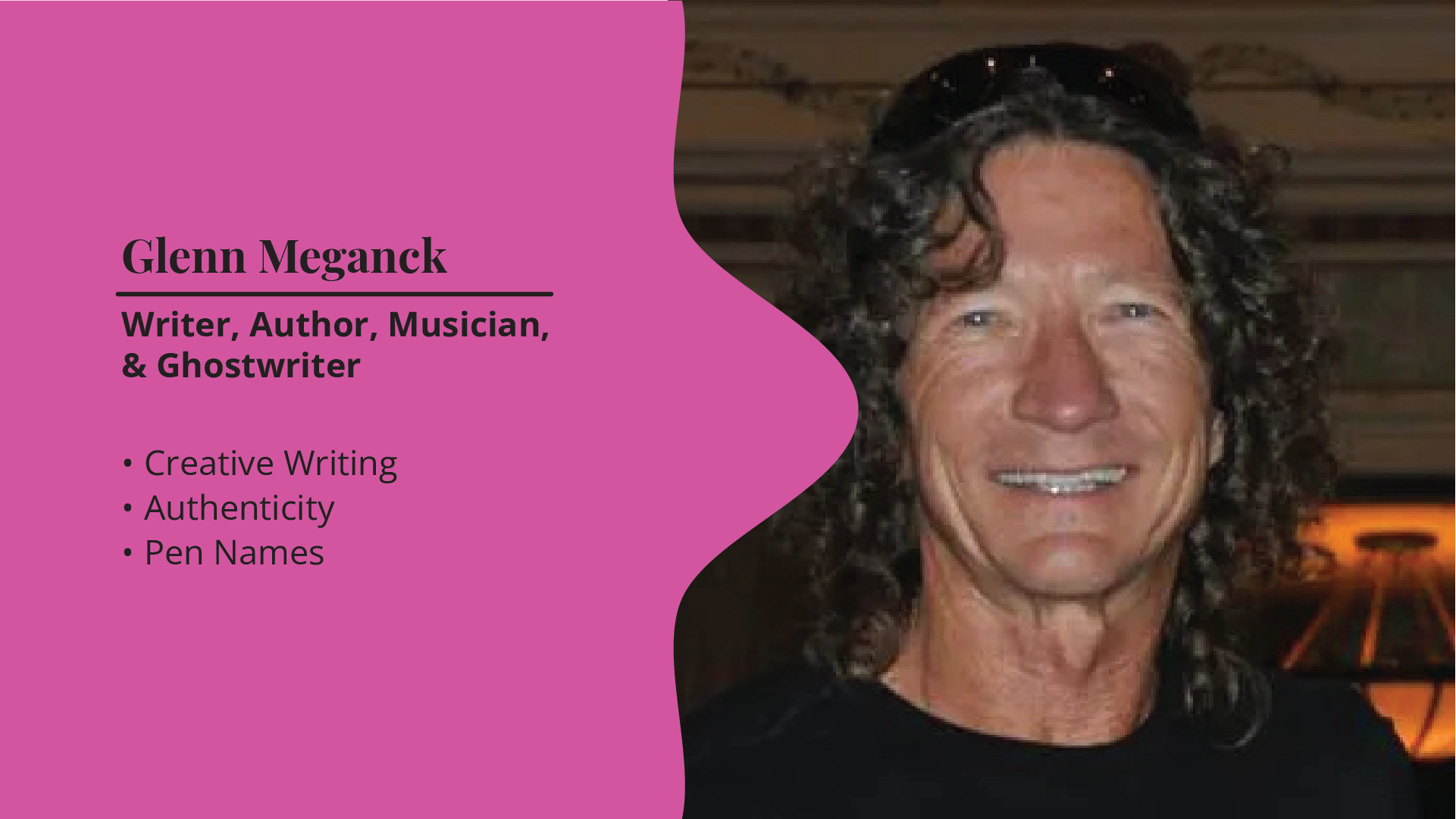
  • Glenn Meganck

    Glenn Meganck

    Interview

    Transcript

    00:00 Victoria Bartolotto 

    It’s okay. To start, could you do the favor of introducing yourself? Spell out your name, tell us where you’re located currently. And yeah, we’ll start there. 

    00:10 Glenn Meganck 

    My real name is, that I rarely use is Glenn Meganck. And right now, I’m in Chapel Hill, North Carolina. 

    00:20 Victoria Bartolotto 

    Okay. Can you tell us a little bit about your job? I know you do multiple things, songwriter, ghostwriter, author. Can you just tell us just a little bit about what you do and what you specialize in? 

    00:35 Glenn Meganck 

    Well, that’s it. Every day I do some writing and some music. Both are equally important to me. So, I tend to write every morning, seven days a week, and then switch to music at some point in the afternoon, and work on more songwriting and recording and that sort of thing. I’m always working on at least two or three novels at a time, it seems, these days as well, under a lot of different genres. So, there’s no one kind of thing that I do in terms of that. 

    01:07 Victoria Bartolotto 

    I know one of your books, “Booking a Killer Vacation”, is set in Myrtle Beach, South Carolina. Is that correct? 

    01:16 Glenn Meganck 

    Yeah, that’s a J.R. Ripley book, and that’s more like a light mystery, which I do a lot of those. I did a bunch of them in a very short period of time, and now I just do a few here and there, but…  

    It was something I had never done before, and then I just sort of fell into it for a couple of years where people were asking for them, a publisher. And so, I ended up doing about, nine a year for a few years. Kind of cranking them out until I got kind of tired of it, because it really wasn’t what I did. I really didn’t even know the genre at all. It was like, “oh, I better read some of those and see what they do.” 

    02:01 Victoria Bartolotto 

    Can I ask specifically about that book? What about South Carolina or Myrtle Beach itself drew you to that specific location? What did you think was unique about it that you were like, “yeah, this needs to be set in South Carolina?” 

    02:15 Glenn Meganck 

    Well, for that genre, of these sorts of cozy light mysteries, that are amateur sleuths, right? So the setting is important. You want someplace unique and that makes sort of like its own little world that can be fun and has enough interesting things going on. Not necessarily a small town, but most of them are in a small town. I mean, there are a few that are probably in New York City that people do, but in general, they tend to be a either real, a fictionalized version of a real town or again, just something you make up or use like Myrtle Beach. I like Myrtle Beach and I’ve been there a lot. And it was a good setting. And I just finished a couple more of them. And it has a nice vibe.  

    I love music. I mean, I’m a musician. So, the next one, when I finally got back to doing more of them, the next one, which comes out in, I don’t know, a couple of months, maybe, that one involves music as well. And of course, in the Myrtle area, there’s lots of live music and bands that come through and theater. So I was able, in the ’60s kind of music and stuff, so I was able to incorporate that. Then in the third one, which I wrote already as well, but I don’t know when that one comes out, but that one involves more surfing. So, it has people surfing yeah, so. But yeah, it’s just a fun place. And because it’s a place a lot of people know and have been to, at least in this country, and lots of tourism. It has a lot of interesting characters too, the kind of people that come there and the partying and then the motorcycle events and things like that too.  And yet it’s a small, sort of a small town feel in and of itself, you know? 

    04:10 Victoria Bartolotto 

    Definitely. Overall, throughout your creative career, was there a defining moment that you can think of that led you to wanting to become an author or wanting to do kind of multiple pen names? Was there anything that really stood out to you when you were like, “yeah, I want to be a writer? Yeah, I want to pursue this kind of career?” 

    04:34 Glenn Meganck 

    The writing and music, I’ve always been since the youngest that I can remember. I loved to read. I didn’t grow up in a household where reading mattered or music. I mean, my grandparents loved music and played, but my parents weren’t into music, didn’t play at all. They listened to country music, but they didn’t play any instruments and nobody read books in my family except me. And, I always wrote whether it was writing poetry or whatever, when I was a little kid. And I always wanted to learn the piano and then the guitar and whatever so I just kind of started on my own with all that. And it’s just sort of like a compulsion. I’m not happy or satisfied if I don’t do it.  

    The pen names is because when I started out getting published, I remember I was still living at home. I was young. One day I was home alone and, at my parents’ house, and a girl came knocking at the door and wanted to meet me because she’d seen an article about me in the paper. It just freaked me out, you know, and it was a book that came out under my real name. And I hadn’t thought about it at the time. This was when I was living in Florida. It just freaked me out that people knew who I was. And so, I liked the idea from then of using pen names, because I like being anonymous.  

    So, I’ve done a lot of books and a lot of music where, and for the longest time it was new book, new name. New record, new name. Just so nobody would ever know who I was because I like my privacy. So, I’m still not keen on a lot of that. I know, especially these days of social media and everything, it’s kind of hard to remain anonymous. And of course, publishers or music people and whatever in the business, they don’t want you to be anonymous because that doesn’t sell, it’s not good for business. It’s not good for your career. In a perfect world, I would be completely anonymous. 

    06:54 Victoria Bartolotto 

    Yeah, I can relate to that a little bit. I’m a writer myself. I’m in school to become a writer and I’ve been thinking about pen names and things like that because, like you, I really don’t like people in my privacy, especially with, like you said, social media. Everyone wants to know who you are. Everyone wants to know everything about you. And it’s like, that’s not how it should be. Celebrities are people too. 

    07:20 Glenn Meganck 

    Exactly. I’m not in it for that. I don’t care about celebrity stuff. I don’t care about other celebrities. I don’t care. I mean, for a long time I lived in LA full of celebrities and the gym I would go to was full of all these really well-known people in every aspect of the arts, especially, actors and musicians and writers. I mean, because it was in this little studio in this area of town where they all went, and that’s where I happened to live and go too. But it didn’t mean anything to me, and I just wanted to be left alone.  

    And when I would go to the gym, I never talked to anybody. I always felt like, I always feel invisible, that nobody sees me anyway. I can just come and go, and nobody notices me. And then one day in the gym, a woman came up to me and said, “my friend is afraid of you.” I thought, “huh?” I never talked to anybody. And she said, “yeah, you come here every day. You never look at anybody. You never talk to anybody. You’re just kind of freaking her out.” So, I said “I didn’t even know you saw me, I just feel like I’m a ghost.” 

    And the other thing, for you as a writer, what evolves though, uh, with the writing. What kind of writing do you do? Do you have any preferences? 

    08:43 Victoria Bartolotto 

    I’m very into historical action, very much like treasure hunting. I love any kind of contemporary story that involves history, that involves big impacts on the world. Right now, I’m currently writing a treasure hunting series that takes place in Key West. So I’m super excited about that project. I’ve been thinking about it for so long. So, I really want to go in the direction of kind of this contemporary adventure that isn’t so much commercialized. I feel a lot of things are, especially commercialized fiction nowadays. I feel it’s so quick and rapid and not deep, if that makes sense. 

    09:27 Glenn Meganck 

    Oh, sure. I mean, the market right now, because the people who run the business, they’re business people. They’re not the kind of people who, when you read about the days when Hemingway and stuff was writing, where the editors really loved books and cared about books. Now they’re just marketing people and that’s all they care about; how many followers you have. Whatever kind of book succeeds, they just want more of those. So, it’s tough. But so like with yours, I mean, so you have historical elements in it too, or just more of a modern day? 

    10:04 Victoria Bartolotto 

    It has some historical elements. I did a lot of research on this one fleet of Spanish ships that went down in the Keys, and there was someone who went and found all the treasure in that, fleet. One of my questions was, for the novel to take place, because it is obviously fictionalized. I don’t want to just pull directly from history and do whatnot. But one of the questions I had was, “what if there was a third ship?” Because there were two that went down. And so, I’m like, “what if there was a third ship with a secret treasure on it that no one knew about?” And it draws from some people who actually lived in Key West. It draws from this one guy who actually owned it at one point before America bought it. Not Mel Fisher, I know who that is and that’s who like found everything. I actually went to go see his museum there and I did like the whole walkthrough which was an amazing experience. 

    11:05 Glenn Meganck 

    I’ve met him in the past a long time ago yeah. 

    11:07 Victoria Bartolotto 

    Oh really? Oh wow! That’s cool! 

    11:10 Glenn Meganck 

    Because he lived in Florida so I met him there, yeah. 

    11:15 Victoria Bartolotto 

    Yeah, kind of just really want to incorporate the history of Key West and how it kind of became the kind of big tourist spot that it is now. Maybe draw a little bit of attention to how it’s not just a tourist spot. There’s actually a lot of history here that no one really knows about. So that’s kind of my goal with that novel, with that series. 

    11:37 Glenn Meganck 

    So that’s it, you’re planning it as like a series? 

    11:40 Victoria Bartolotto 

    Yeah, I want it to be a three-book thing. 

    11:43 Glenn Meganck 

    Yeah, that’s a good way to look at it. Anyway, again, my advice is because I remember sometimes, again, when I was starting, you’d write a book and you’d think “that’s it, that’s just all I want.” But then the publisher would want more. And like, wait, there can’t be more. I mean, that was the end, but they wanted it to be a series because it did well enough and they liked it. 

    I had thought, well, I boxed myself.  Where am I going to go? How am I going to do that? But you find a way. Now, whenever I do a book that even as a standalone, I always tell myself, leave some room that it could be a series. And then to get back to your point again with the pen names, though, the way it develops too, because of the business side of it over time as it’s become harder and harder and tighter and tighter and more labels become more important. 

    So certain pen names and most of the names I use are just ones that I can’t say anyway, even though they’re pen names or names that publishers asked for. I do the ghostwriting too with other authors. But so, if you have a certain name, for a style of book that you do, then if I write a book that’s like the, what was the one you said, the Myrtle Beach one? I forget the titles because I write so many books in a year. But the Myrtle Beach series, when you write a book like that, and then you say you write a book that’s more like Carl Hiaasen kind of novels, which are kind of Florida thrillers, but there’s a lot more sex and violence and all that kind of stuff. Well, you can’t very well do that under the same name because it’s a different audience, they’d be offended by the language or whatever. So it’s better the publishers would rather that was under a different name.  

    So your name sort of becomes your label. They know you’re buying a certain name that they’re going to get a certain kind of book, right?  If you buy a James Patterson book, you know what kind of the vibe and feel and language are going to be, right? Or if you buy a, I can’t think of anybody modern. I mean, but they’re a lighter novel or someone who writes literary things. 

    The business just expects you to stay within that. And the bookstores, they don’t want a cozy mystery by someone who writes hard thrillers. Well, no, that’s not going to fit or that doesn’t sell. They’re looking at that name. They would rather have it under a new name. than the other name, even though people know that name. They would rather you start with a fresh name. So, the little things of the business that come up that, you know, for better or worse, that’s the business. 

    14:40 Victoria Bartolotto 

    With changing up the names, because every time you take a new name, you kind of get a fresh blank page, fresh slate. Is there any kind of fear that comes up that maybe the project isn’t going to work out or maybe dipping into this genre isn’t going to be received well? Is there any kind of fear or something around that that you experience? 

    15:02 Glenn Meganck 

    Not for me, because I don’t care. I mean, I do what I like to do, and it’s all I’ve ever done, you know? So even within a certain genre, if I don’t like it, I’m not going to do it, and I don’t need to do it. So, I don’t do it for the money. I don’t do it for fame, clearly. I just do what I feel like writing, and it has to excite me. It has to make me want to sit down the next morning and do some more of that and have it in my head like you, you’re a writer you know, so it’s in your head. 

    You couldn’t pay me enough to write something I didn’t want to write. And whether it succeeds or not in a genre, again, I’ll get asked to do things and I can’t go into them because they’re for other well-known authors. But, in genres that I don’t necessarily write in, they’ll say they’re stuck and, “oh, can you help me?” And I don’t really want to, but people ask and it just becomes, “oh, fine, I’ll help you.”  

    Then it’ll often be where I have to research the genre a little bit. And then even then I’ll kind of twist it to the way I see it, like one that I just recently doing with, again, a bestselling author, but I thought, when he first asked me to do it was because he felt like he couldn’t write the next one. I said, “yeah, no, I’m just not the right person and I don’t want to write it, it’s just not my thing.” And I said, “you went too dark and that kind of violence. I just don’t gravitate.” And he said, “well, don’t make it like that. Make it sound like me but make it like you too. And you can make it what you want.” 

    Ah fine. I just try to always truck myself out of jobs. So, things succeed. I’d rather write what I like and have 10 people like it than write something I don’t like and have a million people like it. You know what I mean? Because I would. And I would be out of it and I’d feel like I’d cringe. So, I worry about failure if I’m happy, though I’m never happy. So that’s different. 

    17:11 Victoria Bartolotto 

    As we kind of wrap up, do you have any kind of advice or skills that you would give to college students like me or people in high school that maybe want to pursue becoming an author? Do you have any kind of advice to give to those kinds of people? 

    17:25 Glenn Meganck 

    Well, just kind of what I was saying. I mean, write because you love it. Don’t write because you think you’re going to make money. Don’t follow the trends. Just write what you love because you’ll find your audience. It’s easier now in some ways because you can always self-publish, indie publish, whatever, and get started and get your name out there. So instead of trying to be like everybody else, which is how I feel about life in general. There’s an old song called “Dare to be Different”. And that’s how I think. Don’t be afraid to be different. Don’t be afraid to say what you feel.  

    And another thing people get into when they write their first book is they hold back because they feel, well, “I can’t put too much in it because what will I write about in the next book?” Don’t worry about it. Just throw everything. It’ll come. And for me, and again, this is just my advice. Plenty of people will tell you different, but for writing and music are two things that I absolutely love. And just, I mean, I can’t live without them. I do them every day just because I can’t not do them and I’m not satisfied if I don’t. But they’re also the two things I would never go to school for personally, because I don’t want anybody else telling me how to do it.  

    Isaac Asimov, when people would ask him, how do you write a novel, he would say, write a million words. I mean, all these people, they would say, don’t go. I mean, all you’re going to learn is how someone else did it. If you want to be unique, do it your way. Just don’t worry about the rules or whatever anybody else tells you. Just go figure it out your way. And that’s, that’s what I’ve always done. And whether people like it or not, I mean, I don’t care. So it all worked out okay for me anyway. 

    So, I mean, I had a friend who, her father, an old girlfriend, whose father, he had been in World War II as an American soldier. And when he got out, he wanted to be, he was an artist, a painter, and a writer. And they decided to stay in France after the war. And the mother taught at an American school. And he would paint in the summer and write in the winter. Never sold anything. Couldn’t sell a painting, couldn’t sell a book, couldn’t sell anything, right? Until he was about, let’s see, I would say he was 55 or 60 years old. And then out of the blue sells a book for half a million dollars. And took off from there. They made some movies, some other books, but I mean, he just kept doing what he did. And he again, did it under a pen name because he didn’t want anybody to know who else. And he wanted to paint under one name, do his books under another name, and have nobody know any of the names. And when he died, he had a huge warehouse with full of thousands of paintings because he didn’t even want anybody to see him or make them for sale at that point. He just thought, oh, I don’t need money now, so I’m not even going to try to sell them, right? He just hoarded them all.  

    20:23 Victoria Bartolotto 

    Thank you so much for taking the time to talk with me today. 

    20:32 Glenn Meganck  

    Yeah, thank you. 

  • Glenn Meganck

    Glenn Meganck

    “Write because you love it. Don’t write because you think you’re going to make money. Don’t follow the trends. Just write what you love because you’ll find your audience.” 

    Quick Facts

    Years of Experience: Over 25 Years

    About

    While he is known by a variety of aliases, Glenn Meganck is an author, ghostwriter, and musician. With an interest in piano and poetry as a child, the love for creating is what fueled Glenn’s passion for pursing the arts as a full-time career.  He dabbles in a bit of everything, from writing light mystery novels to rock songs, and maintains an important balance of creation between them all. 

    As his books span across multiple genres, Glenn is an advocate for the use of pen names in order to differentiate his work personas from one another, as well as direct the audience to what kind of book they are reading. “Your name sort of becomes your label,” he remarks, “They [readers] know you’re buying a certain name that they’re going to get a certain kind of book, right?  If you buy a James Patterson book, you know what kind of the vibe and feel and language are going to be, right?” 

    Even though he has been immersed within the traditionally published world for a long time, Glenn also highly regards self-publishing, as it can be more accessible for authors to get their work out and into the world than traditional publishing. 

    He stresses the importance of writing for passion rather than for money. “You’ll find your audience,” he says. “Instead of trying to be like everybody else…don’t be afraid to be different. Don’t be afraid to say what you feel.” 

  • Marlanda Dekine

    Marlanda Dekine

    “Take your time.” 

    Quick Facts

    Education: Graduate, Furman University, University of South Carolina, Converse University 

    Years of Experience: 20 years

    About

    Marlanda Dekine is a Listening Poet, lending herself to write, publish, and read aloud poems. As a child, Marlanda wrote poems to process difficult emotions, and while she attended Furman University, participated in her first poetry slam. She highlights poets like Saul Williams and Patricia Smith, crediting their readings as models for her own performances. 

    As a Listening Poet, Marlanda has opportunities to collaborate with artists across all mediums. She emphasizes the importance of creating as often as possible and practicing without external validation. Marlanda advocates for professional workshops with other writers in order to “stretch your ideas of what is possible,” and insists on only keeping the feedback “that makes your work better.” 

  • Quwana James

    “Continue to be creative in your field by not stopping. Keep writing and performing. That is what makes you a poet, storyteller, writer, and performer. Start by starting.” 

    Quick Facts

    Education: Graduate School

    Years of Experience: 10 Years

    About

    Quwana James started writing and never stopped. That is how she describes it, because simplicity is the point. Her poems are about everything, always from an adult perspective. Every poem and short story rhyme to attempt to make the best sense of the world around her. With a decade of experience, Quwana continues practicing her craft of adult poetry and storytelling. 

    Working as a licensed professional counselor and a poet, Quwana’s two lives are not often in conflict. Counseling adds to her writing a depth of attention and care, coming from spending her days listening with intention to people. She brings that same quality of presence to her craft. 

    She is currently working on her first poetry book, due out in the fall of 2026. It is the next step in a quiet and consistent process that she has been building, which reflects her belief that becoming a storyteller is simple: do not stop. Quwana emphasizes that waiting to feel ready or until everything is polished is a feeling that should be avoided. “Keep writing and performing,” she says. “That is what makes you a poet, storyteller, writer, and performer.” Start by starting and then keep going from there. 

  • Samyra Hunter

    “Don’t overthink the process. Start where you are, keep creating, and trust that your growth will come from showing up, not from waiting until everything feels perfect.” 

    Quick Facts

    Education: South Carolina State University, Graduate 

    Years of Experience: 2 Years

    About

    For Samyra Hunter, writing was a way of making sense of things as a child. It was how she transmitted the weight of everyday experiences somewhere it could breathe. Ever since then, she kept at it, stayed consistent, and over time became a practice that was more than a habit.  

    What sets her storytelling apart is where she starts. Rather than outlining a plot structure, Samyra begins with emotion. She seeks what her audience is currently feeling, which makes the experience personal and roots the process in honesty. She says, “I create meaningful, thought-provoking experiences through storytelling that connect deeply with people.”  
    While she is only two years into her professional writing life, Samyra carries the confidence of someone who has been a long-time storyteller. She describes herself as continuously growing, not just as a writer, but as a creative, and is intentional about expanding her work into new spaces to reach a wider audience. 

    Her message to anyone hesitating to start is simple: don’t overthink it. Start where you are. The growth multiplies by showing up, not from waiting for the perfect moment or the perfect version of yourself.

  • Shannon Ivey

    “Don’t give up. But also, don’t give in to toxic groups or people, because that will squash your creativity.” 

    Quick Facts

    Education: Graduate; Has taught at SCSU, York Tech, and Midlands Tech

    Years of Experience: 25 Years

    About

    Shannon Ivey is a professional theatre artist who works in applied theatre, storytelling, and creative non-fiction. Her passion for the stage developed in early childhood, with a love of books, experience in puppet ministry at her church, and an admiration for performances of the older students at her elementary school. These pieces built up a language for storytelling unconfined to a stage or single form, a language that fully blossomed twenty-five years later when she decided to build on what started back then.  

    Shannon taught at South Carolina State University, York Tech, and Midlands Tech. She is the Founder and Chief Story Officer #whatshesaidproject, and from that, has gained experience of the business side of being a creative. “It is so much more than entrepreneurial than school prepared me for,” she says. “So. I’ve learned a lot about business.” 

    She is also an advocate for positive, healthy work environments, especially in creative industries. The creative life is long, and the network matters. Toxic people and groups have a way of quietly flattening creativity before it is even noticeable, so she promotes working with others who focus on the positive. Shannon is glad she is integrated across many artistic genres and is always learning as well as experimenting. “Restlessness,” she says, “is a gift.”