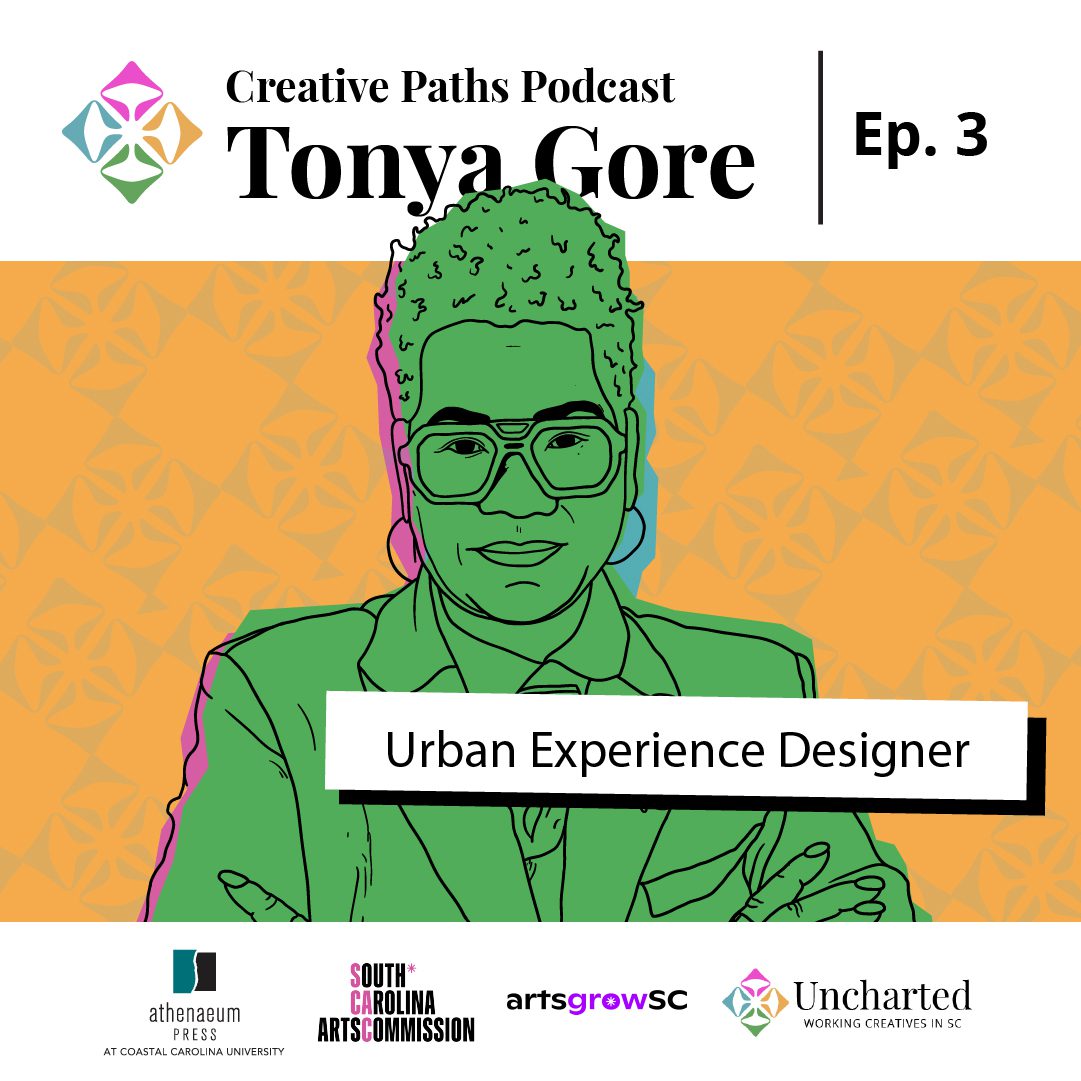
In this episode, we’re exploring resilience in home with Tonya Gore, who’s found a thriving career, make that several careers revitalizing her hometown of Myrtle Beach, South Carolina. She currently works as the Director of Enhancement and Design with the Myrtle Beach Downtown Alliance, Tonya has leaned on her creative thinking to develop our local community.
Career Area: Design
-

Gil Shuler
“I’ve always been an artist; I drew all the time.”
Gil Shuler is a graphic designer and business owner in Charleston, South Carolina. He holds a Bachelor’s in Fine Arts with a concentration in Graphic Design from Western Carolina University. He has owned his design studio and company, Gil Shuler Graphic Design Inc., for over forty years and is known for his artwork of the “Palmetto Doves.”
About
Gil Shuler was born and raised in Sumpter, South Carolina, where he started his art journey at an early age. From spontaneous art drawings to private art lessons and his early mastery of oil paintings, Shuler’s creative side was a driving force in his life. However, as he approached his junior year of high school, Shuler began to lose interest. Despite his deep-rooted passion for art, he focused on academic education. With two older siblings already in college and after an intensive search, Shuler attended Anderson Junior College, but he was still unsure exactly what his career path would be.
“I was there for two years, and after the second year of basically partying, I was like, I need to do something,” said Shuler. Shuler found his “something” when speaking with one of his art professors at Anderson, who introduced him to the field of graphic design. From there, Shuler attended Western Carolina University, where he received his degree in Graphic Design. Later, Shuler created his design studio and company, Gil Shuler Graphic Design Inc., In the early days of his career, Shuler took on jobs with individuals and small businesses, such as posters for a theater company where he first met his wife. Since then, Shuler began to grow his business and was able to recruit larger clients.
Shuler’s typical workday is anything but typical. He sets his own pace with multiple jobs, working from a punchlist throughout the day. This flexibility allows him to engage in other activities such as reading and fishing, but also to create work for himself and the Charleston community. One of his notable projects is the “Palmetto Doves,” a project he crafted to honor the nine victims of the 2015 Emmanuel Baptist Church shooting in Charleston, South Carolina.
From Shuler’s experience in running his own business and establishing his career as a graphic designer, he offers advice to up-and-coming creatives who are interested in entering the graphic designer career path and working within companies. “Be flexible, listen. Don’t talk, listen, then execute,” said Shuler.
-
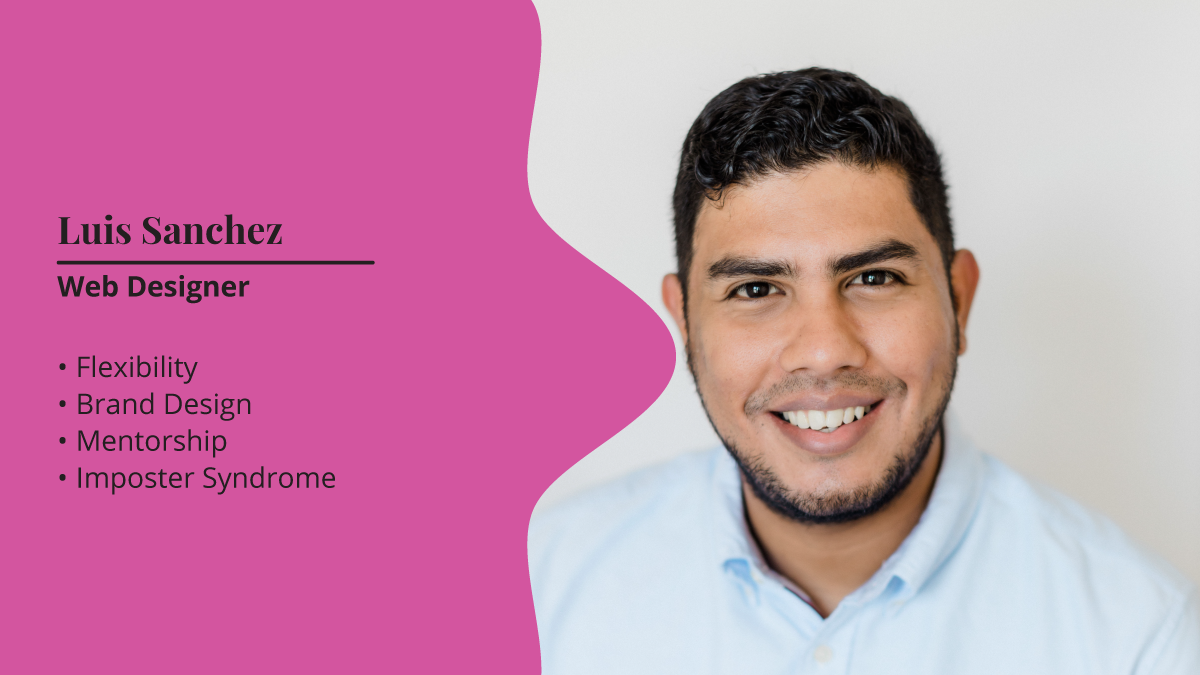
Luis Sanchez
“Be wise where you put your time, money, and effort.”
Luis Sanchez is a freelance web designer based in South Carolina.
Interview
Transcript
Emma Plutnicki 00:02
Okay, so to start, what do you do for work and where are you currently working from?
Luis Sanchez 00:09
So, so I, I started a web design business last June. So most of my time is, you know, setting that up, working from home, but you know, my main job is- I work at a church as a Youth Director. So those are the two things I do.
Emma Plutnicki 00:29
All right, amazing. And what would you say your official job titles for each of those will be?
Luis Sanchez 00:36
So, that’s a good question for, you know, small businesses like, am I a CEO? But you know, the main passion is just web designer, brand design, web and brand design. And then for the church, is just the youth director.
Emma Plutnicki 00:52
Yeah, great. And how long have you been doing those four?
Luis Sanchez 00:55
Yeah, so I’ve been working here since at the church, since 2021. August 2021, and the design since June last year.
Emma Plutnicki 01:08
Okay, nice. And so what does a typical day to day look like for you nowadays? What’s expected of you on a daily basis? What do you get into? What are your responsibilities?
Luis Sanchez 01:17
Yeah so it actually works out pretty, pretty well for me, I- so we’re going to church. Most of my stuff is done on the weekends, so I have a chance of putting time on the web design part during the week, you know. So a week when I have, you know, when I’m working with a client, it’s just meeting with them and then spending, you know, you know, four to five hours a day working on, just design, research, designing, testing different things, and then just, depending on the website, it’ll just take a couple weeks or not. So it was either meeting, doing a lot of research and just designing. And then during the weekends, you know, I pivot back to the church. So I was just preparing for Sunday youth group. We have youth group on Sunday, so the main job just preparing, just everything for for that to happen on Sunday. But yeah, during the week is- I’m working from home, just on my computer and then meeting with clients when needed.
Emma Plutnicki 02:25
Yeah, nice. And so having some work on the weekends, I’m sure it could be hard at times to have a healthy work life balance. So how are you able to navigate that with two jobs and making sure you still have time for your own personal creativity?
Luis Sanchez 02:41
Yeah well, I have a six month old baby, so you should have a clock hits me and my wife are just just spending time together with family. But one thing about it is my wife is usually pretty- she wants to take some time off, and so we have dinner together, spend time together, but usually she goes to bed a little bit earlier. So I’ll hit a lot of different things, you know, from like nine to 11pm I like to read books. YouTube’s pretty cool just seeing what other people are looking at and, you know, and every now and then, I mean, I’ll pick a day in the week where I’m just not going to do anything, but just sit there and think about day and relax and do something aside from it. But yeah, I would just just have intentional time of consuming other- from other people who do design. It’s just helpful for me, but it’s always tempting when you hear something, it’s like, “oh, I want to try that”. You grab your computer. I just kind of have some liberty where it’s okay to do that sometimes, it’s okay to just read, It’s okay to just take some time off. But I think my job allows me to be creative too, with the church. You know doing things like running social media, creating graphics, videos, whatever it is. So I still get to do that. So it’s a good way for me to try out things that I maybe not try out with clients. So I don’t know, I just look at opportunities for- to do different things and try different things.
Emma Plutnicki 04:22
Yeah, no, makes sense. And so with both of your careers, sometimes within creative fields it can be hard to measure success, so how do you- is there a difference between what success looks like in both of your roles? And how do you personally define either professional success and then also just personal success?
Luis Sanchez 04:42
There’s definitely, very different, I think, you know, with a business there’s, there’s just numbers, whether you like it or not, whether it’s financial numbers or number of clients. But you know, in working out of church. Which, you know, we’re talking about real people. So you don’t want to treat it just as a number. So that’s not really what I’ve- I have had to learn not to focus on that, which I think helps me with my business, because I mostly care about just interactions, and how I’m interacting with the people around me, you know. So I want to, I want my clients with web design to love their website and love, you know, I want to help their businesses. Ultimately, that’s the goal for me. To make a website for them. Is to help their businesses, their brands and everything. So when I get to just interact with them or interact with their website, see that they’re growing, that people are, you know, visiting whatever, then that, for me, is fulfilling. And same thing in my church job is, you know, if I’m having good interactions with with the students, with the volunteers, then that’s just fulfilling. That’s always going to be, you know, how are people responding to the work that I’m doing? I think it’s just a healthier way to look at things, instead of just a number. And of course, I have goals, but, you know, I keep an eye on those, but those are not ultimately, they’re just determined if I’m going the right way or I need to change something, but not- defines failure or success for me. So.
Emma Plutnicki 06:19
Yeah, no, amazing, yeah. And did you have any fears when you were coming into either of these careers?
Luis Sanchez 06:26
Yeah, the biggest fear is for especially for the web design, is just investing. That imposter syndrome kicks in. Is this really something I can do, or does anyone even want to work with me? Can I- Can I even make a website like this? Weird how these thoughts take over. So it’s just investing. You know, putting that time aside every every day to work is a big deal financially. You know, you want to get the best tools, the best stuff, or whatever. You know, is it worth it if they’re gonna- so I think that’s the biggest fear. I mean, right now, just starting, you know, is finding confidence in what I can do and being wise about where to put my time and money and effort. Well, ideally, I just don’t want to look back, you know, and I messed it all up with making or whatever, so I think. But again, trying to act with the fears, it’s just hard to navigate. Yeah.
Emma Plutnicki 07:34
Yeah and has there been anybody that has helped you navigate those fears or struggles? Any advice that you’ve been given, whether good advice or bad advice?
Luis Sanchez 07:44
Yeah, I would say my professors, when I studied Digital Arts at Horry Tech and graduated last May from that- that’s so, you know, I always had. I always like creative and arts and all that but I needed some, I needed, you know, someone to teach me how to do it right. It’s all self taught and so I think just having people that you know, I graduated in May, but I still talk to them, I send every time I make a website, like, “Hey, can you give it a look? Let me know” and just, you know, just having people that I respect who would look at myself and tell me, you know, whether it’s good or bad, but just letting me have confidence that, hey, like I’m not an imposter, like I did the work, I studied, I graduated, the stuff, whatever looks good. And so I don’t know it’s like a specific advice, but just- having- being able to show stuff to other people, for critique, for ideas, for that’s probably the hardest part of me when I first started the design program, because I always kept my art to myself.
Emma Plutnicki 08:58
Yeah.
Luis Sanchez 08:58
And then once I through my professors, they pushed me to start showcasing that, you know, different ideas and different things, and I started to gain confidence in my creativity and my art. And so the- best, my best advice would be that just be willing to show, show it to other people, and you’ll get rid of the imposter syndrome for sure, because you’ll find out if you’re really a designer or not, you know.
Emma Plutnicki 09:26
Yeah. And throughout your career, you’ve mentioned, you know, struggling with imposter syndrome. Has there been one specific project that has had a significant impact on you, or has kind of been the pinnacle of your career that you can really draw on when you are feeling doubts? And you could say, Yes, I worked on this project and I can do it. Is there anything like that that stands out?
Luis Sanchez 09:49
Yeah, definitely. I think there’s a lot of them. Not that I like-
Emma Plutnicki 09:54
That’s a good problem!
Luis Sanchez 09:56
Every project that, especially in school, every project I did. I taught me something about myself. I think we have a senior showcase where you just have to show off everything you created in the past two years, which is just nerve wracking and very scary. But there’s something about looking back at those nights where you were there 2am freaking out because your design looked horrible, like it’s not going to work, and and then you see the finished product, and you know that you pushed through. It’s just really helpful, just to know that you can do it. But I mean, ultimately, for my business, my- the first website I designed, and the client likes it, and you get paid for it. It’s a little surreal, like I created something for someone. So I would say that would be probably the most meaningful, just the first website, just the full, first whole client process, website design, delivering, and it’s out on the web. So I would say that was just probably the most meaningful for me.
Emma Plutnicki 11:00
Yeah, for sure, that must be incredible to see things come to light and actually being used in a real setting.
Luis Sanchez 11:07
It’s worth it. It’s like, yes, what I want to do.
Emma Plutnicki 11:10
Amazing and how do you like working in South Carolina specifically? Have you lived in other places? Or what kind of, you know, contribution does South Carolina specifically have to your work? Is there any influence?
Luis Sanchez 11:21
Yeah. So I’ve actually, I was born in Honduras,
Emma Plutnicki 11:25
Okay.
Luis Sanchez 11:26
Yeah and then I originally went to school in Spain, so I lived there for five years, studied computer science, but then moving to South Carolina, it’s been a huge impact, because first of all, I went to Horry tech in 2022 and they had free tuition. So I did the whole program for free. So that’s just the best thing ever. Very grateful for Horry county or South Carolina, whoever made that happen, a huge opportunity, just for everyone that you know can take that. And so that was very, very big. And then I think the one thing that I love about working here in web design and church and everything just very relational. Every time- every client I work with that’s like, the goal is to be relational. I think we all have, I just feel the sense of our small businesses or it’s just a community. So, you know, I’m just, like I said, I’m not just making a website so you can pay me. I want to grow your business. I want to grow your brand, because we’re all a community, and so I think South Carolina is just, the southern charm is just very alive, and I want to be part of that. And so, you know, the heart behind what I’m doing is helping out people who want to showcase their business and their brand and grow and- but I want to do it in a relational way, not in a transactional way. And so I lived here for seven years, and everyone’s just been so, so welcoming, so helpful, so everything. So I just want to return that same to, you know, through people, through my art. So.
Emma Plutnicki 13:16
That’s great. I’m glad you found South Carolina.
Luis Sanchez 13:18
I know. Oh this is the best place, I lived a lot of places in the world, but-
Emma Plutnicki 13:22
Yeah.
Luis Sanchez 13:23
-home.
Emma Plutnicki 13:24
Good, amazing. So just as we wrap up, is there anything else you’d like to add about your career? Any advice or anything else?
Luis Sanchez 13:31
I would just add, I just, you know, looking back, you know, I’m 33 and I graduated last year, and I just know high school was a hard time because I just couldn’t figure out what I wanted to do, what I was good at, what I was not. And I studied computer science in school, but I realized that’s not what I- where my passion was. And then, you know, even though it took me a long time to go back to school, I spent that time just trying to find what is it that I was passionate about, and thankfully I had the opportunity to do digital arts. And now I know it’s very fulfilling. I’m just very I just know that was the right place where I needed to be, and this is probably where I need to be doing. So, you know, just just, just trust your passions, your- your skills, your, you know, I think everyone’s creative, and we just need to be able to have opportunities to showcase to the world how we are creative. So just, yeah, just looking back, I know that I feel like there’s a lot of people in that same boat of, like, trying to figure out what they’re called to do. And I just, you know, just go for it and ask people for help and show people what you can do and what you help you figure out and give you confidence. So you don’t feel like, you know. An impostor or anything like that.
Emma Plutnicki 15:02
No amazing. Thank you so much. That’s great advice. I should take that advice myself. So thank you so much.
-
Luis Sanchez
“I want to grow your business. I want to grow your brand because we’re all a community.”
Luis Sanchez blends design and purpose, building websites by day, mentoring youth by night.
About
Luis Sanchez wears many hats, but at the heart of everything he does is his love for people. Based in South Carolina, he’s a full-time Youth Director and has started a web and brand design business. His creative journey has had its ups and downs. After studying computer science in Spain, he stumbled upon his passion for digital arts at Horry Georgetown Tech, and since then, he’s been all about helping others express their identity, whether through mentoring or visual design.
During the day, he develops websites, focusing on building relationships rather than just making transactions. “I want to grow your business. I want to grow your brand because we’re all part of the same community,” he explains. On weekends, he puts together youth group programs and makes genuine connections with teens.
Balancing two jobs and a new baby isn’t easy, but Luis keeps his creativity alive by intentionally carving out time to learn and experiment. He’s open about dealing with impostor syndrome, wondering things like, “Can I even make a website?”, but his motivation and support network, which includes trusted professors and friends, have helped him push through self-doubt.
Luis’s journey is one of hard work, purpose, and creativity centered around people. In this episode of Uncharted, he shares how he found a rewarding path later in life, the value of relational business practices, and why he feels at home in South Carolina. Whether you’re diving into a creative career or starting a side hustle, this conversation is a great reminder that true fulfillment comes from pursuing your passions and connecting with your community.
Contact
-
Tori Hord
“The more you push yourself out of your comfort zone and out of the box you’re used to, the more confident you get.”
Tori Hord is an Associate Professor of Graphic Design at Methodist University in Fayetteville, N.C. She grew up in Loris, S.C., and earned her bachelors in graphic design at Coastal Carolina University. She continued her graphic design with a Master of Graphic Design M.G.D. at North Carolina State University.
Interview
Transcript
Tori Hord
My name is Tori Hord. I am from Loris, South Carolina, so very close to Coastal [Carolina University], like 30-ish minutes. And I currently teach graphic design at Methodist University in Fayetteville, North Carolina.
Emma Plutnicki
So how long have you been working there?
Tori Hord
Seven years.
Emma Plutnicki
Wow. Amazing. And your official job title, would that just be graphic design teacher?
Tori Hord
Associate Professor of Graphic Design.
Emma Plutnicki
Amazing. So how did you get into that? How did you find that job? And how did you just end up in that field overall?
Tori Hord
That’s an interesting, so I started when I started Coastal. I went to undergrad there, I started as a biology major. About a semester or two semesters in, I decided to switch my major to graphic design without telling any of my family and made them all have a small heart attack when they found out.
Emma Plutnicki
Oh my gosh.
Tori Hord
But it’s always something that I’ve loved. So it was a really good change for me. And from there, I just, I was just very passionate about it. And when I graduated, I got a job in the field. And I worked there for a couple years and then decided that I wanted to pursue my masters in graphic design. So I went and got a masters in graphic design from NC State. And then when I graduated from NC State, there were, y’know, lots of applying to jobs, and I landed here in Fayetteville at Methodist University.
Emma Plutnicki
Amazing. So what made you switch from biology to graphic arts? Was it more hating biology? Or was it more a passion for graphic arts?
Tori Hord
It was more passion for sure. Always loved it growing up, but just never considered or thought of it as a turning something I loved into the career. And once I figured out that I could do that, I was like, “Absolutely. Let’s do this.”
Emma Plutnicki
Yeah. More fun, probably. So can you walk us through a typical work day? Like, what’s expected of you, what your work process looks like, what kind of things you work on?
Tori Hord
Yes, absolutely. So for me, I think being, teaching design and being a professor, you kind of get the best of both worlds. So my initial attraction to teaching it, you know, other than just loving the subject and wanting to share more was that it has a great schedule. You have time for, you know, it’s a great work life balance for the most part. And that also gives you lots of time to continue to work in the field, which I was adamant about not stopping, I didn’t want to stop my design career to teach, I wanted something that would allow me to do both. And that’s what the shop does, which I love it, you get a great schedule, you get a, you know, it’s a steady, it’s not like you’re freelancing all the time, it’s a steady income. Day to day, it depends on what classes I have offered, but I teach anywhere from two to three, like studio length classes a day. So I’m in the art building, in the studio, working with students. And then when I’m not teaching I’m in my office, you know, doing housekeeping things and preparing and also working on my own work.
Tori Hord
Amazing. So the classes that you teach, are those different levels of graphic designer, or do they have specialties within them?
Tori Hord
Yes, I teach at all levels. So I teach the freshmen their first semester, on up to the seniors in their last semester. And everything in between. So I see a little bit of all of them all the time.
Emma Plutnicki
Yeah, that’s great. So can you describe a defining moment in your, like, creative journey so far? So maybe it’s a specific project that really showcased your creativity or had a significant impact on you?
Tori Hord
The one, this is ironic, but the one that really comes to mind as being most memorable for me was actually at Coastal at the Athenaeum Press.
Emma Plutnicki
Oh, really?
Tori Hord
Yes, we worked on the Gullah Geechee project. And there was, we traveled out to these different places and took photographs and did interviews and then the project itself won an Addy Award at the end. So it was kind of like a, a quintessential moment for me. I was like, “this is actually going to work. This is neat. We’re getting recognition for work that me and my friends have, you know, kind of poured our hearts into.” So that was a big moment for me.
Emma Plutnicki
Yeah, I’ve seen that work. It was great. So I’m sure that was a really fun time to work on. So do you think this career path is challenging? What challenges have you faced and how have you been able to kind of overcome those challenges? Because being in a creative career as a whole is pretty challenging, but how have you kind of worked through this?
Tori Hord
It is, I would say it was challenging. And it’s um, it’s like with anything you do, the more you do it, the more you push yourself out of your comfort zone and out of the box that you’re used to, the more confident you get in it. I do remember my first year teaching anything, I was terrified, right? I’m standing up in front of this group of people. And you’re suddenly faced with like, “I know nothing,” right? “I am not qualified to do this, I should not be here. Why did these people give me a job.” But the more you do it, you realize, “okay, I’m equipped, I have the knowledge, I’ve done the education, I have a passion for it.” So for me, it really was just making sure I was getting out of my comfort zone, and putting in the effort… and it was fantastic. But the more I was in those classrooms with the students and got to know them, and saw their excitement for it, everything just came together.
Emma Plutnicki
Yeah, that’s amazing. So within your specific field, can you think of any skills that you possess that helped you land that role, or any skills that you think an applicant should have to increase their chances of getting that role? I know, like you’re in teaching, so is there any like connection with teaching that you had to help you or was your skill in graphic design, like the driving force to lead you to teaching, or just in general, like any skills that helped you?
Tori Hord
Obviously, to be able to teach art or graphic design or anything, you have to have a certain level of knowledge, but especially for art design, you also have to have a certain level of skill, right, you have to be able to get to that point. So a portfolio is still a big part of this job, even though it’s not a, the focus is not necessarily all design, you know, work all the time, you still have to have a great portfolio, you still have to make sure that you’re paying attention to the detail, because it matters when getting these roles. And I think the other part of it is, is communication, being able to talk about what you want from that job, but also be able to talk about your work in ways that ties it in to people that might not necessarily be in your field. Which is a great skill for designers have anyway, because there’s lots of contact with people outside of the art world. So being able to communicate those ideas and your thoughts and passions to those people is really important, too.
Emma Plutnicki
Yeah. It’s a very important skill. And so, you studied in South Carolina, and now working in North Carolina. Are there any like organizations or programs or events that you recommend for people who are trying to get into that field? Is there any like conferences you went to that helped you network to figure out, like, gain more connections within the creative world or anything like that in the area?
Tori Hord
Yeah, I’m a big supporter of AIGA [the Professional Association for Design] I’ve been a member of AIGA since I was an undergrad, and continued that. But more so than that, I found a lot of helpful was these kind of like open houses for different schools. So when I was pursuing my master’s or thinking about going to get my graduate degree, I looked into these different kind of open houses, kind of meet and greets. And I met a lot of really great people and lots of great networking opportunities just from doing that. And that had no ties to it. You didn’t have to, no commitments, you’re just kind of going and exploring and learning about what your options are.
Emma Plutnicki
That makes sense. So AIGA, you said?
Tori Hord
Yes.
Emma Plutnicki
What does that stand for, do you know?
Tori Hord
American Institute of Graphic Arts.
Emma Plutnicki
Okay, awesome. I’m sure a lot of people know that. I didn’t know. That’s amazing.
Tori Hord
The chapter here is in Raleigh, the closest one. But a lot of universities have like local student chapters. I know Coastal used to have one, whenever I was there. And we have one here. It’s just a great opportunity for professionals and students to kind of connect.
Emma Plutnicki
Yeah, that’s amazing. So great. Thanks for saying all this. This is such an interesting field. I’m sure you have fun with it every day. But just as we wrap up, do you have any advice for current college students or just people who are looking to get into these fields in creative professions?
Tori Hord
Follow what you’re passionate in. That was a big thing for me. So I went along with, like I said, the biology doing what I thought I was supposed to do, and what, you know, everyone was like, “Oh, you’d be great, at you know, XYZ, you’d be a great doctor, you’d be great at this.” And in the back of my mind, there was always something like, “Maybe but I don’t know that I want it.” And just listening to that little voice, and you know, going after what you do want, regardless of what other people might think which, I mean is, you know, life anyway right?
Emma Plutnicki
Yeah. No, that’s great advice. I definitely need to listen to that too.
-
Marius Valdes
“Everyone’s got their own journey, and you have to find your way. I would never discourage anyone from a journey in the applied arts or the creative arts if they have the drive and the will to do it. Because that’s the biggest part of it: just being disciplined.”
Marius Valdes is an artist, illustrator, and professor of Studio Art teaching graphic design and illustration at the University of South Carolina. Valdes received his BFA in graphic design from the University of Georgia (UGA) and his MFA in visual communication from Virginia Commonwealth University (VCU). Valdes is originally from Charleston and lives in Columbia.
About
“Being a professional creative is not for the weak of heart,” said Valdes. “You need to be patient and persistent.” He recalled the first time, as a college student, that he told his father he wanted to major in art. “I remember driving with my dad and telling him, ‘I think I’m going to be an art major.’ I was waiting for him to say, ‘What are you thinking?!’ but he just said to me, ‘Well, if you do something that you love, you’ll never really work.’ And I feel like that. I do work, but I work on things I care about. And that, to me, is one of the most important things.”
Valdes didn’t set out to be a university professor. After graduating from the University of Georgia (UGA), he worked as a graphic designer for several years and allowed his creativity to determine his next step.
“I was exploring illustration and enjoying it more than graphic design. I wasn’t very good about talking about my work, and I thought grad school would help with that, as well as allowing me to refocus my work and make myself more marketable,” said Valdes. Valdes earned a scholarship for his MFA at Virginia Commonwealth University (VCU), and part of that scholarship included teaching a class.
“I just loved it,” said Valdes. “I found that even though some of the students were in some ways more talented than I was, I knew more than them because I’d been doing it as a professional, and I really enjoyed it.”
In addition to teaching, Valdes works as an artist creating work for area organizations. “The past couple years I’ve been working with the Medical University of South Carolina children’s hospitals,” said Valdes. “I created some murals for them, created some kids’ activities books for therapists to use, and that’s been the most rewarding thing I’ve ever done. One day, a man I work with came up and said, ‘My kid is obsessed with your frog mural. It’s made a real difference.’ So it’s sad because seeing that mural means you have a sick kid, but it’s also rewarding to know it had an impact.”
-
Tori Hord
“The more you push yourself out of your comfort zone and out of the box you’re used to, the more confident you get.”
Tori Hord is an Associate Professor of Graphic Design at Methodist University in Fayetteville, N.C. She grew up in Loris, S.C., and earned her bachelors in graphic design at Coastal Carolina University. She continued her graphic design with a Master of Graphic Design M.G.D. at North Carolina State University.
About
Tori Hord’s path to graphic design was not always clear. She began her studies at Coastal Carolina University as a biology major with thoughts of pursuing a medical career, her family remarked that she would make an excellent doctor. After a couple of semesters, she changed majors without telling anyone, giving them “small heart attacks” when they found out.
Upon switching to graphic design, she went all in, joining the American Institute of Graphic Arts (AIGA) and working at The Athenaeum Press, Coastal’s student-driven publishing lab. Specifically, she worked on the Gullah: The Voice of an Island with the Athenaeum Press and recalls the joy and excitement of getting recognition for work that she and her friends poured their hearts into — work for which they earned an national American Advertising Award, or ADDY.
Working as a professor is a career path that has allowed Hord to pursue the “best of both worlds.” She enjoys sharing her graphic design expertise with college students as she continues cultivating her own artistic skill. “I didn’t want to stop my design career to allow me to teach,” Hord said, so she leads two to three studio classes per day while carving out time to focus on her own projects as a freelance designer and consultant.
Professor Hord encourages other aspiring graphic designers to join professional groups like AIGA (American Institute for Graphic Arts) and to get some pre-professional experience. Her essential advice for college students is, “Listen to that little voice and go after what you do want, regardless of what other people might think.”
-
Lauren Rose
“Let your ego go and be willing to learn.”
Lauren Rose is a publication designer and the Design Editor at North State Media in Raleigh, NC. With roots in student journalism, she now brings clarity and creativity to print layouts in a fast-paced newsroom environment.
About
Lauren Rose’s love of design began with school projects and scrapbooks, but it took off in the newsroom. As art director for The Chanticleer, the student newspaper at Coastal Carolina University, she found herself juggling creativity with tight deadlines skills she now uses daily as Design Editor at The North State Journal.
Based in Raleigh, NC, Rose handles the design of a weekly print newspaper. Her Sundays are devoted to page layout and collaboration with editors, while the rest of the week focuses on refining and preparing content. “The design changes constantly between issues, and I love that.”
Though her career evolved organically, Rose credits her growth to patience and openness. “Let your ego go and be willing to learn,” she advises. She views design not just as an art, but as a way of organizing information to serve the reader.
Rose encourages other creatives to take chances, embrace mistakes, and explore different media before settling on a path. For her, the magic of design is in the details and the opportunity to keep learning every week.
-
Lex Stress
“Once you’re in tech, there’s room to grow.”
Lex Stress is the Principal Graphic Designer at Ellucian, a tech company specializing in software for higher education. From Charleston, SC, Stress brings creativity and strategy to every project whether for clients, internal teams, or freelance ventures.
About
Lex Stress didn’t plan to work in tech, but after spotting the Blackbaud headquarters on a daily drive, they decided to apply. That bold move opened the door to a thriving career in design for the tech world.
Today, as Principal Graphic Designer at Ellucian, Stress leads visual direction across digital platforms, email campaigns, and social media. A graduate of Coastal Carolina University, they credit their education for building a solid foundation but it was curiosity, networking, and real-world practice that propelled them forward.
Stress enjoys the dynamic pace of tech and its flexibility. “Once you’re in tech, there’s room to grow,” they say. Their role allows them to blend strategy with creativity, and they also freelance on the side to keep their skills fresh.
They encourage aspiring designers to explore the business side of creative work, and not to underestimate the value of a strong portfolio and clear communication. Their advice? Keep evolving. Keep making. And always be ready to take the next leap.
-
Robert Taylor
“Growth happens outside of your comfort zone.”
Robert Taylor is a graphic designer for RallyUp, a tech platform supporting nonprofit fundraising. With over a decade of experience, he blends technical skill with emotional storytelling to design brands and campaigns that inspire.
About
After ten years working in Coastal Carolina University’s student accounts office, Robert Taylor made the leap into full-time design. He started in advertising handling quick-turn print and social media projects before discovering his passion for deeper brand work.
Now with RallyUp, Taylor works remotely on design projects that support nonprofits and charitable campaigns. He loves the combination of design and mission-driven storytelling. “It’s more than just making something look good it has to connect,” he says.
Taylor has worked in both agency and corporate settings, including a stint at WE*DO Worldwide in Asheville, NC, where he dove into full-scale web development and branding. He believes every role taught him something essential especially the value of stepping into the unknown. “Growth happens outside of your comfort zone,” he says.
Taylor encourages other creatives to take chances and chase the work that aligns with their values. He still looks back on his early work to see how far he’s come. It’s a reminder that design is a lifelong craft and every project is part of the journey.