“The importance of learning the craft, learning the principles and elements of art and design and really understanding how to apply them, cannot be overstated. Design theory ends up being the currency of whether or not you can develop a particular visual way of expressing yourself, whether it’s sculpture, ceramics, architecture or another field.”
Jim Craft, who lives in Greenville, was a studio artist for ten years and then transitioned to academia. He was a professor of art at North Greenville University for 16 years and then moved to West Palm Beach, Fla., teaching at Palm Beach Atlantic University for 10 years. He earned his B.A. and M.A. from Bob Jones University and his MFA at Clemson University.
About
As a studio artist, Craft worked in nearly all traditional media, including drawing, painting, ceramics, sculpture, and printmaking. He marketed ceramics, sculpture, and art to galleries and designed and produced ceramics for the High Point, N.C., furniture market. Craft secured commissions for paintings, murals, and architectural installations, including one at Our Lady of the Rosary in Greenville, S.C.
“It was really fun having a studio and being an artist, getting up every day and making stuff, showing my work at exhibitions,” said Craft. “But, it’s just not a realistic long-term goal. Even my friends who were wildly successful as artists had to supplement their income with other things, and it’s good to have those kinds of things in your pocket. So, I wouldn’t discourage anyone from getting a degree in graphic design or advertising or any of the design areas.”
Craft had also earned a degree in education, and making the move to academia was the best fit for him and his family. Teaching allowed him to mentor and guide aspiring artists, and the range of their career journeys was vast.
“I had students who have ended up in retail and selling in galleries or auction houses, traveling internationally even. Keep your alternatives lined up and be realistic about a career in the arts. You don’t have end up in a studio to stay in the arts. I had a student who ended up being an international buyer of fine rugs from all over Europe and North Africa and the Middle East. She was a painter, and she understood artistic principles and elements. You can focus on that and keep that, but keep a number of alternatives in your pocket just to be more widely marketable. It’s all the same – whether you’re looking at a Persian rug or a really nice ceramic vessel.”
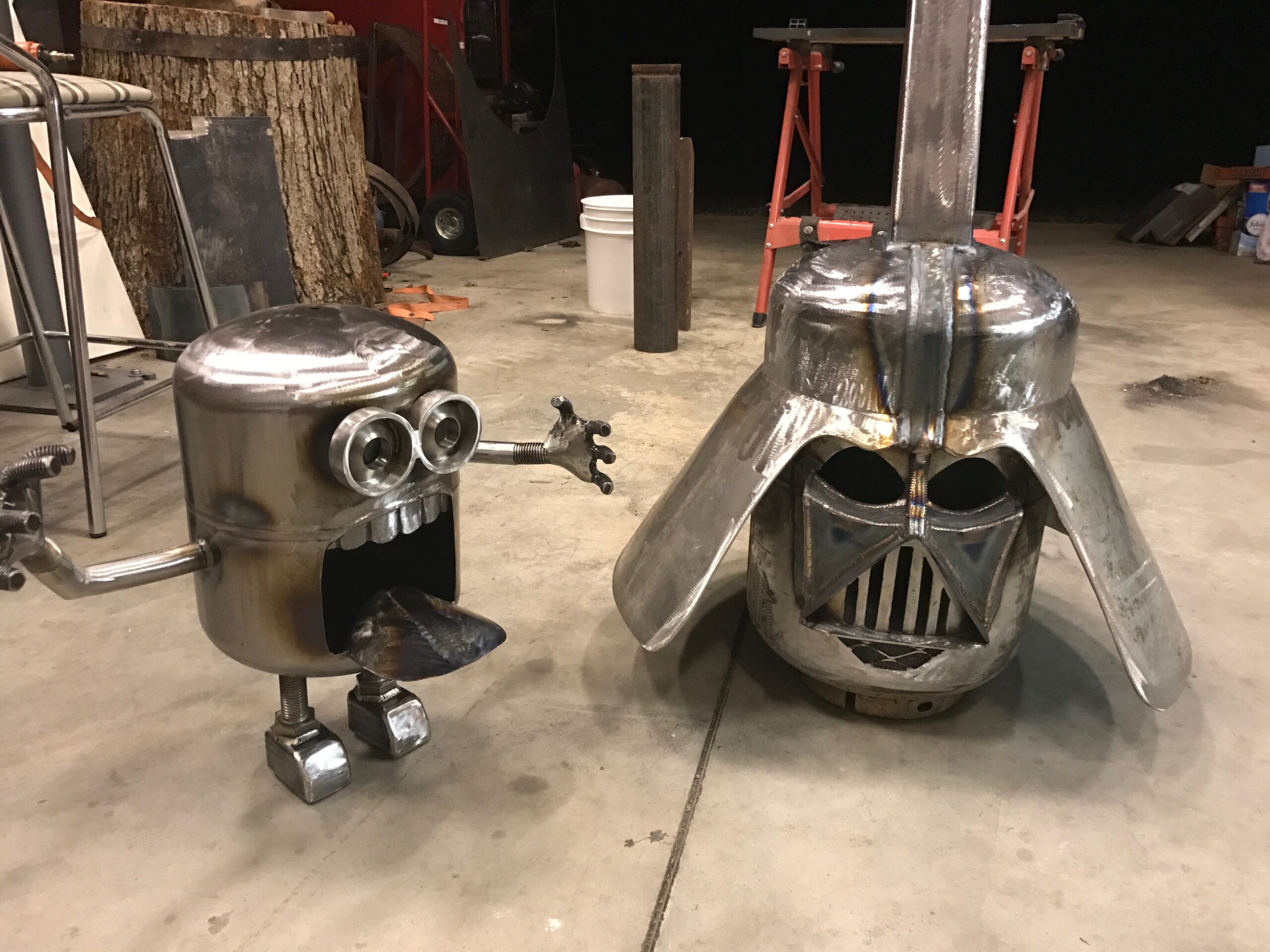
“I’ve always had a passion for welding… I’ve always been the kind of person who likes to work with his hands. The more you do, the more you try, the better you get.”
Daniel Dorriety is a welder by trade and works at General Electric building gas turbines. He is part of a special process team for repair engineering, focusing on joining development, handling the welding on every part of the gas turbines that get fixed.
About
Daniel Dorriety is a seasoned welder at General Electric, repairing massive turbines with laser precision. His path began in high school, where he took welding at the Golden Strip Career Center and discovered the satisfaction of building something with his own two hands. That experience, paired with an associate’s degree from Greenville Tech, launched a lifelong career in the trades.
Today, Dorriety specializes in special process welding a technically demanding role that involves everything from torch repair to laser applications. Off the clock, he runs his own small welding shop and dreams of full-time self-employment. What drives him isn’t just the metal it’s learning. “The more you do, the better you get,” he says.
He encourages students interested in trades to explore short-term training programs like Arc labs, and to stay open-minded about alternative paths. Welding isn’t just about physical skill, he says it requires patience, communication, and constant adaptation. Whether it’s collaborating with engineers or mentoring newcomers, Dorriety takes pride in the craft and the community behind it.
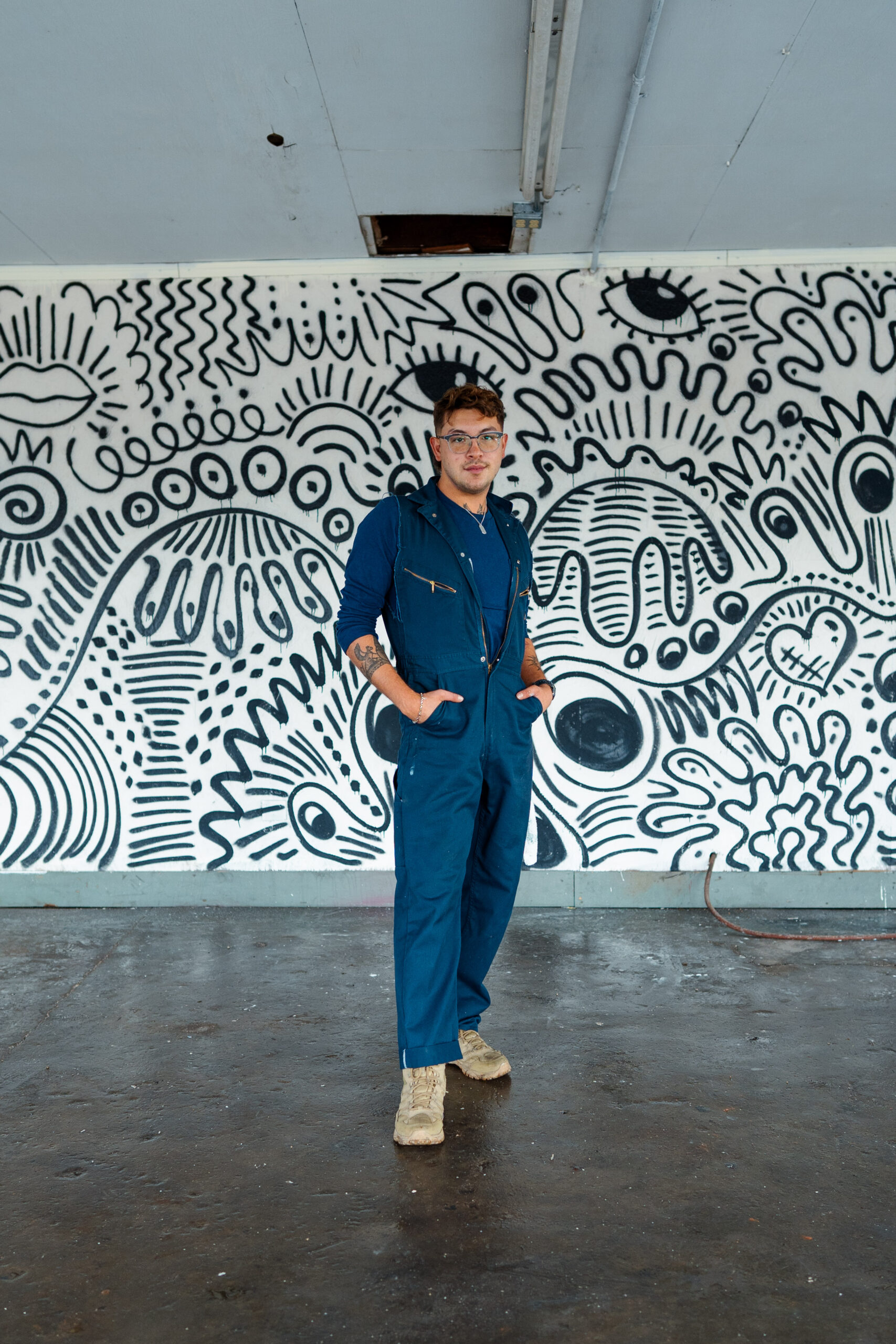
Matteo Miles is a professional muralist based in Greenville, SC. Known for large-scale, hyper-realistic public art, he blends creative talent with a strong business sense. Miles believes in creating work that speaks for itself and builds community along the way.
About
Matteo Miles built a career from scratch literally by picking up a paintbrush and offering to finish a mural that had been abandoned at the hotel where he bartended. That spark ignited a career now filled with large-scale murals across the region for clients like Starbucks and local businesses.
A graduate of Greenville Tech and the Fine Arts Center, Miles knew from a young age that art was his calling. “I always wanted to do something creative,” he says. But the transition from sketchbook to scaffolding wasn’t easy. He learned to price his work fairly, navigate contracts, and build stamina for long painting days. His advice? “Take yourself seriously, and others will too.”
Miles now completes multiple mural projects a month and approaches each one with both artistic vision and professional discipline. His work is deeply tied to place celebrating community stories, local icons, and shared identity. “You’re creating something that lives in people’s everyday world,” he says.
For young artists, he recommends gaining both technical and physical readiness. “You’ll be on your knees, on ladders, in heat or cold,” he says with a laugh. But the results? They’re unforgettable.
“Stay true to your creative path—there are remarkable opportunities waiting for those who persevere.”
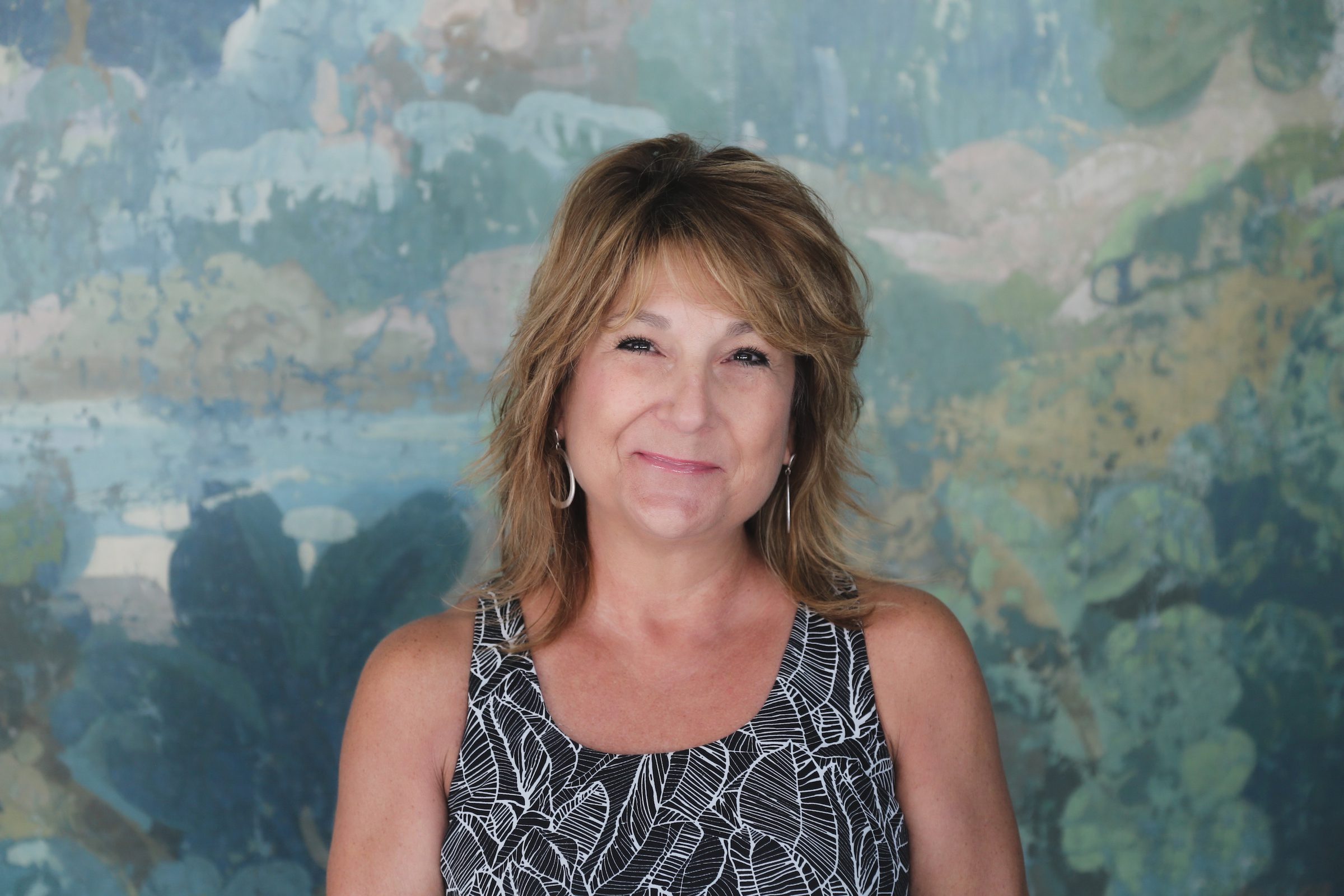
Kathy Phillips is the Chief Curator at Baxter Mill Archive. She holds an MFA in Theatre Design with a concentration in costumes.
About
Kathy Phillips is an accomplished Creative Director, Chief Curator, and textile expert with over 25 years of experience in the home, apparel, and quilting/craft industries. Currently serving as the Chief Curator at Springs Creative’s Baxter Mill Archives, Kathy leads the creative development of a vast collection of over 1 million antique documents, textiles, hand-painted artwork, and rare European textile books.
Throughout her career, Kathy has worked with esteemed home furnishing companies, curating artwork and inspiration that reflect evolving consumer trends and uphold brand integrity. She has successfully directed high-profile brand launches, including the Springmaid rebrand in collaboration with Target and Genevieve Gorder, and has expanded product lines at JLA Home, overseeing collections for prominent brands like Natori and Woolrich.
A passionate educator, Kathy has taught textile design at Winthrop University and the Art Institute of Charlotte and holds creative workshops for local fabric stores and quilt guilds. She holds an MFA in Theatre Design, with a concentration in costumes, from the University of Connecticut. With a keen eye for design and a commitment to preserving and advancing textile arts, Kathy continues to shape the industry through innovative brand strategies and creative vision.
“I actually got turned down twice when I applied to medical illustration school. I took time off, reassessed, and just drew and drew. When I finally got in, I was excited, and I have been doing this ever since.”
Rick Sargent is a professor of art at The Citadel, where he teaches drawing, painting, animation, and illustration. He is also a seasoned freelance medical illustrator specializing in medical-legal illustration. A native of Columbus, Georgia, now based in Mount Pleasant, South Carolina, Sargent holds a bachelor’s degree in interdisciplinary studies from the University of Georgia and a Master of Science in Medical Illustration from the Medical College of Georgia (now Augusta University).
Interview
Transcript
Rick Sargent 00:00 I am Rick Sargent. I’m originally from Georgia, Middle Georgia, a smallish, mid-sized town called Columbus, Georgia. And right now, I currently reside in Mount Pleasant, South Carolina.
Sara Sobota 00:12 What do you do for work? And where are you working from right now?
Rick Sargent 00:16 I am primarily a college professor at The Citadel, and I teach art. I teach drawing, painting, animation, and illustration. What makes me suitable for that is my other career. My other gig which is being a medical illustrator. When I’m teaching, obviously it’s in person, not online. As a medical illustrator, I work from home.
Sara Sobota 00:43 Okay, next question. How long have you been working there, and what is your official job title? You have two of each of those?
Rick Sargent 00:50 I do, yeah. I’ve been at The Citadel for 10 years. I have been a medical illustrator for 22 years.
Sara Sobota 00:59 Okay, wow. How did you end up in the field? We kind of went over that already, but if you could just give us a recap?
Rick Sargent 01:06 Yeah, absolutely. So, I ended up becoming a medical illustrator from the inspiration and advice I had from my high school art teacher, who knew a medical illustrator and thought I would be a good fit.
I changed my major at the University of Georgia, earned an undergraduate degree in Interdisciplinary Studies, and then went on to get a Master of Science degree in Medical Illustration. From there, I started practicing medical illustration in New Jersey, came down to South Carolina, and had a colleague who was teaching at another school who turned me on to the idea of teaching. He eventually left the program, and I took over his role and fell in love with teaching. I have been a teacher ever since.
Sara Sobota 02:08 Wow, that’s great. So, your graduate degree was an M.S. in Medical Illustration?
Rick Sargent 02:15 Correct.
Sara Sobota 02:16 Wow, that’s fantastic. You don’t often hear or see that.
Rick Sargent 02:21 Yeah. Different programs offer different degrees. Some, like Johns Hopkins, offer a Master of Arts program. At the Medical College of Georgia now Augusta University they wanted to provide a stronger scientific foundation, so they offered a Master of Science degree while teaching the arts.
Sara Sobota 02:49 Forgive me, I don’t know what’s the Medical College of Georgia’s name now?
Rick Sargent 02:56 It is now Augusta University.
Sara Sobota 03:00 Oh, I didn’t know that.
Rick Sargent 03:01 It changed maybe five years ago. It used to be Georgia Regents University, but they were absorbed into Augusta University.
Sara Sobota 03:10 Got it. What background helped you land your roles?
Rick Sargent 03:16 Yeah, for sure. For being a professor, it was a real-world experience plus having a master’s degree, which is the terminal degree for medical illustration, since there is no Ph.D. in the field.
Sara Sobota 03:34 Are there any medical illustration programs in South Carolina?
Rick Sargent 03:40 There are not.
Sara Sobota 03:40 So you need to go to another state?
Rick Sargent 03:46 Yes. There are about six schools across the country offering a master’s degree program. Some, like Rochester Institute of Technology, offer a bachelor’s degree in medical illustration.
Sara Sobota 04:01 Can you walk us through a typical workday? What’s your process and what’s expected?
Rick Sargent 04:08 Sure. I’ll focus on the medical illustration side. I specialize in what’s called medical-legal illustration. I work for attorneys who need to explain in layman’s terms and visually what happened in an accident or a procedure.
A typical day involves reviewing operative reports and radiology films, then making a proposal on the best way to present their case. That gets reviewed by a medical expert. We usually schedule Zoom meetings to clarify the case, and once I have the supporting materials, I begin creating the illustrations.
Sara Sobota 05:04 Wow, you are blending law, medicine, and art.
Rick Sargent 05:08 I’m telling you, it’s all over.
Sara Sobota 05:10 That’s amazing.
Rick Sargent 05:12 Yeah.
Sara Sobota 05:14 That is awesome. Can you describe a defining moment in your creative journey, something that had a significant impact on you, or something you produced that really showcased your creativity?
Rick Sargent 05:27 I will say, medical illustration-wise. Yeah, there was a defining moment; I was the senior medical illustrator at Houston Sports Medicine Orthopedic Hospital in Columbus, Georgia. And there was a conference coming up, where a surgeon wanted to display a new surgery technique. And he was; this was back in 2002. Um, 2003, time. And he was cutting edge. And even in technology as far as visual communication. And so, he was really pushing the department to move to 3D. While we were just scratching the surface of that, a lot of stuff that we did was in Photoshop. Every now and then, we would dip into After Effects and things like that to make things move for animation.
And so, in a very quick turnaround, he bought the software for 3D, told me to learn it, and created an animation of his procedure. So, we had a roughly three-week turnaround time, from start to finish, of storyboarding of creating the models and rendering to get ready for his presentation at his conference. And we actually won an award for it. It was, it was insane. It was long nights spent. I slept there over the weekend trying to create something. But it’s well worth it. And I think he is still using some of the components of it.
Sara Sobota 06:37 That’s amazing. So, when you say “we,” who was on the team? Was it just you and him or?
Rick Sargent 07:19 It was me and him as; we had another medical illustrator on staff, who was helping to kind of give art direction to it. Since she was more, publications. But she was definitely lending a hand to the process. We had all hands-on deck, so to speak, right?
Sara Sobota 07:39 That’s amazing. Was it for you to find this career path? Or to figure out how to apply your background to this task? We talked about that.
Rick Sargent 07:49 Definitely a challenge, for sure. And I definitely wrestled with, could I make a career, I’m just gonna go with medical illustration, like, it was definitely challenged to say that I was going to be a medical illustrator. I actually got turned down, twice, to apply to the school. And so, with my portfolio I just kept, I was more kind of not really, I was a little bit wishy-washy, at least on the second round, because I was debating on this career or this career. And I was like, well, I’ll just submit my application.
And then I took a year off. And that kind of sat down, reassessed where I was going, and what I needed to do, and I think, really put the nose to the grindstone and just drew and drew and drew and drew, you know, everything that they wanted for the portfolio, took their advice from the previous portfolio, and it’s like, Alright, I’m going to, I’m gonna hit this hard, you know. And then, when I finally got in, I was pretty excited.
Sara Sobota 08:50 Yeah, that’s amazing. Great. Can you recommend any specific skills that an aspiring applicant should have to increase their chances of landing a role in your field?
Rick Sargent 09:04 I know that, obviously, rendering and the timeless skills are line, shape, accuracy, value, accuracy, being able to communicate visually, and being confident and effective about the way that you communicate with line and value. That is something that, hands down, digital or non-digital, you have to know.
So, but I know that, you know, AI is coming up and you know, or people say, is that going to replace, you know, illustration and things like that, and then relying on generative AI, things inside of software such as Adobe Photoshop, which we use a ton. That software only gets you so far, and that reliability on that can only get you to a certain level.
So, I would say you need to; don’t rely on those things. You can use them as tools, but you’re making case specific and what’s going to make you relevant is that you can be case specific, and not generic and not rely on things like AI, or generative art that’s going to make you seem more clip art and non-relevant.
So, I would say, keep being creative, I would say, keep up your draftsmanship skills and your ability to learn how contrast of how atmospheric perspective communicates and makes a hierarchy. That will be the most important skill that I would recommend.
Sara Sobota 10:30 Okay, great. Okay. Are there any local organizations, programs, or events that you recommend for aspiring creatives in South Carolina?
Rick Sargent 10:41 In South Carolina, I would say, you know, Piccolo Spoleto, getting involved in getting your artwork out there as much as possible. Being involved in art and art competitions, I found it really useful. I won the Cooper River Bridge run poster design contest, you know, way back when, and just getting involved in competitions, like those sort of things, even though the Cooper River Bridge one, wasn’t medical illustration at all, you know, but it’s designed, and it got my name out there. It gave me a little bit of, you know, clout. As I approach and talk about design, they are like, well, what did you do? And I say, well, here is this or people recognize my name from certain things.
And I have always been a proponent of just finding any competition that interests you make stuff and find ways to get into it. You get connected to more artists that way, that, oh, I saw your work and filled in the blanks, right? And so, design organizations, graphic design organizations, I would be a part of or try to connect with. There is the Association of Medical Illustrators, as far as my own career that I am a part of, I would connect with them, you know, follow them online, look at their stuff on Instagram. See what is happening? What are hot topics? And learning those topics? The research know, is it on your own?
Sara Sobota 12:10 One more aside, have you ever been to Artfield’s?
Rick Sargent 12:16 I have never been to art fields. I know, stop. I know, I know. It’s my own fault. It’s my own fault. Some of that, I’ve submitted fine artwork to art fields that were not accepted. It is one of my goals to have a piece that is accepted that way; a lot of my stuff is more illustration-based rather than pushing the envelope of art.
I’ve had friends; one of my best friends here, who is a painter, you know, got in several years ago, and just spoke highly of that and loved it. And I want to take my kids there; they are now traveling at an age where we can do that sort of thing. And so, yes, it is my own fault. But I want to be part of that.
Sara Sobota 12:59 I only ask because I’m so proud of that gem for our state.
Rick Sargent 13:04 It’s amazing. Really incredible.
Sara Sobota 13:07 It’s really nice to have you here. Do you have any advice for current college students or pre-professional creatives?
Rick Sargent 13:18 Yes, I do. I would say there are two main schools of thought for creatives currently. Number one is that you find your thing and do it really, really well. It seems more of a single focus. And so, I would, I would say, it’s easy to get distracted from social, in social media, and discouraged and say, well, I’m not that person, and then just quit what you’re doing. I would say, first and foremost, find, figure out what you like, and figure out what you want to do. And what gives you energy, what feeds your creativity, and do that thing and keep going at it. It is discipline. And so focus on that. And just keep going, keep going, keep going.
Rick Sargent 14:09
Draw, sketch. If you are a fanatic about birds. How can you communicate, birds, and do it over and over and over and over and over and over again? The thing is, to not resist the temptation to have diversity. So, are you an acrylic painter? Are you an oil painter? Are you a sculptor? Do you have a creative inkling to move into other realms? Don’t limit yourself.
So, I know it seems like a little bit of a disconnect or contract or I’m contradicting myself a little bit. But at the same time, man, there’s some really cool stuff that you can be involved in, and you’re never going to know that if you follow this little track of creativity it’s going to come back to that other bit that you were just passionate about or like oh, wow, now I see these connections.
I’ve had so many things that have strangely connected me and developed my artwork. You name it. sand sculpting, you know, like what? Sure, you know, like sculpting has helped me become a better draw or like a better illustrator, like learning in depth and plains of the face as maybe a better portrait painter by becoming better by sculpting like things that you would never think that could be connected somehow gets connected.
So, if there’s something doesn’t ignore things that give you fire as far as a creative like, Man, that is so interesting. pursue it, learn about it, and figure some things out because it may come back to bless your drawing, so to speak, or enhance your drawing, so to speak, or enhance your other part of your creativity.
Sara Sobota 15:45 Yeah, fantastic. Well, that’s all the questions that I have for my interview; you have given me so much; I really appreciate it and your input, I know it will really be helpful to the students. And there is also a few other things that we might have gone on with creative careers in the future. So, is it okay if I reach out to you again if anything comes up?
Rick Sargent 16:06 Yes, absolutely. Yes. Okay, well, I love talking about this stuff. I love meeting other medical illustrators or other illustrators or aspiring medical illustrators. For you know, Zoom calls, I’ve had text, Zoom calls, coffee, you know, with people who are interested in this. So, either that or any sort of creative, please let me know.
Sara Sobota 16:28 Okay, that sounds great.
Rick Sargent 16:29 Yeah.
Sara Sobota 16:30 Thank you for your time!
Rick Sargent 16:31 You’re welcome, Sara. Nice to meet you.
“Everyone’s got their own journey, and you have to find your way. I would never discourage anyone from a journey in the applied arts or the creative arts if they have the drive and the will to do it. Because that’s the biggest part of it: just being disciplined.”
Marius Valdes is an artist, illustrator, and professor of Studio Art teaching graphic design and illustration at the University of South Carolina. Valdes received his BFA in graphic design from the University of Georgia (UGA) and his MFA in visual communication from Virginia Commonwealth University (VCU). Valdes is originally from Charleston and lives in Columbia.
Interview
Transcript
Marius Valdes 00:00
My name is Marius Valdes. I’m from Charleston, South Carolina. I currently live in Columbia, South Carolina. I’m a professor at the University of South Carolina. I teach graphic design and illustration. I’m also a practicing artist and illustrator.
Emma Plutnicki 00:15
Amazing. So, can you just tell us what your official job title is? And how long have you been working as a professor there?
Marius Valdes 00:22
Yep, it’s Professor of Studio Art. And I’ve been here since 2007, so something like 17 years.
Emma Plutnicki 00:31
Yeah.
Marius Valdes 00:33
So long!
Emma Plutnicki 00:34
Yeah, that is a long time. So how did you end up as a professor, and I believe before you were a practicing professional in the field, so how did you kind of make that transition from practicing in the field to then to academia?
Marius Valdes 00:48
So, I graduated from the University of Georgia in 1998. And I worked as a designer for about four or five years. And I had got to a point where I was really exploring illustration, I was kind of enjoying that almost more than the design work I was doing. But one of the things I felt like was limiting me as a designer was, I didn’t feel like I was very good at talking about my work. So, I thought going to graduate school would be kind of a good way to go and kind of expand my education, and kind of take what I’ve been doing for four or five years and kind of refocus and kind of just make myself more marketable. And while I was there, I had no intention of being a professor or teacher, and to me today that still seems kind of crazy. They let me do that. But when I was there, part of my scholarship was to teach a class. And I just loved it. And it was really fun. And what I found was kind of like, even though some of the students I taught were, were, maybe in some ways, more talented than I was, as a designer, I just knew more than them, because I had been doing it as a professional. And so, I just kind of really enjoyed it.
When I originally started college, I was going to be a psychology major, because I thought maybe I would be a counselor, or a shrink or something. I like talking to people. But then I realized there was science involved. So, I feel like teaching has kind of given me the ability to do that sort of stuff, in addition to teaching, you know.
Emma Plutnicki 02:25
Yeah, it makes sense. So, what kind of background led you to become a professor? What do you think, specifically lead you to do studio design, how has your background within studio design helped you to teach it now?
Marius Valdes 02:39
Yeah, so I think what helped me was, and I always tell students who are thinking about going to grad school to work for a couple of years, because when you get out of college, and you start working, and this is also why internships are really important, it gives you a chance to kind of figure out what you like, and also what you don’t like. So, for example, I was working in Charleston, and I was doing really well, I was working for companies that were doing a lot of real estate, like brochure design and advertising for real estate companies. And it just got so boring. I mean, it paid okay, and it was a nice job. But it wasn’t very interesting. And I started painting on the side for fun. I was literally finger painting on cardboard. And that started winning me awards. And I was, just like “what?” You know?
So it was kind of taking those things that were fun with the practical stuff I had kind of learned as a designer, and putting those together and then going to graduate school for two years, and working with a whole new group of professors who treated me more like a colleague and less like a student, and just learning to talk about work and look at my own work and kind of evaluate it, and look at other people’s work and be able to learn how to talk about it. All those things make me able to teach now, you know. Some semesters are easier than others, you know, some groups of students are easier to work with than others. But usually, it just means it takes me a little longer to kind of get through to people. But once I do, you know, I can share with them what I’ve been through. And I think that helps.
Emma Plutnicki 04:11
Yeah, that’s great. So nowadays, can you walk us through a typical workday, like what you have to do, what classes you teach, and just what’s expected from you on a daily basis?
Marius Valdes 04:33
Yeah, so I teach what they call two-two load, which means I teach two classes in the fall and two classes in the spring. I teach Mondays and Wednesdays, which is why I normally check my calendar first thing Monday morning. But the thing about teaching is my classes are two hours long. And I don’t always go the full time because a lot of times, the students, I give them something to do and they need get started and they’ve got to meet with me, and then once I’ve I met with them they need to go work. And that can be, they can stay in the classroom, they can go to a design lab, they can go to the library, they can go wherever they need to do their work. But for me on Mondays and Wednesdays, I’m teaching from eleven to four. Before the classes start, I’m usually checking email, getting caught up talking to students.
On Tuesdays and Thursdays, I do office hours, and that might be coming into my office and actually meeting with people. It might be doing a Zoom call; it might just be looking at work that’s been posted online and making comments on it. And then I’m also doing emails with, you know, colleagues and trying to figure out how to keep the design program going. It might be service at the university where I have to go to, like, for example, I was a faculty senator for a bunch of years. And that was a thing where once a month, for two or three hours, you go to a really long meeting and talk about all the things going on at the university.
So, Fridays are usually research days where it’s supposed to be a day where you have kind of an uninterrupted time to just work on your work. Although I will say this year, it’s been a lot of meetings on Fridays, because there’s so much going on all the time. At the university level, I’m at what they call research one university. So that means the emphasis is 40% teaching, 40% research, and then 20% service, which is doing things like being a faculty senator, for example. Other schools, like I taught at USC Upstate for two years. That’s what they call a teaching school where you’re teaching more classes and there’s less expectation of you doing research. Research for me is doing design work, illustration work, making art, and putting on other shows and stuff like that. And going to conferences to present my work.
Emma Plutnicki 06:55
Cool. Yeah, so, you just mentioned putting together projects and things like that. Do you have one project that stands out in your career as being, like, exceptionally motivating toward you or something that just had a significant impact on your life?
Marius Valdes 07:11
Oh yeah. You know, for the past couple of years, I’ve been working with the medical university, Carolina’s Children’s Hospital in Charleston. And I got a couple of grants through the school to work with them and created several murals for them. I’ve created some kids’ activities and books for therapists to use. I would say that’s been the most rewarding thing I’ve ever done, because it’s weird, I mean, I’m not kidding you, about an hour ago, a guy I work with here was like, “Hey, man, I’m at MUSC right now in the children’s hospital with my kid and my kid is like obsessed with your frog, you know, the mural, and it’s been really nice, like, it’s really made a difference on this visit,” and I get emails like that occasionally from people. And its always kind of sad, because like, the only way to really see those things is if you have a sick kid, but I really enjoy that.
And then I have other projects, I’ve done things that are more self-initiated, where I’ve kind of created little casts of characters. Some of them are called The Secret Species, and they’re these little clay figures, and I kind of would make art about them and leave them places and stuff. And I got a lot of mileage out of those, like that was kind of part of my thesis for my grad school. And I just kept kind of working on it. I got some really good attention for that work that was meaningful to me, for people to say, “Wow, this is a really creative idea,” you know. I kept hoping a toy company would come and offer me a couple million dollars for it. But that never happened. So…
Emma Plutnicki 08:45
No, that’s so cool. And just like, overall, has it been challenging in your career, both as a professor and as a practicing creative?
Marius Valdes 08:57
Yeah, I mean, you know, I’ll be honest with you, I think being a professional creative is not for the weak of heart. But what I will tell you is that when I was probably a little bit, like, your age, or even a year or two younger, I remember driving with my dad, and telling him, “I think I’m going to be an art major.” You know? I was just waiting for him to like, say, “What are you doing?” you know, and he just said to me, he’s like, “Well, if you do something like that that you love, you’ll never really work.” And I kind of feel like that. I mean, now, I do feel like I work. But, I mean, I work on things I care about. And I think that to me, it is sort of one of the main things that is like, you know, on my worst day, I might be struggling with a painting or an illustration for a client, but what I’m sitting here doing is drawing, you know. And I’m married to my wife who is a paralegal. She has a very normal nine-to-five job. And, you know, her job is answering to five attorneys, you know, screaming, like, “I need this now, I need this now.” And I can’t really complain too much, right?
The other thing is, I think that like, if you go into design or advertising, you are a little bit subject to your clients, and where you’re working and who your clients are, versus academia, which is much more steady, it’s a little bit more of a routine, you know, you kind of get into a groove. And I feel like whenever it gets too stressful, oh, spring break! Oh, Christmas time, here’s a month off! Here’s summertime, you can go paint for a month. And you kind of get all the stress of all the things you have to do, kind of out of your system, and then you reset. So, I feel like I’ve done a little bit of everything in the creative world. And I think like, sometimes the grass is greener, you know, sometimes you’re doing, you know, I’m doing academia, and I’m here teaching a bunch of kids, or students, and I think like, “man, I’d really like to just be in like an office setting right now, working on a project all day, sitting in front of it not worrying about this person or this person or this person.” But then you go into having a critique, and your students bring in a bunch of amazing work. And you’re like, “oh, man, I am a good teacher!” I mean, I joke around them all the time, and when they do something good. I always say, “Oh, I do know what I’m doing.” You know? There are little rewards everywhere.
And I think there’s all levels of like, I look at some people who have careers, you know, in the arts, and they are just doing amazing things. And they’re making gobs of money. And they have tons of exposure and fame and fortune. And I looked at people who were totally content just to be in their studio painting all day and illustrating and never seeing anybody and that makes them happy too. So, it’s like anything in life, you kind of have to everyone’s got kind of their own little journey. And you kind of have to find your own way. But I would never discourage anyone from a career in the applied arts or creative arts, if they have the drive and the will to do it. Because I really think that’s the biggest part of it is just being disciplined, you know?
Emma Plutnicki 12:15
And along with being disciplined, are there any physical skills that you think are beneficial for people trying to break into the world of design? Any specific skills that maybe you possess, that help you in your day to day life, or just if you saw, if you were hiring for a design job, and you saw, “Oh, this applicant has this skill,” what kind of things like that are beneficial to have?
Marius Valdes 12:39
Yeah, I think anytime you can get better and faster at learning software, that just becomes a tool in your tool belt that will help you get your ideas out faster. The one thing I preach to my students about a lot, and I always tell them this story that I graduated on Friday, and I started the following Monday freelancing at Cartoon Network, which at the time, back then that would have been my dream job, to work there and work with animation stuff. And what happened was, I was at Turner network, which is in Atlanta, and they were using a brand-new version of Adobe Illustrator that was different than what we had in my undergrad at Georgia. And I just could not teach myself how to figure out the new software, because I was used to having a professor always come over my shoulder and say, “All right, push that button, push this button.” And back then there was no SkillShare. There was no LinkedIn learning, it was called Adobe Classroom in a book, and it was a book like this thick, and you had to flip through and follow the steps, and it was really unintuitive. So I always kind of preach, I think one skill students can really do is teach themselves how to learn, and learn how to learn, and be open, you know, because technology is changing so quickly, that if you can’t keep up with it, it’s going to really hinder your growth, I think.
And the other thing is to be a design sponge or art sponge. And I mean that in the sense of, don’t just look at Pinterest and don’t just look at Google. It’s like, go to the library, look at design books, find stuff that’s been curated and edited, and it’s got the really good stuff in it, because the stuff you see on the internet, while some of it’s really cool, a lot of it is just a copy of a copy of a copy, you know. It’s good to go back and go to the original stuff. I think also just being a decent person, a nice person, nice to people. That goes a really long way. You know. And not everybody is going to be nice to you, but I think I’m in this job because I’m a good, decent person. I think that as I make connections and networks and you start meeting people, I think people are like, “Oh, that’s someone I would want to work with,” you know?
Emma Plutnicki 15:03
Yeah. That makes sense. So, for networking, are there any events or programs or organizations within South Carolina to meet people like that? Like design specific events or anything that you know of that someone who’s looking to get into that field could go to and kind of meet people that have similar minds?
Marius Valdes 15:22
Yeah, for design, AIGA [The Professional Association for Design] has always been kind of the big national organization, and they have chapters throughout. Some chapters are better than others. We used to have one in Columbia that was amazing, and it’s basically dead now. But you could go to Charlotte, or depending on where you live, you could go to Atlanta, or maybe another place that has a little bit more thriving AIGA chapter.
The other thing we’re seeing is like, here at the university we’ve got a group of students who just kind of took it upon, amongst themselves, to start a new chapter of a design club. And they’ve been doing amazing things, bringing guest speakers and doing workshops for students that are younger than them. And it’s just kind of been really cool to see them kind of take on a mentorship role. And some of the speakers they’ve got in, I’m just like, “how did you get that person for free?” I mean, you know, I think if there’s not something for you to use, then you can always start your own thing, and get like-minded people together. For advertising, there’s the Advertising Federation, there’s usually chapters of that. So, for example, there’s the Midlands Federation here, and they have things every year called The Addy Awards. So those are competitions you can put your student work in and try and get feedback on. But those are kind of probably the main ones I would think about, you know?
Emma Plutnicki 16:47
Amazing. And then just as we wrap up, do you have any advice for either a college student who’s trying to, after graduating, get into design or academia, or just somebody who wants to get into a creative field? Any advice?
Marius Valdes 17:02
Yeah, I mean, so one of the things I’ll tell you is, you know, and again, something I tell my students all the time is, you’re going to graduate with a portfolio that you made. And if you have a good teacher, it should be a good portfolio; it should be a pretty solid portfolio. But the day you graduate, you could take that portfolio, you can throw in the garbage, and make one that you really like, you know? Or you can have several, you could have a portfolio that’s aimed at a very conservative company, you could have one that sort of, like, aimed at like your dream company, you could have one that is more about your illustration than your design, or one that’s all about your lettering. And the main thing is like you want to go after the kind of work you’re interested in doing, because if you put a bunch of calligraphy or hand, you know, handwritten stuff in your portfolio, and you hate doing it, that’s usually what you end up getting hired to do. And you’ll be like, “oh, man, why’d I do this?” So, I think part of it is kind of, again, figuring out what you’re interested in, but also what you’re not interested in. So, you can be more targeted yourself.
I also feel like when you’re in college, and you’re graduating, if you’re young, if you can try and come out of college without any credit card debt or student loans, and you have nothing, like, no baggage, go to a big city and work if you can, because it’s a bigger market. You’ll have more opportunity, it’s faster paced, it’ll make you better, because you’ll be competing against a lot of other people and you’ll be working a lot harder. If you are from a town like Charleston, or Columbia, when you come back, you’ll be heads and shoulders better than everybody else, because you’re used to working in those bigger markets.
And I also tell students, if you’re sending out emails and cold calling people by email, sometimes it helps to have a really nice piece that you can mail, because people love getting cool things in the mail. If you’re looking at a very specific city, you can always email art directors and tell them you’re coming to visit that city for a week, and you would love to meet with them while you’re in town. And sometimes just stopping by place and letting people see you in person and see that you’re a normal, nice person. Or maybe you’re an abnormal person, they like that too, you know? I mean, sometimes just going and introducing yourself, the person sits behind that front desk, they have a lot of power, because they can reach back to the creative director and say, “Hey, you know, this guy Marius came by here today. And he was so polite and nice. He would be a good fit here.” You know? Sometimes that can be the thing that makes a difference, versus just sending a PDF to someone saying, “Hey, here’s my stuff. I just graduated, let me know,” you know.
And lastly, once you graduate, you have your student portfolio. You should be working immediately to try and replace student work with real work. So, if you find an organization, or nonprofits that you’re really interested in, maybe it’s like maybe you’re someone who’s really into cats and dogs, well maybe go to your local SPCA and offer to do a poster for them. If they print it, you’ll trade design services for them doing that, then you can replace one of your student projects with a real project. And I think the more you start building that up, the better it is.
And then the last thing I’ll say, this is the advice I would tell myself, if I could go back in time: be patient, finding a job is, sometimes it’s the market, sometimes its timing, is just like, you know, you just never know what the elements of finding that right job are at the moment. It could be someone is going on maternity leave, and they need someone to fill in for six months. They just happened to get your resume that day; you know that literally happened to me. So, it’s about being patient and not looking at your classmates or your friends and seeing “Oh, man, so-and-so is going to work for Google and so-and-so’s going to work for this agency, and I just can’t find a job.” It’s going to take a little time for some people. And you just have to be persistent, and again, disciplined. Maybe you get a job waiting tables at night, so you have your days open so you can go to an interview or do freelance work. Or maybe you just got your dream job right out of college that happens to you know?
Emma Plutnicki 21:16
That’s great advice, thank you. And just overall, is there anything else you’d like to add?
Marius Valdes 21:21
I mean, I think college and work are the same thing. You get what you put into it. So, I think you just got to get started. Like, that’s really something someone told me. The Cartoon Network thing didn’t work out, so I moved to Charlotte. And the girl I was dating at the time got this amazing job making really good money and doing awesome client work. And I got offered this really boring job, making almost half of what she was making. I remember one of my teachers just saying, “Dude, just get started.” And it’s so true. Once you get into the field, that first job is kind of a fifth year of college. You learn more, and you start to get better at things. And once you’re in a job, it’s easy to find another job, you know? And you will be amazed, and students will be amazed at what life is like when you don’t have homework. You have so much more time, like spare time, that you won’t know what to do with yourself. My first year out of college, I was like the healthiest I ever was in my life, because I would get home from work and be so bored. I would just go for a two-hour walk with my dog and then come home and read, and paint, and I had so much spare time outside of the nine to five thing, and it was great, you know, it was really, really nice. So, I guess that’d be my last little bit of advice.
Emma Plutnicki 22:49
Yeah. Perfect. Well, thank you so much for joining us today.