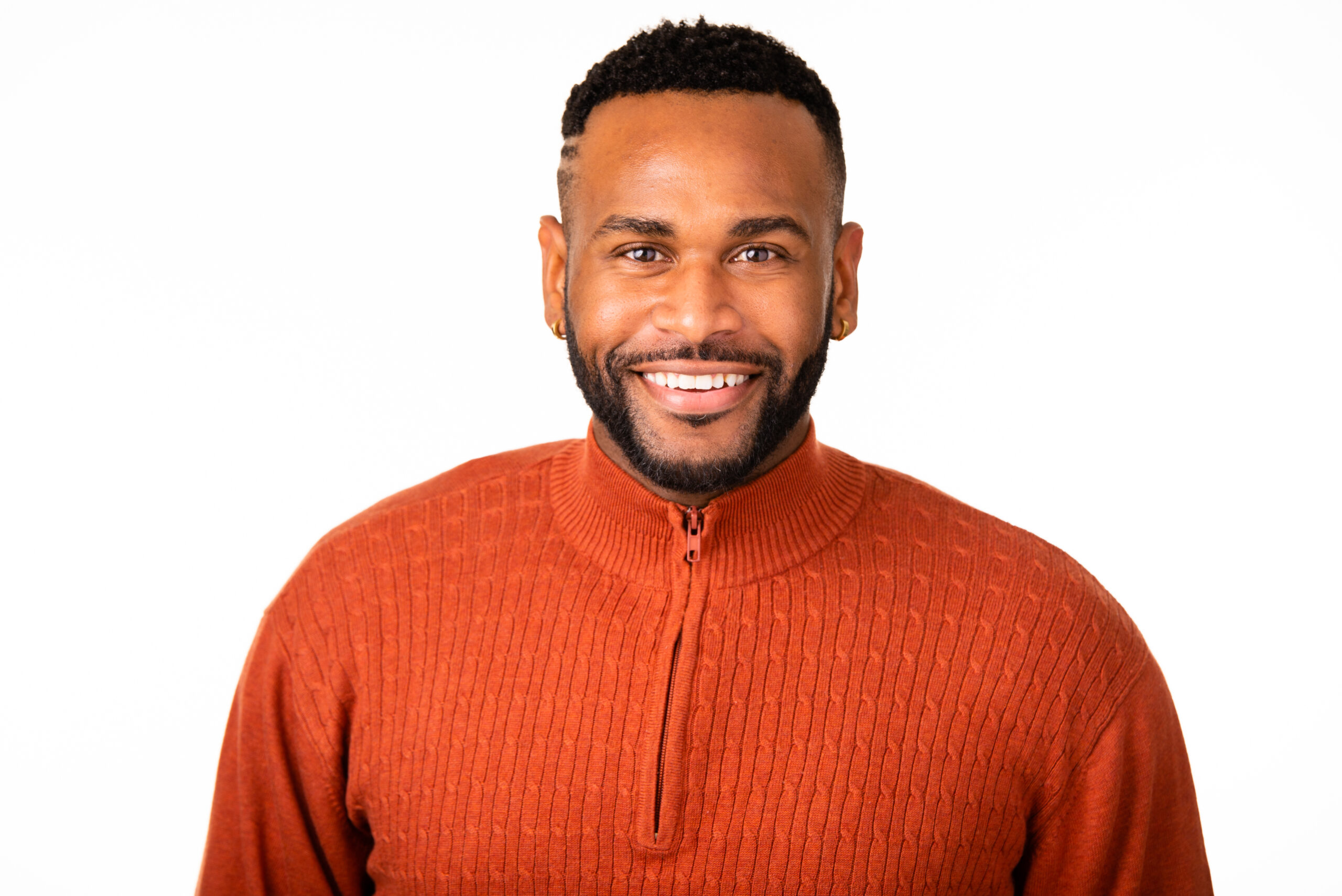
“Stay in your lane. Don’t try to ride somebody else’s, because if you do, you’ll get run over.”
Dr. Walter B. Curry, Jr. is an award-winning author, educator, and historian based in Columbia, South Carolina. Through Renaissance Publications, he documents African American family and local history, connecting ancestral narratives to broader historical themes.
About
Dr. Walter B. Curry, Jr. is the founder of Renaissance Publications and a dedicated historian and author focused on preserving African American heritage in South Carolina. A Columbia native, Curry began writing in 2018 and has since published multiple award-winning books that blend family ancestry with local history. His works, such as The Thompson Family: Untold Stories from the Past and The Awakening, trace powerful intergenerational narratives rooted in Orangeburg and Aiken counties.
With a background in education and business, Dr. Curry transitioned from teaching to a full-time literary career, driven by a deep calling to uncover hidden histories and share them through exhibitions, books, and public presentations. He also serves as author-in-residence with Aiken Center for the Arts and is a speaker with South Carolina Humanities.
Among his proudest moments is the 2020 debut of his first historical exhibition, which drew record-breaking crowds at the Aiken County Historical Museum. Dr. Curry encourages young creatives to guard their minds, focus on growth, and honor their calling with discipline and integrity. His motto: reflect, refine, and remain rooted in purpose.
Dr. Walter B. Curry, Jr. is deeply committed to uncovering and sharing the hidden history of South Carolina’s African American communities, especially through ancestral narratives. He believes that growth both personal and professional, is the most important measure of success for creatives, not awards or recognition alone. His grandmother’s wisdom, urging him to “stay in your lane,” shaped his path and continues to guide his approach to writing, teaching, and collaboration. For Curry, storytelling is not only about the past but also about building community, cultivating purpose, and helping others discover their gifts through history.
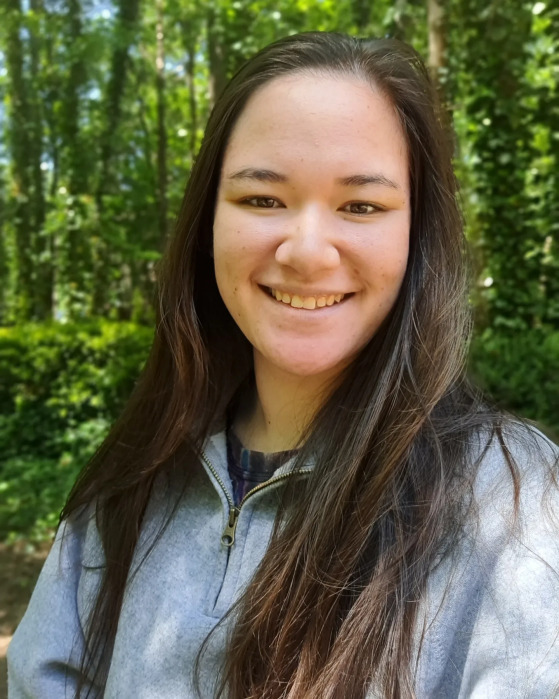
“The best outcome is when I’m not worried about how it’s going to be professionally, we need rawness, weirdness, and vulnerability.”
Madison Wu is a self-employed author based in North Carolina, crafting poetry, fantasy, and contemporary stories centered around inclusivity, vulnerability, and self-discovery.
About
Madison Wu is an independent writer whose creative work spans genres from poetry to fantasy to contemporary fiction. Working from her home in North Carolina, Madison began writing professionally in 2022 and quickly realized that creativity could be both personal expression and a path to purpose. A disabled, Asian-American member of the LGBTQ+ community, Madison brings an intersectional lens to her stories, aiming to reflect voices often underrepresented in mainstream media. “The lack of representation I see around me contributes to my desire to put more representation out there,” she shares.
Her self-published poetry collection born from a challenge to overcome fear became a symbol of boldness and healing: “If you’re afraid to get published, write 100 poems and publish it… then you can’t say you’re afraid anymore.” Madison sees creative success not in viral attention but in emotional resonance; “Someone bought extra copies of my book to give to people they meet. That’s success.”
Balancing her work through routines grounded in music, pacing, and personal discipline, Madison’s artistic life centers on authenticity. “Don’t let whatever anyone says scare you,” she advises new writers. “When you focus on what feels right, that’s when you reach another level.”
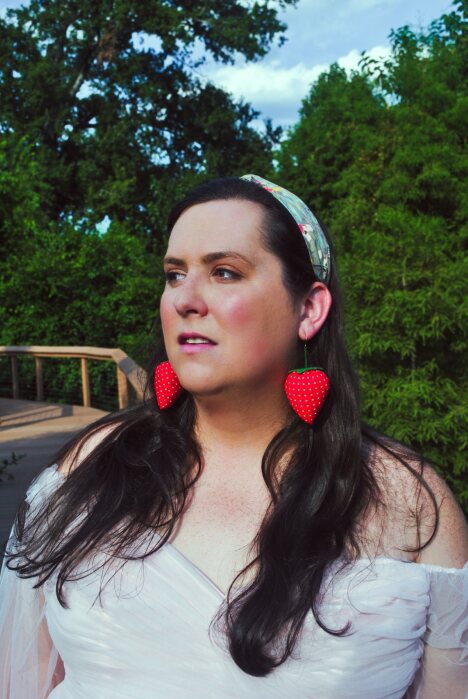
“It’s just that when we’re conceptualizing art, we always think of it as something that has happened, but not something you can do in your own life, like in the current moment. So Don’t wait for permission. Just start working and start sharing.”
Evelyn Berry, poet and educator from Columbia, SC, uses her voice to champion authenticity and queer Southern storytelling. Through workshops, editing, and her acclaimed poetry, she inspires writers to embrace vulnerability and speak truth to power.
About
Evelyn Berry’s story is one of authenticity, resilience, and artistic devotion. A poet and editor raised in South Carolina, Evelyn began writing seriously at 16, publishing in local journals and never looking back. Today, she is the author of multiple poetry collections, including Grief Slut, and forthcoming Tea for Tea, Evelyn’s writing is deeply informed by her identity as a queer Southerner and her commitment to storytelling that uplifts marginalized voices. Beyond her books, she leads creative writing workshops for festivals, universities, and nonprofits, and works as a freelance editor and library communications strategist.
Evelyn’s writing is confessional and political, shaped by her experiences as a queer person in the South. “It’s impossible for pretty much anything I write not to be viewed by others as political,” she said. In a world where many discourage political storytelling, Evelyn insists on honoring the truths of lived experience. Evelyn’s work reflects a deep love for art and advocacy. As she shared, “All of our lives are very political,” and her writing unapologetically reflects that truth.
She emphasizes that success is “writing something that people respond to… that might change how they think or how they feel.” Her advice to aspiring artists is simple yet bold: “Don’t wait for permission. Just start making and start sharing.”
Through her books, mentorship, and community work, Evelyn creates space for voices often silenced. Her story is a reminder that art is both personal and communal and that creativity, when wielded with courage, can shift culture.
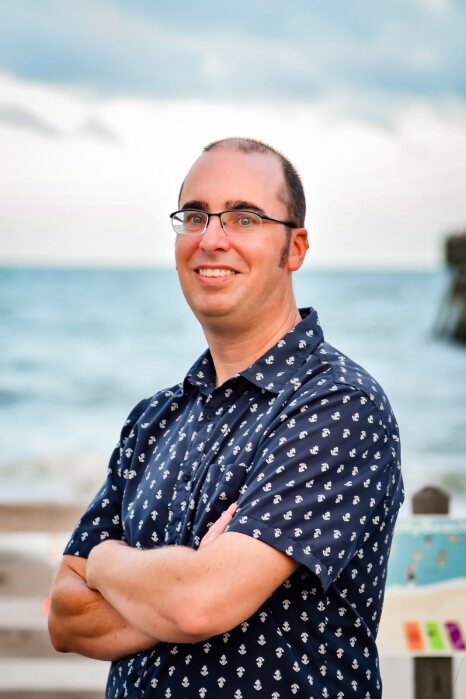
“If the car accident hadn’t happened, I couldn’t have asked for a better career for me.”
Mystery author Caleb Wygal turns personal tragedy into literary triumph through the Myrtle Beach Mysteries series.
About
Caleb Wygal is a full-time author living in Surfside Beach, South Carolina, and he’s mainly known for his Myrtle Beach Mysteries series. His journey to becoming a successful writer was anything but straightforward. It all kicked off during some quiet moments at a slow office job and took a serious turn after a bad car accident that almost derailed everything.
Caleb talks about how a traumatic brain injury made him relearn the basics, walking, talking, and even writing his name. Doctors said he’d never hold a full-time job, but he proved them wrong. Some folks say his stories helped them learn English or get through tough times in the hospital.
What started as short stories born out of boredom has turned into a popular book series, thanks in part to the strong author community around South Carolina’s Grand Strand. From writing on the beach to getting featured on local TV, Caleb’s journey is packed with creative twists, small-town inspiration, and some pretty memorable moments, like when he spilled the beans on a local talk show that one of his murder victims was based on the host. For Caleb, success is simple: paying the bills and bringing joy to his readers. With each new mystery, he continues to prove that storytelling is not just an escape.
“Take time to celebrate every achievement, because it’s huge. And your creativity is a gift. You’ve got to keep stewarding that gift.”
Ronda Taylor is a poet, writer, storyteller, and program director of Youth Empowerment Services, a non-profit organization in Charleston. Taylor earned a B.A. in English with a minor in creative writing, as well as a Master of Arts in Writing, both from Coastal Carolina University. She published a children’s book titled Radiant Girl: Daughter of the King (2024), and her work appears in two poetry anthologies: This is the Honey (2023), edited by Kwame Alexander, and Ukweli: Searching for Healing Truth (2022) Taylor is the founder of Seen Heard Loved Publishing, LLC.
Interview
Transcript
Ronda Taylor
My name is Rhonda Taylor. I am a poet and author. I’m also a program director for a nonprofit organization called Youth Empowerment Services. So we were middle and high school girls, and I live in Charleston, South Carolina.
Emma Plutnicki
Perfect. And how long have you been working there?
Ronda Taylor
The nonprofit?
Emma Plutnicki
Yeah.
Ronda Taylor
The nonprofit, was technically at the beginning of last year, so January, but I have been working in my different capacities since 2020. I actually was introduced to them because of my poetry. I did a poetry event at their annual Dream Girls Conference that brings in about 1,200 to 1,500 girls from across South Carolina. And then I just started serving and volunteering, and then I ended up loving it so much, that I ended up becoming program director. So.
Emma Plutnicki
Amazing. So, would you say that that conference really helped spark your career? Without that conference, do you think you would have ended up where you are now?
Ronda Taylor
I think it was a big turning point. But, I think it was always there.
Emma Plutnicki
Like, yeah.
Ronda Taylor
happens for…creativity was always there. That’s what I went to school for. So, I was always pursuing that. And then that conference just kind of solidified, is what I would kind of say. It solidified what I already knew was kind of my passion, and then being able to work with young people. It just all aligned, with what I was looking for.
Emma Plutnicki
That’s Amazing. So, what background did you have that specifically helped you learn that role? I know you said that you’ve had some interest in creative fields before, but what specifically in that role within your background helped you land that?
Ronda Taylor
So, of course, I’m alumni from Coastal Carolina University. So, I’ve always wanted to write, I’ve always kind of been creative and artsy, so I knew if I went to school, it would be for writing. And so I went to Coastal. I got my bachelor’s in English with a minor in Creative Writing. And then, I went on to get my Master’s in writing. And so I think I got introduced to the Athenaeum Press in undergrad. And I loved it so much, I continued to stay with it even in my graduate program. And so all of those things were very helpful to like, set the foundation. And then, during my college career and being a part of things like the Athenaeum Press, it just helped me refine more and more what I enjoyed about writing and what I enjoyed about my creativity. So with the Athenaeum Press, cultural things that that the press highlights, different communities, that was always important, because it felt like it was creative storytelling with a purpose. And that’s what I love. Is creative storytelling with a purpose.
Emma Plutnicki
Yeah, amazing. So, can you please walk us through a typical workday? What your process looks like? what’s expected of you on a daily basis, is every day the same? Does it change?
Ronda Taylor
Every day is not the same, which is hard to… It’s so hard to answer. Because I don’t have like a specific structure, like I go into the office, I do what I need to do, and then I leave every day. So, like, vastly different. It just depends on what each project or thing requires. And I think the Athenaeum Press kind of set me up for that too, because you could be doing a bunch of research on a computer or in a library at a research center. Or you could be in the field, visiting St. Helena Island, talking to different people in the community, like, it just depends on on what’s needed at that time. And so, like I said, I work with a nonprofit. And so we do a lot of mentoring. And so, it could look like going into schools and group homes and talking to students. We have different Summer programs and Fall programs. Sometimes, we take the kids on cultural events. The students on cultural events. And so, yes, not just one thing, it looks very different.
Emma Plutnicki
Yeah.
Ronda Taylor
Each time, depending on where my creative will is, I’ll make space to write. I’m also working on a book right now. I’m coming out with a children’s book called Radiant Girl, Daughter of the King. And so, there’s also the business entrepreneurship side of creativity. Of just figuring out, okay, how do I get this book out there? How do I market it? How do I, how do I fund this? Invest in this? Invest in my creativity. And so, when I graduated from school, one of the biggest things that I did was, I was like, I really want to pursue writing children’s books. I really want to pursue poetry. And so what I did was, I would go to different writing and author events to connect with people. And that was the big thing, is for me to network. I would go to conferences and retreats, and I created, like, some of the best networking experiences I have, like, I’m on personal levels with, with authors and illustrators that I was inspired by and I look up to. And so, that was a lot, but, I’m saying that because not every day is the same, but it’s also very exciting because you never know what the day will bring.
Emma Plutnicki
Yeah, and no, I love that. And so, you mentioned some projects. So, how many projects at a time do you typically work on? Are there set projects? Or is it more just whatever pops up? Or are you working on long-term projects? Short-term projects? All at the same time? And how do you juggle those?
Ronda Taylor
Yeah, great question. I would say, naturally, I would prefer to work on one thing at a time. But as I stepped more into this world, it’s kind of multiple things at once. So, like I said, I’m coming out with this book project. And I have to learn a lot about watching the book and getting it into libraries and getting it into stores and making sure that it’s online. And all of those parts are a lot of things that lead to kind of one. But also, within that I have a publishing company that I published through. And, the goal for that is not just to publish myself but eventually to publish future authors, to partner with illustrators, and just different people in the publishing world. And so, I have a long-term goal, which is, I really want to have a solid and successful publishing company that, you know, produces diverse. Which is really important. Diverse work, for children and for future generations. And so, I would say multiple projects, even though that’s not how I’m naturally built, it’s, it’s just a learning curve for me, and it stretches my capacity or stretches me outside of my comfort zone, but that’s, that’s also how you learn.
Emma Plutnicki
Yeah, I love that. And can you describe a defining moment in your creative journey? You were just talking about the book, that might be it, but, maybe a particular project that has made a significant impact on you, or something that you produced that really just was the pinnacle of your creativity.
Ronda Taylor
Oh, I think it’s a lot of little things, honestly, that makes it kind of grand. Because when I really look and reflect, I’ve been able to accomplish some really great things in a short amount of time. And if I don’t take the time to reflect on those little things, I’ll just be so focused on going forward that I won’t even realize my successful moment. So there’s a few I think, honestly being published, this is a big deal. I’m publishing two Anthologies, as a contributing poet. So, one of them is Ukweil: Searching For Healing Truth. And then the other one is a big one, which is. This is the Honey, edited by Kwame Alexander. Those are really two beautiful moments, especially with This is the Honey, because I’m in a work of art with, literally, poets, black poets that I grew up on and who I’m inspired by. Some who are personal friends, and also people that I’m learning about, I’m within that, that community. And that’s really awesome. And then on top of that, I’m releasing my first personal project, which is a really huge step. It’s something like if you’re a kid, and like the goal, and your dream was always to be published and have your own book, like, this is the moment where I can say, I’m going to be able to hold my own book in my hand, and other people will be able to read it, I’ll be able to share it with young girls, I’ll be able to share with children and their families, and they get to take that book home and read it and enjoy it. That’s very exciting.
Emma Plutnicki
Yeah, that’s amazing. That’s gonna be great. Do you think it was, has been challenging in this field? This is a very difficult field, for sure. But how have you been able to kind of face the challenges that you’ve found along the way? And conquer them?
Ronda Taylor
For sure. Specifically, with the writing. When I came home, I took a really big step to pursue this. And so, you never know what that road looks like, and how much it takes to get through that. And so, you do have disappointing moments where things didn’t work out exactly how you saw it in your head, but you have to take those disappointments and the rejection and just redirect.
Ronda Taylor
And so, that’s what I had to learn in this process is just, you had this destination, and you weren’t able to go this route, but you’re able to redirect, and you’re still getting there. And so, still, persevere, still endure. Try a different way, and know that it’s okay, and what’s for you is for you. And so that’s what I had to learn, is, I had to shift and make that change. And so, I’m still in a beautiful place, even though it took me a different route to get here.
Emma Plutnicki
Perfect. I love that. And can you recommend any specific skills that someone should have to increase their chances of you know, making it in this field? Are there any specific skills that you use on a daily basis that you find are particularly important in your work?
Ronda Taylor
I would say networking has been really important. Finding those spaces where there’s just opportunity for community has been important. So, that’s looked different in different ways. Sometimes, that looks like specific memberships, being a part of a children’s membership. Being a part of even social media, Facebook groups. You can find really great communities and opportunities for networking and mentorship. When I don’t have the answers. I ask questions. I find someone who I admire, and I see what they’re doing, and I want to do something similar, and I just shoot them an email or shoot them a message, and I don’t get a response from everybody, but when I do get a response, people take the time to pour into me, share with me their insight, and those things have been really huge. I’ve also made time just to invest in myself. That might look like a workshop or a class just learning more about whatever field I’m interested in and passionate about. And so, that’s how I pursued that. And a really helpful thing for me, because you mentioned the South Carolina Arts Commission. I received a grant from the South Carolina Arts Commission, the Artists Business Initiative Grant, and that was really huge to help me launch a publishing company. And to invest in an illustrator, invest in a website, and be able to make that dream of publishing a children’s book come true. So, that was a very helpful thing as well.
Emma Plutnicki
Yeah, amazing. So, for networking that you mentioned, are there any specific programs or organizations or events within South Carolina that you find particularly important for networking, or things that you’ve gone to?
Ronda Taylor
Yes, for me with writing, I think about independent bookstores that we have. Which are really important. So Best in Books has been a great community partnership. That’s where we did a poetry reading with This is the Honey, and that’s a great community partnership. There’s Turning Page Bookshop, which is an independent Black-Owned, Black Woman-owned bookstore in South Carolina, which is very rare. So, those independent bookstores are great communities; the Charleston Libraries, of course, are just great for me. And then different people like our Charleston poet Laureate. Formerly, was Marcus Am . He’s doing great things in the community. And now in Asia, Asian man, she’s really great as well. And so I just tried to find specific events and conferences, and people to connect to.
Emma Plutnicki
Yeah, perfect. So, as we’re wrapping this up. Do you have any advice for current college students or young adults who are about to enter the workforce and looking to make a start in a creative field of work?
Ronda Taylor
Don’t get discouraged. Definitely keep going. Definitely surround yourself with a community that will support you and encourage you. And yeah, just just keep, keep going, keep moving forward, because it will happen even if it doesn’t happen in a certain way. And take, take the time to celebrate every achievement because it’s really huge. And your creativity is important, and it’s a gift. So you just got to keep stewarding that gift.
Emma Plutnicki
Yeah, that’s great. Well, thank you so much.
Emma Plutnicki
I’ll be reaching out to you for a few more things. Thank you for sending over the headshot. That’s great. And would you be open to speaking to our team again, if anything comes up?