Tag: Nonprofit

  • Marsh Deane

    “Especially because right now is a digital world, the world is just an open oyster for creatives so just do it. Otherwise, the dream will just stay in your head.”


    Marsh Deane is a filmmaker, photographer, and outdoor educator based in Pawleys Island, SC. Through his business ML & L Media, he captures South Carolina’s hidden stories and landscapes with heart and purpose.

    Interview

    Transcript

    Creative Careers – Marsh Deane  

    Lexi Raines 00:00 

    So, first, just give a little introduction of yourself. What do you do for work and where are you currently working from? 

    Marsh Deane 00:09 

    So, my name is Marsh Deane. I’m a photographer and filmmaker, and an outdoor educator, and I’m based out of Pawleys Island, South Carolina. I own an independent media company called ML & L Media. 

    Lexi Raines 00:26 

    That’s awesome. So how long have you been doing this? 

    Marsh Deane 00:30 

    Well, I’ve been into photography since I was in middle school. So, really, probably 20 years as a photographer, but as a career, I only started in 2019 when I graduated from Coastal Carolina, so I’m in my sixth year in this career. 

    Lexi Raines 00:52 

    Yeah, that’s amazing. So, you said you work in Pawleys Island. What’s one thing that you love about working as a creative in South Carolina? 

    Marsh Deane 01:01 

    Well, for me, it’s definitely the access to nature, the access to the outdoors. Here along the coastline, we have, of course, amazing beaches that everyone knows about, but we also have amazing river systems. We have Cypress forests; we have remote barrier islands. We have a lot of special places that have been conserved and are kind of off the beaten path. 

    And a big mission of mine as a creative is I try to document, and I try to showcase our heritage. I try to showcase the parts of South Carolina that visitors don’t see and really, as an outdoors enthusiast, it’s a playground for me. I’m a boater, I’m a kayaker, and that’s kind of what I’ve become known for.  

    Lexi Raines 01:53 

    I would completely agree on that. I think that a lot of people, whenever they think of South Carolina, only think of the super touristy parts. And yeah, we do have that, but we also have a lot of other stuff. So, what do you think South Carolina brings to your work, and what is its unique influence on you compared to being anywhere else? 

    Marsh Deane 02:15 

    Well, I’m born and raised here, and a kind of unique part of my story is that I grew up in historical locations. My parents were antique dealers, and they purchased old plantation properties, and so I was very, very lucky to grow up on 50-acre properties by the river in 150-year-old former plantation houses.  

    And when you grow up in a place like that, on one side, I had the natural beauty, I had access to that which really shaped my development and my interests. And then there also is a negative side to our history, and I learned about that at a young age. We had slave cabins on the plantation that I grew up in, and so I learned about that history, and I learned about, you know, the dark truth of the South Carolina story. And that also shaped my interests, and it shaped the stories that I wanted to tell. And so, for me it’s a very personal journey as a proud South Carolinian, I hope to tell our story. I hope to share our heritage.  

    Also, in this area, we have a lot of tourism and a lot of development, and so I see a unique opportunity that as this region changes, part of my job is that I can capture moments in time, and I can tell these stories while we have them, because I know that down the road, this area is going to change so much, and I feel a little bit of a weight on my shoulders that as a South Carolinian, I’m trying to preserve some of our heritage for the future generations to enjoy. 

    Lexi Raines 04:05 

    I think that’s definitely an amazing thing to do, for sure. How would you describe your local professional community? 

    Marsh Deane 04:13 

    Very giving. I live in Pawleys Island, and we’re a little tourist town, and when I started out, I was with the Georgetown RISE program at Coastal Carolina. And from there, I was connected with the nonprofit world. We have a lot of nonprofits in this region, and I started marketing for the nonprofits. And I found out that this area is just so giving, from churches to school groups, just to community groups.  

    I mean, there are, I believe now, in Georgetown County there are 90 different individual nonprofits that you know have community missions. And so, I’m heavily involved with that. Southern hospitality, that is alive and well down here. And that can really impact your career, you know, especially as a creative finding ways to share the positive stories and the positive giving nature of this region. 

    Lexi Raines 05:12 

    One thing I’ve noticed is that everyone who moved here from the north, their number one thing they always say is everyone’s just so friendly, so like, I’m glad to hear that it’s the same in the professional community as well. So how would you define professional or personal success in your creative endeavors? 

    Marsh Deane 05:29 

    For me, it’s really about having a tangible impact that you can see. In the creative industry, there’s many, many different paths you can take. And nowadays we get sidetracked by social media. We get sidetracked by, you know, followers and views and short form media, right? And that gets a lot of attention, you know? So, you can focus on, “I am really going to try to focus on social media, Instagram, YouTube, and get those high views?” And there’s certainly a great career in that, being an influencer, but there’s also other things.  

    For me, it was more getting involved in local communities, creating short films that were, you know, supported initiatives that I’m interested in. So yeah, as a creative our work is individualized to us. It is an expression of us and our energies and our efforts and our interests. And so, no matter what it is, whether it’s on social media or whether it’s in the local community, there’s so many ways to feel justified and fulfilled in your time spent in this creative industry. And there’s so many different niches. There are so many different things that you can do nowadays, and it’s very rewarding. Once you find that path that’s working out, and you find that that job or that that gig or that niche that satisfies you, it’s just extremely rewarding, in my opinion, more so than any views or really any dollar amount, is just the satisfaction of being an artist and knowing that I’ve done something that has created a ripple.  

    Lexi Raines 07:11 

    Yeah, I completely agree with that. I feel more like long form content has definitely been lost with the rise of social media. So, I feel like it’s awesome that you are still finding beauty in that, because I think there is a lot of value in it. What was your biggest fear when you first decided to pursue the arts professionally? 

    Marsh Deane 07:33 

    Definitely the biggest fear is, you know, going out on a limb by yourself, not having a boss, not having a company that you’re working for, not having a guaranteed paycheck when you start a business as a creative.  

    The great thing about it is that you can shape it to what you want to do and have not having a boss is great, right? Setting your own schedule is great. But there’s also immense pressure with that, because you realize you are the one responsible for the income. And so, it definitely is; it’s taking a leap. It’s taking a leap of faith, if you really commit to it, I think anyone that takes that leap is going to find success, especially because right now, it’s a digital world, and so the world is just an open oyster for a creative, you know?  

    And again, whether you’re going to focus on social media or you’re going to focus on the business side of it, there’s just every company, every industry, every business needs marketing, needs to tell their story. And so, there’s just so much out there you might not even know when you take that leap. You might not have a clue what you’ll be doing next year, but you have got to take the leap to find out.  

    Lexi Raines 08:47 

    I think that is definitely one of the most important things. I’ve talked to a lot of creatives, and they have all said that you just got to take that leap. I agree that it’s very important. Can you describe a defining moment in your creative journey? Was there a particular project that made a significant impact on you?  

    Marsh Deane 09:09 

    I would say probably my internship with the Village Group started it off for me. I had been doing some real estate photography, and so I knew that I could make money doing real estate photography. I knew that there was some potential there, but it didn’t fulfill a lot of satisfaction. It was a great career to be in.   

    I started my internship with the Village Group, and I was doing marketing, showcasing what this nonprofit is doing for children in a rural Plantersville community. And through that nonprofit, first I was doing marketing, but then they found out, “Oh, well, you like the outdoors? Hey, would you like to take our students on an outdoor walk? “ 

    And then that outdoor walk began, I brought my cameras along, and I let the students use my cameras. Then that became a Media Club, and we got a grant, and we got 20 cameras for the students. It quickly went from a marketing internship to a teaching opportunity, and it was just this eureka moment, because I loved it. I mean, taking these, these kids, out into the woods on a nature trail, giving them cameras, and kind of teaching them photography, and just seeing how just how interested the kids were, it’s a fun class to teach, and so I get the best out of the students.  

    And that was the moment where I was like, I definitely want to do this for the rest of my life, if I could just keep doing this, finding an avenue to, you know, combine my camera, the outdoors and people having a good time, and the Village Group having that internship through the Georgetown RISE program. Had I not done that, I have no clue what I would be doing today.  

    Lexi Raines 10:58 

    That’s so special, like, I’m sure you made so many special memories for those kids, and you also showed them that you might have given them something they really love too. So that’s actually awesome. So, what’s the best and worst advice you’ve ever received?  

    Marsh Deane 11:15 

    I guess the best advice I’ve received in many ways over the years, the Nike slogan, “Just do it”. Just do it!  

    It’s so easy. Nowadays we’re surrounded by comfort, and it’s so easy to put things off. It’s so easy in the evening to, you know, sit down and turn on the TV. But if you have any goal, you have to just do it. You have to… sometimes you have to give yourself that little kick in the pants to get up and chase that dream, to make that project that you want to make. Otherwise, it’ll just stay in your head. You have to just do it.  

    You know, action, and especially nowadays, I think a lot of my generation and younger, with all these distractions around us. I think a lot of us do struggle with procrastination. And so, really, the best thing is you have to get up and do it. You know, you got to be moving, momentum.  

    The worst advice being opinionated online, I tell students, just to be careful with, you know, online right now, there’s so many different things going on in the world, and we’re all very passionate about many things, and online discourse, as we all know, gets very… it’s easy to misunderstand, it’s very easy to misunderstand people, and then it gets Negative pretty quickly, right? And so, I’ve learned just that you put something out there, and you really need to take the time to make sure that your thoughts are understood by the reader in the way you intend.  

    And let’s say, if they’re not understood the way you intend, don’t take it personally, and don’t get in those comments. And you know, it’s easy to get even a little triggered online. And that goes for all of us, and I admit to that. And you know, sometimes you can turn away viewers. You can turn away the audience you’re supposed to reach, just with online misunderstanding. Not bad advice that I’ve received, but I do just that’s, I know that that’s advice I try to give my students of things not to do is just take a little slower online when dealing with other people and just understand communication. We’re meant to communicate face to face and see each other and hear each other’s tone, I don’t know if that really answers the question.  

    Lexi Raines 13:49 

    It does. I think that. I think that is good advice, because I feel like if you don’t listen to that, there is so much that could go wrong in that situation. So, can you walk me through a typical workday? What does your process look like and what is expected of you on a daily basis? 

    Marsh Deane 14:07 

    Well, so the cool thing as a creative and owning my own business is that I am my own boss, and so I get to wake up when I like, usually, I’ll wake up between eight or nine, but it depends really, you know what’s on the schedule.  

    I have set up my business, so that most of the work I like to do after 10am, I like to give myself that extra time in the morning to kind of wake up and have a slower pace. So usually during the day, after 10am it’s meetings, I’m going out into the community to different locations for photo shoots or video shoots, interviews, and then the afternoons and the evenings are usually set aside for editing time and editing as a creative that’s one thing.  

    Yeah, we work a lot. We work a lot behind the scenes. Often, I’ll be editing until 11 or 12 o’clock at night, and so I’ll tell some people that I work 80 hours a week, but those 80 hours aren’t what you would typically think of as work. You know, because sometimes I’m sitting at the computer, I’m working on a project, but I am also, as the computer is rendering, I’m pulling out my phone and on social media, or I’m multitasking, I’m bouncing around.  

    My days are very, a little disjointed, you know, I’ll spend an hour working on something, and then I’ll get up and walk around my yard for a little bit, do some yard work. I’ll go inside, you know, make a meal. So, I don’t really have a set schedule. I don’t have a nine to five, and I love that. But also, again, sometimes it is annoying, you know, when you find yourself at midnight still editing and working on that project.  

    So, for creatives you kind of have the power to be as structured as you want or as unstructured as you want. I’m unstructured by nature. I’m ADHD. But I would definitely say being a creative, you do have that power to structure your life, whatever way you wish. And I think that’s amazing. I tell many people that I get up when I want to, I go to sleep when I want to, and I schedule work when I want to, but of course, you schedule your work around your client and when they’re available, and so really, on a week to week basis, it changes.  

    I travel a lot for work, which is great, and there’s also a lot of time spent, though people don’t see this as a photographer or any creative, there’s a lot of time spent packing gear, charging batteries, processing data on the computer, and if for painters or other you can translate that into dealing with, you know, the paint or your canvas, there is a lot of unseen It’s not as glorious as you think, being a creative, there’s a lot of time doing busy work in between to get everything lined up so that you can create. 

    Lexi Raines 17:09 

    I feel you have already explained this a little bit, but how do you create a work life balance where you’re able to maintain, like your professional creativity, your personal creativity, and what are some habits that you have that you think would be beneficial to others wanting to pursue the arts? 

    Marsh Deane 17:26 

    For me, having a work life balance, there really is no, well, it’s unbalanced, but that’s a little bit of a good thing for me, because it is my passion. All my time, every day, I’m working on projects. Some days that’s a project for a paid client, so it’s work. But then there are other days when I’m working on a personal project. And those personal projects, it might be a video going out into the swamp and showing people a really cool tree, right, or YouTube videos.  

    So, my balance is that I’m balancing the professional work and then personal work. The passion work, right, the work that I want to be known for, the work that I enjoy. I’m not getting paid for it, like the YouTube videos, or the swamp adventure videos. That’s not my career, but I do see it as work, because I see it as my portfolio, I see it as my legacy. And so, for me, it’s having that passion and doing what you love. If I didn’t have the time to do those personal projects that I enjoy, I probably would be miserable.  

    And so, I think, for any creative just make sure that, yes, you’re doing a lot of work for clients that are going to get you paid but make room for the personal work that you want to do. I feel that most creatives are always working on something, and so just be sure that some of that is giving you enjoyment. It’s for you, it’s for your soul, it’s for your satisfaction as an artist, because you can get burnt out really easily. And I certainly got burnt out about a year or two into my journey, because all I was doing was working for money, working for other people’s vision, and I wasn’t doing things for myself. 

    Lexi Raines 19:19 

    I think that’s honestly really, really amazing advice, because, as you’re saying, it is so easy to get burnt out as an artist. 
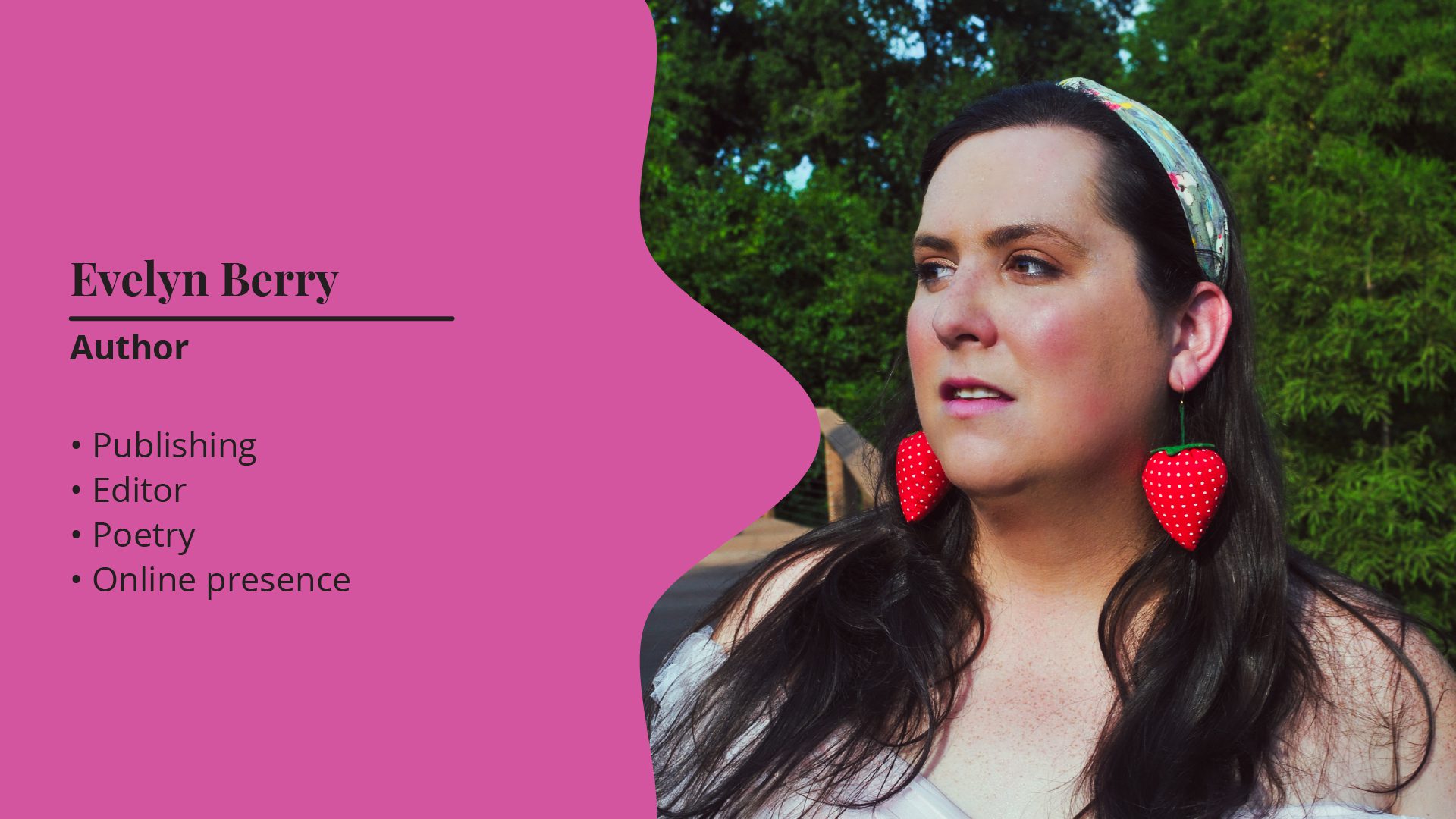
  • Evelyn Berry

    Evelyn Berry

    “It’s just that when we’re conceptualizing art, we always think of it as something that has happened, but not something you can do in your own life, like in the current moment.” 

    Evelyn Berry, poet and educator from Columbia, SC, uses her voice to champion authenticity and queer Southern storytelling. Through workshops, editing, and her acclaimed poetry, she inspires writers to embrace vulnerability and speak truth to power.

    Interview

    Transcript

    Lexi Raines 00:00 

    Alli, okay. So, first just give us a little introduction to yourself. What do you do for work and where are you currently working from? Yeah. 

    Evelyn Berry 00:08 

    My name is Evelyn Barry. I was born and raised here in South Carolina. I am an author of a book called grief slut, which was published last year by sundress publications, as well as some chat books called buggery and glitter husk. I have another book coming out next year called Tea for tea, from a small harbor press. In addition to writing and publishing, I teach workshops at organizations, whether that’s a nonprofit that’s looking to bring me in for a workshop series, a literary festival that wants to bring me on for a panel, a conference where I’m going to do kind of like a masterclass seminar with students, either online or in person, as well As universities. Where I might come speak to the classes, lead a couple of classes, and then usually do like a masterclass in reading at that university. In addition to that, I am an editor. Yeah, I would say, big role, besides writer and educator, is as a freelance editor, so I work one on one with writers all across the country on their manuscripts. This might look like helping build better writing practices where we talk about how they can deepen their craft, or it might look like helping them navigate the like the world of professional publishing. How one seeks agents, how one seeks publishing opportunities, how you write cover letters and things like that, or even find out about these kind of publishing and funding opportunities. And then my day job, which probably comprises of, like, probably two thirds of all of the money I made last year, is as a library communications strategist. So, I work with staff at a pretty large library system here in South Carolina and help with employee communications that might include anything from drafting all staff emails to share operational updates, creating talking points to help staff talk to and discuss kind of interesting, relevant topics with our communities. This might be a new initiative, an art gallery. Maybe it’s something that’s happened in the news that we want to make sure staff are equipped to talk about, and also staff newsletters, so this includes a lot of blogs that feature staff stories’ this could be anything about a staff who really likes speaking, and it’s about their love of baking, or it might be about staff who run programs using tabletop role playing games, or sometimes like a Storytelling Festival that we’ve had at the library, things like that. So, anything kind of communications wise that might be shared with staff. I usually have a hand in, and I’m sitting on different committees for different projects. 

    Lexi Raines 03:23 

    Awesome. You sound very busy, but that all seems very exciting. 

    Evelyn Berry 03:27 

    It is very busy. It’s a full schedule. Yes! 

    Lexi Raines 03:32 

    I’m sure. So how long have you been writing?  

    Evelyn Berry 03:38 

    So, I’ve been writing since I was a kid, which I think is pretty common, though, I’d say probably started writing seriously around the age of 16, when I was that’s also when I started to publish in literary journals. I was around the age of 16, you know, both obviously in my like high school literary journal, but also in some community literary journals, and then a little farther afield by the time I got to college. I kind of started in high school publishing short stories and poems. I also used to write some articles and a semi regular column for like, a local arts alt weekly newspaper in Augusta. 

    Speaker 2 04:19 

    Georgia. Oh, that’s so cool. That’s all, that’s actually awesome. One of my first paid. 

    Evelyn Berry 04:24 

    Writing gigs, and I think I was just a precocious teenager. Very much precocious.  

    Lexi Raines 04:32 

    What’s one thing that you love about working as a creative in South Carolina?

    Evelyn Berry 04:38 

    In South Carolina, there’s a fairly close-knit community of writers. I think that one of our one of our strengths, is the small size of the state, both in numbers as well as geographically, which means that it’s really easy. Get to one another. I live in Columbia, so within two and a half hours I can pretty much get to any other city which offers a lot of really cool opportunities. When I started to write, I probably had no real business like teaching or writing book reviews, or, like, writing articles in magazines. But a lot of older writers took me under their wing and kind of believed in my work, and, you know, helped me navigate those processes, helped introduce me to new opportunities, and that was tremendously helpful. I don’t have, like, an educational background in writing. I did study English, and I don’t have an MFA, don’t have a PhD, but what I do have is, like a massive village of writing mentors throughout South Carolina and beyond. Who care really deeply about community, and so that’s, that’s a big thing I really love about South Carolina. It’s gotten to the point now where, you know, anytime I go to pretty much anywhere, no matter how small. I know someone there, you know, and I know someone I can grab coffee with, or who would be glad to have me over at their house and, you know, eat dinner their family. Just because, like, that’s kind of what the writing and the arts community at large is here, which is, is really beautiful.  

    Lexi Raines  06:26 

    It is super beautiful. I’ve heard a lot about that in my interview. So it is, I think it’s super awesome to hear that. It really is just a huge community. So, what does South Carolina bring to your work compared to anywhere else.  

    Evelyn Berry  06:43 

    I mean, I grew up in Aiken, South Carolina. I went to school in Charleston, South Carolina. I live in Columbia, South Carolina. Now I’ve you know, spent the majority of my life here in South Carolina. So. it’s kind of impossible for the landscape, the culture, the language, the stories of South Carolina not to seep into my work. I write confessional poetry which is often very biographical. So, the experience of living in the South, especially as a queer person, has kind of informed most of my creative work. Also, in the past, I’ve had the opportunity to work in different capacities in archives, as well as write in response to materials from archives, and it’s gotten me really interested in South Carolina history. I specifically am really interested in South Carolina’s queer history and the ways in which queer people have kind of fought for our rights here in South Carolina, whether that’s the like 1989 ACT UP die in at the state house, or the first Pride festival, which was only like 35 years ago, or, you know, even some of the more, like illicit parts of history, like the history of cruising down in Charleston, South Carolina, from like the sailors and things like that. So there’s all of these, like interesting stories, whether it’s like stories of resistance, or kind of sordid stories, or really fun stories. And I think people don’t think about that when they think of South Carolina, other parts of history. And I’m really always interested in what different spaces and places offer up in terms of their history. 

    Lexi Raines  08:39 

    I completely agree. I think South Carolina has, like, a very diverse history that, like, not too many people know about, like outside of those specific communities. So, I feel like just bringing out that research is super cool. That’s awesome. 

    Evelyn Berry  08:55 

    Yeah, it’s been super fun, especially, you know, I’m not an academic, I’m not a historian, so I get to have the freedom of doing things creatively, which gives you a lot of leeway with these things, which is, which is a lot of fun. How 

    Lexi Raines  09:10 

    Would you define professional or personal success in your creative endeavors? 

    Evelyn Berry 09:15 

    Um, I think that personal success, I think usually comes when you’ve written something that people respond to, that speaks to them. That might change how they think or how they feel, or just move them in some way. I would say the best kind of response that I’ve gotten from like books, is people I’m talking about what it meant to them, whether that it’s, you know, helped vocalize something about their own life that they had never seen on the page before, or that it helped them write something about their own life. Think, which I think is always super cool to see. So I think that’s kind of personal success, professional success, I think is a little bit trickier, because, you know, we do live in a society where you got to pay rent, got to have health insurance. So, I think that if you can consistently get projects and you know, say for poetry or novels, it’s consistently getting published, consistently getting invited to festivals and conferences to teach, so that you can kind of maintain a steady income, which is extremely hard to do because, you know, funding in the arts is very unpredictable. Some years you might, for example, get a fellowship, which I’ve done in the past. Like, last year, I got the South Carolina Arts Commission fellowship. And, like, you know, that’s, that’s like, $10,000 you know, on top of what I usually make. And it’s a big, you know, that that’s, that’s a huge thing for me. And then, you know, having to think of, okay, next year you’re not going to have that. Well, how are you going to make sure to maintain what you’re doing? Like, what will you have to do differently? So I think finding sustainability is really the key for professional artistic success. 

    Lexi Raines  11:27 

    Yes, I would completely, completely agree with that. So, um, this kind of goes along the same lines of that, what was your biggest fear when you first decided to pursue the arts professionally? 

    Evelyn Berry 11:41 

    Well, you know, I mentioned that I didn’t really study English. I really wanted to, I really, you know, when I was applying to colleges and high school, all I wanted to do was write. I wanted to write stories. I wanted to write novels. I wanted to write poems, plays, whatever I could get my hands on. And everyone kind of tells you that it’s a dead end, that it’s impossible. But I think that’s also because they don’t really know anyone who’s ever done it. It’s a weird thing, because, you know, we have, culturally, an idea of artists as something from the past, right? You know, when we think about if you ask someone their favorite artist or their favorite writer, they’re more than likely going to name someone who’s dead, which is not a problem. It’s just that when we’re conceptualizing art, we always think of it as something that has happened, but not something you can do in your own life like in the current moment. So, I think that was the big thing. Is just kind of like falling on my face. I’ll say I remember feeling so like defeated at one point. So, I had a I had my first novel come out when I was very young. So, I like signed a contract when I was 19, and then all came out when I was 22 which is like, maybe irresponsibly young to publish it, to be honest. And, you know, of course, like I was in college, I had this very romantic idea of what a right being a writer was like, I, you know, got to go to, like, one or two conferences and festivals and be like, here’s my novel. And then like, reality set in really fast, which was like, you know, there’s hundreds and hundreds and, you know, there’s 10s of 1000s of novels out there. And so now, just because you’ve, you know, published one, how do you make people actually care about that? How do you sustain that kind of momentum as well? I didn’t have anything else ready to go, you know, at that point, because I’d been college through that entire editing process, and it was a couple of days after, you know, it was months after the novel had come out, interest had already dried up. Like six months in, I’d stopped doing events, and I finally graduated college, which was a crazy kind of thing. And then I remember the very next day, I was like, working at this restaurant, and I was like, a busboy and a like, I like, came up on this table, and it was like a mother with her daughter, and they were touring the college from which I had just graduated, right? It just graduated from the Honors College or top honors, and I dropped the plates in front of them, like I, like, tripped and, like, dropped plates. And the mom looked down at me and pointed at me and went, see, that’s why you need to go to college. And I remember just being like, Oh no, crazy that I’ve, like, you know, thought that I have, like, reached this height, and you think that you’re going to, like, have a single success, or you’re going to graduate from college and then launch yourself into some sort of, like, career of miracle after miracle after just like, coincidence. Yeah, but it’s much harder work than that. So, I think that’s the biggest fear, was realizing that it would not be as easy as I thought, or that, you know, luck and coincidence can only take you so far.  

    Lexi Raines  15:18 

    An English major, actually going back to your first point, like, I was terrified to be an English major. I didn’t come into college as an English major. I was originally a computer science major, and I just hated it, like it was so miserable. And like, I’ve always really enjoyed writing and like reading, and so when I made that switch, I was so much happier. And so I feel like people saying that they don’t have there’s no jobs in English is very, very untrue, obviously. So I feel like just being able to keep your options open and look for those opportunities is something that’s really important. 

    Evelyn Berry  16:03 

    Awesome! Well, I mean, I’ll just say, in response to that, like, something that I would say to anyone who’s graduating with, like, an English degree, or say, like sociology, or any kind of degree that people are generally saying that doesn’t make money, there’s, there’s a lot of jobs out in the world that you’ve never heard of that actually need the skill set that you have, and the skill set that you have, whether it’s like writing and communicating clearly, is becoming more and more rare. I mean, I’m sure you see it in your own peers. Like the ability to write a like cogent and coherent essay about a literary piece without using AI is like a huge deal these days. I see it in, you know, my communications work all the time where, like, you know, being able to quickly and correctly write, or even knowing, like, the basics of grammar or the basics of sentence construction, that’s something I take for granted. I’m like, everyone, everyone knows that. Like, duh, everyone can but that’s not true. And the more that you kind of like work in the world, you realize, oh, actually, I do have a set of skills that might be really useful to some people, and my I might be able to leverage it in real ways. Yes, 

    Lexi Raines  17:24 

    I’ve, really noticed that. And I think coastal does a good job with preparing English majors to, like, really market their skills. So it’s awesome. Can you describe, like, a defining moment in your creative journey? 

    Evelyn Berry 17:38 

    You know, what’s kind of interesting is, you know, when you’re doing creative work, every Turning Point feels like the big break. You know, in some ways, I would say the biggest thing for me a big turning point. A couple of years ago, a mentor of mine encouraged me to apply for a National Endowment for the Arts fellowship in creative writing. So these are governmental fellowships that are given to 25 writers per year. It’s a tremendous amount of funding. And beyond that, it’s quite like an honor to get it is, you know, one of those awards that people recognize on a resume and will bring you in. And at the time, I didn’t have a full length poetry collection out. The novel had been kind of a flop. I was starting to publish in different places, but I still didn’t feel like a quote, unquote, real writer. You know, I still felt like I had failed to live up to that kind of potential, and there was a massive amount of insecurity around the fact that I never went to graduate school and never studied writing. The older I got, the further I felt behind my peers, despite the fact that, you know, I was reading the same books that they were in graduate school. I was, you know, having the same conversations, going to the same events, doing this in kind of community volunteering and getting involved in the literary community. So, you know, this sort of fellowship wasn’t a sort of thing that I thought someone like me was one supposed to apply to, because it would be a waste of time, right? That it would be something no one without proper training, no one without that kind of pedigree already would be able to get a fellowship like that. But I decided to apply. I applied twice, and on the second time I got it, it was, it was really life changing. I actually didn’t believe them when they pulled me on the phone that I had gotten the fellowship, yeah. And it was just really cool to, like, have that moment of like, okay, like, this is real. Like this is, you know, it kind of was funny because it eclipsed a lot of other failures, because it didn’t really matter anymore. It’s like, well, you have, like, this seal of approval, which sounds silly, like, you know, a lot of especially universities, they look for those. Seals of approval, right? And or before they like invite you to come teach, or invite you to come read. And sometimes when you’re able to get a fellowship or an award like that, it’s just the one thing that can help you kind of stand out in the crowd. And that was really a turning point for me. I think that I was able to take myself a little bit more seriously as a writer, I was able to demand a little bit more in terms of, like, what I charge from, you know, people who were hiring me and mostly it kind of gave me, like, the confidence to continue to actually say to myself, like, okay, like, this isn’t just something I do for fun. It is actually, like, my vocation. It is the thing I’m doing with my life is to write and share stories and share poems. Congratulations! 

    Lexi Raines  20:53 

    On that. That’s actually, so that’s awesome. So it was really great.  

    Evelyn Berry  20:58 

    Cool. Yeah, I think, um, it was kind of interesting. Last year, a like, some academic did, like, a qualitative study on, like, who got these kinds of fellowships, and I was the first one to receive that fellowship, I think, in like 30 years. Like, the last person who did it was James Dickey, and so it’s kind of like, yeah, like even that, like Southern writers, rural writers are, like, massively underrepresented for these fellowships. You know, the majority of writers who get them are people who are already well-established. They’re already teaching at major universities and things like that. So it felt really good to like represent for my state as well. And I didn’t realize that until someone pointed it out, and I was like, wow. Like, it’s kind of wild, because I know so many amazing artists and writers here who deserve support, sometimes ignored by like, the national art scene. 

    Lexi Raines 22:01 

    Yeah, that makes it even more meaningful. Congratulations again. Like, what is the best and worst advice you’ve ever received? 

    Evelyn Berry  22:10 

    Unfortunately, the best advice, and I think this goes for any creative path, is just do the thing that you want to do. What I mean by that is, I know a lot of writers who think, Well, I would love to write a novel, but before I can write a novel, I need to go take a creative writing class. Before I write a novel, I need to read 10 books about writing a novel. Before I write a novel, I need to like prove myself in some way, same with being an artist. You know, I will become an artist. I will start making art once I get to the certain point that it’s proved myself. But the only way that you can actually develop craft and develop as an artist, as a photographer, as an actor, is to practice that craft. And, you know, often practice looks like failure because you’re not going to be good at it at first, right? No one is no one is like perfect or no one is skilled at what you do first, and you still might feel inadequate years later, too. But once you start comparing you know how you’ve developed, you’ll see growth. So I think that’s really important as to whatever you’re doing to begin now, you know to not kind of wait for any kind of permission, to wait for any kind of degree or certification or seal of approval from anyone else, but just to start making and also start sharing that work, even if you don’t think it’s very good, you know, upload that photography to Instagram if you’re writing stuff and you know, you know, go ahead and send it out to literary journals. If it’s not getting published in literary journals, like print it in a zine. Share it with friends. Once you start to get into that cycle of creating and sharing art, you’ll kind of you’ll do some more often, the worst advice I’ve ever gotten, I think that the worst advice I’ve gotten is that one should separate, not write about politics. I think a very common thing, what used to be a very common thing in the arts, and especially in writing, was that, you know, people didn’t want to read, you know, quote, unquote, political stories or political art, because it was very heavy handed, which it definitely can be for sure. You know, we’ve all read work that is very heavy handed in that way. But I think it’s really important to think about why that advice is given and Who Gives it often. You know, the lack of politics is not. A lack it is just like a defense of the status quo. And so art that does not engage with values that might be seen as quote, unquote, political are still political. You know, they are. They’re maintaining a kind of status quo, a patriarchy of white supremacy, you know, kind of this, this, this kind of paradigm, right? That is seen as the quote, unquote norm or seen as apolitical when, in fact, it’s very political. All of our lives are very political. And as a poet you know, writing about like being queer in the south, it’s impossible for pretty much anything I write not to be viewed by others as political, even if I don’t mean it that way. And so I remember getting some advice, like definitely, from like, fiction writing mentors and teachers to kind of avoid, you know, talking to explicitly about politics, despite the fact that it kind of informs our every day, I feel like it 

    Lexi Raines  26:04 

    Would be hard to ever completely avoid that topic, because it makes up who you are. It makes up the community around you. It really makes up everything a lot, influencing you. 

    Evelyn Berry  26:14 

    Yeah? So that’s what? Yeah, exactly. It’s an impossible piece of advice unless you are, like, the single most privileged person in the world and are able to insulate yourself completely. 

    Lexi Raines  26:25 

    So, can you please walk us through a typical work day for you, like, what does your process look like, and what’s kind of expected of you on a daily basis? Yeah, 

    Evelyn Berry  26:33 

    Let me take you through kind of a general day that includes all of my different jobs. So I usually wake up at five in the morning, which I know is not fun to hear. If I have real energy, I’ll work out. Otherwise, I’ll go shower. I will say I this is so I mean, maybe it won’t sound weird, but like, you know, I’m not the biggest physical fitness person, but I do think that exercise and just moving your body, whether that’s walking or going to the gym or like playing a game with friends, actually can, like, help boost your creativity. It puts you in a better mood, and it helps bring you energy that doesn’t necessarily fade throughout the day. So I think it’s a really good way to get one’s mind ready to write after that. I usually end up coming home showering, putting on makeup, etc., and I will go right. So sometimes I write at home at my desk. More often, I will go to like a local coffee shop, and write for anywhere from one to two hours before work. And the reason I do this is just that I’m a morning person. It is like when I do my best work is when I wake up by the time like one o’clock rolls around, I’m a little less sharp, so I want to give the best version of myself to my creative work. Then I usually go to work at the at the library. So this usually looks like spending the morning, usually dealing with more immediate needs. So that might be helping write an email, helping finish up some projects, maybe being in meetings so often I will find, like, we have meeting rooms at the library, so I like to find, like, a quiet place have my like, noise canceling headphones, and just really dig into the deep work. So anywhere from one o’clock to five o’clock is when I do that kind of deep work for communications, that’s strategy building, or just something that’s going to take a long time to write. I will say I’m very lucky in that sense, like I have a job in which people generally leave me alone unless they need something or they’ll send me an email, so I get a lot of uninterrupted time to, like, think and sit, and I think that’s really important to kind of have, like, you know, I’m also totally allowed if I wished to, like, leave the library and just like, wander around, because that might help, like, write something that I need to write, and get me in the right mindset to do it. So, yeah, that’s generally what that workday looks like after work. I might do different things. So I help. I helped start a local collective here called queer writers of Columbia. We hold like write ins and workshops and open mics. So often, if that is happening, I will leave work and go grab something to eat, maybe with some of the friends from that group, and we will go and write together even more. Sure, generally in that setting, I’m actually not writing my own work. I’m usually helping other people navigate stuff, just a lot of moving parts. So it might be, you know, just mentoring people basically to get published or to seek opportunities. It might be going to support people at open mics. I’m at the point in my career now where, like, I don’t necessarily have to do those things, you know, like, I can get paid to go read poetry, so I don’t need to go to an open mic and, like, have that kind of exposure. But I think it’s still important to engage with like, everyone in your community, no matter like, level of development they’re at, because, you know, that’s kind of how I had any opportunity at all as a writer, is that someone took a chance on me and gave me an opportunity before I was ever ready for it. So that’s, that’s a big thing that I believe in, is, you know, encouraging people to say, hey, you know, you should really host this. And they’re like, I or teach a workshop, you know? And usually people say, like, I don’t have anything that I could possibly teach others. And I think that when you start doing it, you’ll be surprised by what you can teach others. Something else I really believe in is like, to not get, keep, like, publishing secrets. There’s a lot of norms around literary magazine publishing, wearing agents reaching out to bookstores that are not like written down in many places. You might learn them in an MFA program, but even then, probably not. So the only way to learn them is through trial and error or from just another writer telling you. So I’m a big believer in, you know, mentoring writers to make sure that their talent is not being unnoticed, that they’re able to develop and both within their community and beyond. Yeah, 

    Lexi Raines  32:00 

    So,it sounds like you again, you’re very, very busy person. How do you, like, create a good work life balance where you’re able to maintain both, like, your professional creativity and your personal creativity. That 

    Evelyn Berry  32:15 

    Can be hard sometimes. You know, I think one of the challenges that you run into, like I write for work, and so when I’m done sitting at a computer for eight hours, I don’t want to go sit at a computer anymore. So one of the things I do is prioritize my personal creativity. I think of that as you know, despite the fact that it doesn’t make me as much money, it is the thing that I want to give, like the best part of myself to, which is why I tried to do it before work, right? You know, I say that’s a typical day, but, you know, maybe going and spending time with other writers happens maybe once a week. You know, I’m also very conscious, and even more so these days of like self care, make sure to have time to myself. One of the huge benefits of working at the library where I work is that it has a big emphasis on work life balance. So we have open PTO, which means we can basically take as much PTO as we need. I’m able to work from home one day a week, which is where I am now. I’m not at work right now or not at the workplace. So, you know, it allows the flexibility, which is really great because, you know, I work with people, with families who, you know, need to like to pick up their kids from school in the middle of the day or drop their kids off at daycare. And it’s really nice to work for both a organization as well as for a manager who cares about your personal well being like, beyond anything else, like the actual parts of my job, sometimes they’re fine, like, I like writing articles, but a lot of it’s very boring. It’s very boring writing. It’s very technical, it’s very straightforward, but that doesn’t really matter to me, because what’s more important is that I’ve chosen a career that can sustain me enough that I have the energy and the time and the ability to pursue my creative passions. So for example, like last year, I went on book tour for grief slut. And, you know, I was able to take, you know, several days off, sometimes weeks, or like, a week at a time, to go travel around the country and tour this book. And it was really important to have support from the organization. Person I was working for. And not everyone has that. So like, you know, if, again, you know, if I’m would give advice to someone, I’d say, like, you know, think about the values of the people for whom you’re working, because they will also, you know, sometimes help shape you will they see, like, your art career as something that supplements them, like it’s like something that they’re very happy about, or do they see it as a rival for their time? And so if you can find someone who supports your art as well as your livelihood, it’s a really beautiful thing. I agree.  

    Lexi Raines  35:39 

    That is, I want to find would be an amazing opportunity for a lot of people. 

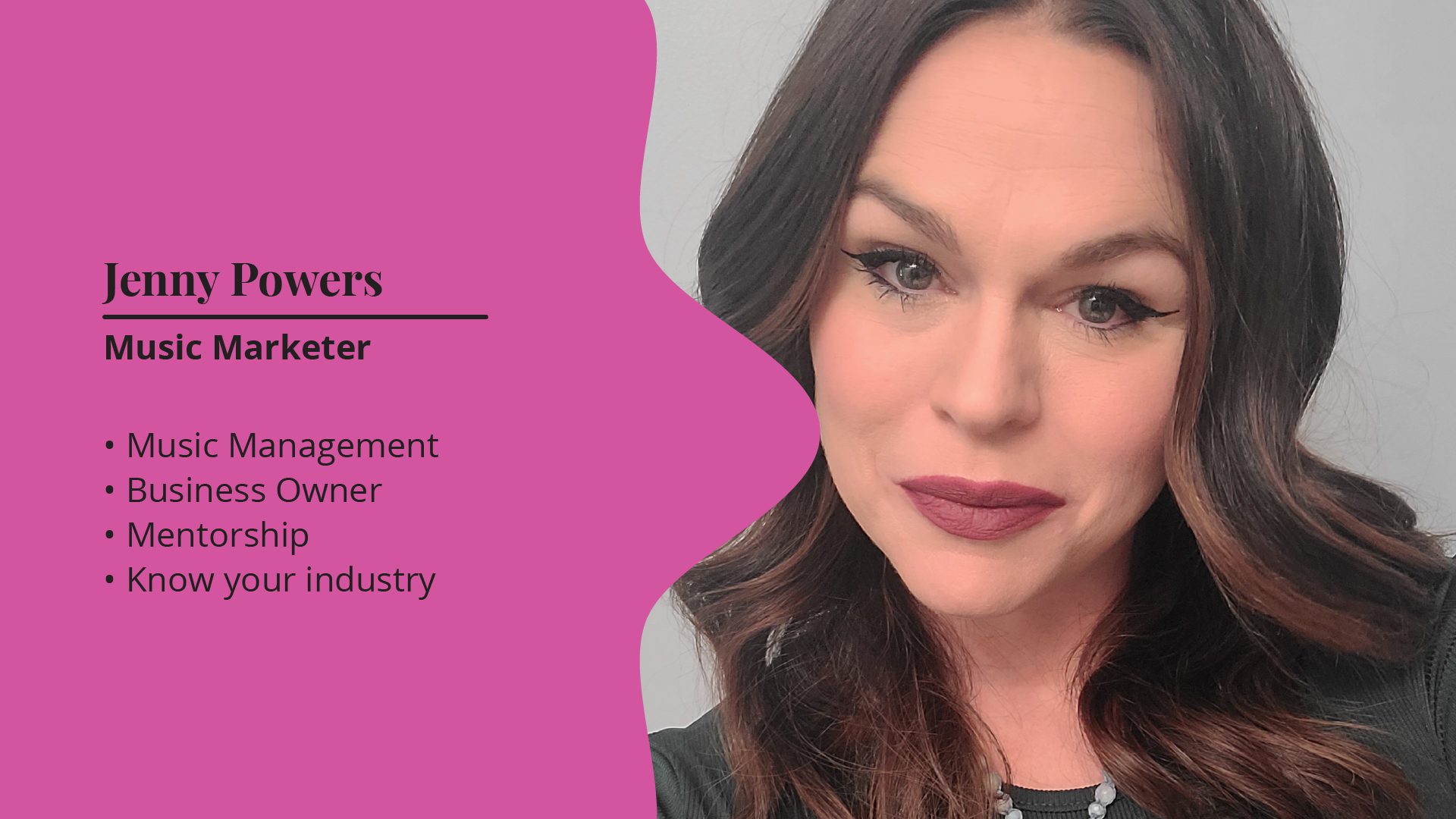
  • Jenny Powers

    Jenny Powers

    “The money will come and go, but the impact you make on people’s lives that’s the real success.”

    Jenny Powers is a Myrtle Beach-based music marketing strategist and founder of Blue Avenue Music Group, empowering independent musicians to thrive on their own terms.

    Interview

    Transcript

    Emma Plutnicki

    Okay, so to start, what do you do for work and where are you currently working from? 

    Jenny Powers 

    So I live in Myrtle Beach, South Carolina. My husband is the men’s tennis coach at Coastal and I am here in my office. And I own Blue Avenue Music Group, which is a music marketing and management company, and so I work a lot with artists and musicians from everyone from ground up to Grammy nominated artists

    Emma Plutnicki 

    Cool, and how long have you been doing? That for? 

    Jenny Powers 

    I’ve had my company for seven years, and then I’ve been managing a tree house the local reggae rock band for about 15 years.  

    Emma Plutnicki 

    Amazing. So what does a typical day look like for you? What kind of responsibilities are expected of you, and what do you get into? 

    Jenny Powers 

    Oh, well, it varies from artist to artist. So right now, with Treehouse, we have a new song that will be coming out in a few weeks, and so we’ve been working on their content plans and their tour and making sure everything is uploaded and ready for those releases 

    Emma Plutnicki 

    cool and so how do you manage kind of like having a work life balance, because I’m sure, like creativity strikes at different times of day and things like that. So how are you able to kind of manage that? 

    Jenny Powers 

    Oh, that’s a good one. Definitely set boundaries. I mean, my clients are on tour, so they are up at all times of the day and night, and so for me, it was really about setting those boundaries that I am available between eight in the morning and five o’clock in the evening, unless there’s an absolute emergency that cannot be taken care of. So definitely setting those work boundaries, especially because I work from home, so making sure that I allocate the necessary time to spend with my family and do the things I love to do like I even like I don’t respond on weekends either. So those are, those are my times, and those are times that I think everyone should be be bound to, yeah, for sure, 40 hours, yeah, and working from home.

    Emma Plutnicki

    Is it sometimes hard to separate work life from personal life? Or have you been able to kind of overcome that? 

    Jenny Powers

    Oh, I have, even in my family life, it’s, you know, eight o’clock until five o’clock here at home, and if my door is closed, I’m in meetings or I’m actively working on something, but if my door is open, then my kids are always welcome to just come on in and see, see what I’m doing and what’s what we’re what’s going on.  

    Emma Plutnicki 

    Yeah, for sure. And so living in Myrtle Beach, does South Carolina play any role in your work? Does it influence your work in any way? Or have you lived in other places where you notice that living in South Carolina kind of has a different influence on what you do? 

    Jenny Powers 

    So that’s that’s a really great question. I was born and raised here. I graduated from the academy of arts, science and technology in entertainment technology, my sister is one of the first graduating students from the Governor’s School in Greenville for music and arts, and she went on to found the longest running Girls Rock and Roll camp, and now we have our our nonprofit in Nashville. So South Carolina’s definitely given me and my family a lot of opportunities. My brother’s been a touring musician for 17 years. My sister was a touring musician for 10 years, and and I’ve been doing this for a long time too, and so we’ve always had that philosophy of bloom, where you’re planted. And we’ve, we’ve done so well. 

    Emma Plutnicki 

    Yeah, amazing. So coming from such a musical family, have you been given any advice along the way from family members or mentors that kind of helped you in this career path? 

    Jenny Powers

    No, no, no, because think about think about it like the major hubs for music are New York, Nashville and. And LA with Austin having its own central like Texas is like its own music world. Honestly, there’s artists that only tour Texas and never leave it. So being in South Carolina that wasn’t a music hub. I had to learn those things. And I was very lucky to meet Ari Herston, who is, you know, the go to guy for independent music. And what I learned from there, I was able to bring and work with my artists and really elevate them from where they are and take them to where they want to go. 

    Emma Plutnicki

    Yeah, for sure. Did you have any fears when you started in this career? 

    Jenny Powers 

    No, no. Like, I didn’t have a choice. Yeah, my brother called me up, and he was like, I need a manager. And I was like, I have no idea how to manage you in your music career. Yeah, we’ll find out. And once I found out, made a plan. We’ve been trucking along ever since.

    Emma Plutnicki 

    So yeah, amazing. So throughout your entire career, have you had one specific project you worked on, or one specific person that you’ve worked with that has really kind of had a significant impact on you, and you kind of see as maybe, like the pinnacle of your career, just something that stands out in in your career so far. 

    Jenny Powers

    I mean, every day is kind of magical, because I love that you never know what’s going to come your way. So I mean, I’ve had some really great people in this industry that I really do lean on. So Ari. Ari was one of them. And I have all kinds of great friends that I lean on, but I think I forgot your question.

    Emma Plutnicki 

    No, it’s okay. How is, how is the local working community in South Carolina? Is there a network that you rely on in South Carolina specifically, or are you kind of just a lone wolf out here? 

    Jenny Powers

    I am probably the lone wolf of South Carolina in the way that I work with artists, and the amount of artists I’ve worked with and the impact that I’ve actually made in the music industry. So one of my other positions is the VP of community of artist hub, which is a music marketing company. And we’ve, you know, we actually changed how you market music. So through those, those deep links, we’ve, you know, revolutionized how you market your music. And right now we’re working on building direct distribution through the blockchain. So that is going to be, you know, taking the way things are right now and looking into the future of how the whole industry is going to be moving forward. 

    Emma Plutnicki

    Yeah, makes sense. And so to succeed in this career, you know, in creative fields, it can be kind of hard to figure out what success looks like, because it’s different. So how would you define success in your career? Is it financial? Is it projects you’ve worked on reaching success? Like, how do you kind of gage your success and your professional life? 

    Jenny Powers 

    Well, okay, that’s a that’s a good one. I mean, yeah, it’s hard. That is a hard one because I have been able to literally take everyone else’s platforms that they’re working on and help them succeed, and by helping them succeed, that is my success. So the money will come and go, but the help and the impact that you make on people’s lives is what really is my driving force?  

    Emma Plutnicki

    Yeah, I love that. And what kind of skills do you need to have in your career to find success? Like, what are, what are important qualities to have for someone in your position, 

    Jenny Powers

    One, knowing the ins and outs of how the industry works. So one of the big things in our industry right now is the independent music voice was about 40% of streaming revenue, and they were doing it so well that the major labels but. Up all the independent distributions, and that was a big scary thing for me, because I’ve seen where the major labels would actually use independent artists and take them off of platforms to negotiate with like Tiktok and things like that, so the artist who thought they were independent really weren’t independent. And so now artists have almost no true autonomy over their careers without new independent sectors coming in and giving them that opportunity that they had before.  So that’s really where I am, is making sure that, you know, all these artists that I love back here have the ability to have full control over their music business. You know who’s managing their catalogs and who is managing their publishing administration and where they’re just distributing their music on these platforms, because if they don’t know up the chain who owns those they could be giving their rights away without knowing it. That’s my, my biggest concern. 

    Emma Plutnicki

    Yeah, and how were you able to learn those ins and out ins and outs? How were you able to kind of establish your knowledge within that? 

    Jenny Powers

    Oh, definitely. I mean, I read, read a book, not much about the structure of your businesses, like the music business itself has changed, but being able to use the new ways that are implemented to your advantage is really, you know, staying ahead of the curve while everyone is talking about things I’ve been doing for the last year and a half, they’re just now like, this is what you should be doing. And I started doing those things because you can see those trends if you’re paying attention. 

    Emma Plutnicki

    Yeah, makes sense. Amazing. So just as we wrap up, is there anything else you’d like to add, any advice you’d like to give, or anything else you’d like to add about your career? 

    Jenny Powers 

    Oh, wow, yeah, if you’re going into you know, if you’re going to be a musician that wants to tour and distribute your music and have, like, a real business and that be your livelihood, then make sure you know the ins and outs of what that means, the contracts, the the everything, because you have all of these rights. And with every step of the way, everyone wants a cut of it. And so by maintaining your rights, gives you the power to have that autonomy over your career. Amazing. 

    Emma Plutnicki

    That’s great advice. Well, thank you so much. I’m going to stop the recording. Okay, bye.