Tag: Management

  • Jenny Powers

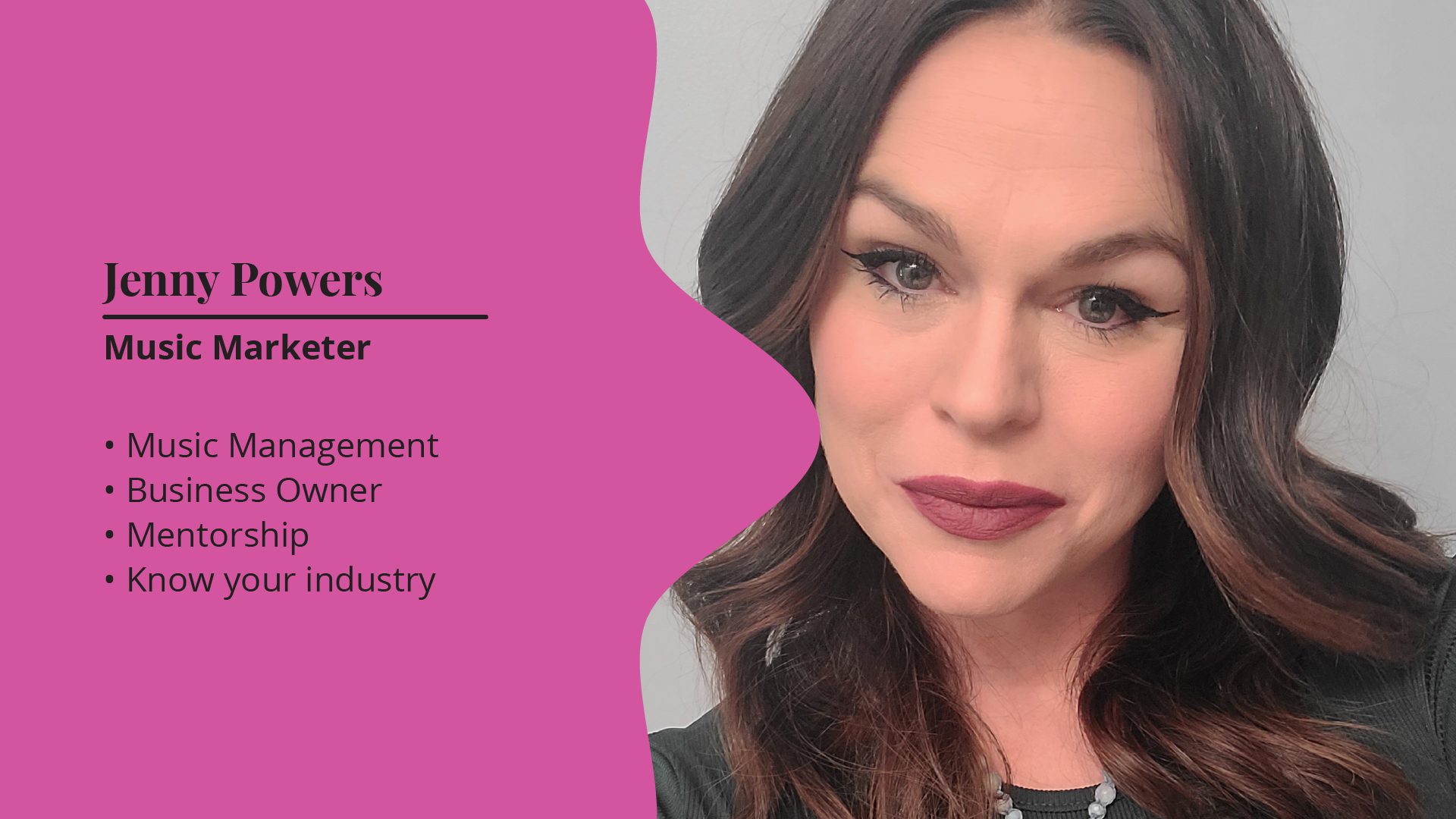
    Jenny Powers

    “The money will come and go, but the impact you make on people’s lives that’s the real success.”

    Jenny Powers is a Myrtle Beach-based music marketing strategist and founder of Blue Avenue Music Group, empowering independent musicians to thrive on their own terms.

    Interview

    Transcript

    Emma Plutnicki

    Okay, so to start, what do you do for work and where are you currently working from? 

    Jenny Powers 

    So I live in Myrtle Beach, South Carolina. My husband is the men’s tennis coach at Coastal and I am here in my office. And I own Blue Avenue Music Group, which is a music marketing and management company, and so I work a lot with artists and musicians from everyone from ground up to Grammy nominated artists

    Emma Plutnicki 

    Cool, and how long have you been doing? That for? 

    Jenny Powers 

    I’ve had my company for seven years, and then I’ve been managing a tree house the local reggae rock band for about 15 years.  

    Emma Plutnicki 

    Amazing. So what does a typical day look like for you? What kind of responsibilities are expected of you, and what do you get into? 

    Jenny Powers 

    Oh, well, it varies from artist to artist. So right now, with Treehouse, we have a new song that will be coming out in a few weeks, and so we’ve been working on their content plans and their tour and making sure everything is uploaded and ready for those releases 

    Emma Plutnicki 

    cool and so how do you manage kind of like having a work life balance, because I’m sure, like creativity strikes at different times of day and things like that. So how are you able to kind of manage that? 

    Jenny Powers 

    Oh, that’s a good one. Definitely set boundaries. I mean, my clients are on tour, so they are up at all times of the day and night, and so for me, it was really about setting those boundaries that I am available between eight in the morning and five o’clock in the evening, unless there’s an absolute emergency that cannot be taken care of. So definitely setting those work boundaries, especially because I work from home, so making sure that I allocate the necessary time to spend with my family and do the things I love to do like I even like I don’t respond on weekends either. So those are, those are my times, and those are times that I think everyone should be be bound to, yeah, for sure, 40 hours, yeah, and working from home.

    Emma Plutnicki

    Is it sometimes hard to separate work life from personal life? Or have you been able to kind of overcome that? 

    Jenny Powers

    Oh, I have, even in my family life, it’s, you know, eight o’clock until five o’clock here at home, and if my door is closed, I’m in meetings or I’m actively working on something, but if my door is open, then my kids are always welcome to just come on in and see, see what I’m doing and what’s what we’re what’s going on.  

    Emma Plutnicki 

    Yeah, for sure. And so living in Myrtle Beach, does South Carolina play any role in your work? Does it influence your work in any way? Or have you lived in other places where you notice that living in South Carolina kind of has a different influence on what you do? 

    Jenny Powers 

    So that’s that’s a really great question. I was born and raised here. I graduated from the academy of arts, science and technology in entertainment technology, my sister is one of the first graduating students from the Governor’s School in Greenville for music and arts, and she went on to found the longest running Girls Rock and Roll camp, and now we have our our nonprofit in Nashville. So South Carolina’s definitely given me and my family a lot of opportunities. My brother’s been a touring musician for 17 years. My sister was a touring musician for 10 years, and and I’ve been doing this for a long time too, and so we’ve always had that philosophy of bloom, where you’re planted. And we’ve, we’ve done so well. 

    Emma Plutnicki 

    Yeah, amazing. So coming from such a musical family, have you been given any advice along the way from family members or mentors that kind of helped you in this career path? 

    Jenny Powers

    No, no, no, because think about think about it like the major hubs for music are New York, Nashville and. And LA with Austin having its own central like Texas is like its own music world. Honestly, there’s artists that only tour Texas and never leave it. So being in South Carolina that wasn’t a music hub. I had to learn those things. And I was very lucky to meet Ari Herston, who is, you know, the go to guy for independent music. And what I learned from there, I was able to bring and work with my artists and really elevate them from where they are and take them to where they want to go. 

    Emma Plutnicki

    Yeah, for sure. Did you have any fears when you started in this career? 

    Jenny Powers 

    No, no. Like, I didn’t have a choice. Yeah, my brother called me up, and he was like, I need a manager. And I was like, I have no idea how to manage you in your music career. Yeah, we’ll find out. And once I found out, made a plan. We’ve been trucking along ever since.

    Emma Plutnicki 

    So yeah, amazing. So throughout your entire career, have you had one specific project you worked on, or one specific person that you’ve worked with that has really kind of had a significant impact on you, and you kind of see as maybe, like the pinnacle of your career, just something that stands out in in your career so far. 

    Jenny Powers

    I mean, every day is kind of magical, because I love that you never know what’s going to come your way. So I mean, I’ve had some really great people in this industry that I really do lean on. So Ari. Ari was one of them. And I have all kinds of great friends that I lean on, but I think I forgot your question.

    Emma Plutnicki 

    No, it’s okay. How is, how is the local working community in South Carolina? Is there a network that you rely on in South Carolina specifically, or are you kind of just a lone wolf out here? 

    Jenny Powers

    I am probably the lone wolf of South Carolina in the way that I work with artists, and the amount of artists I’ve worked with and the impact that I’ve actually made in the music industry. So one of my other positions is the VP of community of artist hub, which is a music marketing company. And we’ve, you know, we actually changed how you market music. So through those, those deep links, we’ve, you know, revolutionized how you market your music. And right now we’re working on building direct distribution through the blockchain. So that is going to be, you know, taking the way things are right now and looking into the future of how the whole industry is going to be moving forward. 

    Emma Plutnicki

    Yeah, makes sense. And so to succeed in this career, you know, in creative fields, it can be kind of hard to figure out what success looks like, because it’s different. So how would you define success in your career? Is it financial? Is it projects you’ve worked on reaching success? Like, how do you kind of gage your success and your professional life? 

    Jenny Powers 

    Well, okay, that’s a that’s a good one. I mean, yeah, it’s hard. That is a hard one because I have been able to literally take everyone else’s platforms that they’re working on and help them succeed, and by helping them succeed, that is my success. So the money will come and go, but the help and the impact that you make on people’s lives is what really is my driving force?  

    Emma Plutnicki

    Yeah, I love that. And what kind of skills do you need to have in your career to find success? Like, what are, what are important qualities to have for someone in your position, 

    Jenny Powers

    One, knowing the ins and outs of how the industry works. So one of the big things in our industry right now is the independent music voice was about 40% of streaming revenue, and they were doing it so well that the major labels but. Up all the independent distributions, and that was a big scary thing for me, because I’ve seen where the major labels would actually use independent artists and take them off of platforms to negotiate with like Tiktok and things like that, so the artist who thought they were independent really weren’t independent. And so now artists have almost no true autonomy over their careers without new independent sectors coming in and giving them that opportunity that they had before.  So that’s really where I am, is making sure that, you know, all these artists that I love back here have the ability to have full control over their music business. You know who’s managing their catalogs and who is managing their publishing administration and where they’re just distributing their music on these platforms, because if they don’t know up the chain who owns those they could be giving their rights away without knowing it. That’s my, my biggest concern. 

    Emma Plutnicki

    Yeah, and how were you able to learn those ins and out ins and outs? How were you able to kind of establish your knowledge within that? 

    Jenny Powers

    Oh, definitely. I mean, I read, read a book, not much about the structure of your businesses, like the music business itself has changed, but being able to use the new ways that are implemented to your advantage is really, you know, staying ahead of the curve while everyone is talking about things I’ve been doing for the last year and a half, they’re just now like, this is what you should be doing. And I started doing those things because you can see those trends if you’re paying attention. 

    Emma Plutnicki

    Yeah, makes sense. Amazing. So just as we wrap up, is there anything else you’d like to add, any advice you’d like to give, or anything else you’d like to add about your career? 

    Jenny Powers 

    Oh, wow, yeah, if you’re going into you know, if you’re going to be a musician that wants to tour and distribute your music and have, like, a real business and that be your livelihood, then make sure you know the ins and outs of what that means, the contracts, the the everything, because you have all of these rights. And with every step of the way, everyone wants a cut of it. And so by maintaining your rights, gives you the power to have that autonomy over your career. Amazing. 

    Emma Plutnicki

    That’s great advice. Well, thank you so much. I’m going to stop the recording. Okay, bye. 
  • Kelley McDonnell

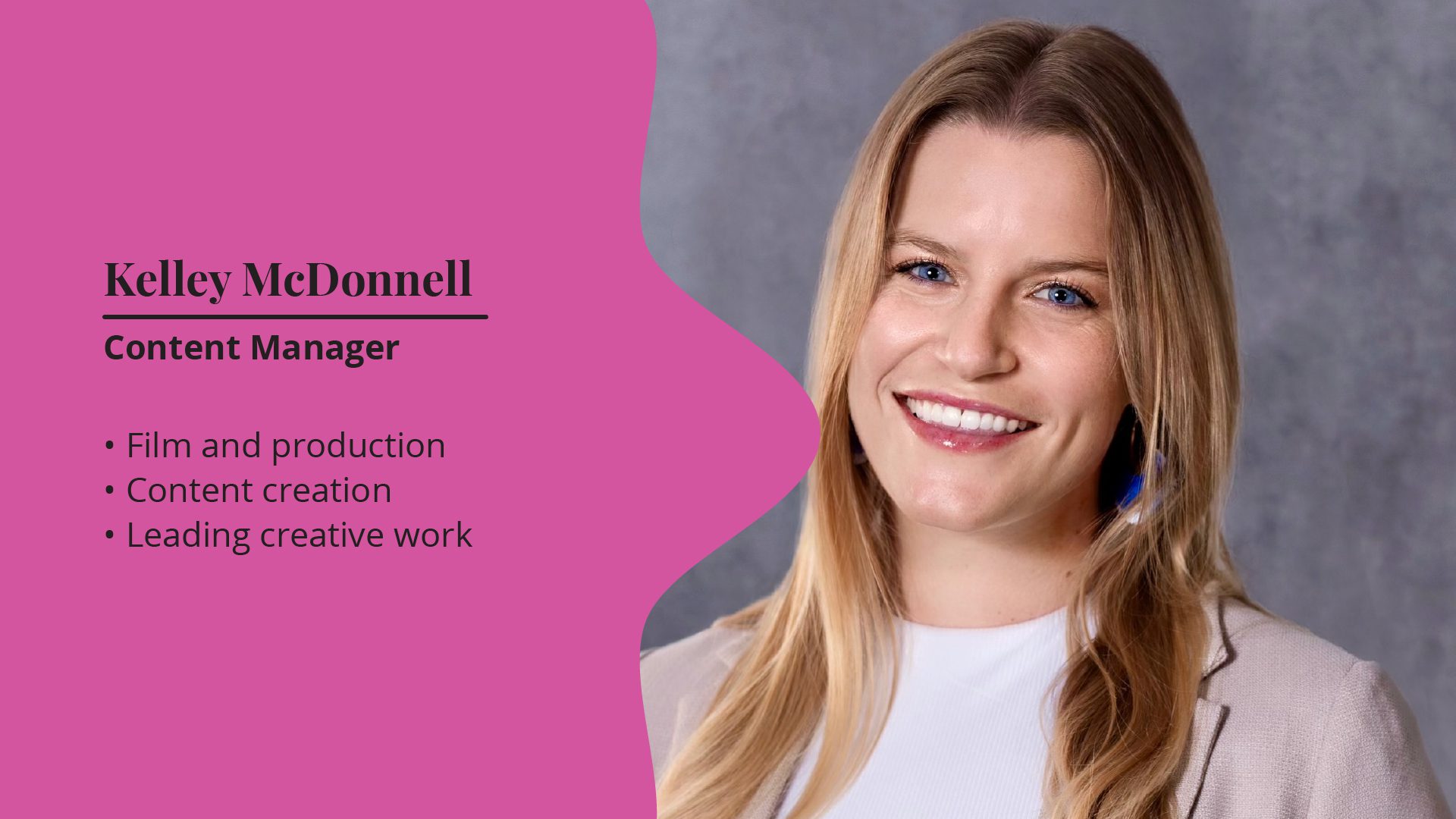
    Kelley McDonnell

    “You should love what you do, because even if you love it, there are still days that feel a little mundane.” 

    Kelley McDonnell is a content manager at Visit Myrtle Beach. She channels her passion for storytelling into promoting her hometown’s creative spirit. 

    Interviews

    Transcript

    Emma Plutnicki  00:02 

    Okay, so to start, what do you do for work and where are you currently working from? 

    Kelley McDonnell  00:08 

    Okay, I am the content manager for Visit Myrtle Beach. In Myrtle Beach, South Carolina. 

    Emma Plutnicki  00:13 

    Amazing. How long have you been doing that?  

    Kelley McDonnell  00:16 

    For just about a year.  

    Emma Plutnicki  00:19 

    Okay, amazing. And so, what’s one thing that you love about working in Myrtle Beach specifically? 

    Kelley McDonnell  00:25 

    In Myrtle Beach specifically? Well, I am from here originally, so when I majored in Film and Media at South Carolina, and then when I graduated, I went to LA and did film production over there, and then I went to Nashville, and then Savannah, Georgia, and then I had kind of gathered all of this information and new skills and decided that it was time to move back home and apply those skills. So, I think my favorite part about working in Myrtle Beach is that I am from here originally, and I feel like all of the growth that I’ve seen since I was last here, when I was in high school or early college, has been insane. So now I feel grateful to have a job where I can kind of show that to the rest of the world, how much Myrtle Beach has grown, but in a creative way. 

    Emma Plutnicki  01:16 

    Yeah, amazing. And so, you’ve been all over the country, it sounds. So, what is special about South Carolina, and does it have any unique influence on your work as compared to other places that you’ve worked in?  

    Kelley McDonnell  01:32 

    Yeah well, I think again, it’s more because I’m from here originally, that makes it feel extra special. But I think that there’s a lot of interest in South Carolina. I know that there are some other destinations within the state that are looking into having a local film commission. I know there’s a lot of film production and sorry, that’s my level of expertise. So that’s what I always talk about. I know there’s film production a little bit in Charleston. I know we here at Visit Myrtle Beach are very passionate about starting up a local film commission here as well. So I just think there’s a ton of interest, and I think that eventually it’s going to start to catch on, and people such as yourself and the people that are studying these types of careers are going to find a way to make it happen, because I feel like that’s kind of what I did, is I didn’t feel like there was a lot of opportunity for me at the time when I had graduated high school and even a little bit of college, and then I kind of went out and learned and came back, and then I realized I could do anything. I can do it here, for sure. So I think it just takes some education and some other people that work within South Carolina who can kind of share what they’ve learned and what they’ve gathered over the years and hopefully inspire people to stay and not feel like they have to go out of state to work in the arts. 

    Emma Plutnicki  02:57 

    Yeah, amazing. And so, how would you describe the local professional community here? Is there a lot of support that you lean on? 

    Kelley McDonnell  03:04 

    Yeah, definitely. When I first moved back here from Savannah, there were a lot of local people that worked in film production that were freelance, so this was all they did. And so, I was able to find some work through them, and because of that, that was kind of how I got introduced to the folks at Visit Myrtle Beach and how I have the job that I have now. But I think, my superiors here at my company, are all very passionate about moving it forward, especially professors at CCU like Michael, you know, who have expressed interest and in growing the education of film production and just art in general, in the area. So, I feel, like I said, there’s a lot of interest. It’s just a matter of taking the actual steps. 

    Emma Plutnicki  03:56 

    Yeah, definitely. And within a creative career, it can be hard sometimes to know what success is. So how do you define success, both personally and professionally? 

    Kelley McDonnell  04:08 

    That’s a great question. I feel very passionately that success, to me, is defined as feeling excited about getting up and going to work every day. And, you know, obviously there are those days where it’s, you know, but generally speaking, I feel very grateful to do what I love. I know that there are a lot of people out there who don’t and who dread going to work and who just do it for the paycheck, and I feel grateful that I love what I do. I love the people I get to interact with. I love creating and putting content out there for everybody to see. I love interacting with people. I love knowing what they think, and how can we be better, and everything’s always moving and changing and evolving. And I love that kind of fast paced speed of it. But I think that success is just looking forward to going to work and not feeling like you’re just collecting a paycheck. That’s how I feel, at least.  

    Emma Plutnicki  05:02 

    Yeah, that’s definitely refreshing to hear. But did you have any fears going into this career? 

    Kelley McDonnell  05:07 

    Yeah, definitely when I first started. Actually, the majority of my career up until this point has been freelance, and that is definitely scary because you don’t have any job security, and kind of have to fend for yourself to get work, there’s a lot of hustle involved. And that’s really why I wanted to sit down and talk with you about this. Because when I was in college, somebody came and spoke to our class about, you know, the first couple of years getting into the industry are really hard, but you just have to keep pushing through. You kind of feel like you’re not sure which way is up and what’s happening, but, if you just keep your head down and keep putting the work in and remind yourself how much you love it and how great it’s going to be when it does work out, that’s kind of what got me through. But the biggest challenge was definitely not knowing when my next job was. Am I ever going to get a check from those people that were kind of sketchy, that kind of thing? So, it was definitely a little nerve wracking, but it got me to the point where I am today. So just, you know, keeping your head down, keep on trucking. Do follow your instincts kind of thing.  

    Emma Plutnicki  06:16 

    Yeah, I love that. And throughout your career, has there been a specific moment or project that you’ve worked on that really stands out in terms of, you know, having a significant impact on you or your creative journey? 

    Kelley McDonnell  06:30 

    Yeah, that’s a very interesting question. A handful of years ago, I had the opportunity to direct a promo for an FX show called The Patient, and the lead in that show was Steve Carrell, so I got to interview him and direct him in some promo work for that show, for FX, and that, to me, really felt like an “I made it” moment for me and I think it was just because I had worked with a ton of celebrities previously, but never in the director’s chair. And so that was my first time as like, I’m the person that people are asking the questions to. I’m the one making the decisions. And it felt very natural, and I felt like I was in the right place, doing the right thing. And it felt very good. And then kind of after that, it was like, Okay, now what am I going to do next? So it’s kind of a, it was a pivotal point in my career, because I felt like I had hit this ceiling, almost in a way, and then it was like, Okay, what am I going to do next? And it just kind of fueled me into the next phase of my career, which is how I ended up here. 

    Emma Plutnicki  07:41 

    Yeah, that’s amazing. That must have been incredible to work on that project.  

    Kelley McDonnell  07:46 

    Yeah, it was really fun.  

    Emma Plutnicki  07:51 

    Yeah, oh my gosh. And so along the way, I’m sure there’s been roadblocks and struggles, but has there been anybody that’s offered you advice, either good advice or bad advice? What kind? 

    Kelley McDonnell  07:59 

    So many people, I can’t even tell you. I mean, there have been people that I met on set that day that were complete strangers, that are just kind of like, Hey, I know what it’s, what it’s like to have just moved to LA or to have just graduated college, keep doing what you’re doing, you know, whatever, whatever. And I’ve had the opposite, where people are like, Get out now you’re still young. Like, get a get a real job, while you still can, you know, go learn how to be an accountant. I wish I did, or whatever. And you just kind of have to take each of those things with the grain of salt, the good and the bad, because it’s not always as glamorous as people think, and it’s also not always as bad as people may think. So, at the end of the day, I think you just have to trust yourself and remember that it’s just opinions. No matter who it’s coming from, it’s just opinions. At the end of the day, all that matters is what you think and how you be yourself. So yes, I’ve gotten a ton of advice, good and bad over the years from so many different types of people. But you know, you just kind of have to internalize it and decide how you want to use it from there. 

    Emma Plutnicki  09:09 

    Yeah, for sure. And so nowadays, what does your typical work day look like? What do you usually like? What is expected of you? What do you get into? 

    Kelley McDonnell  09:19 

    So, it’s really fun. It’s different all the time, which is what I like. I think a lot of people who work in the arts and creative people like for it to be different. But since I am the content manager for Visit Myrtle Beach, I kind of manage all of, any kind of content that we put out, from social media to blog articles on our website, any kind of advertisements that we put in any publications or on any websites or anything. I’ll write all the copy for it and determine which images to use. We also do commercial shoots here for the destination, which, again, is why I love my job, because I’m passionate about the city, because it’s my hometown. So yeah, we do commercials, photo shoots, things like that. So, day to day, it’s more, it’s a lot of scheduling, which I learned how to do in LA on set, which is great. So, it’s definitely a lot of scheduling, a lot of coordination with a lot of people that are local. But I meet so many different people and interact with so many different people every week that I feel like this world just keeps getting smaller and smaller, in a good way. Yeah, so sometimes we will step out and go shoot something at the boardwalk. Sometimes, you know, we do have the Myrtle Beach classic. So sometimes I’m out on the golf courses doing some content for that. So it’s definitely always exciting, it’s different every day, which is great. 

    Emma Plutnicki  10:42 

    Yeah, that must be a lot of fun. And so, I’m sure there’s certain events that go late into the night or on weekends. So how are you able to manage a better like work life balance? 

    Kelley McDonnell  10:53 

    Yeah, that’s a great question. That’s a great question. That was something that I had really struggled with when I was freelancing, because, like I said, I didn’t know when my next job was coming, so any job that was offered to me, I took it because I didn’t want to be ungrateful. I wanted to always take advantage of any work that was coming my way. So, I did not have a good work life balance. But I feel like that’s what your 20s are for, is figuring that out. So yeah, I have definitely gotten a lot better at it. There are, thankfully for me in this job, the events and the things that require me to stay late or work on the weekend are fun. So, it doesn’t feel like work, like going to work the Myrtle Beach classic on a Saturday and Sunday. It doesn’t feel like, Oh, I’m losing my Saturday and Sunday. It’s like, I get to go to the Myrtle Beach classic for free, and I get to just walk around there, enjoy the weather, interact with the people who are having a good time. So it just depends there. And that’s not to say that there are some times where things run a little late, and it’s a little bit of a bummer, but I always just practice gratitude, and I think that’s the best way of looking at it, is that, you know, if I, if I didn’t go to these events, that means that I don’t have this job, and who knows what I would be doing if I didn’t. So, I think just always kind of looking for the positives, when things like that are always going to come up. I think in any job, any career, where you have to do something that’s on your own time, or you might have to miss something so you can go to a work thing. But I think just reminding yourself the good parts of it and keep you in check. 

    Emma Plutnicki  12:30 

    Yeah no, that’s a great way to reframe that. I love that, so amazing. So just as we wrap up, is there anything else you’d like to add about your path, your career, or any advice along the way?  

    Kelley McDonnell  12:44 

    Yeah I mean, I would just say advice that really worked for me, like I was saying kind of towards the beginning of this is just trust yourself if you life is too short to do something that you don’t want to do, especially when it’s, you know, we’re expected to work 40 hours a week for however many years of our life, you should love it, you should love what you do, because even if you love it, there are still days that feel a little mundane. So may as well love it the majority of the time. But yeah, and just think, you know, when I was growing up, it was definitely like, go to college, get the job that’s gonna make money. You know, Do this, do this, do this, do this. And I’m so glad I didn’t do that. I’m so so glad that I stuck with art and figured out a way to make it work for me. And I just would say that anybody who is passionate about it, you should try to do your passion for work. 

    Emma Plutnicki  13:37 

    Yeah, I love that. Well, thank you so much.  

    Kelley McDonnell  13:42 

    Yeah, of course.