“It’s just that when we’re conceptualizing art, we always think of it as something that has happened, but not something you can do in your own life, like in the current moment. So Don’t wait for permission. Just start working and start sharing.”
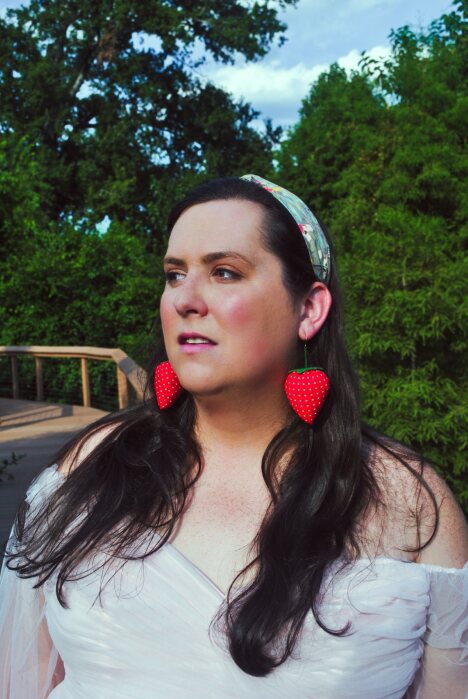
Evelyn Berry, poet and educator from Columbia, SC, uses her voice to champion authenticity and queer Southern storytelling. Through workshops, editing, and her acclaimed poetry, she inspires writers to embrace vulnerability and speak truth to power.
About
Evelyn Berry’s story is one of authenticity, resilience, and artistic devotion. A poet and editor raised in South Carolina, Evelyn began writing seriously at 16, publishing in local journals and never looking back. Today, she is the author of multiple poetry collections, including Grief Slut, and forthcoming Tea for Tea, Evelyn’s writing is deeply informed by her identity as a queer Southerner and her commitment to storytelling that uplifts marginalized voices. Beyond her books, she leads creative writing workshops for festivals, universities, and nonprofits, and works as a freelance editor and library communications strategist.
Evelyn’s writing is confessional and political, shaped by her experiences as a queer person in the South. “It’s impossible for pretty much anything I write not to be viewed by others as political,” she said. In a world where many discourage political storytelling, Evelyn insists on honoring the truths of lived experience. Evelyn’s work reflects a deep love for art and advocacy. As she shared, “All of our lives are very political,” and her writing unapologetically reflects that truth.
She emphasizes that success is “writing something that people respond to… that might change how they think or how they feel.” Her advice to aspiring artists is simple yet bold: “Don’t wait for permission. Just start making and start sharing.”
Through her books, mentorship, and community work, Evelyn creates space for voices often silenced. Her story is a reminder that art is both personal and communal and that creativity, when wielded with courage, can shift culture.
“I define success by being able to wake up and actually see my work impacting the lives of others.”
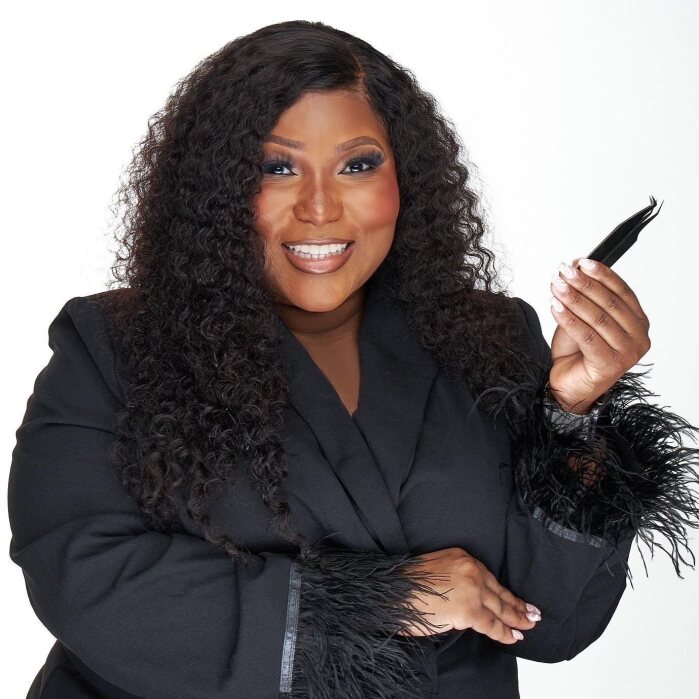
Desiree Williams is a licensed esthetician and educator. Desiree is turning creative passion into community impact, one lash, lesson, and life at a time.
About
For Desiree Williams, being a licensed esthetician isn’t just a job; it’s something she’s super passionate about, driven by creativity, mentorship, and resilience. Based in Columbia, South Carolina, she’s not only a certified esthetics instructor but also the founder of a growing beauty business specializing in master lash extensions. But her influence goes way beyond what happens in the salon.
Every night at 9 PM, Desiree hosts free lash classes on TikTok, giving guidance and support to aspiring beauty pros all over the country. With over 1,500 students under her belt, she sees success not in dollars, but in real transformations: “I’ve learned that my success is in helping people change their lives in a real, true way.”
Her journey hasn’t been a walk in the park. She started her business from home without any funding and faced a lupus diagnosis right when her career was taking off. Through it all, she learned how to create sustainable systems and find a healthy balance. “You don’t realize how much you’re pouring into something until you step back and look at the bigger picture,” she says.
Today, she credits South Carolina’s awesome support for micro-businesses, including the Columbia Business Office’s Next Level program, for helping her keep growing. Surrounded by local esthetics communities and entrepreneurial mixers, she’s built a vibe filled with support and opportunities.
“It’s a very fortunate blessing to find something in life that you like enough that you do it before you’re paid for it.”
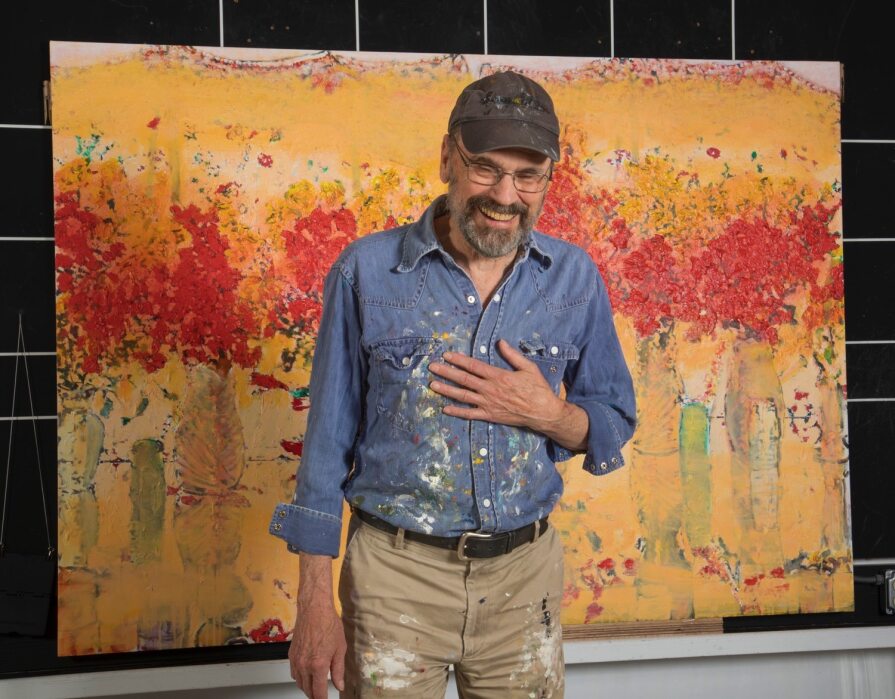
Philip Mullen is a Painter and professor emeritus Philip Mullen reflects on decades of artmaking and mentoring and why South Carolina and a bathtub shaped his creative life.
About
Philip Mullen is a well-known painter and a Distinguished Professor Emeritus at the University of South Carolina. For over fifty years, he’s poured his energy into large-scale acrylic painting, mentoring others, and staying true to his artistic vision. His awesome studio in Columbia even got a shoutout in The Artist Magazine. He’s had major shows in New York and participated in the prestigious Whitney Biennial. Throughout his journey in the art world, Mullen has shown both resilience and style.
Mullen opens up about the unique challenges and quirks of keeping an artistic practice going for life. He talks about stuff like making custom racks for his big canvases, learning to fix elevators in Andy Warhol’s old studio, and how he juggles teaching with showcasing his art. “To be an artist, you’ve got to have it in one seat. You’ve got to have a big ego … But myself, like most artists I know, have very fragile egos.”
During his 31 years at USC, Mullen created a hands-on course called The Artist Experience. This class lets students dive into practical learning by visiting studios, firing pottery, and getting up close with Degas sculptures.
Even though he faced some early doubts, especially from his own family, Mullen built a career based on passion rather than prestige. “In a way, to me, the success has to do with putting together a life in which I could spend a lot of time making paintings,” he explains. In this heartfelt conversation, he reflects on the joy of being creative, the need to keep that creativity going over time, and why Columbia, South Carolina, is such a big part of his artistic journey.
“The more you push yourself out of your comfort zone and out of the box you’re used to, the more confident you get.”
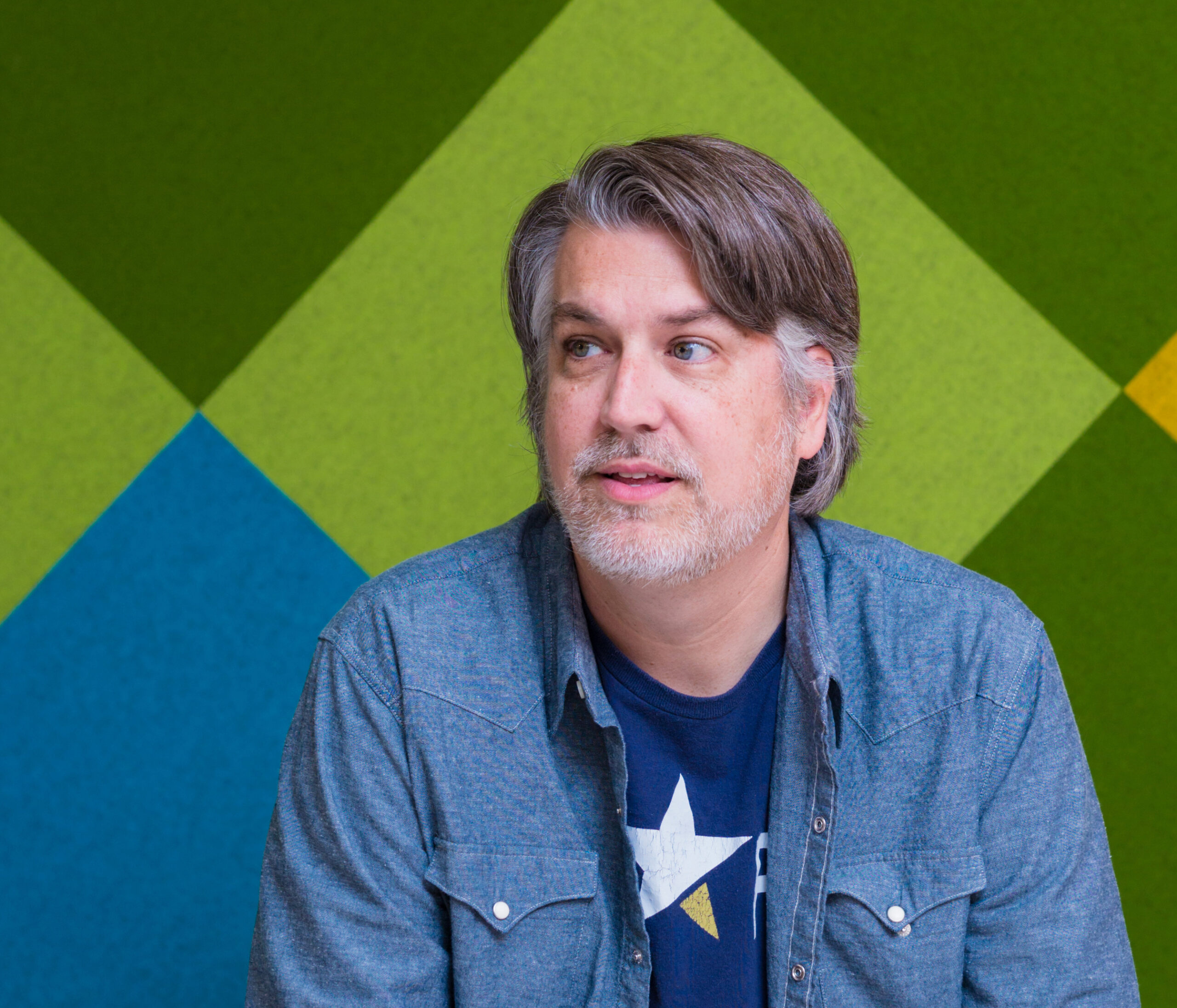
Tori Hord is an Associate Professor of Graphic Design at Methodist University in Fayetteville, N.C. She grew up in Loris, S.C., and earned her bachelors in graphic design at Coastal Carolina University. She continued her graphic design with a Master of Graphic Design M.G.D. at North Carolina State University.
Interview
Transcript
Tori Hord
My name is Tori Hord. I am from Loris, South Carolina, so very close to Coastal [Carolina University], like 30-ish minutes. And I currently teach graphic design at Methodist University in Fayetteville, North Carolina.
Emma Plutnicki
So how long have you been working there?
Tori Hord
Seven years.
Emma Plutnicki
Wow. Amazing. And your official job title, would that just be graphic design teacher?
Tori Hord
Associate Professor of Graphic Design.
Emma Plutnicki
Amazing. So how did you get into that? How did you find that job? And how did you just end up in that field overall?
Tori Hord
That’s an interesting, so I started when I started Coastal. I went to undergrad there, I started as a biology major. About a semester or two semesters in, I decided to switch my major to graphic design without telling any of my family and made them all have a small heart attack when they found out.
Emma Plutnicki
Oh my gosh.
Tori Hord
But it’s always something that I’ve loved. So it was a really good change for me. And from there, I just, I was just very passionate about it. And when I graduated, I got a job in the field. And I worked there for a couple years and then decided that I wanted to pursue my masters in graphic design. So I went and got a masters in graphic design from NC State. And then when I graduated from NC State, there were, y’know, lots of applying to jobs, and I landed here in Fayetteville at Methodist University.
Emma Plutnicki
Amazing. So what made you switch from biology to graphic arts? Was it more hating biology? Or was it more a passion for graphic arts?
Tori Hord
It was more passion for sure. Always loved it growing up, but just never considered or thought of it as a turning something I loved into the career. And once I figured out that I could do that, I was like, “Absolutely. Let’s do this.”
Emma Plutnicki
Yeah. More fun, probably. So can you walk us through a typical work day? Like, what’s expected of you, what your work process looks like, what kind of things you work on?
Tori Hord
Yes, absolutely. So for me, I think being, teaching design and being a professor, you kind of get the best of both worlds. So my initial attraction to teaching it, you know, other than just loving the subject and wanting to share more was that it has a great schedule. You have time for, you know, it’s a great work life balance for the most part. And that also gives you lots of time to continue to work in the field, which I was adamant about not stopping, I didn’t want to stop my design career to teach, I wanted something that would allow me to do both. And that’s what the shop does, which I love it, you get a great schedule, you get a, you know, it’s a steady, it’s not like you’re freelancing all the time, it’s a steady income. Day to day, it depends on what classes I have offered, but I teach anywhere from two to three, like studio length classes a day. So I’m in the art building, in the studio, working with students. And then when I’m not teaching I’m in my office, you know, doing housekeeping things and preparing and also working on my own work.
Tori Hord
Amazing. So the classes that you teach, are those different levels of graphic designer, or do they have specialties within them?
Tori Hord
Yes, I teach at all levels. So I teach the freshmen their first semester, on up to the seniors in their last semester. And everything in between. So I see a little bit of all of them all the time.
Emma Plutnicki
Yeah, that’s great. So can you describe a defining moment in your, like, creative journey so far? So maybe it’s a specific project that really showcased your creativity or had a significant impact on you?
Tori Hord
The one, this is ironic, but the one that really comes to mind as being most memorable for me was actually at Coastal at the Athenaeum Press.
Emma Plutnicki
Oh, really?
Tori Hord
Yes, we worked on the Gullah Geechee project. And there was, we traveled out to these different places and took photographs and did interviews and then the project itself won an Addy Award at the end. So it was kind of like a, a quintessential moment for me. I was like, “this is actually going to work. This is neat. We’re getting recognition for work that me and my friends have, you know, kind of poured our hearts into.” So that was a big moment for me.
Emma Plutnicki
Yeah, I’ve seen that work. It was great. So I’m sure that was a really fun time to work on. So do you think this career path is challenging? What challenges have you faced and how have you been able to kind of overcome those challenges? Because being in a creative career as a whole is pretty challenging, but how have you kind of worked through this?
Tori Hord
It is, I would say it was challenging. And it’s um, it’s like with anything you do, the more you do it, the more you push yourself out of your comfort zone and out of the box that you’re used to, the more confident you get in it. I do remember my first year teaching anything, I was terrified, right? I’m standing up in front of this group of people. And you’re suddenly faced with like, “I know nothing,” right? “I am not qualified to do this, I should not be here. Why did these people give me a job.” But the more you do it, you realize, “okay, I’m equipped, I have the knowledge, I’ve done the education, I have a passion for it.” So for me, it really was just making sure I was getting out of my comfort zone, and putting in the effort… and it was fantastic. But the more I was in those classrooms with the students and got to know them, and saw their excitement for it, everything just came together.
Emma Plutnicki
Yeah, that’s amazing. So within your specific field, can you think of any skills that you possess that helped you land that role, or any skills that you think an applicant should have to increase their chances of getting that role? I know, like you’re in teaching, so is there any like connection with teaching that you had to help you or was your skill in graphic design, like the driving force to lead you to teaching, or just in general, like any skills that helped you?
Tori Hord
Obviously, to be able to teach art or graphic design or anything, you have to have a certain level of knowledge, but especially for art design, you also have to have a certain level of skill, right, you have to be able to get to that point. So a portfolio is still a big part of this job, even though it’s not a, the focus is not necessarily all design, you know, work all the time, you still have to have a great portfolio, you still have to make sure that you’re paying attention to the detail, because it matters when getting these roles. And I think the other part of it is, is communication, being able to talk about what you want from that job, but also be able to talk about your work in ways that ties it in to people that might not necessarily be in your field. Which is a great skill for designers have anyway, because there’s lots of contact with people outside of the art world. So being able to communicate those ideas and your thoughts and passions to those people is really important, too.
Emma Plutnicki
Yeah. It’s a very important skill. And so, you studied in South Carolina, and now working in North Carolina. Are there any like organizations or programs or events that you recommend for people who are trying to get into that field? Is there any like conferences you went to that helped you network to figure out, like, gain more connections within the creative world or anything like that in the area?
Tori Hord
Yeah, I’m a big supporter of AIGA [the Professional Association for Design] I’ve been a member of AIGA since I was an undergrad, and continued that. But more so than that, I found a lot of helpful was these kind of like open houses for different schools. So when I was pursuing my master’s or thinking about going to get my graduate degree, I looked into these different kind of open houses, kind of meet and greets. And I met a lot of really great people and lots of great networking opportunities just from doing that. And that had no ties to it. You didn’t have to, no commitments, you’re just kind of going and exploring and learning about what your options are.
Emma Plutnicki
That makes sense. So AIGA, you said?
Tori Hord
Yes.
Emma Plutnicki
What does that stand for, do you know?
Tori Hord
American Institute of Graphic Arts.
Emma Plutnicki
Okay, awesome. I’m sure a lot of people know that. I didn’t know. That’s amazing.
Tori Hord
The chapter here is in Raleigh, the closest one. But a lot of universities have like local student chapters. I know Coastal used to have one, whenever I was there. And we have one here. It’s just a great opportunity for professionals and students to kind of connect.
Emma Plutnicki
Yeah, that’s amazing. So great. Thanks for saying all this. This is such an interesting field. I’m sure you have fun with it every day. But just as we wrap up, do you have any advice for current college students or just people who are looking to get into these fields in creative professions?
Tori Hord
Follow what you’re passionate in. That was a big thing for me. So I went along with, like I said, the biology doing what I thought I was supposed to do, and what, you know, everyone was like, “Oh, you’d be great, at you know, XYZ, you’d be a great doctor, you’d be great at this.” And in the back of my mind, there was always something like, “Maybe but I don’t know that I want it.” And just listening to that little voice, and you know, going after what you do want, regardless of what other people might think which, I mean is, you know, life anyway right?
Emma Plutnicki
Yeah. No, that’s great advice. I definitely need to listen to that too.
“Everyone’s got their own journey, and you have to find your way. I would never discourage anyone from a journey in the applied arts or the creative arts if they have the drive and the will to do it. Because that’s the biggest part of it: just being disciplined.”
Marius Valdes is an artist, illustrator, and professor of Studio Art teaching graphic design and illustration at the University of South Carolina. Valdes received his BFA in graphic design from the University of Georgia (UGA) and his MFA in visual communication from Virginia Commonwealth University (VCU). Valdes is originally from Charleston and lives in Columbia.
About
“Being a professional creative is not for the weak of heart,” said Valdes. “You need to be patient and persistent.” He recalled the first time, as a college student, that he told his father he wanted to major in art. “I remember driving with my dad and telling him, ‘I think I’m going to be an art major.’ I was waiting for him to say, ‘What are you thinking?!’ but he just said to me, ‘Well, if you do something that you love, you’ll never really work.’ And I feel like that. I do work, but I work on things I care about. And that, to me, is one of the most important things.”
Valdes didn’t set out to be a university professor. After graduating from the University of Georgia (UGA), he worked as a graphic designer for several years and allowed his creativity to determine his next step.
“I was exploring illustration and enjoying it more than graphic design. I wasn’t very good about talking about my work, and I thought grad school would help with that, as well as allowing me to refocus my work and make myself more marketable,” said Valdes. Valdes earned a scholarship for his MFA at Virginia Commonwealth University (VCU), and part of that scholarship included teaching a class.
“I just loved it,” said Valdes. “I found that even though some of the students were in some ways more talented than I was, I knew more than them because I’d been doing it as a professional, and I really enjoyed it.”
In addition to teaching, Valdes works as an artist creating work for area organizations. “The past couple years I’ve been working with the Medical University of South Carolina children’s hospitals,” said Valdes. “I created some murals for them, created some kids’ activities books for therapists to use, and that’s been the most rewarding thing I’ve ever done. One day, a man I work with came up and said, ‘My kid is obsessed with your frog mural. It’s made a real difference.’ So it’s sad because seeing that mural means you have a sick kid, but it’s also rewarding to know it had an impact.”
“When you live with this experience of being the one dealing with this inaccessible content for over 30 years, you recognize what the issues are. And you have the skills to articulate the issues, you’re kind of in a position where if that’s something you’re interested in, that path sort of finds you automatically.”
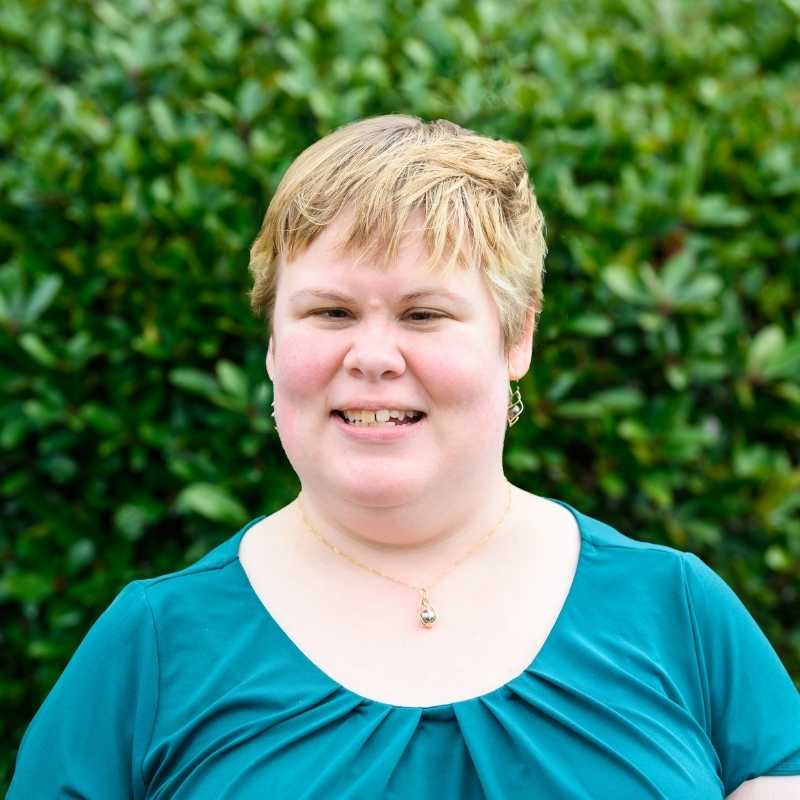
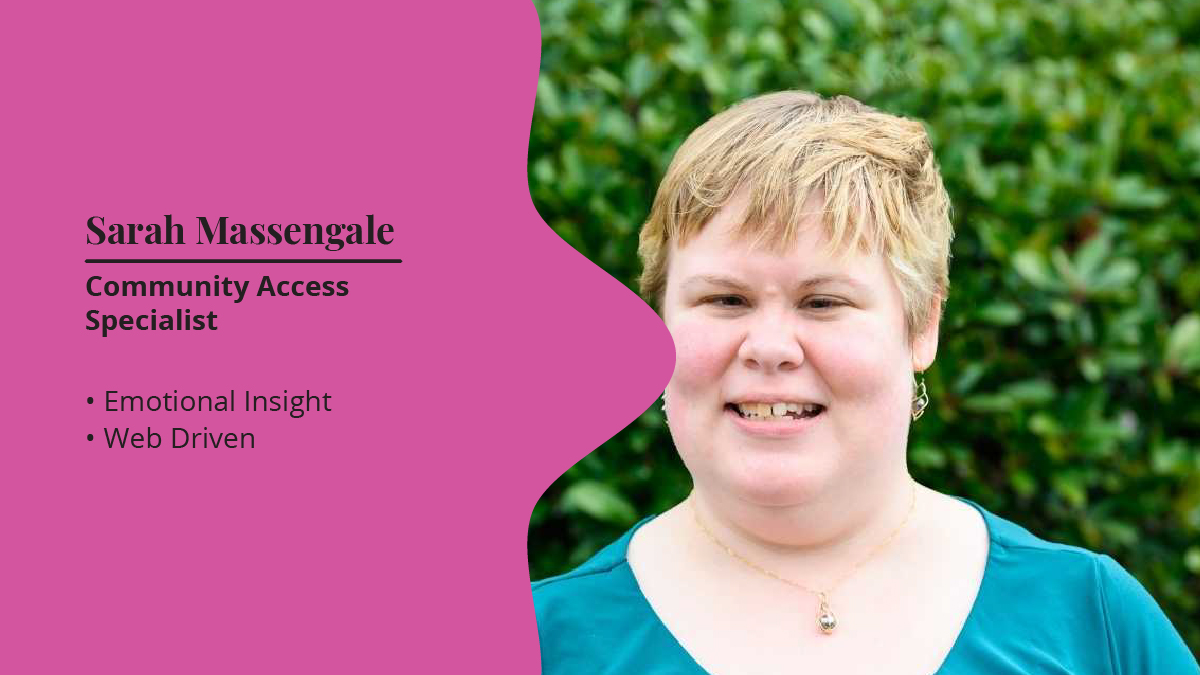
Sarah Massengale is an alumnus of Converse University and the University of South Carolina. She holds a public relations and music degree. At the time of the interview, she was the community access specialist at Able South Carolina, but she is currently a Web Accessibility Auditor at McGraw Hill.
About
Sarah Massengale, a native of Barnwell, South Carolina, began her career in the music world after graduating from Converse University performing opera. However, she soon realized the limited opportunities for a music career in South Carolina, particularly for individuals with disabilities.
This realization sparked a fire within her, leading her to return to school and earn a degree in public relations from the University of South Carolina (USC). Throughout this journey, Massengale’s frustrations with inaccessible web content, an issue she has faced for most of her life, began to fester, fueling her passion for advocacy. Massengale recognized that inaccessible web content worked within the parameters of her public relations degree, and she soon took on the role of facilitator in her training and in her time working with a student-led public relations agency at USC, furthering her way to her current career. Eventually, during the pandemic, Massengale received a job with Able South Carolina, a disability-led organization working to create change within systems, communities, and individuals to be more inclusive of all people with disabilities.
Massengale’s typical workday changes daily based on her responsibilities of facilitating training on digital accessibility, creating accessibility content, and conducting digital accessibility audits on websites and web platforms. Though Massengale mentions the challenges in trying to reach clients to get them on board with having digital accessibility, and even still to this day, Massengale herself, outside of work, faces inaccessible content, she is most inspired by her impactful work with the South Carolina Arts Commission to continue working to make change.
From Massengale’s experience leading to her career path as a Community Access Specialist and her work with Able South Carolina, she offers advice to up-and-coming creatives interested in entering this career path and the next generation of creatives. “Do not let anyone, whether it be an academic institution, family, non-disabled peers, state agencies, or whoever, do not let anyone dictate your career path, and do not let anyone tell you that you cannot do your career path.”
“If you ever start to feel inadequate at what you’re doing, don’t let that stop you.”
Whitney McDonald is the Theatre Operator for the Amentum Center of Performing Arts and the Aiken Community Theatre in Aiken, S.C. She acts as a liaison between the city and the theater, runs the box office, and handles communications for the theater.
About
Whitney McDonald formerly worked in retail and banking, acting at the Aiken Community Theatre as a hobby. When the previous theatre operator announced her retirement, McDonald decided to apply. “I had been a part of the theater for a long time,” she says. “I always thought to myself, ‘Man, if she ever retired, it would be really great to have her position.’”
McDonald got a job offer two weeks after her interview. “It just worked out,” she says. “I knew everyone in the theater anyway, but I’ve always been a performer. I’ve always been on stage, I’ve done a little bit backstage. But I didn’t ever really realize how much goes on behind the scenes to run a theater.”
McDonald starts her day at 8 a.m., when she checks her email and voicemail, and makes sure everything in the theater itself is ready for production. Because she works for both the theatre and the city, she handles communication and manages the box office. “It kind of just depends on what’s going on that week. There’s always something different to do every day.”
McDonald says that every theater’s administration is different from being on stage, and each venue requires something different from its theatre operator. “Having a background in some sort of administration would help,” she says. “I didn’t have a whole lot of that.”
She also says students would need to be okay with working by themselves most days, and that they should work on their customer service skills. “You are the face of the box office,” she says. “When people call in, they expect to speak to you, and you want to be able to help them as best you can.”
McDonald suggests that people interested in working in theater should start by getting involved in local workshops and attending local auditions. “That’s how I got into it,” she said, crediting a lot of her success to the connections she made while acting. Finally, she advises students to be bold. “If you ever start to feel inadequate at what you’re doing, don’t let that stop you.”
“When you live with this experience of being the one dealing with this inaccessible content for over 30 years, you recognize what the issues are. And you have the skills to articulate the issues, you’re kind of in a position where if that’s something you’re interested in, that path sort of finds you automatically.”
Sarah Massengale is an alumnus of Converse University and the University of South Carolina. She holds a public relations and music degree. At the time of the interview, she was the community access specialist at Able South Carolina, but she is currently a Web Accessibility Auditor at McGraw Hill.
Interview
Transcript
Sarah Massengale 00:00
My name is Sarah Massengale. I’m originally from Barnwell, South Carolina, currently living in Columbia.
Emma Plutnicki 00:06
And can you please tell us what you do for work and where you’re working from, I’m assuming around Columbia?
Emma Plutnicki 00:12
Amazing, and how long have you been working doing that?
Sarah Massengale 00:12
Sure. So my official title is Community Access Specialist with Able South Carolina. To kind of break that down, what that means is I am in charge of conducting little accessibility audits on websites and web based platforms. I facilitate trainings on digital accessibility and creating accessible content, and do technical assistance and consulting on again, kind of accessible communications, creating accessible websites, things like that.
Sarah Massengale 00:14
May will be three years.
Emma Plutnicki 00:16
Great, amazing. So how did you end up in that field? How did you hear about it? How did you figure out that that was a path that you could take?
Sarah Massengale 01:03
So I started out, I think the person who nominated me mentioned I started out with a music degree from Converse University, it was Converse College at the time. And that, of course, was tricky in a number of ways. So first of all, having a full time music career in South Carolina, where it’s exclusively performance based, is tricky. Hopefully, there’s a teaching component or something like that, because there’s not the full time sort of performance venues. And then there’s the added sensation of being blind, where employment of people with disabilities is significantly less than the employment of non-disabled people. And that’s a whole longer conversation.
I ended up deciding to go back to school, got a degree in Public Relations, from USC, from [University of South] Carolina. And in the process, I had been living with, you know, for 36 years now, really living with the frustrations of inaccessible web content. And so when you think about inaccessible web content, it kind of plays really nicely with that public relations and communications and marketing and journalism space, right?
And so I started kind of taking on that role of facilitator in trainings. And my performance experience kind of comes into that because you learn to give that, you have that presenting ability, and the, you know, kind of assertiveness to really stand up and go, “Okay, I have the skills I can voice this, I can be in front of people and facilitate this.” And so I started kind of taking on the facilitating of those trainings working for a student-run PR agency that I was involved with, and then from there going into digital accessibility was kind of a natural path. And so Able hired me to do that work back when the pandemic was going on. And then from there, I’ve kind of built out my certifications and my credentialing to really be able to dig into that path. But I’m really always doing it from that communication space.
Emma Plutnicki 03:38
Yeah, that makes sense. So how would you say, you just mentioned that your like, performance background helped you? How else do you think having that degree in music has helped you in your current profession?
Sarah Massengale 03:50
So there’s a couple different things that go on. The performance background, of course, like I said, helps a lot with the training facilitations. And the other thing is, I’m in a space with, the digital accessibility space, where I’m in front of a lot of clients, in front of a lot of different people. And people who have very strong emotional reactions to various parts of the disability experience, whether or not it’s us telling them “hey, your site’s not accessible, you know, that’s a that’s a violation of the law,” or us having to give them information that they are just not expecting on the extensive remediation that’s going to happen. So there’s a value in reading people that comes from the performer’s mindset that’s also really important. And then kind of surface level. There’s the logistics and scheduling piece. So as a performer you’re constantly responsible for your own logistics, your own scheduling, you know, dealing with accompanists, dealing with opera directors, dealing with voice coaches, and so I’m very obsessively calendar conscious. And that’s something that comes from that performance background as well.
Emma Plutnicki 05:03
Yeah, that makes sense. So can you just walk us through a typical workday, what your work process looks like, and what’s kind of expected from you on a daily basis?
Sarah Massengale 05:13
Sure. For example, my workday kind of depends on whether it’s an audit day or whether it’s a training day. So an audit day is a couple of hours of admin first thing in the morning, which might be doing some of that logistic scheduling, might be some client correspondence, but then it’s going to be six hours straight of me, a minimum of three different screen reading pieces of software, two computers, and keyboards, various sundry automated testing tools, and just digging very deep into whatever web based platform is in front of me at the time. So essentially, basically, working in the tech field at this point, and doing that very deep-in technically-focused work.
Now, a Monday or a Thursday is going to be more client facing. And that’s going to be anything from facilitating these trainings, whether it be remote or in person, it’s going to be report consults with clients, where they have gotten their audit reports back, and I take some time to really sit down and decode those audit reports with them, because these are highly technical, very long documents.
And so really sitting down and putting this into the plain language, making sure that folks really understand not only what they’re looking at, but why it’s important and who the barriers are going to effect. And then, so, other meetings are going to be of course, what we call pitch meetings. And the pitch meetings are, you know, a client has come to us, or we’ve discovered a client’s website is inaccessible and so we’ve reached out, but either way, the client is sitting down with us. And we are really working to get them on board with accessibility and talking through the services that they can receive, and how those services are going to be beneficial to them as a company.
Emma Plutnicki 07:27
Yeah, that makes sense. So do you think it’s been challenging for you to find this career path? Or like how to figure out how to apply your background to this task? Or are there any challenges that you run into on a daily basis that you’re able to kind of conquer?
Sarah Massengale 07:45
I don’t think finding the career path itself has necessarily been challenging, because again, when you when you live with this experience of being the one to deal with this inaccessible content for over 30 years, and you have the skills to articulate the issues, and you recognize what the issues are, you’re you’re kind of in a position where if that’s something you’re interested in, that path sort of finds you automatically. But as far as challenges to conquer, I think the biggest thing is, those barriers still exist in websites that I have to access to do my job. And then it’s also the getting clients on board with accessibility.
Because, you know, for instance, I’ve been working with the Arts Commission. The Arts Commission is a rare situation, because they’re passionate, they’re excited, they want to do this work, they’re committed to this work. But eight times out of ten, what we’re more likely to see, say in a larger corporation is, “but people with disabilities don’t shop here. Why do we need to be doing this? Why? Why does it matter if our website is accessible?” Or something like, “oh, well digital accessibility is expensive.” Or, “Well, we’ll just put an accessibility overlay on our website. And that’ll solve all of our problems, right?” So the biggest barrier is really getting the client on board with what they need to be doing instead of doing just sort of these half baked ideas.
Emma Plutnicki 09:26
Yeah, that makes sense. I’m sure that’s very frustrating.
Sarah Massengale 09:31
Interesting.
Emma Plutnicki 09:32
Yeah. So, so far in your professional life, do you have a like defining moment that you’ve come across or like a particular project that you worked on, that’s made a significant impact on you?
Sarah Massengale 09:48
I think, honestly, this Arts Commission work has definitely been up there, because one of the things that’s been really cool, I joke with my director at work all the time about not often enough having the opportunity to, quote, “get out of my tech geek box.” And the Arts Commission project has been really cool, because in a lot of ways, it’s been able to really play the three parts of me, you know, the musician and performer, the woman in tech and the public relations and communications professional, all together. And I’ve really been able to maximize using all of that, and I’ve been really excited and really appreciative of that.
Emma Plutnicki 10:35
Yeah, that’s great that all your backgrounds kind of come together like that.
Sarah Massengale 10:39
It is, it’s awesome.
Emma Plutnicki 10:40
Yeah. And so are there any local organizations within South Carolina that you know, of either local organizations or programs or events that you can recommend for anybody who’s looking to get into a field similar to yours?
Sarah Massengale 10:57
So unfortunately, South Carolina really does not have the facility for teaching most of these skills. There are, there is access South Carolina IT or ASCIT, which is a dedicated organization for accessibility professionals in the state, which I also chair. But as far as trainings for digital accessibility professionals, that doesn’t happen in South Carolina, I’m one of the very few handful of auditors in South Carolina and one of only like two or three that are actually certified. Folks will have to go out of the state for the trainings, but we live in the age of technology, a lot of that is available online.
Emma Plutnicki 11:49
Yeah, makes sense. So just as we wrap up, do you have any advice for current college students or just people who are young and trying to get into a professional world similar to your field?
Sarah Massengale 12:05
So what I’m gonna say is not necessarily centric on my field, what I’m going to say is to young disabled college students, is that do not, do not let anyone, whether it be academic institution, whether it be family, whether it be non-disabled peers, whether it be state agencies, whomever, do not let anyone dictate your career path, do not let anyone tell you that you cannot do your desired career path. But also remember that as a person with a disability, you’re going to have to work twice as hard.
But it’s something my own mentor who was also blind said to me, when I got into the space that I was in college, and then I was starting to look for employment. And that’s something that has stayed with me because societal expectations of people with disabilities are unfortunately always lower. And so in order to make those societal expectations equitable, we are always going to have to work even harder than not disabled folks.
Emma Plutnicki 13:13
Yeah, that’s great advice. And is there anything else you’d like to add in general?
Sarah Massengale 13:19
I don’t think so at this time, but can I reserve the right to email you if I think of anything?
Emma Plutnicki 13:24
Absolutely, absolutely. For sure. That’d be great.
“Everyone’s got their own journey, and you have to find your way. I would never discourage anyone from a journey in the applied arts or the creative arts if they have the drive and the will to do it. Because that’s the biggest part of it: just being disciplined.”
Marius Valdes is an artist, illustrator, and professor of Studio Art teaching graphic design and illustration at the University of South Carolina. Valdes received his BFA in graphic design from the University of Georgia (UGA) and his MFA in visual communication from Virginia Commonwealth University (VCU). Valdes is originally from Charleston and lives in Columbia.
Interview
Transcript
Marius Valdes 00:00
My name is Marius Valdes. I’m from Charleston, South Carolina. I currently live in Columbia, South Carolina. I’m a professor at the University of South Carolina. I teach graphic design and illustration. I’m also a practicing artist and illustrator.
Emma Plutnicki 00:15
Amazing. So, can you just tell us what your official job title is? And how long have you been working as a professor there?
Marius Valdes 00:22
Yep, it’s Professor of Studio Art. And I’ve been here since 2007, so something like 17 years.
Emma Plutnicki 00:31
Yeah.
Marius Valdes 00:33
So long!
Emma Plutnicki 00:34
Yeah, that is a long time. So how did you end up as a professor, and I believe before you were a practicing professional in the field, so how did you kind of make that transition from practicing in the field to then to academia?
Marius Valdes 00:48
So, I graduated from the University of Georgia in 1998. And I worked as a designer for about four or five years. And I had got to a point where I was really exploring illustration, I was kind of enjoying that almost more than the design work I was doing. But one of the things I felt like was limiting me as a designer was, I didn’t feel like I was very good at talking about my work. So, I thought going to graduate school would be kind of a good way to go and kind of expand my education, and kind of take what I’ve been doing for four or five years and kind of refocus and kind of just make myself more marketable. And while I was there, I had no intention of being a professor or teacher, and to me today that still seems kind of crazy. They let me do that. But when I was there, part of my scholarship was to teach a class. And I just loved it. And it was really fun. And what I found was kind of like, even though some of the students I taught were, were, maybe in some ways, more talented than I was, as a designer, I just knew more than them, because I had been doing it as a professional. And so, I just kind of really enjoyed it.
When I originally started college, I was going to be a psychology major, because I thought maybe I would be a counselor, or a shrink or something. I like talking to people. But then I realized there was science involved. So, I feel like teaching has kind of given me the ability to do that sort of stuff, in addition to teaching, you know.
Emma Plutnicki 02:25
Yeah, it makes sense. So, what kind of background led you to become a professor? What do you think, specifically lead you to do studio design, how has your background within studio design helped you to teach it now?
Marius Valdes 02:39
Yeah, so I think what helped me was, and I always tell students who are thinking about going to grad school to work for a couple of years, because when you get out of college, and you start working, and this is also why internships are really important, it gives you a chance to kind of figure out what you like, and also what you don’t like. So, for example, I was working in Charleston, and I was doing really well, I was working for companies that were doing a lot of real estate, like brochure design and advertising for real estate companies. And it just got so boring. I mean, it paid okay, and it was a nice job. But it wasn’t very interesting. And I started painting on the side for fun. I was literally finger painting on cardboard. And that started winning me awards. And I was, just like “what?” You know?
So it was kind of taking those things that were fun with the practical stuff I had kind of learned as a designer, and putting those together and then going to graduate school for two years, and working with a whole new group of professors who treated me more like a colleague and less like a student, and just learning to talk about work and look at my own work and kind of evaluate it, and look at other people’s work and be able to learn how to talk about it. All those things make me able to teach now, you know. Some semesters are easier than others, you know, some groups of students are easier to work with than others. But usually, it just means it takes me a little longer to kind of get through to people. But once I do, you know, I can share with them what I’ve been through. And I think that helps.
Emma Plutnicki 04:11
Yeah, that’s great. So nowadays, can you walk us through a typical workday, like what you have to do, what classes you teach, and just what’s expected from you on a daily basis?
Marius Valdes 04:33
Yeah, so I teach what they call two-two load, which means I teach two classes in the fall and two classes in the spring. I teach Mondays and Wednesdays, which is why I normally check my calendar first thing Monday morning. But the thing about teaching is my classes are two hours long. And I don’t always go the full time because a lot of times, the students, I give them something to do and they need get started and they’ve got to meet with me, and then once I’ve I met with them they need to go work. And that can be, they can stay in the classroom, they can go to a design lab, they can go to the library, they can go wherever they need to do their work. But for me on Mondays and Wednesdays, I’m teaching from eleven to four. Before the classes start, I’m usually checking email, getting caught up talking to students.
On Tuesdays and Thursdays, I do office hours, and that might be coming into my office and actually meeting with people. It might be doing a Zoom call; it might just be looking at work that’s been posted online and making comments on it. And then I’m also doing emails with, you know, colleagues and trying to figure out how to keep the design program going. It might be service at the university where I have to go to, like, for example, I was a faculty senator for a bunch of years. And that was a thing where once a month, for two or three hours, you go to a really long meeting and talk about all the things going on at the university.
So, Fridays are usually research days where it’s supposed to be a day where you have kind of an uninterrupted time to just work on your work. Although I will say this year, it’s been a lot of meetings on Fridays, because there’s so much going on all the time. At the university level, I’m at what they call research one university. So that means the emphasis is 40% teaching, 40% research, and then 20% service, which is doing things like being a faculty senator, for example. Other schools, like I taught at USC Upstate for two years. That’s what they call a teaching school where you’re teaching more classes and there’s less expectation of you doing research. Research for me is doing design work, illustration work, making art, and putting on other shows and stuff like that. And going to conferences to present my work.
Emma Plutnicki 06:55
Cool. Yeah, so, you just mentioned putting together projects and things like that. Do you have one project that stands out in your career as being, like, exceptionally motivating toward you or something that just had a significant impact on your life?
Marius Valdes 07:11
Oh yeah. You know, for the past couple of years, I’ve been working with the medical university, Carolina’s Children’s Hospital in Charleston. And I got a couple of grants through the school to work with them and created several murals for them. I’ve created some kids’ activities and books for therapists to use. I would say that’s been the most rewarding thing I’ve ever done, because it’s weird, I mean, I’m not kidding you, about an hour ago, a guy I work with here was like, “Hey, man, I’m at MUSC right now in the children’s hospital with my kid and my kid is like obsessed with your frog, you know, the mural, and it’s been really nice, like, it’s really made a difference on this visit,” and I get emails like that occasionally from people. And its always kind of sad, because like, the only way to really see those things is if you have a sick kid, but I really enjoy that.
And then I have other projects, I’ve done things that are more self-initiated, where I’ve kind of created little casts of characters. Some of them are called The Secret Species, and they’re these little clay figures, and I kind of would make art about them and leave them places and stuff. And I got a lot of mileage out of those, like that was kind of part of my thesis for my grad school. And I just kept kind of working on it. I got some really good attention for that work that was meaningful to me, for people to say, “Wow, this is a really creative idea,” you know. I kept hoping a toy company would come and offer me a couple million dollars for it. But that never happened. So…
Emma Plutnicki 08:45
No, that’s so cool. And just like, overall, has it been challenging in your career, both as a professor and as a practicing creative?
Marius Valdes 08:57
Yeah, I mean, you know, I’ll be honest with you, I think being a professional creative is not for the weak of heart. But what I will tell you is that when I was probably a little bit, like, your age, or even a year or two younger, I remember driving with my dad, and telling him, “I think I’m going to be an art major.” You know? I was just waiting for him to like, say, “What are you doing?” you know, and he just said to me, he’s like, “Well, if you do something like that that you love, you’ll never really work.” And I kind of feel like that. I mean, now, I do feel like I work. But, I mean, I work on things I care about. And I think that to me, it is sort of one of the main things that is like, you know, on my worst day, I might be struggling with a painting or an illustration for a client, but what I’m sitting here doing is drawing, you know. And I’m married to my wife who is a paralegal. She has a very normal nine-to-five job. And, you know, her job is answering to five attorneys, you know, screaming, like, “I need this now, I need this now.” And I can’t really complain too much, right?
The other thing is, I think that like, if you go into design or advertising, you are a little bit subject to your clients, and where you’re working and who your clients are, versus academia, which is much more steady, it’s a little bit more of a routine, you know, you kind of get into a groove. And I feel like whenever it gets too stressful, oh, spring break! Oh, Christmas time, here’s a month off! Here’s summertime, you can go paint for a month. And you kind of get all the stress of all the things you have to do, kind of out of your system, and then you reset. So, I feel like I’ve done a little bit of everything in the creative world. And I think like, sometimes the grass is greener, you know, sometimes you’re doing, you know, I’m doing academia, and I’m here teaching a bunch of kids, or students, and I think like, “man, I’d really like to just be in like an office setting right now, working on a project all day, sitting in front of it not worrying about this person or this person or this person.” But then you go into having a critique, and your students bring in a bunch of amazing work. And you’re like, “oh, man, I am a good teacher!” I mean, I joke around them all the time, and when they do something good. I always say, “Oh, I do know what I’m doing.” You know? There are little rewards everywhere.
And I think there’s all levels of like, I look at some people who have careers, you know, in the arts, and they are just doing amazing things. And they’re making gobs of money. And they have tons of exposure and fame and fortune. And I looked at people who were totally content just to be in their studio painting all day and illustrating and never seeing anybody and that makes them happy too. So, it’s like anything in life, you kind of have to everyone’s got kind of their own little journey. And you kind of have to find your own way. But I would never discourage anyone from a career in the applied arts or creative arts, if they have the drive and the will to do it. Because I really think that’s the biggest part of it is just being disciplined, you know?
Emma Plutnicki 12:15
And along with being disciplined, are there any physical skills that you think are beneficial for people trying to break into the world of design? Any specific skills that maybe you possess, that help you in your day to day life, or just if you saw, if you were hiring for a design job, and you saw, “Oh, this applicant has this skill,” what kind of things like that are beneficial to have?
Marius Valdes 12:39
Yeah, I think anytime you can get better and faster at learning software, that just becomes a tool in your tool belt that will help you get your ideas out faster. The one thing I preach to my students about a lot, and I always tell them this story that I graduated on Friday, and I started the following Monday freelancing at Cartoon Network, which at the time, back then that would have been my dream job, to work there and work with animation stuff. And what happened was, I was at Turner network, which is in Atlanta, and they were using a brand-new version of Adobe Illustrator that was different than what we had in my undergrad at Georgia. And I just could not teach myself how to figure out the new software, because I was used to having a professor always come over my shoulder and say, “All right, push that button, push this button.” And back then there was no SkillShare. There was no LinkedIn learning, it was called Adobe Classroom in a book, and it was a book like this thick, and you had to flip through and follow the steps, and it was really unintuitive. So I always kind of preach, I think one skill students can really do is teach themselves how to learn, and learn how to learn, and be open, you know, because technology is changing so quickly, that if you can’t keep up with it, it’s going to really hinder your growth, I think.
And the other thing is to be a design sponge or art sponge. And I mean that in the sense of, don’t just look at Pinterest and don’t just look at Google. It’s like, go to the library, look at design books, find stuff that’s been curated and edited, and it’s got the really good stuff in it, because the stuff you see on the internet, while some of it’s really cool, a lot of it is just a copy of a copy of a copy, you know. It’s good to go back and go to the original stuff. I think also just being a decent person, a nice person, nice to people. That goes a really long way. You know. And not everybody is going to be nice to you, but I think I’m in this job because I’m a good, decent person. I think that as I make connections and networks and you start meeting people, I think people are like, “Oh, that’s someone I would want to work with,” you know?
Emma Plutnicki 15:03
Yeah. That makes sense. So, for networking, are there any events or programs or organizations within South Carolina to meet people like that? Like design specific events or anything that you know of that someone who’s looking to get into that field could go to and kind of meet people that have similar minds?
Marius Valdes 15:22
Yeah, for design, AIGA [The Professional Association for Design] has always been kind of the big national organization, and they have chapters throughout. Some chapters are better than others. We used to have one in Columbia that was amazing, and it’s basically dead now. But you could go to Charlotte, or depending on where you live, you could go to Atlanta, or maybe another place that has a little bit more thriving AIGA chapter.
The other thing we’re seeing is like, here at the university we’ve got a group of students who just kind of took it upon, amongst themselves, to start a new chapter of a design club. And they’ve been doing amazing things, bringing guest speakers and doing workshops for students that are younger than them. And it’s just kind of been really cool to see them kind of take on a mentorship role. And some of the speakers they’ve got in, I’m just like, “how did you get that person for free?” I mean, you know, I think if there’s not something for you to use, then you can always start your own thing, and get like-minded people together. For advertising, there’s the Advertising Federation, there’s usually chapters of that. So, for example, there’s the Midlands Federation here, and they have things every year called The Addy Awards. So those are competitions you can put your student work in and try and get feedback on. But those are kind of probably the main ones I would think about, you know?
Emma Plutnicki 16:47
Amazing. And then just as we wrap up, do you have any advice for either a college student who’s trying to, after graduating, get into design or academia, or just somebody who wants to get into a creative field? Any advice?
Marius Valdes 17:02
Yeah, I mean, so one of the things I’ll tell you is, you know, and again, something I tell my students all the time is, you’re going to graduate with a portfolio that you made. And if you have a good teacher, it should be a good portfolio; it should be a pretty solid portfolio. But the day you graduate, you could take that portfolio, you can throw in the garbage, and make one that you really like, you know? Or you can have several, you could have a portfolio that’s aimed at a very conservative company, you could have one that sort of, like, aimed at like your dream company, you could have one that is more about your illustration than your design, or one that’s all about your lettering. And the main thing is like you want to go after the kind of work you’re interested in doing, because if you put a bunch of calligraphy or hand, you know, handwritten stuff in your portfolio, and you hate doing it, that’s usually what you end up getting hired to do. And you’ll be like, “oh, man, why’d I do this?” So, I think part of it is kind of, again, figuring out what you’re interested in, but also what you’re not interested in. So, you can be more targeted yourself.
I also feel like when you’re in college, and you’re graduating, if you’re young, if you can try and come out of college without any credit card debt or student loans, and you have nothing, like, no baggage, go to a big city and work if you can, because it’s a bigger market. You’ll have more opportunity, it’s faster paced, it’ll make you better, because you’ll be competing against a lot of other people and you’ll be working a lot harder. If you are from a town like Charleston, or Columbia, when you come back, you’ll be heads and shoulders better than everybody else, because you’re used to working in those bigger markets.
And I also tell students, if you’re sending out emails and cold calling people by email, sometimes it helps to have a really nice piece that you can mail, because people love getting cool things in the mail. If you’re looking at a very specific city, you can always email art directors and tell them you’re coming to visit that city for a week, and you would love to meet with them while you’re in town. And sometimes just stopping by place and letting people see you in person and see that you’re a normal, nice person. Or maybe you’re an abnormal person, they like that too, you know? I mean, sometimes just going and introducing yourself, the person sits behind that front desk, they have a lot of power, because they can reach back to the creative director and say, “Hey, you know, this guy Marius came by here today. And he was so polite and nice. He would be a good fit here.” You know? Sometimes that can be the thing that makes a difference, versus just sending a PDF to someone saying, “Hey, here’s my stuff. I just graduated, let me know,” you know.
And lastly, once you graduate, you have your student portfolio. You should be working immediately to try and replace student work with real work. So, if you find an organization, or nonprofits that you’re really interested in, maybe it’s like maybe you’re someone who’s really into cats and dogs, well maybe go to your local SPCA and offer to do a poster for them. If they print it, you’ll trade design services for them doing that, then you can replace one of your student projects with a real project. And I think the more you start building that up, the better it is.
And then the last thing I’ll say, this is the advice I would tell myself, if I could go back in time: be patient, finding a job is, sometimes it’s the market, sometimes its timing, is just like, you know, you just never know what the elements of finding that right job are at the moment. It could be someone is going on maternity leave, and they need someone to fill in for six months. They just happened to get your resume that day; you know that literally happened to me. So, it’s about being patient and not looking at your classmates or your friends and seeing “Oh, man, so-and-so is going to work for Google and so-and-so’s going to work for this agency, and I just can’t find a job.” It’s going to take a little time for some people. And you just have to be persistent, and again, disciplined. Maybe you get a job waiting tables at night, so you have your days open so you can go to an interview or do freelance work. Or maybe you just got your dream job right out of college that happens to you know?
Emma Plutnicki 21:16
That’s great advice, thank you. And just overall, is there anything else you’d like to add?
Marius Valdes 21:21
I mean, I think college and work are the same thing. You get what you put into it. So, I think you just got to get started. Like, that’s really something someone told me. The Cartoon Network thing didn’t work out, so I moved to Charlotte. And the girl I was dating at the time got this amazing job making really good money and doing awesome client work. And I got offered this really boring job, making almost half of what she was making. I remember one of my teachers just saying, “Dude, just get started.” And it’s so true. Once you get into the field, that first job is kind of a fifth year of college. You learn more, and you start to get better at things. And once you’re in a job, it’s easy to find another job, you know? And you will be amazed, and students will be amazed at what life is like when you don’t have homework. You have so much more time, like spare time, that you won’t know what to do with yourself. My first year out of college, I was like the healthiest I ever was in my life, because I would get home from work and be so bored. I would just go for a two-hour walk with my dog and then come home and read, and paint, and I had so much spare time outside of the nine to five thing, and it was great, you know, it was really, really nice. So, I guess that’d be my last little bit of advice.
Emma Plutnicki 22:49
Yeah. Perfect. Well, thank you so much for joining us today.