“If you ever start to feel inadequate at what you’re doing, don’t let that stop you.”
Whitney McDonald is the Theatre Operator for the Amentum Center of Performing Arts and the Aiken Community Theatre in Aiken, S.C. She acts as a liaison between the city and the theater, runs the box office, and handles communications for the theater.
Interview
There was a technical issue with our audio during this interview, so we are providing just the transcript.
Transcript
Whitney McDonald 00:00 Hi, I am Whitney McDonald. I live in Aiken, South Carolina. I am the theater operator for the Momentum Center for Performing Arts. It is a city-owned facility, and Aiken Community Theater is the main tenant. So, I work mostly for Aiken Community Theater, but I also do work for the city as well. I’m kind of split between both. I am more of a liaison between the city and the Aiken Community Theater.
Haley Hansen 00:28 How long have you been doing that?
Whitney McDonald 00:29 Two years in August. Yeah! coming up in August. It will be two years.
Haley Hansen 00:33 Can you walk me through your typical workday?
Whitney McDonald 00:36 Sure. I come in at 8:00 a.m. every morning, even though the box office isn’t open until 9:00. I use that hour to check voicemails and emails for both the theater and the city. I walk through the theater to make sure everything looks okay, especially if we have a rental that day making sure the stage and the back hallway are clean. After that, I answer phone calls and emails. It really depends on what is going on that week or month. There is always something different to do, which keeps you on your toes.
Haley Hansen 01:21 How did you wind up in that field?
Whitney McDonald 01:23 I’ve been a part of the theater for a long time. The previous theater coordinator was with the theater for over 20 years, and I always thought, “If she ever retired, that would be a really great position to have.” It seemed like a nice job weekend off, evenings free. In mid-2022, she announced she was leaving, so I applied. I knew it was a city position, so I had to interview both the city and the executive director of the theater. I had an interview one day, and two weeks later, they offered me the job.
I already knew everyone in the theater. I’ve always been a performer, mostly on stage, and a bit backstage. I did not realize how much went on behind the scenes until I took the job. I’m still learning new things every day. There is no handbook for this position; my predecessor created the role. So, I’m the second person to fill it in. I just take it day by day with support from the board and executive director.
Haley Hansen 03:08 Was there any specific moment when you realized you wanted this job?
Whitney McDonald 03:25 It was always in the back of my mind as a “Dream Job,” but I never thought it would really happen. I was happy doing theater as a hobby. When the job opened, I saw it as an opportunity. I figured even if I did not get it, I would not regret applying. It still feels surreal that I actually work here, kind of like a dream come true.
Haley Hansen 04:21 What were you doing before you came to this position?
Whitney McDonald 04:24 I did a lot of retail, food service, and worked in banking for a while. Those were the main things. I didn’t have a lot of administrative experience, other than what I gained in banking. I think I got lucky. Knowing the people involved helped a lot.
Haley Hansen 04:45 What was the biggest adjustment when you started?
Whitney McDonald 04:58 Getting comfortable answering the phone was a big one. I keep my personal phone silent all day, like a true millennial. Learning the ticketing system was daunting too. The previous coordinator had already left, so there was no formal training. Volunteers, board members, and the executive director helped, but I had to figure out a lot on my own. Learning quickly and independently was the biggest adjustment.
Haley Hansen 05:50 Are there any specific skills a student or young adult should pick up if they want to work in theater administration?
Whitney McDonald 06:01 A background in administration would help. I did not have much, and I was lucky this position didn’t require a lot of it. It depends on how much administrative responsibility a theater coordinator has. We have a treasurer who handles finances, and our executive team shares administrative duties. Also, being okay working alone is important and there are many days I’m here by myself. Customer service is key, too. You are the face of the box office, so being pleasant and helpful really matters.
Haley Hansen 07:19 That’s helpful.
Whitney McDonald 07:20 I’ve never met another theater operator, so I can’t really compare my role with others. Each theater’s daily operations are unique.
Haley Hansen 07:34 Are there any organizations, programs, or events you’d recommend for people interested in theater?
Whitney McDonald 07:43 We used to offer workshops, improve acting classes but haven’t in a while. That is a great place to start. Or just go to an audition. That is how I got started, I had never done theater before, went to an audition, got cast, and went from there. As for getting a job in the industry, I don’t know the exact route. I just got lucky. Some theaters require degrees or certifications.
Haley Hansen 08:28 It sounds like if you show up and get involved, people will help.
Whitney McDonald 08:33 Absolutely. We always welcome new volunteers and encourage people to come in and help.
Haley Hansen 08:40 Do you have any advice for students pursuing a creative career?
Whitney McDonald 08:46 If you ever start to feel inadequate, don’t let that stop you. I feel that way all the time, but I am still learning. If it’s something you really want to pursue, don’t give up. That’s my advice.
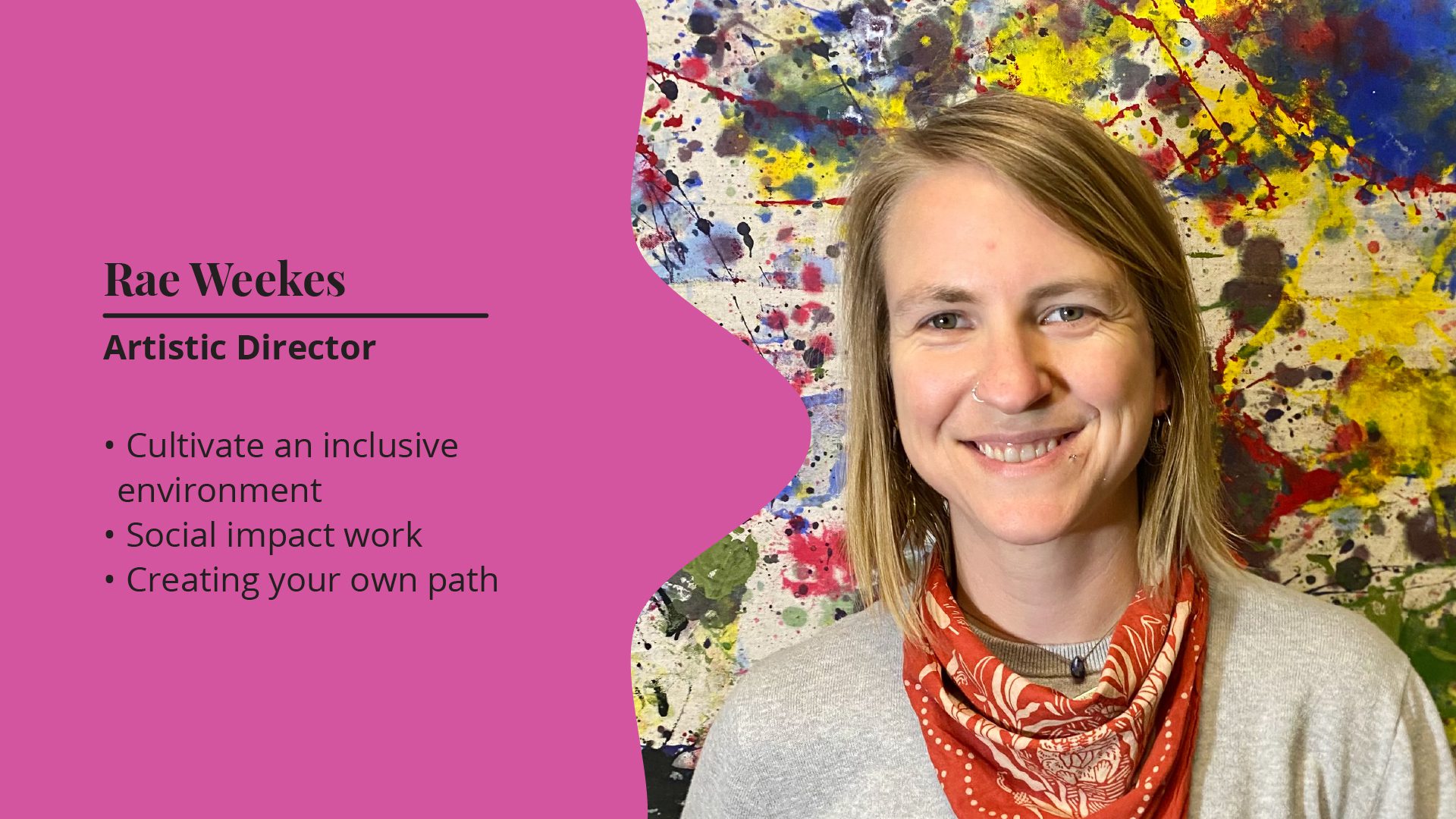
“Pave your own path, make your own way, it can look anyway you want it to.”
Rae Weekes is the Artistic Director at the Hearts Inclusive Arts Community in North Charleston, South Carolina.
Interview
Transcript
Emma Plutnicki 00:00
Okay, so to start, what do you do for work and where are you currently working from?
Rae Weekes 00:06
I work for a nonprofit called Heart Inclusive Arts Community, and we are a visual and performing arts studio for adults with disabilities who want to grow as artists. And, I am currently working or, yeah, I’m currently working from my office that is in our studio building in North Charleston.
Emma Plutnicki 00:26
Amazing. And how long have you been working there?
Rae Weekes 00:29
I’ve been here since it started 10 years ago in 2014.
Emma Plutnicki 00:34
Wow. And what’s your official job title?
Rae Weekes 00:36
I am currently the artistic director.
Emma Plutnicki 00:39
Okay amazing. So, what is one thing that you love about working in South Carolina specifically?
Rae Weekes 00:48
I really don’t have any experience elsewhere. So, this is really, I’ve lived most of my life in South Carolina. I grew up in Greenville and then moved to Charleston for college, and then just have stayed here ever since, and Heart has kept me here. So, I mean, it’s, it just kind of is, I think we have a lot of opportunities here. I think what’s also special about our organization, specifically being here is that I think our state tends to lean in a direction that is not very supportive of who we work with and what we do and who we are. So, it feels good to be doing something that takes up space and lets our artists be seen in a different light.
Emma Plutnicki 01:39
Amazing. And how would you describe the local professional community in South Carolina? Are you able to collaborate with other groups? Or how’s the professional community?
Rae Weekes 01:50
Absolutely. I’d say within the creative community here, it’s pretty tight knit. We’re always trying to connect and figure out ways that we can collaborate together. I think at times, well, at times it can be, it can feel a little competitive, I guess, just because we’re all kind of trying to fight for our way to exist, but, but it all in all like we acknowledge that and realize that that’s not beneficial to anybody. And so yeah, we all try to work together as much as we can, and that opens up new opportunities that you wouldn’t really imagine or think of before, and also just kind of pulls from all different disciplines.
Emma Plutnicki 02:31
Yeah perfect. So you know, in a creative career, it can be kind of difficult to figure out what success looks like. So how do you define personal or professional success in your career. Do you have any metrics, or how do you kind of calculate that?
Rae Weekes 02:51
That’s a big question for me. I guess I would say social impact, community impact and those kinds of things, awareness. How many people can we affect? Are we changing things for the better? So I try to stay on that track, and that’s, I guess, kind of my focus for success.
Emma Plutnicki 03:14
Yeah, amazing. And did you have any fears when you were looking into a career in kind of off the beaten path, any careers that came up?
Rae Weekes 03:27
No I guess I’d say no for me personally, no, I think my parents did. I’m probably, like a lot of other folks in this field, was kind of the black sheep of the family. So was paving my own path. Was doing things that my parents didn’t really, I mean, I’m super grateful they were super, super supportive, but they were definitely nervous. And my dad gave me like a book when I was a senior in high school that said what to do with an arts major, and I probably thumbed through it once or twice. It’s like, well, I don’t know. I’m probably not going to follow any one specific path. And I didn’t. Here I am.
Emma Plutnicki 04:11
Yeah there you go. And along the way, throughout your career, and when you were looking into this career, was there any advice that you were given along the way, good or bad, either from family or mentors or anything that stuck with you?
Rae Weekes 04:27
I can’t, I guess I can’t really say any one thing that sticks out, I think, kind of at large it was to pave your own path, make your own way, and that can, that can look any way you want it to. And yeah, I think that was just comforting to be able to hear that, especially from somebody who’s older, and it wasn’t any one person that said that. It was kind of like, once I got into this field and into the arts, it was kind of like a, surrounding advice from mentors within the community, teachers…
Emma Plutnicki 05:07
Yeah that makes sense. So now, on a typical day-to-day basis, what does your work look like? What’s expected of you on a daily basis? What kind of tasks do you get into? What does your day look like?
Rae Weekes 05:20
It can differ from day to day, which is something that I really enjoy about what we do. So, I guess a typical day we would come in, everybody, all of our artists would, well, let me backtrack a little bit. So, our artists are only in our studio two days a week. The other two days we do all of the behind the scenes. We’re a very small staff. Do all of the emailing, scheduling, things like that. So that’s more of like the boring, like computer stuff, I guess, and then. But when our artists are in the studio, that’s when we all are very energetic, and personalities are just bouncing off the walls. So, I’ll talk about that kind of day. We all come in, and all of our artists just kind of trickle in for the first, like 30 minutes, hour of the day. We’re together for eight hours, and we start our day with a daily draw, which is led by a volunteer. And that kind of gets our creative juices flowing. And just kind of, it’s not expected to be a masterpiece by any means, just a creative activity to get the day started, and then we’ll jump into our main activities for the day. And that can typically start with a couple hours of Visual Arts, where everybody is working on their own, their own projects, their own ideas, brainstorming, everybody’s at different stages. And then staff is there to just help facilitate any needs or wants or thoughts or questions and help just kind of build and strengthen whatever they’re working on. And then we’ll break for lunch. And then after lunch, we dedicate the afternoon to, well, maybe, like 30 minutes of, like movement, or just kind of meditation, yoga, and then after that, a couple hours of Performing Arts, and that could be whatever we’re working on at the time. Maybe we have a small performance that’s coming up and we’re going to do a couple songs, or we have our big summer production, and we’re doing full rehearsals, but that time would be dedicated to that, and then at the end of the day, we just kind of chill while everybody’s leaving, but we do pepper in a lot of outings within our community. We go see shows and events. We go have fun and go to the beach or go to the pool. We take a family vacation every year. And so, yeah, it really just kind of varies week by week.
Emma Plutnicki 07:48
Yeah, amazing. Sounds like busy days. And so, you mentioned that there are some shows for the Performing Arts, kind of side of your days, but for the art, like portions of the days, are there ways for the art to be exhibited? Or do you have exhibits? Or do the artists take the works home with them? Are there any ways of showing their work to the community?
Rae Weekes 08:11
Absolutely, we do a number of markets throughout the year, so we’ll have, like, a vendor table, and those markets can vary as well. We’re part of an arts festival some other like holiday markets. We also have been or the past couple of years, have had an exhibition and a professional gallery, one at one in Somerville at the Public Works Art Center, which was incredible, and then one in the Park Circle gallery, we try to have an art exhibition that coincides with our show or its own exhibition at a gallery. I’m not explaining this very well. Yeah, we try to take whatever opportunity we can find, but that also puts us in the same playing field as any other artist. We don’t want to be secluded, we don’t want to be set aside, pushed to the side. We want to hang on the same walls that another artist would, and that’s important to me, personally and for our artists as well. And then we do have an online store. It’s a little messy right now, but that’s another space that we try to showcase their work and on our website, and try to make that accessible to folks who can’t physically come to our shows.
Emma Plutnicki 09:44
Oh, great, great. And so throughout your career, has there been a particular project that has really resonated with you, or one, one single moment that you really reflect on as being kind of a defining moment in your creative journey?
Rae Weekes 10:07
Oh, every single day you see something that, yeah I try to see every moment, or try to use every moment as a learning opportunity through and through. So, I mean, there’s been a lot of big moments. I mean, that feeling you get after a production. All of our productions are original, and so there’s a lot, a lot of work and effort put into it. I mean, across the board, within our gallery exhibitions as well, there’s just so much work put into it. And so I feel, I mean, I’ve never been disappointed after a show or after an exhibition, opening. Never been disappointed. We’ve been disappointed in rehearsals like, What the hell are we doing? You know, but, but everybody just shows up and shows out for everything, every performance and exhibition that we do, and I think those are just big moments that you know, you feel accomplished, you feel pride, you’re there with your people. And you can, I mean, you see it on everybody’s face, it’s oh. So, I guess collectively, those moments of just being able to take a breath and be like, Look what we just did. Look what we accomplished, and all together, we did it together. So those are, those are the moments, I guess.
Emma Plutnicki 11:31
Yeah, that’s very sweet and I’m sure when you know performances happen, that’s taking up a lot of time in your life. So how do you manage the life-work, balance? And you know, just have space for personal creativity, while also managing that in a professional setting?
Rae Weekes 11:49
I wouldn’t say I’m a poster child for work life, for a healthy work life.
Emma Plutnicki 11:54
Why not?
Rae Weekes 11:57
Because, I mean, I’m getting, I’ve gotten better over the years, but I think a big thing that defines my life is my work and because we’re so close knit, we consider ourselves a family. So it’s, I mean, I hang out with some of our artists outside of our studio hours. We go to shows together. We go to dances together. So, it’s not necessarily all work. I also feel it’s kind of difficult to get things done when our artists are in the studio. So, anything like, we’ve done the computer, I could be like, Yeah, well, I’ll just do that later tonight, or, like, I’ll look up that later tonight. I can do it on the couch. And I also, I mean, I’m a single person with a dog living alone, and so I have, I mean, I’m able to do all those things, and it doesn’t really affect my life too much, but also it’s all kind of I know, but that’s okay. And then in terms of personal creativity, it really is just whenever it strikes me, it’s not a regular thing that happens. Because we’re so creative all the time in our studio, I feel like I do get that creative—that scratches that creative itch very quickly. By just being here. I tend to get more personal work done, I guess, around the holidays and stuff, because I make most of my gifts. So, when there’s a need for a gift or something like that, I can get a little bit more creative and get more work done. But really, if I other than that, if I’m out, or if I’m inspired by something, or if I want to try new material, like I’ll do it pretty quickly, and then it’ll just kind of sit on my coffee table for a while, and then I’ll pick it up again, and then I’ll put it away. So, it just varies. But I think everything’s kind of intertwined for me.
Emma Plutnicki 13:45
Yeah, no makes sense. So just as we wrap up, is there anything else you’d like to add, or anything else you may have wished that I asked that I didn’t?
Rae Weekes 13:54
Not that really comes to mind. Remind me, how are you guys using these interviews again? So, I know you’re pulling the information for folks who want to, like, maybe gain some insights and things like that. But is it going to be like, written or like, our video is going to be posted?
Emma Plutnicki 14:15
Yeah, so it’ll be a little bit of both. Mainly, we are having a professional directory on the Uncharted initiative of the Creative Career Studio, and then I’ll send you the link to the South Carolina Arts Commission Creative Career Studio website. It’s very cool, very intuitive, and offers a lot of great information, but we’ll be collaborating with that, kind of cross-referencing the interviews that we’re doing here with them, so there’ll be a little bit of back and forth on their website. And then we’re also starting a podcast and having video guides to just give more information for young professionals. So, getting the word out there,
Rae Weekes 14:54
Yeah, it’s so awesome.
Emma Plutnicki 14:59
Yeah, no, it’s a great resource. And everybody we’ve been talking to has been amazing. So, I really hope that a lot of young kids are able to utilize this and really work toward a future career doing whatever they want to do.
Rae Weekes 15:08
That’s amazing, exciting.
Emma Plutnicki 15:10
And is there anybody else that, either a coworker or somebody else that you know, in a creative field that you think we should interview?
Rae Weekes 15:21
I mean, I have a number, like, just like artists and teaching artists.
Emma Plutnicki 15:27
Amazing, yeah, I can send you a follow up email. We’ll we ask for, like, a headshot of you. And then also just sign-up permission form, and then I’ll also send a nomination link. If you think of anybody, you can put them there!
Rae Weekes 15:44
Well, thank you so much for doing this. I know I, when I found out about the—sorry reminder—the Creative Career Studio, I immediately send it to my mom, because I was like, I think this would have just been so helpful for you guys, just to feel like, okay, look at all this, the variety of opportunity that people can have, and because they just could, you know, they’re creative, in a sense, but like they probably wouldn’t consider themselves like creatives, and so they just were so unaware. And my mom was also a guidance counselor after I was in school and everything. And I just think that would be such an important tool for all of those people to have who are guiding young people, and especially, yeah, just families, parents who are scared that, like, you can’t make a life out of something like that. And it’s so, so not true. Collecting all this data and information and having real people, real voices is, it’s really important stuff you’re doing. So again, yeah, just super great. It’s awesome.
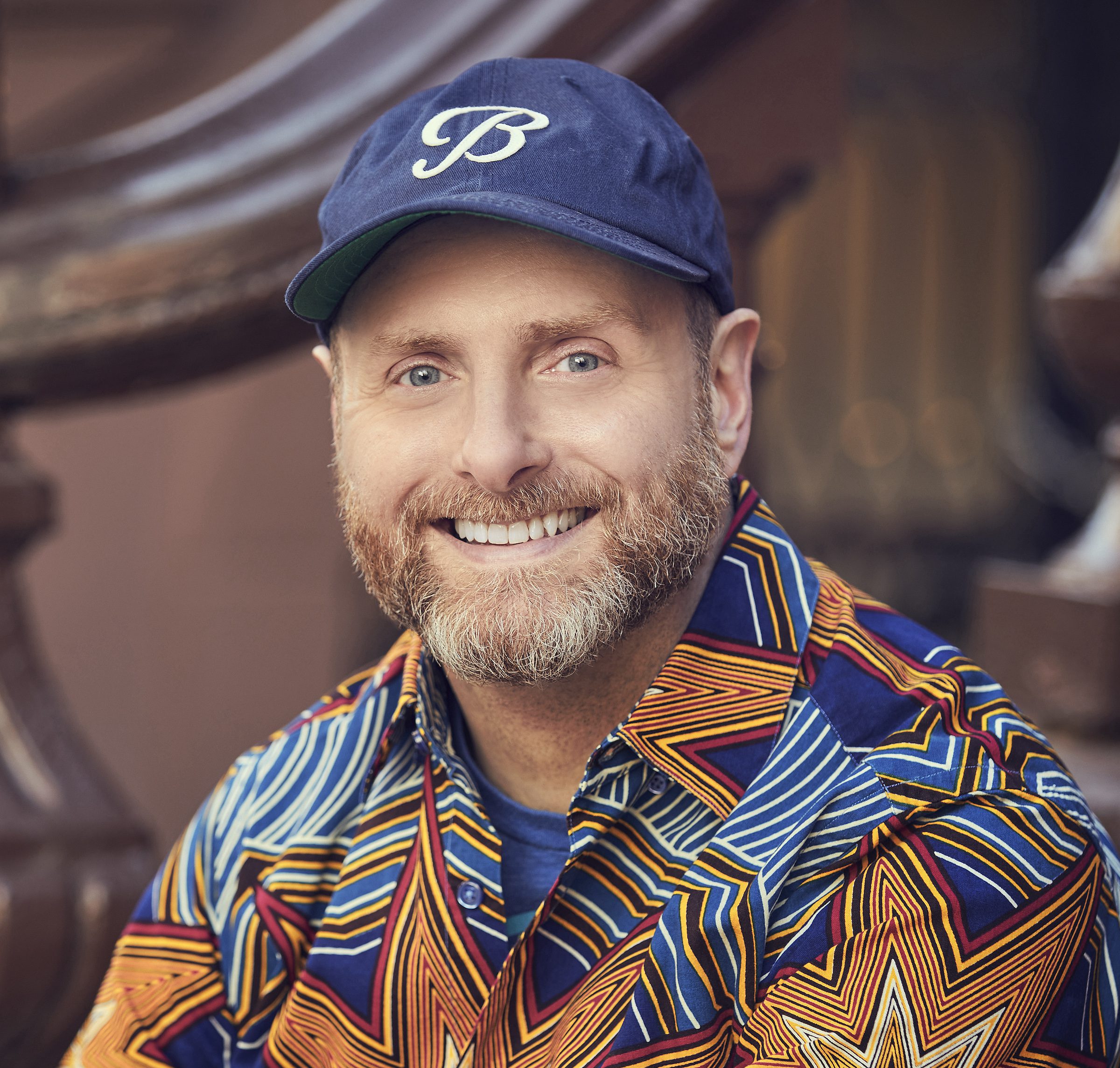
“Being brave does not mean being unafraid. It’s being scared and going forward with it anyway.”
Sisi Garland is the Executive Director of Heart Inclusive Arts Community, an interdisciplinary art studio in North Charleston, South Carolina, serving adults with disabilities. With a background in stage management and theater, Garland has worked in New York and Charleston and celebrates five years of leadership at Heart. She believes in the power of creativity, community, and courage in the arts.
Interview
Transcript
0:02 | Lexi Raines
So first, just give a little introduction of yourself. What do you do from work and where are you currently working from?
0:20| Sisi Garland
I am Sierra Sisi Garland. I’m the Executive Director of Heart Inclusive Arts Community. And I am working from my office (my pink office) here at the Heart Art studio. And I’ve been with Heart for five years now. I just celebrated my fifth anniversary as the Executive Director. (Yeah? So, yeah, did that answer all of those?)
0:47 | Lexi Raines
Yeah, tell us a little bit about the Hearts initiative.
0:52 | Sisi Garland
Heart Inclusive Arts Community is an art studio for adults with disabilities, and we are multi-disciplinary. So, we do performing arts, visual arts, any kind of creative endeavor that we want to get our hands into. We take it on.
1:07 | Lexi Raines
That’s awesome. That sounds like a really fun and meaningful thing to start. So, where in South Carolina are y’all based?
1:23 | Sisi Garland
We are in North Charleston, South Carolina. We started 10 years ago in downtown Charleston and have moved into the North Charleston area about a year ago. But yeah, so we’re in the Lowcountry. We have members in our studio who are from all over the Dorchester, Berkeley, Charleston area.
1:46 | Lexi Raines
Yeah, that’s awesome. Charleston! I love Charleston. Such a good area.
1:50 | Sisi Garland
Yeah, it’s beautiful here.
1:53 | Lexi Raines
It really is. So, kind of on that note, like what’s one thing that you love about working as a creative in South Carolina?
2:03 | Sisi Garland
There’s lots of inspiration here, for sure. Visually, it’s stunning, especially in this and I’m bias from being from Charleston, but especially in this Low Country region, it’s just gorgeous. You have so many places and parks that you can go to and create. But outside of that, there’s also such a rich culture here, and so many different cultures coming together, especially in this downtown area. There’s just a lot to take in, and a lot that you can be inspired by.
2:38 | Lexi Raines
I completely agree. I’ve been in Charleston a lot. I used to have family who lived there, and I feel like there’s just so many different areas blended into one. Like, I feel like you can go to like, one side of Charleston, and it’s completely different from the other side of Charleston.
2:57 | Sisi Garland
Yeah, absolutely it makes it pretty clear why a lot of Hollywood productions want to come out to Charleston and South Carolina, because there’s a lot to offer here.
03:10 | Lexi Raines
Yes, for sure. So, what do you think South Carolina does offer, like, what do you think it brings to your work compared to anywhere else?
03:21 | Sisi Garland
South Carolina has this incredible way of feeling like a sort of small town, where you know everyone, and everyone knows what’s going on with you and what you’re doing, and you just have a lot of familiar support. But at the same time, it also has this broader, bigger feeling to it as well. Like it has a lot of resources, it cares a lot about the arts. It was immediately surprising to me how much South Carolina actually does support its arts and artists, while still feeling very tight-knit community as well
04:07 | Lexi Raines
And that’s amazing to hear, obviously, because that’s like, what we’re trying to do here is just spread that word. Because so many people, I feel like, especially young students in like, middle school and high school, I feel like they really think that they have to move out of South Carolina to pursue a creative path, which definitely isn’t true at all. So that’s amazing to hear.
04:32 | Sisi Garland
Yeah, absolutely. My niece is in high school now, and she’s thinking about a creative career. She’s an actor, and so she, you know, is starting to do the search for school programs and things that she can get to when she graduates. And she’s dead set on New York. She’s got her mind fixed that she’s going to go to New York. And I’ve done the New York path. I’ve moved there for a little over two years and worked there as a stage manager and an actor, primarily as a stage manager, if we’re being honest, but it’s so hard to break people of that idea that you have to go to these you know, like New York especially, or Chicago, if you’re an improver or if you’re in film and television, that you have to move out to LA and it’s just not true.
And in a lot of ways, I think that being go going to those big places, especially for your education in the arts, before becoming a career professional, it can be a little too daunting, or it can be a little too unsupportive, because if you’re not coming there with a network or with a confident background, then it’s going to, it’s going to feel so overwhelming so quickly. So, I’ve been trying to steer her in other directions, to find something a little bit more friendly to the younger, to the greener people, before hitting the big cities.
06:10 | Lexi Raines
Yeah. Well, if she does get accepted there, maybe, like, I feel like New York is obviously an awesome place, but maybe, maybe she’ll miss home.
06:21 | Sisi Garland
Maybe. I’m originally from Delaware, and she still lives in Delaware as well, so it’s only three hours away. It’s fine.
06:28 | Lexi Raines
Yeah, that’s not that bad at all. So how would you describe like the local professional community in Charleston?
06:38 | Sisi Garland
Supportive. That’s the first word that comes to mind. We are so lucky to have a lot of professionals around us who are not only interested in what we’re doing and want to be a part of it, but that will rally their support around us whenever we do things. They’re coming to shows they’re supporting each other’s shows. they’re just getting involved amongst everyone and not just creating this insular, individual attitude where it can’t all exist together.
07:17 | Lexi Raines
I feel like that definitely is something that does happen in a lot of bigger cities, because I feel like things start to get, like, so niche that it’s like you have to be in one specific group or interest. So, I feel like that’s definitely an amazing thing.
07:33 | Sisi Garland
Yeah, yeah. I saw that a lot in New York, which is bizarrely, you know, for being such a big city and everyone, millions of people living there, you still ran into the same people all the time. You’d be in auditions with the same people, or you’d end up like in productions with somebody else’s show running at the same theater. And so, to still have that sort of competitive mindset and attitude toward things. It made it so much more difficult, because on one hand, you’re talking to each other so chummily and or, you know, whatever it is, but then you’re still feeling like you have to compete with those people for the same resources. And so, it just nothing ever felt very secure.
Whereas here it feels like you have friends, you have supporters, you have people that you can turn to, and they’re not going to hoard their information or their experiences and ideas. They’re sharing with you because that inspires them as well.
08:42 | Lexi Raines
Yeah, that’s something I’ve heard a lot across all interviews, is that, South Carolina, really is such a community. Everybody is willing to support everybody. Everyone wants to, kind of, like, hold a hand out for everyone who’s trying to get in who’s trying to grow, all that stuff, and I feel like that’s just such a beautiful thing.
So, kind of shifting gears here. How would you define professional or personal successes in your creative endeavors or in your career?
09:19 | Sisi Garland
As far as in my career, it’s kind of easy, I guess, to define for me, because being Executive Director, I’m sort of responsible for the overall wellness and health of the organization, and so as long as the nonprofit is still going, then I feel like we’ve succeeded to some degree, but as far as in our creative endeavors, if we have reached even one person who hadn’t seen us before, or who was touched by something that we did, or inspired by it, or felt something from what we were doing. Sounds so cliche, I know that’s probably like the creative cliche, but it does mean something, and it does feel like a success. If you’re presenting a gallery in a new space, and someone has walked in and they had no idea what Heart was or who our artists were, and they come in and they see a piece, and they just are in awe of it. That’s so successful and so meaningful to us. So, that’s creatively how we know we’re doing something.
10:31 | Lexi Raines
That is really awesome. And do y’all have your showings in North Charleston? How often do y’all have those showings?
10:43 | Sisi Garland
We don’t have set shows or exhibits necessarily. We do a musical every year. Tends to be an original musical that we’ve written ourselves every year, that we might be exploring different avenues in that and outside of that, we do a rock concert at the poor house in Charleston every year in the winter, we do performances all over the place, like we’ve been invited to perform in Myrtle Beach for some professionals convening there, we were just invited to perform at the State House in Columbia for our advocacy day. Yeah, performances were canceled because of the thunderstorms.
11:32 | Lexi Raines
This weather’s been crazy lately.
11:35 | Sisi Garland
It cannot decide what season it is around here.
11:41 | Lexi Raines
So, what was your, you mentioned that you were an actor. What was your biggest fear when you first decided to pursue the arts professionally?
11:52 | Sisi Garland
The fear that you won’t succeed, that you won’t survive the biz, I guess. You know, like I said, I came from Delaware, which is a small state to begin with, but also I came from a small farming town in Delaware. There wasn’t arts really happening. We had our one school musical every year. And outside of that, there just was not a lot of exposure to the arts, so I had no real concept of what being a professional creative could look like. It felt to me at the time like you either had to be A-Lister red carpet famous or a sad, struggling wannabe, and that there was no in between.
And so, when I came down to Charleston, I moved here to go to the College of Charleston, and I signed up that first day to be a theater major. My father was just so worried. And I don’t know that he’s ever stopped being worried about this, but he just was like, “You’re going to have to do something else. You have to have that backup plan. Everyone has to have the backup plan.” And to some degree, he was right, because you know, you have to have that survival gig while you’re forming that career for some people. Some people are lucky that, that career is built in for them from the beginning. But a lot of times you do have to have other things that you’re good at, but having that creative basis, that creative foundation, makes you good at those other things as well. So, his worry that having a theater degree was going to be completely useless the second that I graduated became also my fear, and I was so nervous about it that I was just going to be poor and struggling forever.
But everything I learned being a creative and being a theater person has gone into all the work I’ve done since, whether or not it’s directly a creative job
14:15 | Lexi Raines
I feel like that’s definitely a barrier that a lot of people have to work through whether it’s like you just have self-doubt, or your family isn’t supportive about it.
Because I know personally, I am an English major, that’s not what I was originally. I was originally a computer science major, but when I told my family I was going to be an English major, it did not go down well, but I feel like if you have a buyer for it, I feel like you can figure it out. And I feel like these jobs do have a lot more to offer than people think. So, I feel like breaking down those boundaries is just so important.
15:03 | Sisi Garland
Yeah, and it starts with having exposure, so like this program that’s coming up, and the creative careers resources, if you don’t know those possibilities are out there, or realize how infused into everything else the arts are. Then if you don’t know it exists, you can’t necessarily imagine that it could happen for you. Um, so, yeah, it’s really cool these programs that that are coming up.
15:36 | Lexi Raines
I 100% agree. So, can you define, like a defining moment, or describe a defining moment in your creative journey? Like, did you have a particular project you worked on that like had a significant impact on you, or did something that you like produced really showcase your creativity?
16:01 | Sisi Garland
I think one, probably the most defining moment in my career, was my first time working professionally as a stage manager. I had stage managed all through college as a theater major, but I hadn’t really expanded outside of that yet, and probably mostly because of that fear and nervousness and doubt. But someone I had worked with on a production in college, they were already a creative professional. They were an actor and director, and they were directing a show in Charleston, and wanted me to come stage manage for them. And I said yes to it. Swallowed the doubts and everything, and I said yes, and came on and did it. And it was that production that connected me to the theater company that I have now been working with for almost 15 years. And it was through doing that that I realized, no matter what else I’m doing in my life, to survive or to be able to live day to day, I’m never not going to do theater as well like I have to keep this in my life.
So, it’s like you said, it’s kind of, if you have that passion, or you have that fire for something, you’re going to go out and do it. It’s just a matter of how it manifests in your in your world. So that show brought me essentially the rest of my career, and it all came from just saying yes to somebody I had worked with in college, and he’s now on Broadway. He’s originated roles in Once, and he was just in Anastasia and Amalie. Yeah, he’s incredible, and I very much have him to thank for continuing to do the arts even when it was scary.
18:07 | Lexi Raines
Yeah. So, I feel like that is, like a really positive note, but kind of going from that, what do you have, like, the worst advice you’ve ever received?
18:21 | Sisi Garland
The worst advice, I mean you always hear the superficial stuff like that, “you have to define your brand” or that you…
I mean, I graduated in 2009 from college, which probably sounds like a long time ago now. But even still then, when I was young, you were still hearing like things about body shaming and appearance and all of these things that you have to do, which thankfully, I feel like have kind of gone away.
But it never leaves you if someone has said that thing to you about just your personal being. Something that is not yourself and took it as, and they say it was such authority that you believe them, you know. And so that’s definitely the worst advice, is listening to anybody about who you need to be and what you need to look like to do anything. It’s terrible. It’s hard not to listen to it, but it’s terrible, it’s awful advice. No one should listen.
19:40 | Lexi Raines
I completely agree. I feel like everybody is their own person. You got to love yourself. So, what’s the best advice you’ve ever received?
19:55 | Sisi Garland
Again, probably a cliché, but it’s true, and I still think about it all the time. That being brave does not mean being unafraid. It’s being scared and going forward with it anyway. So being nervous about an audition or a show that’s coming up, or anything that you have coming in, or taking the leap into a new career, a new job.
All of these things are really scary, but that doesn’t mean that you can’t do it, and you can still be brave and go forward with it, even as scary as it is.
I was terrified when I took this job. I feel like I’m probably still terrified every day in this job, but it’s the most rewarding thing I’ve ever done, and it feels like the culmination of all of these disparate career paths and skills that I had just been doing that because I love them, for so long. And now they get to come together in my job here as the Executive Director, but it was so, so scary. And if you know I didn’t have people telling me that it can be scary, but you can still do it, then I probably would have been like, no, it the this is telling me something I shouldn’t be doing it if I’m this worried about it.
21:21 | Lexi Raines
Yeah, I completely agree with that. I just feel like fear is the best motivator you can have, because I feel like it goes along the lines of like, the only way to grow is to get out of your comfort zone and push yourself. So, I think that is like, I agree with you. I think that’s like the number one advice you can give receive anything, because that’s personally helped me a lot too.
21:54 | Sisi Garland
Yeah. It’s hard to live it, too, though. I mean, I say that, but it’s not like I was the most bravest person, just going out there, throwing myself into things, I still played it fairly safe. I’m still kind of a scaredy cat in that way. But all the good things that I’ve done were when I, like you said, stepped out of my comfort zone, went for that thing that I’d always wanted to do, and I wish I had done even more of that, especially when I was younger, especially when I just like, you know, when things felt a little bit more, not carefree, but possible. You know, when you’re looking ahead into your future and you’re thinking, you can do anything, keep that you can do anything. You can always do anything. So go ahead and do it.
22:43 | Lexi Raines
That’s awesome. I think that’s really amazing. So, can you walk me through, like a typical work day at Heart?
22:55 | Sisi Garland
Yeah, we have sort of a dual life here. So, I have my office time on Mondays and Wednesdays, where I’m doing all of the background support work for the organization. But then on Tuesdays and Thursdays, we have our artists in the studio, and we have about 25 artists that we see every Tuesday and Thursday, nine to five, and they’re all adults. They’re all our peers and our friends and our creative partners in crime.
So, I get to come to work every morning about 8:30 or 9:00, come into the studio and be greeted by everyone and just sort of like, just have that water cooler chat with all of my friends as we come in. And then we first get into sort of a creative but palate cleanser. It’s our daily draw. It jumps starts our day with a little bit of creative thinking, we get an interesting fact for the day from one of our volunteers, and from that, she also creates a drawing prompt that we all work on. So, we do that to kick things off, we get into visual arts, which is now being led by our artistic director, Rae, and that can look all kinds of ways, depending on what we’re working on.
Often, artists are working on some individual piece that they are wanting to finish and see through to its ending. Sometimes we’re doing collaborative larger pieces all together, and sometimes we’re working on a theme towards a specific gallery, but in any case, we’re all creating some form of visual arts there.
We have lunch. We’re usually watching something silly or fun or creative or whatever during lunch. A lot of documentaries about animals, because that’s always fun to see. And then in the afternoons, we do performing arts. So, our performing arts Director, Mel, is a music background. She is the musical director for all of our performances, all of our shows. And so generally, we’re working towards whatever our next performance is going to be.
So lately, it’s been preparing for that state house performance that didn’t quite happen, but we were also performing at “A Night to Shine: The Prom,” which is sponsored by the Tim Tebow Foundation. We were asked to perform there at our local prom. We also have some other performances coming up, and then ultimately, we are rehearsing for that original musical that we do each year. So that goes from auditioning, writing, editing, rehearsing the production, rehearsing the musical, putting it all together with a live band, all of that jazz.
And then at the end of the day, we sort of have some decompression time. We’ve got our free time where we can chat and socialize. We can finish up projects that didn’t quite get to a good spot along the way during the day or just say hi to everyone who stops in to visit on the way home.
26:22 | Lexi Raines
That sounds very busy, but it sounds like a lot of fun. That sounds awesome.
26:28 | Sisi Garland
It is a lot of fun, but I am exhausted at the end of the day on Thursday.
26:34 | Lexi Raines
So, you mentioned that you still want to always try and include, like acting into your life, even when that’s like, not specifically what you’re doing. So how have you created, like, a work life balance where you’re still able to maintain both your professional and personal creativity?
26:59 | Sisi Garland
It’s hard. It’s very hard, especially when your career is so closely aligned to what your passion creativity is, and especially lately, since the pandemic, it was very difficult. I’m part of the acting company for the Village Repertory Company, which is over 20 years old now, here in Charleston, but we had to close during the pandemic. And so that avenue of personal creativity was sort of lost to me, and at a very important time in my career as well, because I had just started working here at Heart.
And so, this new experience, I didn’t have that sort of old, reliable source of creativity to turn to. So, it is really hard, but I feel like just anything that you’re doing, almost as like a self-care or just to feel good, if it’s creative, even if it’s reading a book, even if it’s going to see a show or a performance, that you’re not a part of. Engaging in art, whatever your favorite kind of art is to you, that is the balance, right?
So, it doesn’t always have to be, I feel like sometimes creatives we can put like this burden on ourselves, that we have to complete something, or that we have to show something, we have to have something to put out there for it to count and it doesn’t. It can be whatever you do for yourself, even if that’s like writing one sentence of a novel at the end of the day, and that novel goes nowhere. Who cares, you are expressing yourself. You’re doing something that you care about, and that’s all it ever needs to be. It never needs to see the light of day for it to be important to you.
29:15 | Lexi Raines
I completely agree with that. I think that, like you’re saying, there is such a push to just keep putting stuff out there, but at the end of the day, you are like a person who needs to have things just for you. So, I think that is an amazing piece of advice. So, do you have any questions that you wish you were asked?
29:40 | Sisi Garland
Oh gosh, no, I don’t know that I could have come up with any questions better than what you guys already have.
29:48 | Lexi Raines
Awesome. Yeah, I feel like we kind of put people on the spot without that question. So finally, do you have, this is also not to put you on the spot, but do you have a creative that you’d like to nominate to be interviewed?
30:05 | Sisi Garland
Oh yes, I spoke with someone at Arts Advocacy. Oh, gosh. Okay, let me, for some reason her Instagram, oh no, I know her name. Her name is Janelle Smalls.
30:16 | Lexi Raines
Janelle Smalls. Can you spell that for me?
30:19 | Sisi Garland
I believe it’s Janelle and last name is Smalls. I might have to dig for her contact information to send to you to reach out to her. But she is an artist who is also a K through 12 arts educator and speaking with her at Arts Advocacy this week or last week, she was so passionate and was like, so full of gumption to do something for her students. I think she would be an incredible person to speak with.
30:54 | Lexi Raines
That’s awesome. Yeah, she sounds amazing. Definitely, definitely, send me her information if you can find that. It was so nice talking with you. I think you had such wonderful advice. And you obviously come from a place where you care so much.
31:14 | Sisi Garland
I hope so. That’s sometimes the only thing keeping us going is how much we care about it.
31:20 | Lexi Raines
I completely agree. So, thank you. I hope you have a good rest of your day. Yeah, I’ll be reaching back out to you just for that headshot, and then I can definitely try to email you whenever this goes live to send you the link.
31:36 | Sisi Garland
Yeah, perfect. And if there’s anything we can do at Heart, any of us to support this project, future projects, everything you all are doing, please, just let us know, and we’re there for you.