Career Area: Recreation Specialist

  • Steph Sneed

    Steph Sneed

    Interview

    Transcript

    Sarah Jane Thomas  00:01

    Hello, my name is Sarah Jane Thomas, and today we are talking with Steph Sneed, a professional creative working from and within South Carolina. As we get started, can you tell us your current career and where you’re from?

    Steph Sneed  00:12

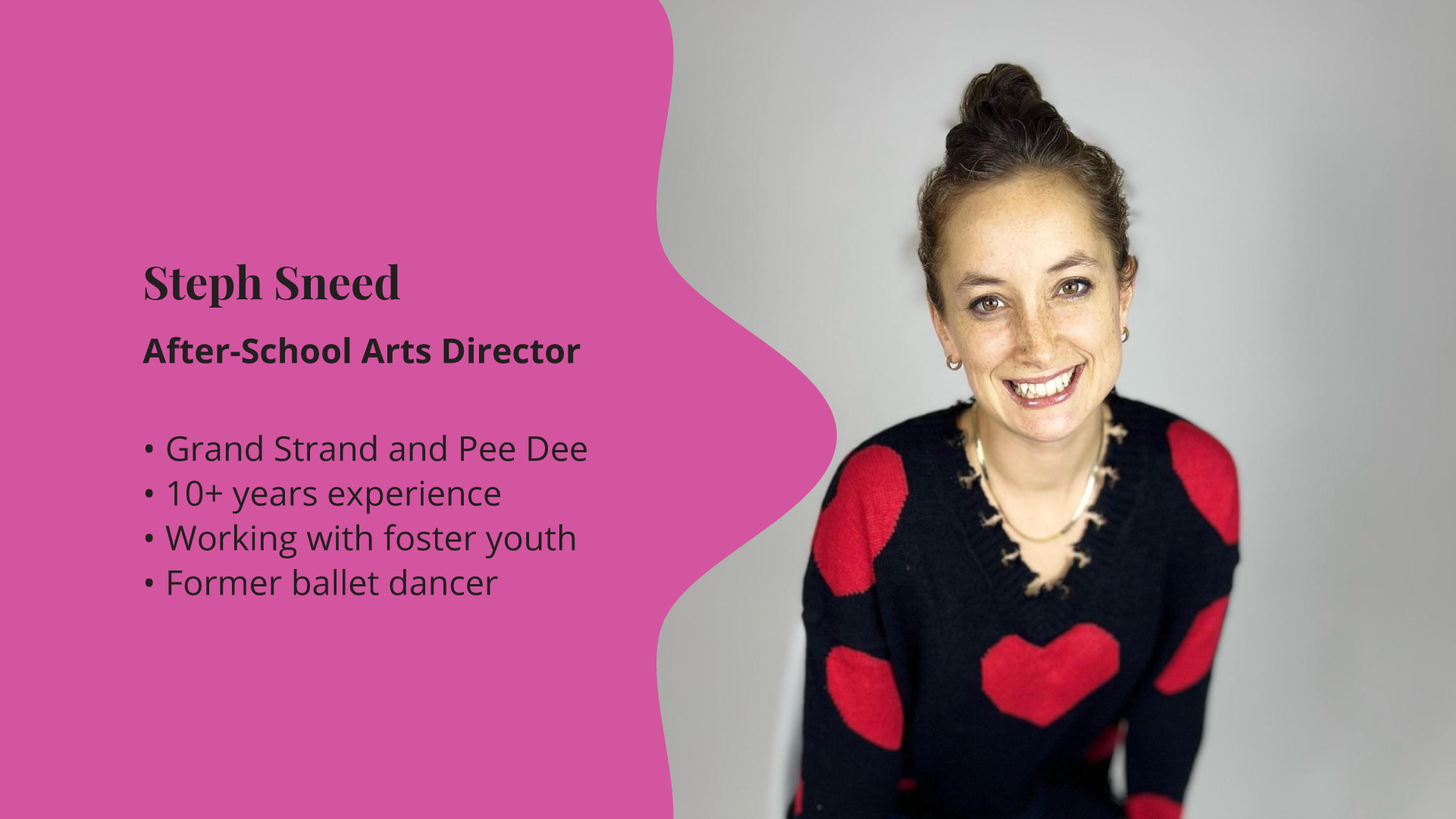
    Sure. Originally, I am from West Virginia, but I have moved around a lot in my life, and I ended up in South Carolina, about eight years ago, and my job is called Imagine Academy. It’s an after-school program for kids age six to 12, and I also do like a lot of workshops, and I work with different organizations within our community.

    Sarah Jane Thomas  00:40

    Perfect. Before we go into detail of your profession, we have a brief section of the interview called One Career 60 Seconds, where you describe your job in 60 seconds or less, similar to an elevator pitch. We’re ready whenever you are.

    Steph Sneed  00:55

    Okay, so my job is basically creating programming for kids, but I also I’m like a one-woman show here. I don’t have any employees or anything. I keep my program very small. I operate out of my house, so I have six students a day. And let’s see what else. I also have a big heart for just kids and youth who don’t get the opportunity to create on a regular basis, and so I actually get to partner with a foster. It’s like a an organization who work with teens in foster care. So I work a lot with that organization, creating classes and opportunities for them to express themselves. And I also work a lot with an occupational therapist nonprofit in our area, who allows me to work with kids on the spectrum and have other disabilities.

    Sarah Jane Thomas  01:48

    That was perfect. What would you consider your job title?

    Steph Sneed  01:53

    I am the director, but I’m also like the teacher. But I would say I’m like the creative director. A lot of the program, a lot of the projects that we do, I like push the kids to create like individual, like themes, and so I’m often like directing them individually based off their ideas.

    Sarah Jane Thomas  02:20

    So, as a director, is there anything in South Carolina in particular that you bring to your work?

    Steph Sneed  02:28

    Like that maybe sets me apart. So, I think the thing that sets my work apart is that I work kind of so with such a small group. I have done workshops with like the school with different school districts, and I’ve noticed in like based off of feedback from the other teachers, the projects that I have in mind are unique because in school settings they would not have the capacity to attempt them, and so because it requires so much like personalized help and support. So I think that’s kind of that and the that I do two part classes. I do like a guided part where we work on like something technical, and then yeah, we do the project where they’re like really being pushed to express themselves personally, based off their interest in, and it’s it’s amazing because it really asks a lot of them to figure out like what do they like, what are they interested in, what inspires them, and that’s a pretty big question for a child.

    Sarah Jane Thomas  03:40

    Do you think it gives you a sense of familiarity being in the area?

    Steph Sneed  03:45

    I don’t know. I don’t know what you mean.

    Sarah Jane Thomas  03:47

    Like with the kids, do you think? Like, do you work with the same kids consistently? Do you work with the same school consistently? Does it kind of give you the ability to get familiar with everything?

    Steph Sneed  04:00

    Yeah. Well, I live in a small town, so I definitely see kids in the community on repeat. I’m really fortunate with the organization, the like teens in foster care organization, that I get to work with their group home. And though that does have turnover, it’s been really amazing. I actually the school district pays me to work with them. They have like a special grant, and so I get to go once a week and work with the group home, and it really, really helps me connect with them by getting to work with them regularly. And they really need people to take the time to get to know them, and I’ve seen a lot of growth in engagement with them because of that consistency.

    Sarah Jane Thomas  04:50

    That’s beautiful. Do you think that there was a defining moment in your life that had an impact on your creative journey?

    Steph Sneed  04:58

    Ooh, good question. Well, for this career, yes. So I actually was a professional ballet dancer before this, and so I’ve I say that I’ve worked in the arts like my whole like professional career, but I I have had kind of like a switch from like the dance to visual arts, and the way that happened was really organically. I was, I kind of had retired from dance, but I was actually babysitting a family in our area, and the kids moved away, and I realized that I really didn’t want to, and when I was babysitting them, all we did was art together, and I I realized when they moved away, or as I was preparing to like say goodbye to them, that I didn’t want to stop working with kids in this way. They just filled this like hole in my heart, and like also they were wonderful collaborators. So that was the moment. Like that was a big moment in my career where I was like, “Okay, I guess I’m gonna try this out. And crazy enough, it worked.

    Sarah Jane Thomas  06:16

    So, kind of along the same lines, before entering your field, did you have any fears about that?

    Steph Sneed  06:23

    Yeah, of course. I mean, I didn’t know if my idea would work. I and also because I hadn’t really trained all my training. It was in the arts. It was in the arts, and I went to like a boarding school for ballet, and like I’ve like and I went to the San Francisco Conservatory of Dance and like I have lived and worked in the arts, but I hadn’t really technically been in the trained in like the visual art field. But I, all my dance education had taught me how to basically pay attention to what my ideas are and learn how to like execute those ideas, and so that really translated into like this whole thing, and give me the confidence to try it, even though I hadn’t gone to like art school necessarily like visual art school, but as I’ve done all this work, I’ve also learned and gained a lot more confidence in my visual art skills, of course, and I’m always hungry to learn more. So yeah, I think those were some fears, but I wasn’t I wasn’t that afraid because I knew, like, from the experience that I had with the kids, that it was fun. Like, whatever we tried together, we were all learning, and it was fun. And so, I was like, if anyone is willing to take a chance on me, I think this is going to be fun for everybody who tries it, and I’ll just be committed to keep learning and getting better, and paying attention to how kids learn. And so, does that answer the question?

    Sarah Jane Thomas  08:09

    Yeah, perfectly. Okay. I was going to ask what inspired you to move beyond those fears, but you kind of encompassed the whole thing for me. Okay.

    Steph Sneed  08:16

    Sorry.

    Sarah Jane Thomas  08:17

    No. Please don’t apologize. This is wonderful. Do you have any advice for young adults or students interested in pursuing a similar career path?

    Steph Sneed  08:28

    I guess so. You have well, you have to be smart, especially like financially. You have to play the game of like how. You really do have to pay attention to. You can’t just go on like your love of art. Like you have to become a business person as well, and so I’ve learned that the best way that I can get like gigs and stuff is to package it nicely, like come up with how it’s going, come up with the plan for how it’s going to benefit the person you’re working with, and like explain that in a concise and clear way, and then just be committed to what you’re doing. Like do a good job with what you’re offering. Like pay attention and be a good communicator. Like those are all like really key elements. But also just like when you get started, you just have to be a little bit brave and show up and ask people if they’re interested in sharing an experience like this with you. Like one of the gigs that I got for a while was at a assisted living place, and what I did was I just showed up with I made this like pumpkin cottage. Like I bought like a little pumpkin from Target, and I like made all these like. Pieces for it that I glued onto it that made it look like a little cottage. I made it out of polymer clay and painted it, and I brought the pumpkin in, and I was like, “Hey, would you guys like it if I like did a class with you and I could teach you guys how to make this pumpkin, like a pumpkin cottage? And they were like, “That is amazing. Yes, and actually, that whole class ended up falling through that time. But later, they reached out to me, and they invited me to come later. And I worked with them for almost a year. And just similarly, like with the organization with the foster teens is called the Trent Hill Center, and I had I think I asked them if they wanted to do the pumpkin cottages as well, and they say yes. So so yeah, I think just being willing to like put yourself out there a little bit. Be kind. Don’t burn bridges, especially if you’re in the community of South Carolina. It’s kind of you know it’s a very small town vibe. Like I think across the state, and so I guess that yeah. I think that’s how I answer that question.

    Sarah Jane Thomas  11:22

    Well, aside from knowing how to build pumpkin cottages, are there any other particular skills one should practice before entering your career path or industry?

    Steph Sneed  11:33

    Well, yeah. I mean, I think if you’re wanting to be like an art teacher or like a community Art teacher, you do also need to, like I said, it kind of goes back to like the business, the business mindset. You have to like price things out, and you have to figure out how to make it affordable for your customers. Also, you have to know who your customers are, and I think something that drives me crazy is when people just consider art a business because it’s like you have to love it, like you have to believe in it, and then that helps you make your business decisions, like have an identity, and like your passion for it becomes your identity, and then you can make your decisions from, from like why you care about what you care about. Like for instance, like my son is autistic, and that’s why I like love to work with the occupational therapist nonprofit because I’m kind of uniquely I’m not like a professional therapist, but the experience that I have with my son makes me a little bit more uniquely qualified to at least facilitate classes where kids with who need like additional support, like that’s like that’s a great area for me to explore. And so, like paying attention to what you care about, what makes you mad, like what upsets you, and creating solutions like is really important because if you go through it identity less and you’re just copying things that you’re seeing like other art groups doing, it’s not going to be as interesting, and they’re going to like they don’t really have a reason to pick you over anybody else to select you to be the person who’s going to hold or host or facilitate. So, those are some of my thoughts on that. Yeah.

    Sarah Jane Thomas  13:45

    Well, I want to thank you so much for taking the time to speak with me today. Would you be open to talking to our team again?

    Steph Sneed  13:52

    Sure. Yeah.

    Sarah Jane Thomas  13:54

    Perfect. We will send you the transcript from this interview. Do you have any of those questions you were wondering about at the beginning of this.

    Steph Sneed  14:02

    So I guess I guess I’m curious, like who I looked at the website a little bit, but like who does this reach?

    Sarah Jane Thomas  14:11

    A big part is students like me. I go to Coastal Carolina, and so obviously me working on the project, I’m aware of it. My boss Alli will go into different classes and speak to different students about it. We also have a big Gullah Geechee presence on campus, and so any opportunity, like we have days for it, and so any opportunity to do some kind of outreach, we kind of talk about this. It’s a big thing for students still trying to figure out like where we are in the world and like what we can do with our passions, and so like especially you talking about formally being a ballerina and now coming into this world, like I think it’s a big pathfinder, I guess, for students like me. So that’s kind of what it’s intended for, but it’s also intended for people in the community to understand their other community members. So that’s kind of what this specific project is.

    Steph Sneed  15:12

    Oh, that’s really cool. That’s cool.

    Sarah Jane Thomas  15:14

    Yeah, I send it like my grandmother looks at it and like sees all the different peoples, and I think too it helps. Like it can be used as a tool for business as well, because we have a lot of artistic creators. We have a lot of film directors. We have theater producers. We have game makers. So it’s kind of just like it could be used as a little directory as well.

    Steph Sneed  15:39

    Oh, okay. Yeah, I like that.

    Sarah Jane Thomas  15:41

    It kind of does a lot of things, reaches a lot of people.

    Steph Sneed  15:45

    That’s great. I love that.

    Sarah Jane Thomas  15:47

    Yeah. So we’ll get the interview transcript sent off to you if you want anything edited or cut. Feel free to tell us. And if you have any questions, you can always reach out to that email.

    Steph Sneed  15:59

    Okay.

    Sarah Jane Thomas  15:59

     So thank you so much.

    Steph Sneed  16:01

    Thank you too. Great questions.

    Sarah Jane Thomas  16:02

    Thank you. Have a wonderful rest of your day.

    Steph Sneed  16:05

    You too. Bye.
  • Cole Bullock

    Cole Bullock

    “You need to get out there, doing things, while you’re a student.” 

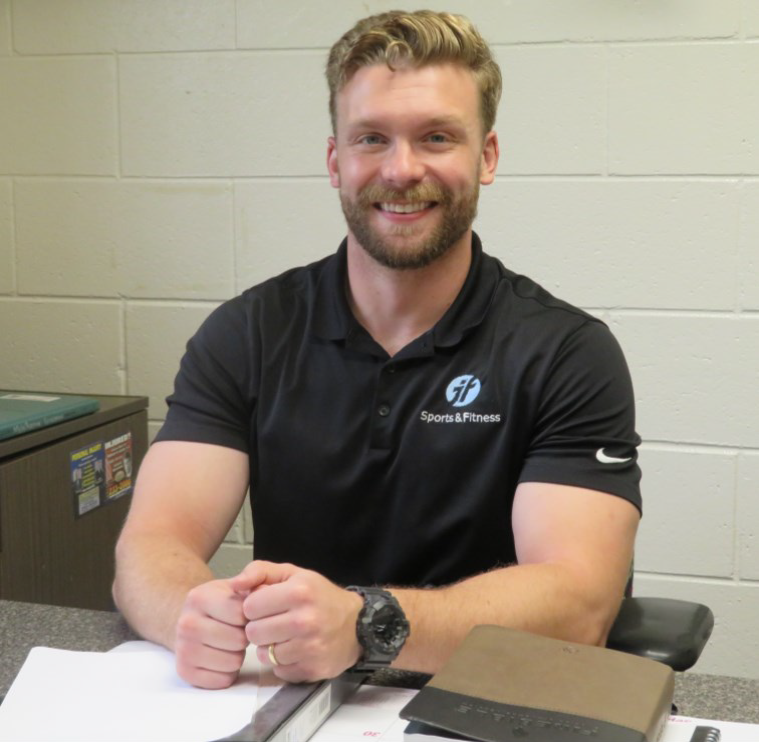
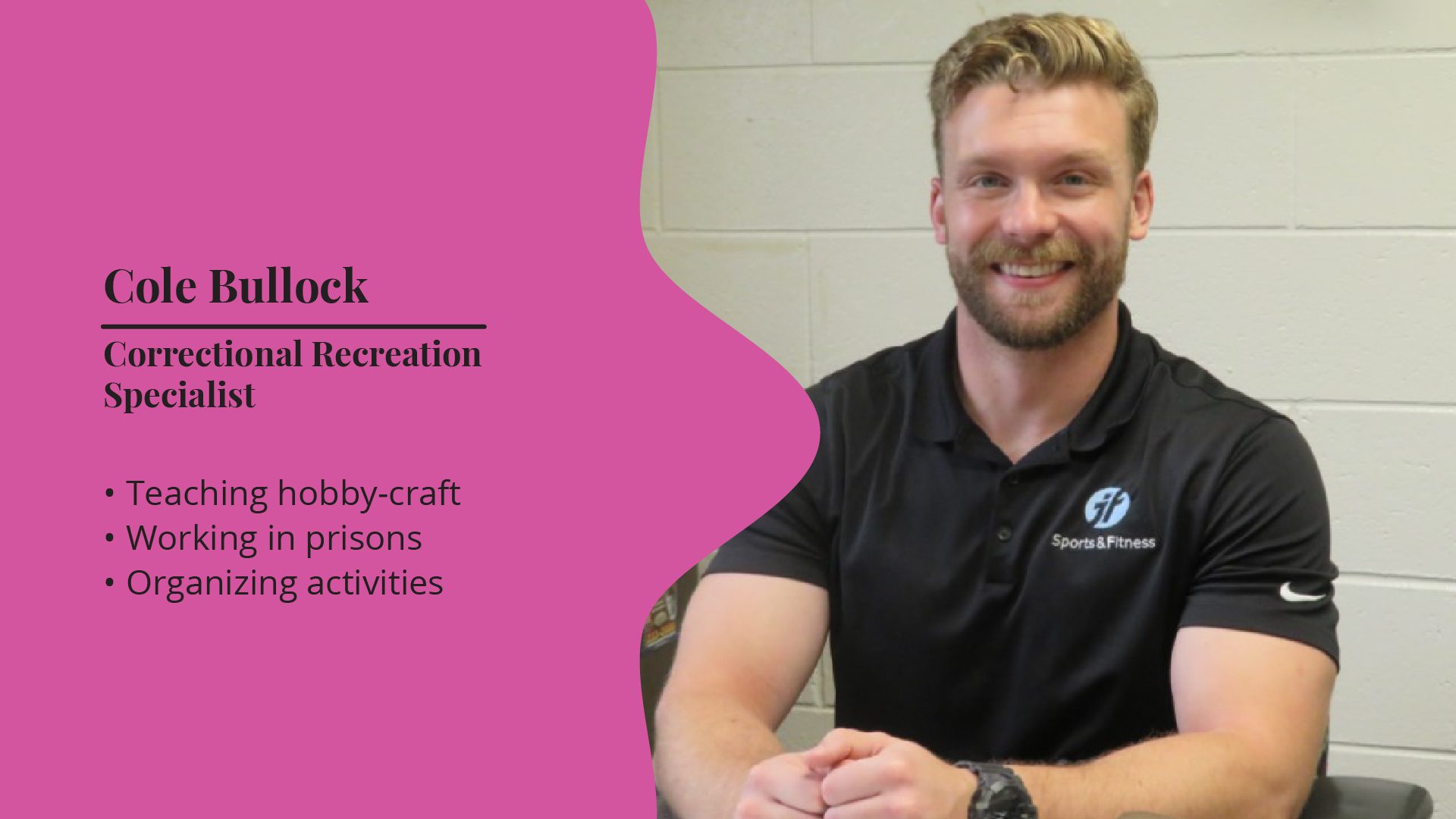
    Cole Bullock is a Recreation Specialist at Perry Correctional Institution in Greenville, SC. He designs and runs creative and athletic programs for inmates. 

    Interview

    Transcript

    Cole Bullock

    I’m Cole Bullock. I am a recreational specialist at Perry Correctional Institution in Greenville, South Carolina.

    Haley Hansen

    How long have you been working there?

    Cole Bullock

    This is my fourth year in June.

    Haley Hansen

    Can you walk me through your typical workday?

    Cole Bullock

    Yes. So a typical workday for me would be to open up a multipurpose facility that Perry has that has a couple classrooms, but more importantly, a gymnasium. And so first things first, I walk in, I prep everything, look for any sort of contraband items that might have been left over, get all the lights on, make sure all of my rec workers who I hire on certain inmates that I’m allowed that I allowed to kind of conduct different cleanings and programs and stuff, I get their stuff ready, I prepare their the workouts of the day, which would be a pre designed class of my own creation, and they’ll post them on certain boards.

    Cole Bullock

    And usually when the guys start coming in, we’ll start the bell being kind of a calendar for the week, when I’m looking for, you know, as far as the programming aspects of things, and we kind of just let the show roll.

    Cole Bullock

    Right now currently, we’re in our Pickleball League. So, inmates have had a chance from their dorms to sign up and create a team of doubles or singles. And so, we are just now building out the tournaments for them.

    Cole Bullock

    And as well as our Hobby-Craft program, as well, which is a program that allows for men to purchase certain items such as arts and crafts, different wood. Ah, surprisingly, different types of like saw blades, which you wouldn’t think they’d be able to have, but to do woodworking as well as leather working as well. So, different kind of tears that they’re able to build up to. And I will illustrate that with their programming and their needs and making sure that they’re, you know, in compliance with everything for what the state likes to see them. Have.

    Haley Hansen

    You said that your background was in sports ministry, right?

    Cole Bullock

    Yeah, so I double majored and Bible Theology and then Sports and Fitness Leadership. And so coming in, I guess, that degree specifically, if you transfer it to more of a secular university, that’s kind of like a sports ethics degree. As far as how the credits match up.

    Haley Hansen

    Ok. Would you say that has helped you a lot at this position?

    Cole Bullock

    Yeah, I mean, the the biggest thing for I think a degree is that once you have it on paper, you essentially have to learn how to put it into practice.

    Cole Bullock

    So I think, although my degree has certainly given me the framework to, you know, understand the need for why to do what I do, but the big process, I think of learning is just doing the reps on site. So there’s, there’s not really much preparation as far as what it’s like to train yourself for prison except for go to prison. Right. So but for the most part, yeah, I think the degree my degree itself has kind of inspired me on the idea that, hey, this is a very valuable career to jump into, because there is a need in order for recreation, you know, the hot topic, word is always rehabilitation, rehabilitate these guys, and you know, so we can bring them back out society and make them productive members.

    Haley Hansen

    What do you say was the biggest adjustment or challenge that you faced, when you started at Perry?

    Cole Bullock

    The biggest thing, the biggest challenge for us is just getting everyone on board with the idea that recreation is something that you would want in an institution. Depending on who you’re speaking with, it just, it’s a challenge to get everyone to kind of connect the idea that rehabilitation and physical fitness are actually a good coupling. You could have some staff members who could perceive the idea that guys are getting physically fit as a threatening thing, meaning they’re, you know, enhancing their physical capabilities and given them maybe that advantage when it comes to anything like physical altercations.

    Cole Bullock

    So, that was my first I think major hurdle was just establish, “Hey, if you program correctly in this institution, good programs create good security. Creating competent individuals that exert their energy in a healthy way, where they are establishing themselves in some some discipline and also giving them something that they enjoy. Which is a privilege that they really don’t want to get taken away from them. So, they kind of adjust their their mindset to be able to keep what they like.”

    Haley Hansen

    You mentioned, you are in charge of getting materials for the hobby crafting class. I imagine there’s some overlap in the conversations you mentioned with that, too. Like talking about how getting physically fit can be perceived as a threat you mentioned, like the saw blades and stuff?

    Cole Bullock

    Yeah, yeah. So oftentimes, we’ll get new staff members and they’ll do their orientation, and they’ll they’ll kind of walk into our hobby craft room. And you know, you’ll see their eyes get this big because they’re like, “They’re they’re allowed to do this? I don’t I don’t understand.”

    Cole Bullock

    And as long as like I said, as long as it’s programmed correctly, the Hobby-Craft, I’ve seen guys create things where I’m like, “There is no way you could have possibly made this, you know, behind bars, this is incredible. This looks machinery.” And you know, if you speak with them long enough, it’s like, “Listen, you know, I had nothing to do but learn this craft, and so day in and day out I had plenty of time to fail and improve upon my ability, and eventually you get pretty good at it.”

    Cole Bullock

    And so, some of these guys make amazing things. Some artists here draw like you with a picture off, you know, with a realism. I mean, it’s quite shocking the talent that happens when you you know, give a man enough time and I would say initiative to do something rather than nothing.

    Haley Hansen

    Do you think the hobby crafting creativity side of it is about as important as the physical fitness? Or do you think one is more helpful?

    Cole Bullock

    Yeah, these are, these are two sides of the same coin, the objective for us is probably the worst thing that you could do to someone who’s incarcerated is put them behind door, lock it away. And then in 40 years, unlock it, and then let them out and see if they’re any better for society, right? Since you you’ve only compounded the problem.

    Cole Bullock

    So the idea is we just want to keep them busy, wanting them to maybe perceive themselves in a different manner. So if you’ve ever coming in, and maybe life has handed you a deck of cards that’s not so favorable. And then when you’re back in prison, you realize “Hey, I am a little bit more talented than I thought. I got these crafts that I’ve learned, I can actually use this to make money on the street.” or “This is something that actually I prefer doing instead of, you know, hustling.” These are the moments that we’re trying to create with the inmates and especially with with working out is, you know, especially for those who are suffering with addiction, if they’re able to kind of place their energy and their mind and their efforts towards something that can create that dopamine effect within the mind. And it’s also healthy for them, you know, we would prefer them, you know, transferring their desire for the drug and replacing that with physical fitness.

    Haley Hansen

    Did you—would you say that you had something is an element when you were working there where you realized, like, it was a job that fit you?

    Cole Bullock

    It’s one of my favorite questions. Because just like many people, I’m coming into this institution with the idea, yeah, I’m gonna meet some broken guys, right? I’m kind of used to that being from a ministry background, and I’m completely okay with that. But, I had no idea what to expect. I mean, you know, I’m walking into a prison with Hollywood movies, given me the context for what I’m about to, you know, encounter, you know, so I don’t know them, and they’re gonna get stabbed, am I gonna get cussed out, am I gonna get, you know, there’s no telling. And I get my hined here. And I see an ecosystem that yeah, it’s complex. And it’s complicated and can be dangerous at some times. But more importantly, I see is just a desire for men to, to do something. To redeem themselves. To give themselves, essentially, another chance at life. And if you don’t think there’s nervousness behind the bars for freedom there is, because they understand and listen, if I’m gonna waste 20 to 40 years sitting here, you know, walk in a circle, I’m gonna walk out into a world that I don’t understand and going to be set up for failure. And so, a lot of us get nervous about that. And they want to be active, they want to, you know, try to see where, where their talents lie, where, you know, what, what society is, how it’s changing on the outside, and how can they be doing things in here to adapt to that reality, I simply want to provide that ability for them to change and adapt and to be successful. So, when they get back to their families are not burdensome to the community or for themselves. So, I grew great compassion, when I learned that the plight of someone that’s incarcerated, which is a far cry from when I came into, because like many people, I looked at those who were incarcerated and went, “Well, they did the crime. So, whatever happens behind bars happens, I don’t really care”. I can’t help but to care now, just because of the fact that I’ve seen it, I’ve seen the humanity in them. And I just want to support that. Someone’s looking to do better and get a redemption story in their life. I want to give them every tool that they can possibly have to make that dream come true.

    Haley Hansen

    Working with inmates, it’s a, it’s not a very visible profession. So, if someone is interested in doing that, are there any programs or organizations you’d recommend them check out?

    Cole Bullock

    Yeah. There’s a lot of groups there’s groups all the time that go into prisons. I think the main thing is if you if you want to know whether or not prisons a good fit for you, as far as a career, if you wanted to work programs in prisons, you just got to get your feet wet. A lot of ministries will come in here and just do support groups, sometimes colleges depending on you know, whatever program is happening will actually will come in here. I know we have a sociology class that we have students from the University I’m not sure which one comes in here and does class with the guys.

    Cole Bullock

    So ultimately, really, what I would suggest for people is if you’re if you’re looking and you want to be interested. Volunteer, in some capacity, contact that institutions chaplain and ask, “Hey, are there any groups that come in that would essentially support inmates or give me a chance to just interact with the guys” , and I’m sure he’ll connection to the correct third party when you’re in that environment. Just placing guys who have been on lockup back in the regular population that doesn’t tend to go well, you know, you kind of have to slowly reintroduce them back into society, a social capacity, because if you’re alone by yourself for years and years and years, you lose some skills, right? And you kind of get to slowly work yourself back into being able to handle other people and different, you know, situations.

    Haley Hansen

    Alright. Do you have any advice for current students who might be interested in this sort of thing you’re doing?

    Cole Bullock

    Yeah, well, I’d say just for any any field is that if you’re going to go through four years of university, and think that when you leave with a piece of paper, that that’s going to be kind of your ticket to get this dream job, you’re in for, unfortunately, a shock.

    Cole Bullock

    I had one of my mentors had established this idea that you’re going to go on your graduation day, you’re going to look to your left, then you go look to your right, and you’re going to notice hundreds of students all with this, essentially the same piece of paper, what’s going to distinguish you amongst the masses of people that graduated that year. And the idea is, is that you need to get out there doing things while you’re a student to increase your marketability. So, shaking hands. I think I’ve opened more doors, in my path in my career by a handshake than anything that a degree has ever offered me. So, they really want to be able to be networking and finding the right people to speak with, especially during school. That’s, you know, someone that’s able to give you some hours, you know, that’s similar to your field. I think that’s just irreplaceable, within your time at school.

    Haley Hansen

    And before we end today, is there anything else you think it’s important to say, for this, project?

    Cole Bullock

    Yeah, I think that speaking from my heart, corrections is a industry that needs support. It needs more of the public’s support to help us accomplish, I think, a goal that everyone should agree on. And that’s this idea that if we’re going to release these guys, we got to make sure that we’re being responsible with what we’re doing with them while we have them with the State. So, that’s a, that’s a group effort.

    Cole Bullock

    That’s, that’s a community effort. And that has to be a willingness for people that although you may have a certain opinion about those who are incarcerated, completely find, but that certain person might live in a neighborhood near you. So, it’s an investment to care about the guys that are behind bars. It’s an investment to have an interest in their improvement and their well being.

    Haley Hansen

    Alright. Thank you.

    Cole Bullock

    All right. Thank you

  • Cole Bullock

    Cole Bullock

    “You just gotta get your feet wet.” 

    Cole Bullock is a Recreation Specialist at Perry Correctional Institution in Greenville, SC, where he runs creative and athletic programs for inmates. With a background in Bible theology and sports and fitness, he sees his work as a form of ethical service fostering discipline and confidence through healthy expression. 

    About

    Cole Bullock didn’t grow up imagining he’d work in a prison, but today he finds deep purpose designing and running recreation and hobby-craft programs for inmates at Perry Correctional Institution in Greenville, SC. A double major in Bible theology and sports and fitness, Bullock says his degree helped him understand why the work matters but not what it would feel like. 

    He works with long-term, often violent offenders, and believes that structured recreation especially creativity and physical fitness leads to better security, better behavior, and even better mental health. “I’m creating confident individuals that exert their energy in a healthy way.” New employees are often stunned by the quality of the art they see inmates produce art that’s photorealistic and precise. “It looks machine-made.”