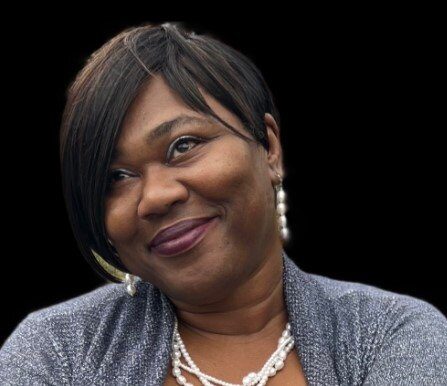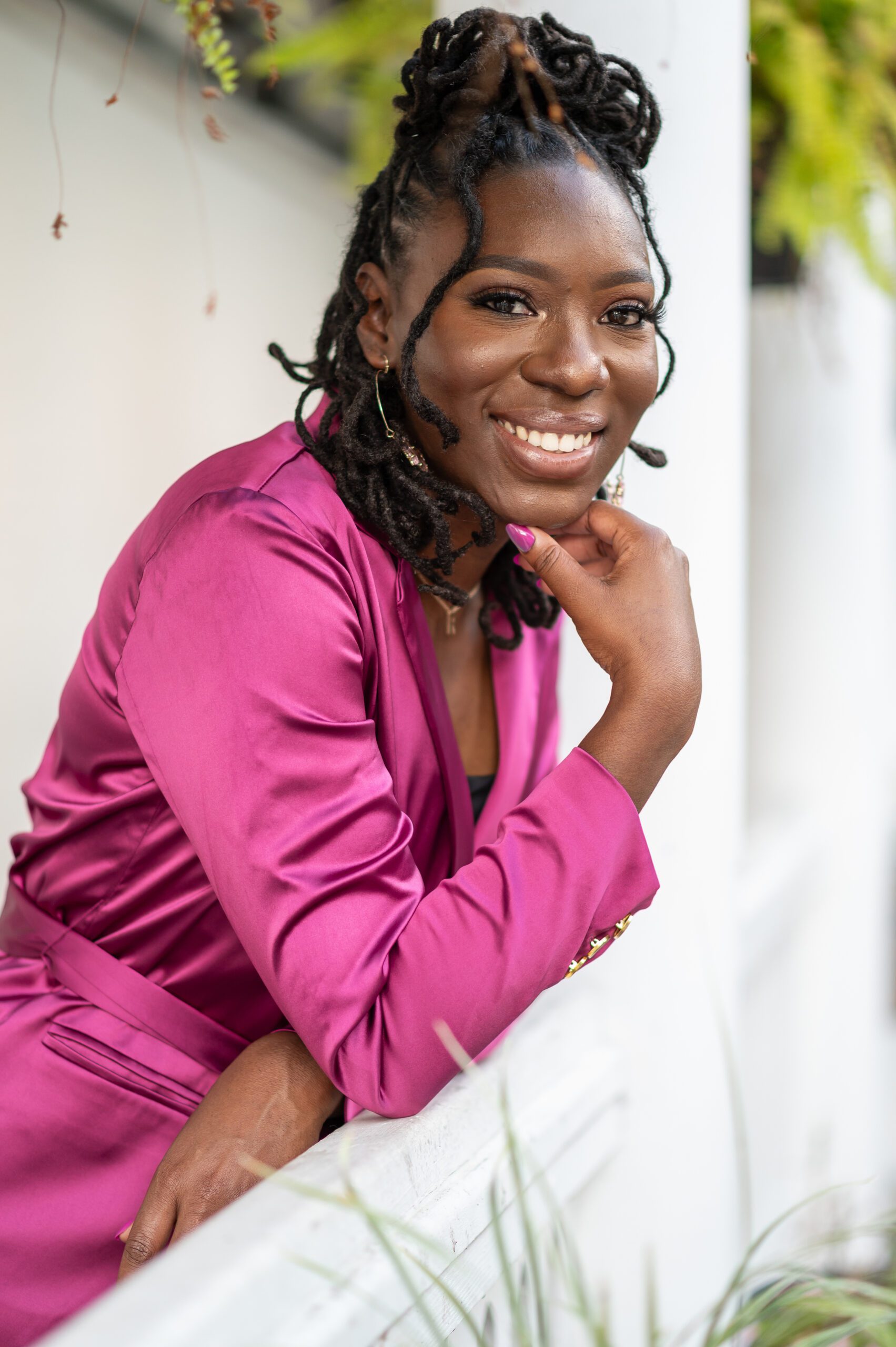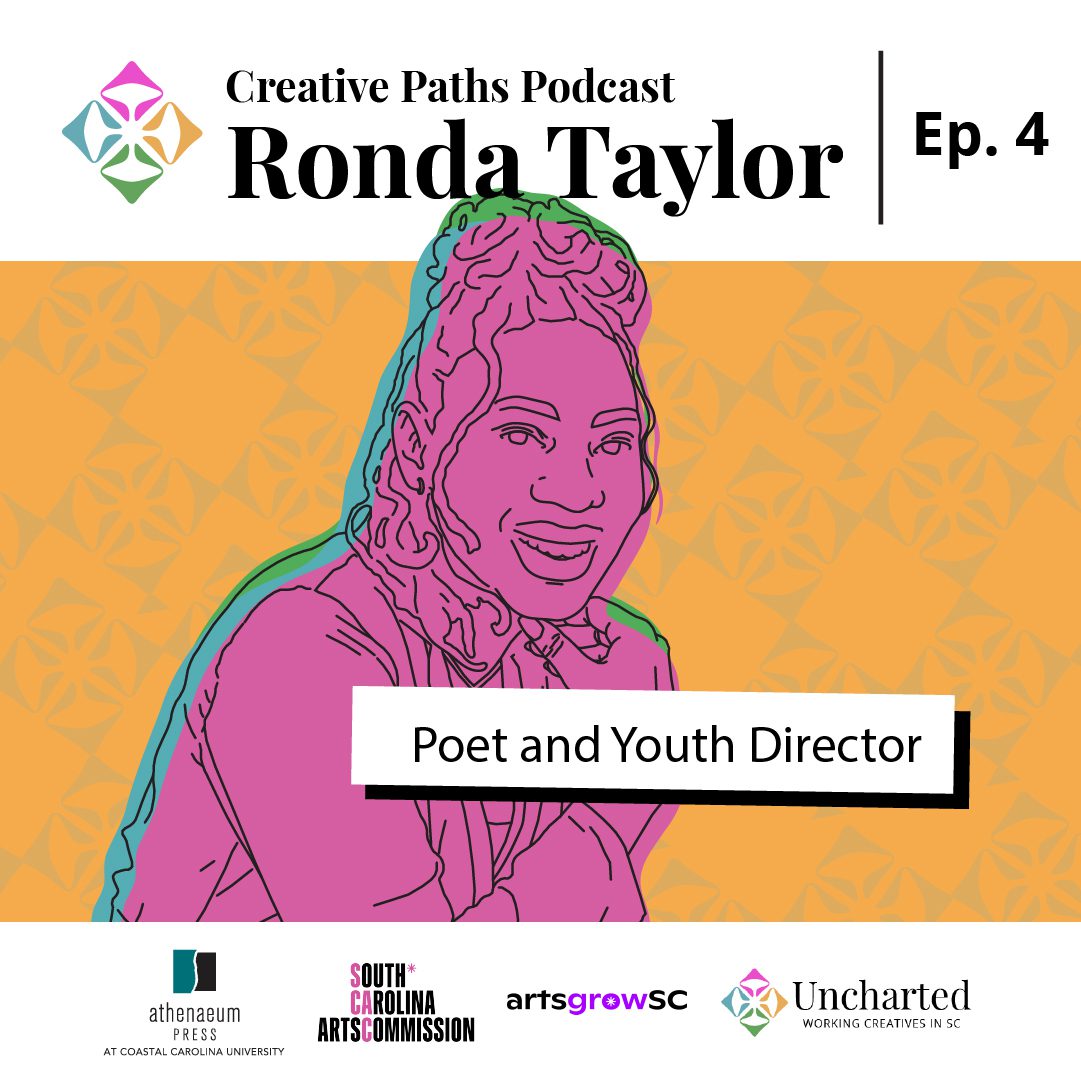
In this episode, we’re exploring what it means to find your voice with poet, storyteller and publisher Ronda Taylor as a writer and program director at Youth Empowerment services in Charleston, South Carolina, Ronda has leaned on her creative passions to uplift and connect with her community.
Career Area: Publisher
-

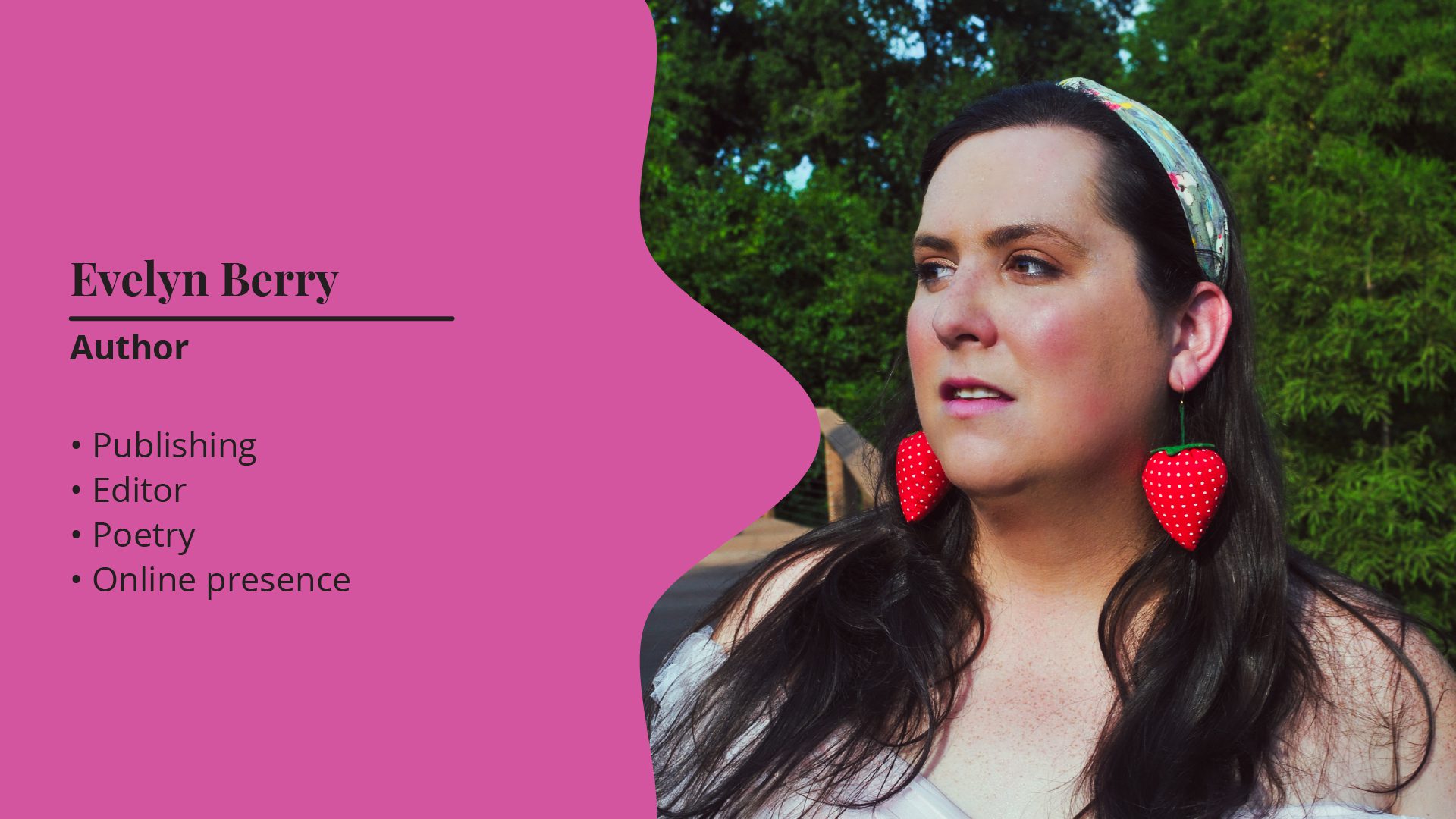
Evelyn Berry
“It’s just that when we’re conceptualizing art, we always think of it as something that has happened, but not something you can do in your own life, like in the current moment.”
Evelyn Berry, poet and educator from Columbia, SC, uses her voice to champion authenticity and queer Southern storytelling. Through workshops, editing, and her acclaimed poetry, she inspires writers to embrace vulnerability and speak truth to power.
Interview
Transcript
Lexi Raines 00:00
Alli, okay. So, first just give us a little introduction to yourself. What do you do for work and where are you currently working from? Yeah.
Evelyn Berry 00:08
My name is Evelyn Barry. I was born and raised here in South Carolina. I am an author of a book called grief slut, which was published last year by sundress publications, as well as some chat books called buggery and glitter husk. I have another book coming out next year called Tea for tea, from a small harbor press. In addition to writing and publishing, I teach workshops at organizations, whether that’s a nonprofit that’s looking to bring me in for a workshop series, a literary festival that wants to bring me on for a panel, a conference where I’m going to do kind of like a masterclass seminar with students, either online or in person, as well As universities. Where I might come speak to the classes, lead a couple of classes, and then usually do like a masterclass in reading at that university. In addition to that, I am an editor. Yeah, I would say, big role, besides writer and educator, is as a freelance editor, so I work one on one with writers all across the country on their manuscripts. This might look like helping build better writing practices where we talk about how they can deepen their craft, or it might look like helping them navigate the like the world of professional publishing. How one seeks agents, how one seeks publishing opportunities, how you write cover letters and things like that, or even find out about these kind of publishing and funding opportunities. And then my day job, which probably comprises of, like, probably two thirds of all of the money I made last year, is as a library communications strategist. So, I work with staff at a pretty large library system here in South Carolina and help with employee communications that might include anything from drafting all staff emails to share operational updates, creating talking points to help staff talk to and discuss kind of interesting, relevant topics with our communities. This might be a new initiative, an art gallery. Maybe it’s something that’s happened in the news that we want to make sure staff are equipped to talk about, and also staff newsletters, so this includes a lot of blogs that feature staff stories’ this could be anything about a staff who really likes speaking, and it’s about their love of baking, or it might be about staff who run programs using tabletop role playing games, or sometimes like a Storytelling Festival that we’ve had at the library, things like that. So, anything kind of communications wise that might be shared with staff. I usually have a hand in, and I’m sitting on different committees for different projects.
Lexi Raines 03:23
Awesome. You sound very busy, but that all seems very exciting.
Evelyn Berry 03:27
It is very busy. It’s a full schedule. Yes!
Lexi Raines 03:32
I’m sure. So how long have you been writing?
Evelyn Berry 03:38
So, I’ve been writing since I was a kid, which I think is pretty common, though, I’d say probably started writing seriously around the age of 16, when I was that’s also when I started to publish in literary journals. I was around the age of 16, you know, both obviously in my like high school literary journal, but also in some community literary journals, and then a little farther afield by the time I got to college. I kind of started in high school publishing short stories and poems. I also used to write some articles and a semi regular column for like, a local arts alt weekly newspaper in Augusta.
Speaker 2 04:19
Georgia. Oh, that’s so cool. That’s all, that’s actually awesome. One of my first paid.
Evelyn Berry 04:24
Writing gigs, and I think I was just a precocious teenager. Very much precocious.
Lexi Raines 04:32
What’s one thing that you love about working as a creative in South Carolina?
Evelyn Berry 04:38
In South Carolina, there’s a fairly close-knit community of writers. I think that one of our one of our strengths, is the small size of the state, both in numbers as well as geographically, which means that it’s really easy. Get to one another. I live in Columbia, so within two and a half hours I can pretty much get to any other city which offers a lot of really cool opportunities. When I started to write, I probably had no real business like teaching or writing book reviews, or, like, writing articles in magazines. But a lot of older writers took me under their wing and kind of believed in my work, and, you know, helped me navigate those processes, helped introduce me to new opportunities, and that was tremendously helpful. I don’t have, like, an educational background in writing. I did study English, and I don’t have an MFA, don’t have a PhD, but what I do have is, like a massive village of writing mentors throughout South Carolina and beyond. Who care really deeply about community, and so that’s, that’s a big thing I really love about South Carolina. It’s gotten to the point now where, you know, anytime I go to pretty much anywhere, no matter how small. I know someone there, you know, and I know someone I can grab coffee with, or who would be glad to have me over at their house and, you know, eat dinner their family. Just because, like, that’s kind of what the writing and the arts community at large is here, which is, is really beautiful.
Lexi Raines 06:26
It is super beautiful. I’ve heard a lot about that in my interview. So it is, I think it’s super awesome to hear that. It really is just a huge community. So, what does South Carolina bring to your work compared to anywhere else.
Evelyn Berry 06:43
I mean, I grew up in Aiken, South Carolina. I went to school in Charleston, South Carolina. I live in Columbia, South Carolina. Now I’ve you know, spent the majority of my life here in South Carolina. So. it’s kind of impossible for the landscape, the culture, the language, the stories of South Carolina not to seep into my work. I write confessional poetry which is often very biographical. So, the experience of living in the South, especially as a queer person, has kind of informed most of my creative work. Also, in the past, I’ve had the opportunity to work in different capacities in archives, as well as write in response to materials from archives, and it’s gotten me really interested in South Carolina history. I specifically am really interested in South Carolina’s queer history and the ways in which queer people have kind of fought for our rights here in South Carolina, whether that’s the like 1989 ACT UP die in at the state house, or the first Pride festival, which was only like 35 years ago, or, you know, even some of the more, like illicit parts of history, like the history of cruising down in Charleston, South Carolina, from like the sailors and things like that. So there’s all of these, like interesting stories, whether it’s like stories of resistance, or kind of sordid stories, or really fun stories. And I think people don’t think about that when they think of South Carolina, other parts of history. And I’m really always interested in what different spaces and places offer up in terms of their history.
Lexi Raines 08:39
I completely agree. I think South Carolina has, like, a very diverse history that, like, not too many people know about, like outside of those specific communities. So, I feel like just bringing out that research is super cool. That’s awesome.
Evelyn Berry 08:55
Yeah, it’s been super fun, especially, you know, I’m not an academic, I’m not a historian, so I get to have the freedom of doing things creatively, which gives you a lot of leeway with these things, which is, which is a lot of fun. How
Lexi Raines 09:10
Would you define professional or personal success in your creative endeavors?
Evelyn Berry 09:15
Um, I think that personal success, I think usually comes when you’ve written something that people respond to, that speaks to them. That might change how they think or how they feel, or just move them in some way. I would say the best kind of response that I’ve gotten from like books, is people I’m talking about what it meant to them, whether that it’s, you know, helped vocalize something about their own life that they had never seen on the page before, or that it helped them write something about their own life. Think, which I think is always super cool to see. So I think that’s kind of personal success, professional success, I think is a little bit trickier, because, you know, we do live in a society where you got to pay rent, got to have health insurance. So, I think that if you can consistently get projects and you know, say for poetry or novels, it’s consistently getting published, consistently getting invited to festivals and conferences to teach, so that you can kind of maintain a steady income, which is extremely hard to do because, you know, funding in the arts is very unpredictable. Some years you might, for example, get a fellowship, which I’ve done in the past. Like, last year, I got the South Carolina Arts Commission fellowship. And, like, you know, that’s, that’s like, $10,000 you know, on top of what I usually make. And it’s a big, you know, that that’s, that’s a huge thing for me. And then, you know, having to think of, okay, next year you’re not going to have that. Well, how are you going to make sure to maintain what you’re doing? Like, what will you have to do differently? So I think finding sustainability is really the key for professional artistic success.
Lexi Raines 11:27
Yes, I would completely, completely agree with that. So, um, this kind of goes along the same lines of that, what was your biggest fear when you first decided to pursue the arts professionally?
Evelyn Berry 11:41
Well, you know, I mentioned that I didn’t really study English. I really wanted to, I really, you know, when I was applying to colleges and high school, all I wanted to do was write. I wanted to write stories. I wanted to write novels. I wanted to write poems, plays, whatever I could get my hands on. And everyone kind of tells you that it’s a dead end, that it’s impossible. But I think that’s also because they don’t really know anyone who’s ever done it. It’s a weird thing, because, you know, we have, culturally, an idea of artists as something from the past, right? You know, when we think about if you ask someone their favorite artist or their favorite writer, they’re more than likely going to name someone who’s dead, which is not a problem. It’s just that when we’re conceptualizing art, we always think of it as something that has happened, but not something you can do in your own life like in the current moment. So, I think that was the big thing. Is just kind of like falling on my face. I’ll say I remember feeling so like defeated at one point. So, I had a I had my first novel come out when I was very young. So, I like signed a contract when I was 19, and then all came out when I was 22 which is like, maybe irresponsibly young to publish it, to be honest. And, you know, of course, like I was in college, I had this very romantic idea of what a right being a writer was like, I, you know, got to go to, like, one or two conferences and festivals and be like, here’s my novel. And then like, reality set in really fast, which was like, you know, there’s hundreds and hundreds and, you know, there’s 10s of 1000s of novels out there. And so now, just because you’ve, you know, published one, how do you make people actually care about that? How do you sustain that kind of momentum as well? I didn’t have anything else ready to go, you know, at that point, because I’d been college through that entire editing process, and it was a couple of days after, you know, it was months after the novel had come out, interest had already dried up. Like six months in, I’d stopped doing events, and I finally graduated college, which was a crazy kind of thing. And then I remember the very next day, I was like, working at this restaurant, and I was like, a busboy and a like, I like, came up on this table, and it was like a mother with her daughter, and they were touring the college from which I had just graduated, right? It just graduated from the Honors College or top honors, and I dropped the plates in front of them, like I, like, tripped and, like, dropped plates. And the mom looked down at me and pointed at me and went, see, that’s why you need to go to college. And I remember just being like, Oh no, crazy that I’ve, like, you know, thought that I have, like, reached this height, and you think that you’re going to, like, have a single success, or you’re going to graduate from college and then launch yourself into some sort of, like, career of miracle after miracle after just like, coincidence. Yeah, but it’s much harder work than that. So, I think that’s the biggest fear, was realizing that it would not be as easy as I thought, or that, you know, luck and coincidence can only take you so far.
Lexi Raines 15:18
An English major, actually going back to your first point, like, I was terrified to be an English major. I didn’t come into college as an English major. I was originally a computer science major, and I just hated it, like it was so miserable. And like, I’ve always really enjoyed writing and like reading, and so when I made that switch, I was so much happier. And so I feel like people saying that they don’t have there’s no jobs in English is very, very untrue, obviously. So I feel like just being able to keep your options open and look for those opportunities is something that’s really important.
Evelyn Berry 16:03
Awesome! Well, I mean, I’ll just say, in response to that, like, something that I would say to anyone who’s graduating with, like, an English degree, or say, like sociology, or any kind of degree that people are generally saying that doesn’t make money, there’s, there’s a lot of jobs out in the world that you’ve never heard of that actually need the skill set that you have, and the skill set that you have, whether it’s like writing and communicating clearly, is becoming more and more rare. I mean, I’m sure you see it in your own peers. Like the ability to write a like cogent and coherent essay about a literary piece without using AI is like a huge deal these days. I see it in, you know, my communications work all the time where, like, you know, being able to quickly and correctly write, or even knowing, like, the basics of grammar or the basics of sentence construction, that’s something I take for granted. I’m like, everyone, everyone knows that. Like, duh, everyone can but that’s not true. And the more that you kind of like work in the world, you realize, oh, actually, I do have a set of skills that might be really useful to some people, and my I might be able to leverage it in real ways. Yes,
Lexi Raines 17:24
I’ve, really noticed that. And I think coastal does a good job with preparing English majors to, like, really market their skills. So it’s awesome. Can you describe, like, a defining moment in your creative journey?
Evelyn Berry 17:38
You know, what’s kind of interesting is, you know, when you’re doing creative work, every Turning Point feels like the big break. You know, in some ways, I would say the biggest thing for me a big turning point. A couple of years ago, a mentor of mine encouraged me to apply for a National Endowment for the Arts fellowship in creative writing. So these are governmental fellowships that are given to 25 writers per year. It’s a tremendous amount of funding. And beyond that, it’s quite like an honor to get it is, you know, one of those awards that people recognize on a resume and will bring you in. And at the time, I didn’t have a full length poetry collection out. The novel had been kind of a flop. I was starting to publish in different places, but I still didn’t feel like a quote, unquote, real writer. You know, I still felt like I had failed to live up to that kind of potential, and there was a massive amount of insecurity around the fact that I never went to graduate school and never studied writing. The older I got, the further I felt behind my peers, despite the fact that, you know, I was reading the same books that they were in graduate school. I was, you know, having the same conversations, going to the same events, doing this in kind of community volunteering and getting involved in the literary community. So, you know, this sort of fellowship wasn’t a sort of thing that I thought someone like me was one supposed to apply to, because it would be a waste of time, right? That it would be something no one without proper training, no one without that kind of pedigree already would be able to get a fellowship like that. But I decided to apply. I applied twice, and on the second time I got it, it was, it was really life changing. I actually didn’t believe them when they pulled me on the phone that I had gotten the fellowship, yeah. And it was just really cool to, like, have that moment of like, okay, like, this is real. Like this is, you know, it kind of was funny because it eclipsed a lot of other failures, because it didn’t really matter anymore. It’s like, well, you have, like, this seal of approval, which sounds silly, like, you know, a lot of especially universities, they look for those. Seals of approval, right? And or before they like invite you to come teach, or invite you to come read. And sometimes when you’re able to get a fellowship or an award like that, it’s just the one thing that can help you kind of stand out in the crowd. And that was really a turning point for me. I think that I was able to take myself a little bit more seriously as a writer, I was able to demand a little bit more in terms of, like, what I charge from, you know, people who were hiring me and mostly it kind of gave me, like, the confidence to continue to actually say to myself, like, okay, like, this isn’t just something I do for fun. It is actually, like, my vocation. It is the thing I’m doing with my life is to write and share stories and share poems. Congratulations!
Lexi Raines 20:53
On that. That’s actually, so that’s awesome. So it was really great.
Evelyn Berry 20:58
Cool. Yeah, I think, um, it was kind of interesting. Last year, a like, some academic did, like, a qualitative study on, like, who got these kinds of fellowships, and I was the first one to receive that fellowship, I think, in like 30 years. Like, the last person who did it was James Dickey, and so it’s kind of like, yeah, like even that, like Southern writers, rural writers are, like, massively underrepresented for these fellowships. You know, the majority of writers who get them are people who are already well-established. They’re already teaching at major universities and things like that. So it felt really good to like represent for my state as well. And I didn’t realize that until someone pointed it out, and I was like, wow. Like, it’s kind of wild, because I know so many amazing artists and writers here who deserve support, sometimes ignored by like, the national art scene.
Lexi Raines 22:01
Yeah, that makes it even more meaningful. Congratulations again. Like, what is the best and worst advice you’ve ever received?
Evelyn Berry 22:10
Unfortunately, the best advice, and I think this goes for any creative path, is just do the thing that you want to do. What I mean by that is, I know a lot of writers who think, Well, I would love to write a novel, but before I can write a novel, I need to go take a creative writing class. Before I write a novel, I need to read 10 books about writing a novel. Before I write a novel, I need to like prove myself in some way, same with being an artist. You know, I will become an artist. I will start making art once I get to the certain point that it’s proved myself. But the only way that you can actually develop craft and develop as an artist, as a photographer, as an actor, is to practice that craft. And, you know, often practice looks like failure because you’re not going to be good at it at first, right? No one is no one is like perfect or no one is skilled at what you do first, and you still might feel inadequate years later, too. But once you start comparing you know how you’ve developed, you’ll see growth. So I think that’s really important as to whatever you’re doing to begin now, you know to not kind of wait for any kind of permission, to wait for any kind of degree or certification or seal of approval from anyone else, but just to start making and also start sharing that work, even if you don’t think it’s very good, you know, upload that photography to Instagram if you’re writing stuff and you know, you know, go ahead and send it out to literary journals. If it’s not getting published in literary journals, like print it in a zine. Share it with friends. Once you start to get into that cycle of creating and sharing art, you’ll kind of you’ll do some more often, the worst advice I’ve ever gotten, I think that the worst advice I’ve gotten is that one should separate, not write about politics. I think a very common thing, what used to be a very common thing in the arts, and especially in writing, was that, you know, people didn’t want to read, you know, quote, unquote, political stories or political art, because it was very heavy handed, which it definitely can be for sure. You know, we’ve all read work that is very heavy handed in that way. But I think it’s really important to think about why that advice is given and Who Gives it often. You know, the lack of politics is not. A lack it is just like a defense of the status quo. And so art that does not engage with values that might be seen as quote, unquote, political are still political. You know, they are. They’re maintaining a kind of status quo, a patriarchy of white supremacy, you know, kind of this, this, this kind of paradigm, right? That is seen as the quote, unquote norm or seen as apolitical when, in fact, it’s very political. All of our lives are very political. And as a poet you know, writing about like being queer in the south, it’s impossible for pretty much anything I write not to be viewed by others as political, even if I don’t mean it that way. And so I remember getting some advice, like definitely, from like, fiction writing mentors and teachers to kind of avoid, you know, talking to explicitly about politics, despite the fact that it kind of informs our every day, I feel like it
Lexi Raines 26:04
Would be hard to ever completely avoid that topic, because it makes up who you are. It makes up the community around you. It really makes up everything a lot, influencing you.
Evelyn Berry 26:14
Yeah? So that’s what? Yeah, exactly. It’s an impossible piece of advice unless you are, like, the single most privileged person in the world and are able to insulate yourself completely.
Lexi Raines 26:25
So, can you please walk us through a typical work day for you, like, what does your process look like, and what’s kind of expected of you on a daily basis? Yeah,
Evelyn Berry 26:33
Let me take you through kind of a general day that includes all of my different jobs. So I usually wake up at five in the morning, which I know is not fun to hear. If I have real energy, I’ll work out. Otherwise, I’ll go shower. I will say I this is so I mean, maybe it won’t sound weird, but like, you know, I’m not the biggest physical fitness person, but I do think that exercise and just moving your body, whether that’s walking or going to the gym or like playing a game with friends, actually can, like, help boost your creativity. It puts you in a better mood, and it helps bring you energy that doesn’t necessarily fade throughout the day. So I think it’s a really good way to get one’s mind ready to write after that. I usually end up coming home showering, putting on makeup, etc., and I will go right. So sometimes I write at home at my desk. More often, I will go to like a local coffee shop, and write for anywhere from one to two hours before work. And the reason I do this is just that I’m a morning person. It is like when I do my best work is when I wake up by the time like one o’clock rolls around, I’m a little less sharp, so I want to give the best version of myself to my creative work. Then I usually go to work at the at the library. So this usually looks like spending the morning, usually dealing with more immediate needs. So that might be helping write an email, helping finish up some projects, maybe being in meetings so often I will find, like, we have meeting rooms at the library, so I like to find, like, a quiet place have my like, noise canceling headphones, and just really dig into the deep work. So anywhere from one o’clock to five o’clock is when I do that kind of deep work for communications, that’s strategy building, or just something that’s going to take a long time to write. I will say I’m very lucky in that sense, like I have a job in which people generally leave me alone unless they need something or they’ll send me an email, so I get a lot of uninterrupted time to, like, think and sit, and I think that’s really important to kind of have, like, you know, I’m also totally allowed if I wished to, like, leave the library and just like, wander around, because that might help, like, write something that I need to write, and get me in the right mindset to do it. So, yeah, that’s generally what that workday looks like after work. I might do different things. So I help. I helped start a local collective here called queer writers of Columbia. We hold like write ins and workshops and open mics. So often, if that is happening, I will leave work and go grab something to eat, maybe with some of the friends from that group, and we will go and write together even more. Sure, generally in that setting, I’m actually not writing my own work. I’m usually helping other people navigate stuff, just a lot of moving parts. So it might be, you know, just mentoring people basically to get published or to seek opportunities. It might be going to support people at open mics. I’m at the point in my career now where, like, I don’t necessarily have to do those things, you know, like, I can get paid to go read poetry, so I don’t need to go to an open mic and, like, have that kind of exposure. But I think it’s still important to engage with like, everyone in your community, no matter like, level of development they’re at, because, you know, that’s kind of how I had any opportunity at all as a writer, is that someone took a chance on me and gave me an opportunity before I was ever ready for it. So that’s, that’s a big thing that I believe in, is, you know, encouraging people to say, hey, you know, you should really host this. And they’re like, I or teach a workshop, you know? And usually people say, like, I don’t have anything that I could possibly teach others. And I think that when you start doing it, you’ll be surprised by what you can teach others. Something else I really believe in is like, to not get, keep, like, publishing secrets. There’s a lot of norms around literary magazine publishing, wearing agents reaching out to bookstores that are not like written down in many places. You might learn them in an MFA program, but even then, probably not. So the only way to learn them is through trial and error or from just another writer telling you. So I’m a big believer in, you know, mentoring writers to make sure that their talent is not being unnoticed, that they’re able to develop and both within their community and beyond. Yeah,
Lexi Raines 32:00
So,it sounds like you again, you’re very, very busy person. How do you, like, create a good work life balance where you’re able to maintain both, like, your professional creativity and your personal creativity. That
Evelyn Berry 32:15
Can be hard sometimes. You know, I think one of the challenges that you run into, like I write for work, and so when I’m done sitting at a computer for eight hours, I don’t want to go sit at a computer anymore. So one of the things I do is prioritize my personal creativity. I think of that as you know, despite the fact that it doesn’t make me as much money, it is the thing that I want to give, like the best part of myself to, which is why I tried to do it before work, right? You know, I say that’s a typical day, but, you know, maybe going and spending time with other writers happens maybe once a week. You know, I’m also very conscious, and even more so these days of like self care, make sure to have time to myself. One of the huge benefits of working at the library where I work is that it has a big emphasis on work life balance. So we have open PTO, which means we can basically take as much PTO as we need. I’m able to work from home one day a week, which is where I am now. I’m not at work right now or not at the workplace. So, you know, it allows the flexibility, which is really great because, you know, I work with people, with families who, you know, need to like to pick up their kids from school in the middle of the day or drop their kids off at daycare. And it’s really nice to work for both a organization as well as for a manager who cares about your personal well being like, beyond anything else, like the actual parts of my job, sometimes they’re fine, like, I like writing articles, but a lot of it’s very boring. It’s very boring writing. It’s very technical, it’s very straightforward, but that doesn’t really matter to me, because what’s more important is that I’ve chosen a career that can sustain me enough that I have the energy and the time and the ability to pursue my creative passions. So for example, like last year, I went on book tour for grief slut. And, you know, I was able to take, you know, several days off, sometimes weeks, or like, a week at a time, to go travel around the country and tour this book. And it was really important to have support from the organization. Person I was working for. And not everyone has that. So like, you know, if, again, you know, if I’m would give advice to someone, I’d say, like, you know, think about the values of the people for whom you’re working, because they will also, you know, sometimes help shape you will they see, like, your art career as something that supplements them, like it’s like something that they’re very happy about, or do they see it as a rival for their time? And so if you can find someone who supports your art as well as your livelihood, it’s a really beautiful thing. I agree.
Lexi Raines 35:39
That is, I want to find would be an amazing opportunity for a lot of people.
-
Walter Curry
“Value success through impact rather than accolades.”
Dr. Walter B. Curry, Jr. is an award-winning author, educator, and historian based in Columbia, South Carolina. Through Renaissance Publications, he documents African American family and local history, connecting ancestral narratives to broader historical themes.
Interview
Transcript
Lexi Raines 00:04
So what do you do for work and where are you currently working from? Just give a little introduction of yourself.
Walter Curry 00:10
Well, first I want to thank you for inviting me. I have followed the Athenaeum Press for a while. I have a connection there, actually how I found out about the press about a year ago, when I’ve heard about your organization, initiatives focusing on community, with the Communal Pen, I’ve learned more about the Press.
But just to tell you about who I am: I am author and educator, and I currently live here in Columbia, South Carolina, and my work focuses on ancestry and local history. And so as an author, I write narratives about my family history which connects to local history in South Carolina, in Orangeburg and Aiken counties, where my family is located, and using those ancestral narratives through the historical context, in the broader scope of African American History and beyond.
Lexi Raines 01:29
That sounds that sounds really fascinating. It’s good to hear that you also know about the Communal Pen. That’s amazing. So how long have you been writing?
Walter Curry 01:40
I’ve been writing about been writing for five years. Yeah, five years. I started in 2018 I published my first book on the Thompson family on told stories from the past 1830 to 1960 and because of the success of the book, I won my first book award in 2019 I was encouraged to use that as a opportunity to launch my business. And so the concept and the business Renaissance Publications is a self publishing company where I published my books focusing on the literary arts, and so I’ve been writing about five years. I’ve written two books, The Thompson Family Book, my second book, The Awakening: the Cy Ellison Family Saga, Volume One, a narrative history. That book won several awards as well. And—
Lexi Raines 02:45
Awesome.
Walter Curry 02:47
Thank you. Thank you. And my third book, which will be a blockbuster South Carolina, Matilda Evans, she was the first African American woman licensed to practice medicine here in South Carolina, that book is coming out in April, and that book is going to be the exclusive biography of Dr. Evans. And so I’m blessed to have written three books so far, and I have also branched out to other areas in the literary arts, visual art. I also do presentations and design of exhibitions as well.
Lexi Raines 03:33
That’s awesome. So it sounds like you’re definitely staying busy. Yes, yes. I am. I am. You said that you have a family history in South Carolina. What’s one thing that you have, like loved about working as a creative here?
Walter Curry 03:47
South Carolina is a very unique state. South Carolina is about 80% rural, 20 urban. And the beautiful thing about South Carolina is that South Carolina is unique because of our rich history and culture. And when I travel across South Carolina doing presentations, I’m always paying attention to the area, looking at the features of the area, looking at the cultural aspects and the local history, which connects that area to other broader aspects of history. And so I will say, with South Carolina, we’re very unique as it relates to our culture, our rich history, and that creates opportunities for authors like myself to bring that history out and to make it come alive. Through the literary arts.
Lexi Raines 05:02
That’s awesome, because I feel like South Carolina does have so much like kind of hidden history that’s kind of been like pushed to the back, and that deserves to all come forward, because it’s always like such beautiful stories that are meaningful.
Walter Curry 05:18
Yes, yes, yes, I totally agree. South Carolina has a lot of hidden history. I’ve discovered during my journey that when I was researching my mother’s maternal native County, Aiken County, I discovered that Aiken County was founded by three African American men during the Reconstruction Era. Aiken County was founded on March the 10th, 1871 and I also found out that Aiken County was the only county in South Carolina that was founded during the Reconstruction Era. And so when I asked my mom and some of my relatives and friends who grew up in Aiken county in the salad area, they had no idea about the founding of Aiken County. They didn’t know that Aiken County was founded by three African American men, all state legislators and civil war veterans. And so it’s the hidden history that I have discovered which is an opportunity for authors and historians like myself to bring that hidden history out, and that is relevant in all communities across South Carolina, there are stories of hidden history that need to be brought out so it creates opportunities for those of us like myself to focus on local history and to make those broader connections to state history, national history, African American History, Women history, or other areas of History.
Lexi Raines 07:20
I feel like you’re definitely helping pave the way, like uncovering all of this stuff. So you how would you like describe the local professional community? Because you did say there’s a few others that are also working on similar projects?
Walter Curry 07:36
Yes, yes, I have a great relationship with the local professional community. I do my best to support my peers. They support me. I have collaborated with several of my peers on various projects, one in particular a good friend of mine named Wayne O’Brien. He’s a local historian and author from Aiken County. He’s from Charleston originally. We have partnered together on several activities and initiatives, the Harlem Renaissance, that exhibition. He has written several essays on his family history, about his family connection to the Harlem Renaissance, and how his great uncle, Charles Linton, discovered Ella Fitzgerald. And yes, yes. Charles Linton the Lenten family, they are from Shera and so his family is from Cheraw, and how the Harlem Renaissance is connected to my family, I’ve discovered in my ancestry that my great grandfather, first cousin Asman Ellison, lived in Harlem New York in the 1930s during the Harlem Renaissance, and he was employed at Hotel Teresa, and that that was the famous place where all of the political dignitaries, cultural icons in the African American community, even foreign leaders, they patronized and stayed at a hotel, Theresa. And so looking at my cousin his life, and also saw, I saw his picture, and I have his picture, and he wore a Zoot Suit. And so I learned about the zoot suits. And so me and my colleague, Wayne o Bryant, we have partnered together over the years. And one of the thing about being a part of a professional community, a network of peers, you are able to share information and share ideas. With each other and potential collaborative opportunities. And so I encourage that, because we don’t know everything. We have our strengths, we have our weaknesses, and I think we as creative, should acknowledge that. And the beautiful thing about being a part of a network is you lift each other up because this work sometimes is challenging, sometimes it’s frustrating. It’s a battle of the mind where we have to constantly reassure ourselves that we despite the struggles that we face from time to time, we’re in this because of our talent and we want to show the world that our talent has value because we believe that we as creatives have value, and that our value is the creative arts.
Lexi Raines 11:06
That’s awesome. Yes, I feel like I completely agree. I think it’s also so nice that, like you have, that South Carolina has such a good community to lean on. Because I feel like that’s something you may not find in, like bigger states, is that just really close connection and networking capability that we have here?
Walter Curry 11:27
Yes, yes, I totally agree. South Carolina is a close community. Is a small state, and we’re a state that is blessed to have rich culture, rich history, diversity. And I remember Governor McMaster, he mentioned in a state of the state address, he spoke about South Carolina rich diversity in history and culture, and that we are the envy of some of our competitive states because of the fact that we have rich history, rich culture from the American Revolution, Revolutionary War, Civil War and beyond. And we also have access to the mountains. We have access to the beaches. We have warm climate. So we have a lot of amenities that motivate us as creative artists to really highlight South Carolina through our work.
Lexi Raines 12:34
Yes, I would completely agree with that. And so kind of shifting gears here in your writing, like, how? How do you define, like, professional and or personal success in your creative endeavors?
Walter Curry 12:49
That’s a great question. I never thought of it. I would say that professional success, to me, is growth. I believe that over time you want to you want to see whether or not you are actually growing in the areas that you need to grow in in order to maintain success. And so for me, I look at my writing. I look at how my writing has improved over time. I also look at my activities. What are what am I doing as far as my activities to make sure that I stay active. So I measure that. Am I’m going to networking events? Am I doing professional development, professional learning opportunities? So I measure that, and how am I applying the knowledge and skills that I have obtained over time, and whether or not the knowledge and skills are working in my favor. And so that’s how I measure myself, professionally, personally, I look at the accolades, because we all want, we all need to know whether or not our work is being recognized. I’m not a person who seek personal recognition, because that is a trap. I think we have to be careful as creative to if we focus too much on personal recognition, but it doesn’t help to get recognized, and so when I receive awards, and I have received several awards for my work, that tells me that I am being noticed, and I am out there and people are. Recognizing my work, not only those who follow me and support me, but my peers who are judging my work as well.
Lexi Raines 15:09
Yeah, I would completely agree with both of those. I think, like first for what you said in your professional life, like I feel like the worst thing that can happen to a creative is that kind of like stagnation. So I feel like striving for growth at all times is the only way to grow to get anywhere. Really.
Walter Curry 15:35
I agree. I agree. I agree and to and to your point, you don’t want to feel stagnated. You always want to achieve growth, and
Lexi Raines 15:48
then with the your personal success, the like awards and stuff, I feel like it definitely, I would agree it’s important to have a mix of having a drive for doing it for yourself, and then having a drive to put stuff out there and be recognized. So I would, I would agree with that. Thank you. Thank you. So what was like your biggest fear when you first decided to pursue the arts?
Walter Curry 16:19
Oh, man, that’s a great question. I would say fear, fear of failure. I have failed several times in business, and I’ve learned from my mistakes. I started out as an insurance agent, following my father’s path, did pretty well, but I found out like this, ain’t me, you know, he’s a very successful insurance professional. He taught me a lot about business and some of the skills and lessons that he taught me, I still apply till this day. And then I moved into real estate, got my real estate license, and I only sold one house. Actually, it was a cousin who I helped, and he owned a rental property, and he sold it, and I helped him for 21,000 so I didn’t do well, because I thought, Man, I got this real estate license. I’m going to make a lot of money. I remember going to a subdivision and this successful real estate broker. He was like, Walter, if you come to this subdivision and you be the agent on duty. And I was thought, man, all these people going to come to me, I found out that was not so. And so I got out of, out of real estate, and then I tried jam Pro, because I was, I was convinced by a cousin to get into the cleaning business. Did okay with that. Then I quit, and then got into education. I taught school for four and a half years, then at the time, I was blessed to obtain my graduate degrees. I have three graduate degrees, by the way, and I decided to leave the classroom because I was tired of teaching middle school kids, so I didn’t do well with that. And I look back at that experience, and I said to myself, if I would have applied myself, I would have been a better teacher. So I was a rebel, okay? And I didn’t take my training seriously, so I fell on what I know, and at the time, I was going through a midlife, midlife crisis, I remember all of the stories that my mom shared with me about her family history, and I did some research and find out that man I have an ancestor who was an enslaved cook in the Confederate Army, and found out about her, located her pension record. Then I did some more research find out about ancestors who were enslaved, more written records, primary sources. I said, Wait a minute. I got something here. Okay, and so I was able to discover my passion in history. I have discovered my passion as a writer, and because of my background in education and business, I put those skills to use, and I have successfully applied those skills. And so I’ve been doing this for five years, but my biggest fear when I started. Out was the fear of failure. And the fear of failure for me was the mistake over the years prior to me becoming a business owner in the literary arts, was the lack of application, the lack of discipline, not being humble, okay, not learning from mistakes. And so I say to myself, I will not fail again, you know? And so I’m blessed to be in business for five years. It has really been an incredible journey. Yes, I
Lexi Raines 20:41
I feel like that definitely shows too that everything that you do does ultimately get you, if not, where you thought you would originally be. It gets you to where, somewhere, where you will be happy, like your business background, your time as a teacher, all of that led up to you being a writer. So it really shows you never know where life is going to take you all the time.
Walter Curry 21:08
Well, I agree. I agree, and that’s why you have to have a open mind. I encourage everyone to seek your gift, seek your calling. I believe that everyone has a calling. Everyone has a gift. It’s how we cultivate our calling, how we cultivate our gift and be able to appreciate that. I’ve learned that you cannot be something that you’re not. You know you could try, but you cannot be something that you’re not. You could, you could try to fill somebody else’s shoes, but over time, those shoes are going to get bigger and bigger, and your feet going to get smaller and smaller. It’s kind of like my grandma, Lizzie Williams curry, she passed away several years ago at the age of 102 and she said she shared a lot of wisdom and advice with me during her last years. We had a lot of private conversations, and she told me about my journey, she said, Walter, I’m going to tell you something. You got to stay in your lane. Okay, stay in your lane. Don’t worry about trying to ride somebody else’s lane, because if you do that, you’re going to get run over. Okay, stay on the path that God has called you to do. Don’t worry about what people say, because people going to talk, they going to criticize. I mean, that’s part of life, that’s part of the game, but you got to stay focused on what God has called you to do, and stay in your lane. So I live by that example, and I don’t try to interject myself in a lane that I am not called to run on. So for instance, because of my popularity as an author and a historian, I have received numerous requests about doing other things and also requests in knowledge that I’m not familiar with don’t have no expertise, so I’m happy to defer to those who do have knowledge, experience and expertise, and that’s why a professional community of peers is so important, because, number one, it helps you to identify peers who have the knowledge, skills and expertise and the resources. And number two, it gives you credibility, meaning that I don’t know all the answers, but I know someone who does so that gives folks a sense of your credibility and your ethical behavior in the field,
Lexi Raines 24:12
I would completely agree. I feel like staying in your lane, like I have a question later about like the best and worst advice you’ve ever received, but I think that is genuinely good advice too, because I feel like, if you are trying to like, you said, like, interject yourself into other places. I feel like that can be where, like so much unhappiness will stem from. Like, that fear of judgment from doing like, what you truly want to do. So I feel like that is just a really, really important and wise piece of information she gave you. Thank you. Thank you. Thank you. So please like describe, for me, a defining moment in your creative journey, like, did you have a like, a particular project or moment that had the biggest. Impact on, on you.
Walter Curry 25:03
Yes, yes, I will say the defining moment for me was in 2020 before COVID. February the first 2020 black history, month of the unveiling of my first exhibition Sally in the Thompson family, and that exhibition was featured at the Aiken County Historical Museum in Aiken, South Carolina, where my maternal family is from. And I, along with the director, Laura Virgo, we collaborated for about six months on the exhibition, the items and the promotion. And I remember putting, putting the word about the exhibition out to the public and on social media. And I looked up one day find out. Man, it is sold out. And I remember Laura said, Doctor, curry. We are at capacity. I said, what? You gotta be kidding me. And so I remember, I spent the weekend down there. My cousins gave me we had an Alli at my cousin house, and so they were so excited. I mean, I mean, they were so excited. Some cousins I never met, who came down, and I was like, wow, they doing all this for me. And so I on Saturday morning, I lost my wallet, and luckily, I was able to recover it. I left it at a gas station, so I said to myself, Man, I lost my wallet a few hours before the opening event of this exhibition. I’m freaking out. And so when, when, when the exhibition was finally open, during event time, I looked up and there were people coming from all walks of life. I mean, I think it was over 100 people. And according to the museum, they say that that was the largest gathering of an exhibition in its history. Insane. That was insane. I was like, Oh, my God, this is insane here, you know. So that was a defining moment for me to really sink my teeth in and say, Okay, this is something. I could do this. And so that led to me defining my skills, making sure that I stayed with what I am doing. And so that was the defining moment. And the second defining moment was recently when I finished writing, when I finished writing my third book on South Carolina, Matilda Evans, a medical pioneer, and looking at my work and looking at how this book is really going to be a major blockbuster in South Carolina history. That is another defining moment for me. So yes, those are two defining moments.
Lexi Raines 28:30
Those both sound so like special I can’t even imagine, like, how you must have felt in that moment. That is congratulations. That is actually amazing. Thank you. So, yeah, of course. So I know we kind of already did hit on this, but if you have any other advice, what is the best advice you’ve received and the worst advice you’ve received?
Walter Curry 28:57
The best advice I receive, I will say, like I said during our interview, is stay in your lane. Know what you’re good at, and perfect your skill and talent. And that has helped me the worst advice. I haven’t received any worse advice. I will say, being tempted to do something that you don’t want to do. I will say over joining organizations. Sometimes we do that. Join this organization, you join that organization, and you hoping that if you join organizations, you will get something out of it. So I will say that is, is the worst advice that I receive. And I will say in that if you going to join an. Organization, you have to feel comfortable. You have to know why you join in that organization, and you don’t want to over join. You want to join organizations that relates to your interests. So that is the two advices that I have received.
Lexi Raines 30:47
I feel like that is definitely good thing, or a good piece of advice, or not over joining organizations, because I feel like young creatives, they are just trying to, like, get their names out there, do whatever they can do, as much as they can. And I feel like, as an artist, it’s so easy to stretch yourself too thin and kind of like get burnt out in that way, which is obviously never what you want to happen to your passions.
Walter Curry 32:53
Oh, I totally agree. And we can get burned out, and you get burned out to a point where it does affect your cognitive ability, because as a creative your mind is all over the place. You know, I even have to guard that myself. Well, well, I want to do this, but, but I know I shouldn’t okay, what I shouldn’t do, what I shouldn’t do I should do okay and to your point, we have to guard our minds. And I will tell any creative, guard your mind. Take time for yourself. Don’t worry about whether or not you’re going to get opportunities. Opportunities will come if you just stay focused and perfect your craft, stay engaged. Opportunities will come, and I’ve discovered that. I’ve discovered the days that I feel like, Are there any opportunities coming? You check your email, you find out, Oh, man, there’s an opportunity. Okay, yeah, yeah. And also cultivate relationships and give back. I think sometimes we miss that. I mean those organizations and peers who have helped us, we need to help them. And I would say that to creatives, that when you have downtime, that doesn’t mean that you’re not working. Okay, that’s an opportunity where you can reflect. That’s an opportunity where you can say, Okay, I need to retweet this. I need to retweet that. I may need to revise this content, revise that content, that content. That could be an opportunity to do some promotion on social media. Okay, follow up on emails. So So I always, I will always say that there’s always something to do, but the same time you have to know what your goals are, what your interests are.
Lexi Raines 32:53
I completely agree with that. Because, like, even on your point with like, not being afraid to give yourself that time to relax and have that downtime. Even I have felt that this past semester in school like it, it’s okay to give your brain a little break, and in that moment, in those moments where you are taking that break, you can find so much inspiration for things when they pick up again.
Walter Curry 33:21
Oh, absolutely. And you have to reflect on your successes too. When you reflect on your successes, that will help you feel positive, because, you know it’s like with Steve Harvey. He owns a radio show, and he has his his morning talks, and his morning talks are very, very powerful, inspirational. I remember listening to one of his morning talks, and he mentioned about how you have to speak something positive about your life, where God has placed you in your life. He will start off by saying, Steve got a radio show, yeah, I got a radio show. Okay? And he will tell you what led to him getting that radio show. He will tell you that man, several years ago, I was homeless. I was sleeping in my car. Okay, now I’m sitting in this chair, and I have my own radio show, and so he takes the time to reflect on his successes, and we have to do that, but particularly in this world of distractions, as we see, there are so many distractions, and so I would encourage creatives to reflect on your successes, and that doesn’t mean reflecting on your awards or your accomplishments, but but if you have published a book, if you have. Design or create a painting. Count that as a success. I mean, I mean, count the fact that you are participating in a professional development opportunity. Okay, the little things. It’s the little things that we have to appreciate. I believe in what St Augustine said in his book confessions, it’s the little things that leads to the greater things he didn’t say. These are the greater things he says, those little things. And so those little things that we have to pay attention to.
Lexi Raines 35:37
I completely agree you have, you have good advice after good advice, this is going to be awesome. So can you walk us through like a typical work day, like, what does your work process look like, and what do you kind of like expect from yourself on a daily basis?
Walter Curry 35:57
That’s a great question. You never know. I’m a father of two sons. I have a lovely wife who supports me, so it’s always unpredictable. I’m blessed to have flexibility. I work from home, so I make it a point to walk outside while my wife and my boys, they in the kitchen getting ready. I’m getting ready to take them to school. So I believe walking outside in the morning to feel refreshed, to connect with nature, to clear your mind, because your mind has to be clear. Also, I work out. I go to the gym twice a week. I’m trying to increase it to three times a week, because your success connects to your physical success. I believe that in order for us as creatives to stay engaged mentally, to decrease stress, we must take care ourselves, take care of our bodies, and we have to incorporate physical activity. So I do work out at the gym. I check my emails in the morning. I look at things that I could do as far as my work. I pick up the kids from school, help them out with their homework, and when my wife and my kids are sleep, I’m back on the computer, catching up on things. Well, that’s my typical work day. I do have presentations, and so when I schedule presentations. I take the time to prepare for those presentations and other projects that I’m working on, making phone calls.
Lexi Raines 37:51
So how do you create like that work life balance where you’re able to maintain like your professional creativity, your personal creativity, and just like that time with your family.
Walter Curry 38:03
Yeah, it’s a challenge. Sometimes it’s a challenge because in my position, I’m blessed to be compensated for my work. I receive compensation through a grant from the South Carolina Arts Commission. I have a partnership with the Aiken Center for the Arts. I am the author in residence, and so we have a grant through the South Carolina Arts Commission, where we host historical exhibitions in middle schools across Aiken County, eighth grade classes. And so I’m blessed to be compensated, and also I’m a member of the South Carolina humanities speakers bureau, where I’m part of a circuit of speakers of history, art and culture called South Carolina, and I present at various cultural centers, museums, arts and humanities organizations across the state. And so I’m blessed that I am being compensated for my work. And I think we have to feel well, let me say we need to be compensated for our work because of what we put in. And so I’m always looking for opportunities for compensation, and if those opportunities for compensation don’t come quickly, then I’m looking to help other authors. And that’s a key point I want to make too, is don’t just look to see compensation all the time, there could be an opportunity to help another creative, and that creative will help you. There could be an opportunity to connect with it, with an influencer. And influencers are very, very important in our work. Those are the individuals who have influence in areas of expert. Teas, but also have influence in networks that could give us opportunities, and so we have an opportunity to help the influencer. So these are strategies that I have used over the years that have helped me, because as a creative, you’re going to experience gaps, okay? I mean, in any business, there will be gaps, okay, but how do you overcome those gaps? How do you train your mind mentally to not allow those gaps to affect your confidence? And so that’s why I live by three things, looking for opportunities that provide compensation, looking to help other peers, and also looking to help influencers and get involved in my professional networks.
Lexi Raines 40:58
I would completely agree. I feel that, like, obviously, when you are working creatively, you do want to worry about money, but like, there’s so many other ways that you can kind of get that, like payout, like just their experience, or growing your circle, all of those things that you mentioned.
Walter Curry 41:19
Yeah, yeah, I totally agree. Totally agree.
Lexi Raines 41:24
So as we’re approaching the end of the interview, do you have any questions that you wish you were asked?
Walter Curry 41:32
Oh, no, no. I really enjoyed this interview. I got off to a slow start, but over time during this interview, really enjoyed answering the questions.
Lexi Raines 41:47
I’ve really enjoyed talking with you. I feel like you have so many like valuable, so many valuable words of advice for people that I think will be just so helpful. Thank you. Thank you. So my last question, do you have a creative that you would like to be interviewed, that you’d like to nominate to be interviewed?
Walter Curry 42:09
I do several of them, several of them. I will say my cousin Teresa Corley Wright and here’s why I say that, because she was the one who introduced me to the world of writing. Really tell you this story like myself, she is a family historian. We share a common we share a common ancestors, and I remember myself and Teresa, we discussed the idea of a family history book. And at the time, I knew that Teresa had experience in writing books. She has written several books over the years and and she told me, she said, Well, Walter, since you know the family history and you know a lot of relatives, you should write the book. I said, me, Ah, man, I’ve never written a book, you know. I said. I said, okay, okay, okay, okay. You gotta be kidding me. I’m just gonna provide you the information. But I said, Well, wait a minute. You know, I’m at a midlife crisis. This is an opportunity for me to show what I can do. And so I took the opportunity I wrote the book through trial and error. But what’s so interesting about my first book is the structure of the book is the same structure that I use when I wrote my dissertation. And so I had no format of writing a book. I say, Okay, I’m going to write the narratives, and then I’m going to write an interpretive essays about the narratives. Okay? And that’s qualitative research, where you take narratives and you write interpretive reflection essays about the narratives, looking at themes and context and so forth. And so I follow that format, yeah, yeah, yeah, yeah, I’ll follow that format. So yes, Teresa has been very helpful. She She deserved to be honored. She has now received accolades for her work, and so I will, I will be be honored to recommend her,
Lexi Raines 44:55
Yes, okay, awesome, so I’m going to be sending. You like a little follow up email, and I’ll remind you in there. But could you just like, attach either her contact information, like her email or her phone number, whichever she prefers, and then also, thank you. Thank you so much. Thank you. Yeah, I’ve really enjoyed our time today this you just have so much good advice. It’s awesome. I feel like your story is really inspiring. Like you’re just you didn’t know what you do. That’s kind of how I’m feeling. Like I don’t know what I want to do, but you give me hope that I will end up there.
Walter Curry 45:35
Well, I appreciate it. And that’s, and that’s, and that’s, that’s what we have, is hope. Like Steve Harvey said, If you don’t have faith, have hope. And I draw on that because that was the characteristic that my ancestors had when they were enslaved and share crop. And in the rural South Carolina, they had faith, but they had hope. And I think before you have faith in something, you got to have hope. You got to have something to believe in. Because when you have hope for something, then then you will develop faith, but you got to have hope first. And how I describe hope as optimism, you have to be you have to be optimistic, and you have to really believe in yourself, because, again, there will be challenges. You have to face rejections. One of things. One thing I learned when I was active in the insurance industry, I learned about rejections. I learned about overcoming rejections, because that’s part of the process. When you are in the sales industry, you going to have objections, you’re going to have rejections. Okay? Is how you overcome those objections and rejections to move forward. It’s all saying it’s a numbers game, you know, an insurance business, it is a numbers game. And that has never changed. And so we as creatives, we’re selling our work. We are actually selling content, okay, where in insurance business, you’re selling a product, okay? That product could be life insurance, health insurance, disability, okay? Where, as a creative, you’re selling content based on an idea. Okay? You’re trying to convince people that your content and your idea worth something for them to buy. Okay, so you got to have hope and you got to have faith.
Lexi Raines 48:06
Yes, that’s also more good advice you, you just keep coming with this.
Walter Curry 48:16
I love to do a podcast one day, my tips and strategies.
Lexi Raines 48:22
Yeah, that would be awesome. We actually do have a podcast section on our website, so I’ll definitely, I’ll definitely mention you to my boss for sure.
Walter Curry 48:37
Yeah, yeah, yeah. I appreciate it.
Lexi Raines 48:40
Yeah, of course. So just thank you again for your time. I’ve really enjoyed this interview. I’m going to send you that follow up email, and obviously you can, like, email me any questions you have, but yeah, I think that’s it.
Walter Curry 48:55
Alright? Thank you so much.
Lexi Raines 48:57
Yeah, of course, you have a good rest of your week.
Walter Curry 49:00
Same to you. Same to you. thank you.
Lexi Raines 49:02
Thank you.
-
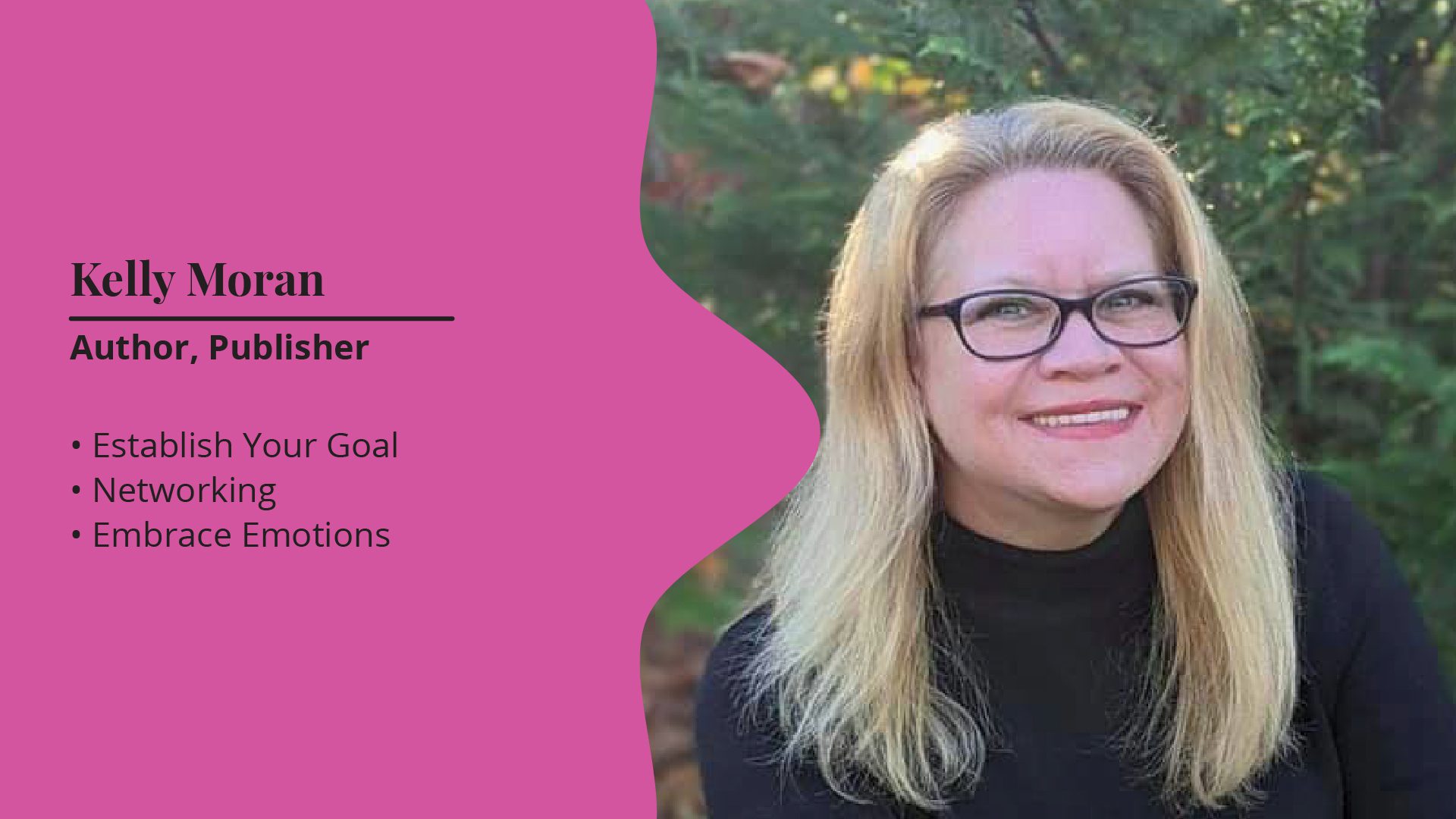
Kelly Moran
“Success is all dependent on every single individual’s definition… You have to define what that goal is for you, because it’s going to be different for everybody.”
Kelly Moran is a multi-genre author and founder of Rowan Prose Publishing, based in York County, South Carolina. Since her first book was published in 2005, Moran has authored over 30 titles across paranormal romance, contemporary romance, and light horror.
Interview
Transcript
Emma Plutnicki 00:02
So to start, what do you do for work, and where are you currently working from?
Kelly Moran 00:09
I live in South Carolina. I’m in York, up in the north-central area, not far from Charlotte. As an author, my first published book was in 2005, and I’ve been publishing it ever since. I mostly write paranormal and contemporary romance, but I do have a horror persona as well, who writes light horror books. And in 2023 I started my own small press publishing company called Rowan Prose Publishing, also based out of York. And right now, we’ve got a little over 50 authors.
Emma Plutnicki 00:57
And so how long have you been doing each? Author you said since 2005 and publishing since 2023?
Kelly Moran 01:05
I want to say 2005 was my first published book. That sounds about right. But really, in essence, I’ve been writing since kindergarten. I always wanted to be an author, but I didn’t always know that’s what it was. You know, I get these ideas in my head, like I want to be the president, or I want to be a US gymnast or whatever, and I realized it was more the story I was interested in, than, you know, the actual job title. So I always had a creative mind. Other people sit and watch movies or do things, and 10 ideas for a new book pops up in my head. I can’t tell you how many titles I have, like 45 maybe, and I’ve been traditionally published with Berkeley/Penguin, larger publishers like Entangled and Kensington, and then I’m also I’m what they call a hybrid author. I also independently published some of my own work. I have foreign translation rights in seven different countries, and I learned a lot about marketing and design amongst other things. That kind of persuaded me to start Rowan Prose Publishing, because I would get a lot of authors who would ask for advice. So, we’re getting a whole different side of publishing and writing and things like that which never would have been seen before. So, you got the Big Five who are publishing what they want to publish, what sounds good, what’s trending. But a lot of them are not taking on what readers are necessarily looking for. They’re not taking a chance on the smaller authors, debut authors, who are just starting out. They don’t want to put a lot of time and effort into helping an author build a career or working really hard on developing a book to the best of its ability. But unless you’re a big name, a lot of publishers, even with agents, aren’t accepting new and debut authors. I got into conversations with an author, and I’ve been friends with her for a very long time, and we were discussing how can we do this? It was a big undertaking, a huge undertaking, but we’re showcasing a lot of authors that you would not see on shelves elsewhere. You know, you would never have heard about these great, amazing, wonderful stories that bigger publishers don’t just want to take a chance on. And because we were by authors, for authors, we wanted to make sure we were not only showcasing new talent, but using new and innovative marketing techniques that some other publishers don’t. We give our authors a lot more freedom than some other publishers would. So, it was a big undertaking, but I’m really glad we did it. We have some really, really amazing talent.
Emma Plutnicki 06:03
And is the is the talent that you work with from South Carolina? Or is there any influence of South Carolina within your work, whether that be the clientele or any influence that the state has on your writing?
Kelly Moran 06:19
In my own personal writing, yes, I have. In my, fact, I’m writing a southern romcom series right now that’s been contracted with Germany for foreign translation. For Rowan Prose, yes and no. We’ve had some really great output from independent bookstores and libraries. I don’t think we have a South Carolina author right now. Publishing is mostly a virtual entity. What I would love to see is more of the colleges and whatnot, like what you guys are doing, showcasing how to properly do this. I mean, there are so many young adults who were me once, who are like, I want to do this. And it can be very dejecting and demoralizing. And it’s, it’s, I wouldn’t want that for anybody. One of our authors, in fact, is based out of Louisiana, and is only 20. She’s in college right now.
Emma Plutnicki 08:02
Amazing. And within a creative career, I mean, it can be very difficult to figure out what your niche is and also how to find success. So how would you define professional success? Is it the number of books you sell, or is it kind of just something within you of like bringing your words to the page. What does success look like for you, both personally and professionally?
Kelly Moran 08:27
I think, to be honest with you, success is all dependent on what every single individual’s definition is. Several of my authors are like, I would just love to see my book in a library, and they will be happy for the rest of their life. Some want New York Times and USA Today bestsellers. Some want to be Stephen King or Nora Roberts and be a household name. For each individual person, you have to define what that goal is for you, because it’s going to be different for everybody.
Emma Plutnicki 14:15
Yeah, no, it makes sense. Did you have any fears when you were starting as an author, or any fears when you started your publishing company?
Kelly Moran 14:23
Oh my gosh, yes, and I still do to this day. I’ve been in this business for 20 years. A lot of it now is fear for my authors. Like, I remember getting that first bad review. Having somebody navigate that with you when you’re first starting out makes all the difference. It’s kind of like hand holding. Not every reader picks up the same book. They always say to grow a backbone, but, in my opinion, if you grow a backbone, you lose a lot of that emotional edge you can put into your writing. You know what? Cry about the bad review. Drink a glass of wine and start again. That’s all you can do. I mean, one of the funniest things I like to tell my authors is, if you look up on Google the reviews for Stonehenge, it’s got an average 2.5 to a 3-star review. So, look at it that way. There’s going to be people out there who are going to hate, and all you can do is keep going, because for everyone that does, there’s 10 that don’t. It’s easy to say grow a backbone, sometimes you get tougher skin out of it. But that’s what always scared me. I think about that every day, and I think about all my new debut authors and how they’re going through that right now. I tell them the same thing: you’re going to get bad reviews, but you’re going to get great ones, and you’re going to build great readers, too. I think a lot of what they fear the most: rejection and failure, but failure is just like success.
Emma Plutnicki 17:43
Yeah, that must be pretty cool to look back on. But has there been a significant project that you’ve worked on throughout your career that really stands out as kind of the pinnacle of your creativity, or just one project that has had a significant impact on your life?
Kelly Moran 18:02
I don’t know if there’s one project in particular, because especially for an author, it’s the little things like, oh my goodness, USA Today reviewed me, or I just won this award, or I’m a finalist in this one, or you collaborate with other authors sometimes to write a compilation and anthology. As a matter of fact, one of my other big pieces of advice is to join a writer’s group, because they have publishing professionals, editing professionals, cover design professionals, indie authors, and traditional authors. And you’ll learn a lot by going to conferences. And some of them are virtual. Some of them are in person. I remember, I think, probably my most pivotal moment that I can think of is I had written and published two or three books with some small press before this happened, and I had written this book, and it was very emotional, it kind of bordered on romance and women’s fiction, but it was a romance, and one of my author friends who I met at a conference had said, why don’t you try submitting it to my agent? I’m like, I don’t know. Okay, let me try. I had hit up hundreds of agents before in some of these previous books, and I didn’t have the reader following. I didn’t have that experience. Most of them didn’t pick me up. So, I did. I submitted it to her agent. She loved it, and that was my first mass market contract. That was my first I’m in every bookstore. That to me, I think, was the most, to date, eye opening and pivotal experience I had, because not only did I get a mass market contract and these books were everywhere, but it was also a two-book deal. That was my moment. So that would probably be the one that stands out the most.
Emma Plutnicki 21:57
Yeah, that’s pretty special. So now, a typical day, what does that look like for you? Do you spend a certain amount of time in your day writing? Are you more on the publishing side? What does a typical day look like?
Kelly Moran 22:10
It depends on what contracts I have for my writing. At the time, Rowan Prose ate most of my time, and I’m happy to do it. I mean, I love what I do. I’m literally living my dream. I wake up when I feel like it, though it’s usually six o’clock in the morning. I check on my authors, and I check on our social media. I post, but it’s a big balance. Here I have all of these responsibilities, and I don’t want to let my authors down. So, there’s that, and then I have my own books to make sure I maintain for my readers, and I’m still following that dream, and I do still have many foreign translation contracts that I fulfill every year. So what I like to do is start out with, you know, something slow in the morning, I always do our social media accounts, make sure we’re posting, doing things, checking email, and then from there, I like to get into whatever edits we have for our authors. Make sure everybody is doing okay. We’re ahead of schedule, and I’ll usually do two to three hours of writing in the late afternoon. We have three interns who are amazing, who help me out when we get backed up, and two other editors beside me. One of them is an author, the other one’s a blogger earning a bachelor’s degree in journalism. We try to make sure we have a balance between work and whatnot.
Emma Plutnicki 24:25
We maintain that, because I’m sure working from home doesn’t make it easy to separate the work from just your normal day-to-day life, and I’m sure creativity strikes at different times of day and night. So how are you able to kind of have time for your work, and then also have time for yourself?
Kelly Moran 24:43
It’s really difficult. You have to be very detail oriented. I have a number of my writers who have day jobs, and then they write at night, which is what I used to do. And for me, I’ve always been obsessively organized, would probably be a good way to put it. So, I have schedules. My schedules have schedules, and those have post-it notes that have their own post-it notes. I make myself follow a schedule, because if I can’t do that, then things go crazy. You just have to set boundaries and stick to them, and set a schedule and stick to it, especially if you’re working a full-time job away from your writing career or your publishing aspirations. A lot of people feel really bad because they go to three days without writing or typing something on a page, but you can’t fix a blank page. I mean, writers probably have one of the best and toughest jobs.
Emma Plutnicki 27:06
Yeah, it’s hard.
Kelly Moran 27:10
I mean, unless you’re an actor or a journalist, what other job is there where, when your day is done, every single person in the world can leave a review about you. I mean, it’s cutthroat. Let’s say you’re a mechanic, right? Imagine going to the shop every day and you’re changing brakes and oil and transmission work, and then every person whose car you fixed then went on to the largest platform on the planet and says, “One star.” I didn’t like his overalls. That’s how it is.
Emma Plutnicki 28:05
I can imagine you must have tough skin to, you know, brave in those reviews?
Kelly Moran 28:12
A dream is a dream, and that’s just one of the things that a lot of people need to take into consideration. A lot of authors don’t even read their reviews for that reason. They don’t even look at one of them. I will, on occasion, pop onto Goodreads or Amazon, but I try not to anymore.
Emma Plutnicki 28:35
Oh man, oh my gosh, yeah. I don’t know if I could, uh, restrain myself from reading them. But, um, perfect. Well, just as we wrap up, is there anything else you’d like to add about your career advice or anything like that?
Kelly Moran 28:51
Follow your dream? It’s the cheesiest, most cliche thing out there on the planet. Learn your craft, join some writer groups, meet a couple of writer friends, and they don’t have to be in your area. I mean, in this day and age, zoom, or, you know, Facebook chat or whatever. Meet some other authors. Learn how it’s done. We do get a lot of authors who don’t even bother reading our submission page before they send it to us, and I’m sorry, but if you can’t take the time to at least think about what we need from you to submit, then that tells me you’re not going to be open to the other things that need to be done later on. When you’re submitting to agents and publishers, follow their guidelines, because every single one is going to have something different. Think about what your goals are. If this is something you want to do, definitely think about the degree you are earning and how you can get into that world, earning a paycheck while you’re working on your book, while you’re working on submitting and any of things like that. That would be my best advice. I had, I want to say it was something like 80 agent rejections before I got mine. And yeah, and I’ve had a number of small presses all the way up to big five rejections, and most of those came from the series that got me the Spiegel bestseller in Germany, and lots and lots of royalties afterwards. And when you’re stuck, move on to something else. We’re authors, we’ve always got something going on in our heads. Don’t feel dejected, because this is one of the toughest markets to break into.
Emma Plutnicki 31:37
That’s great advice. Thank you so much. I really appreciate the time and words of wisdom. I’m sure this will definitely help some people who want to become authors in the future. So, I really appreciate it. Thank you. Bye.
-
Angela Thomas Smith
“You determine your worth and set your success. Don’t allow your success to be set on what others think of you and how others perceive you. You determine that, so you won’t have expectations from the world, but you can set your own guidelines and your own expectations.”
Angela Thomas Smith is an entrepreneur who helps authors publish their books in addition to having a podcast and a magazine based in Georgia.
Interview
Transcript
Emma Plutnicki 00:02
So, to start, what do you do for work and where are you currently working from?
Angela Smith 00:24
I work from wherever my computer allows me.
Emma Plutnicki 00:31
Amazing and where is home for you?
Angela Smith 00:34
So, home right now is Georgia.
Emma Plutnicki 00:37
Okay,
Angela Smith 00:38
I actually just moved from Myrtle Beach.
Emma Plutnicki 00:41
Oh, Amazing! Um, so how long have you been doing that? How long have you been an entrepreneur? How long have you been helping with publishing and all that?
Angela Smith 00:50
I’ve been doing this since 2012. I started in 2012, I really stepped out in 2016 it really picked up the during the pandemic, and it’s just been going amazing. And I published my first client. Um, we’re having a book signing in Georgia this weekend, so I’m excited about that. Amazing! congratulations. That’ll be so fun and so how has your work shifted at all living in South Carolina to now Georgia has done South Carolina has any influence on your work, as opposed to now living in Georgia? So, I am originally from South Carolina. I’m originally from upstate South Carolina Anderson, South Carolina. Actually, nothing has shifted. It is the same because, I have established a virtual community. So, I’m able to connect with people virtually, um, so we’re able to connect globally. I have individuals that’s not here in the US, and we’re connected with individuals in the UK, Africa, the Virgin Islands. I have a host from one of my podcasts that she’s a professor at University of Virgin Islands. So, we are connected globally, and during the pandemic, I was able to establish that platform. So, I’m grateful for that. Yeah, it’s great to have that flexibility. So, if you’re working with people from different time zones, and you’re on your computer conducting these tasks. Is it ever hard to have a good work life balance, because you’re able to work at any time at your fingertips? Is it ever hard to shut the laptop and kind of get away and have some time for yourself? It was at first, but when you learn how to balance, when you learn that if you don’t take care of yourself, then you’re not going to be any good for anyone else. So, when you learn how to incorporate self-care into your daily life, it makes everything so much easier. Just having that time to, you know, escape from the computer, you know, because sometimes you can get overwhelmed and you can get consumed with what you’re doing, and you get caught up. So just having that time to escape, it’s necessary, I encourage everyone to have that for sure. So, what does a typical day look like for you now? What’s expected of you on a daily basis, and what kind of things do you get into? Okay, so first thing I’m usually up at 4am I normally take Angel, who is my mom, my God, mom’s little baby. For a baby, I usually take her out. And I do a 5am prayer. I am a spiritual person, so I am part of a prayer call. We’ve been doing it now for five years. So, I do that every morning, and it starts my day. It encourages me, it uplifts me, it gets me started. And then, I own the computer doing whatever that task is for the day, and it can range from today, I’m working on a magazine. We have a special edition of the magazine that’s dropping to honor poets, celebrating our new poet of the year out of Dallas, so I’m excited about that. She’s from Dallas, Texas, and we get opportunity to really connect, collaborate and be creative, and build a community where people can come and have that safe space to be creative and to allow that express side of them to come forth, whether it’s through books, whether it’s through podcasting, whether it’s through magazine, whatever it is, we want to be that space that allow you to be able to create, yeah, for sure.
Emma Plutnicki 04:31
And so, your podcast, how often do you film those and what kind of topics do you cover?
Angela Smith 04:36
So, we stream live, and we stream on from Sunday to Friday. We have nine hosts, and they all have two shows a month. So, say one may come on every first and third Wednesday, like doctor chin, she comes on every first and third. Thursday, we have a young lady that comes. On first, no second, Sundays and fourth Thursday. So, they have different days that they may come on, but we have someone on every day, Sunday through Friday, at 8pm and they talk about different things because they come from different walks of life. We have individuals that have disabilities. They have a young lady that was born with spina bifida and hydro syphilis. She has a podcast called delayed but not deny. So, she not only focused on disabilities and showing people that you can overcome disabilities, but she allowed anybody that has a story that wants to share it to come on her podcast. Individuals that work in social work and librarians. We have a young lady from Toss in South Carolina. She’s a librarian, um, she hosts a podcast that focuses on authors and anything in the literary world, creative side, she likes to focus on that. So, we are a diverse group, and we’re from all over. We have South Carolina, we have New York, we have the Virginia area, California, Texas. So, we have a variety of individuals as a part of what we do amazingly.
Emma Plutnicki 06:08
And so, with a career like this, is it hard to kind of quantify success? Because, you know, in a creative career, it can be hard to figure out what success looks like, whether it’s financial or ideological. So, in your role, how do you define personal and professional success? Is it how many viewers you have on your podcast? Is it the stories and of people saying that they’ve been touched? Or how do you how do you kind of define that?
Angela Smith 06:36
So, that is something that is just like beauty is in the eye of the beholder. So, that will be something that each individual person will have to say. But for me, success, to me, is seeing individuals that I’ve worked with go to the next level and seeing them excel and go beyond what they thought they could do to me, that’s success. Seeing articles about me, seeing interviews, seeing different things, where people acknowledge the things that I’ve done to me. That’s success, and you know, it’s measured upon the person that is doing it. It is in the eye of the beholder. So, you determine your work, and you set your success. Don’t allow your success to be based on what others think of you and how others perceive you. You determine that…So, you won’t have expectations from the world, but you can set your own guidelines, and you can set your own expectations so that’s my, that’s my take on that. Yeah, that’s a great way of framing that.
Emma Plutnicki 07:46
Did you have any fears when you were coming into this career?
Angela Smith 07:49
I had a lot of fears but had to step out on faith. I had to believe in myself and knowing that I had all these dreams and I was doing things that I didn’t want to do, and I never thought I would be doing the stuff that I’m doing. But when I stepped out and believed in me and believed in what I felt was on the inside of me, things came forth, and I just began to Just go and things just begin to open up, and the more and more I did, the more and more things opened up. And I tell anybody, if you take that first step, that is the most important thing, get rid of fear. Because fear is not something that we are supposed to have. Because if you’re a believer, whatever your belief is, it has to lead to you not having a spirit of fear but having that spirit to do what you’ve been purposed to do. And how do you do that? Go forth, step into it. Do it boldly. You know, I’m reminded of when I was a child, and all the things that I did when I was a child, and how I enjoyed those things. You know, I got back to doing those things. You know, sometimes we get caught up in trying to live up to expectations of other people, where we lose those things that we’re passionate about by chasing after the things that everybody around us want us to do, but if we hold on to those things that we’re passionate about, it will allow us to be creative, and it will allow us to be who we are, and it allowed that true spirit of us to come forth.
Emma Plutnicki 09:35
I love that. Yeah, and along the way, was there anybody offering you advice, or was this something that you just kind of figured out on your own?
Angela Smith 09:44
Well, there were a lot of people that were in and out of my life, and people that probably didn’t realize that they were pouring into me and giving me advice and encouraging me, like my sister. For example, for those that know my story, I lost my mom to a day after my 16th birthday. So, my sister was very important in my life. She was a very inspirational person. She was one of those people that no matter what, she always encouraged me, she always uplifted me, she always pushed me to go beyond. She always believed in me. And she was one of those people that no matter what you did, she would tell you, you did wrong, but she didn’t hold it against you. She always solved the good in you, and that was one of my inspirations. But there have been so many people, and I can’t begin to name them. Because I would definitely lead someone out, and I don’t want to do that, because there have been so many people that have been inspirational to me, even giving credit to my high school coach, Monica Denise Davis, she was someone that if I never come across her, I never would have played basketball. I never would have had that opportunity to go to college. I ended up in North Greenville for one year. I ended up at Morris Brown College. We had the opportunity to play basketball, meet, some individuals, had the opportunity to travel and do some things that I never would have done. So, there’s been a lot of people and just allowing those people to pour into your life. So, take those mentors. If you have an opportunity to be mentored, take that mentorship. Allow individuals to pour into you.
Emma Plutnicki 11:19
Yeah, for sure. And so last kind of question, has there been one significant project that you’ve worked on, or something that you’ve done that kind of sticks out as being particularly significant throughout your career? Maybe it’s a project or someone you worked with, or something that stands out as kind of like the pinnacle of your creativity or of your career.
Angela Smith 11:42
Wow, I can say right now what we’re doing the 100 authors movement, the 100 authors to watch being able to work with a diverse group of authors that are trying to make an impact, that are trying to leave a legacy, that are trying to allow their voice to speak and touch on different things that they’re passionate about. I am grateful for that opportunity that right now is the most, I mean, pivotal thing, and to hear I’ve had the opportunity to sit and interview all of these authors, a part of this movement right now, and every last one of them, they have a spirit of gratitude. They’re grateful for the opportunity, and it’s based on four seeds, connection, collaboration, creativity and community. That is truly what is based on and being able to give individuals a platform where they can be supportive, where they can feel comfortable and open to support. There was a young guy, he was getting ready to release a book. He was having writer’s block. He came inside the chat. We have a chat room on Facebook. We have a group on Facebook, so we have a chat. He comes inside the chat, and he just said he was having a bad day, and he explained what was going on. One of the group leaders immediately responded to his post. She posted some things that he could do. Just willingly. Posted things that he could do. He incorporated those things, he came back, he gave his testimony, he wrote his book. His book dropped, and that’s what we’re doing. We share resources. We are pulling on each other. We’re letting each other know that we’re there, that you don’t have to do this alone. Because a lot of people start a podcast, they start a magazine, they start a book, they do whatever they do, and then they get stuck after they’ve done this thing, like, what do I do now? Now you have a community that’s there to support you, that’s helped, to push you, that’s there to help promote your stuff, that’s helped, and we just want to be a family so that, I think right now, that is the most pivotal thing. And just having all these individuals from different backgrounds, you know, when I say different backgrounds, we have professors involved. We have a professor right now that’s being honored out at miles University, a part of the movement. We have Doctor Chen. We have teachers, elementary and middle school teachers. We even have a high school teacher. I forgot about him down in Texas. We have men and we have women a part of the project. So, we are a diverse group of individuals just wanting to be a voice, um, wanting individuals to know that, yes, you can. We are not respective people, just as we did it. You can do it too. So that’s what, that’s what I’m doing, and I’m excited about that, that project.
Emma Plutnicki 14:38
Yeah, I love that. That’s amazing. Thank you for sharing all that. And just as we wrap up, is there anything else you’d like to say about your career? Any advice or anything else you’d like to add?
Angela Smith 14:50
Well, I just want to tell everybody. As I turn, I’m turning 50 in a couple of days, I would say, what? 12 days I’ll be 50. I’m going to be dropping another book. It’s never too late. Um, because I didn’t start until 2016 and it took me almost losing my life. Because I’m a domestic violence survivor. And it took me almost losing my life for me to really step out and do the things that I wanted to do. Don’t allow something to be the reason that you step out and do something. Do it because you’re passionate about it, and it’s something that you just want to do, and you want to leave your impact. Because we are our legacy. We are our brand. We are the ones that must tell our story. So, we can tell that in the form of written. We can tell in the form of audio, like we’re doing now, visuals, different things, where we can archive the great works that we’re doing. Because if you are a believer, and you are a word, when you know that the words say we should do greater works, and if we should do greater works, how will they know? Because we can’t alter none of the things that have come before us. So, we have to leave the evidence and how we do it through our works, our works just speak even when we’re not here, and we want to leave something that the next generation can pull off because someone did something for us before we got here, and those things that they did for us allow us to be in place to do the things that we’re doing now. So, I just tell anybody, believe in yourself, know your worth, know that you have power because you were positioned to be an overcomer, because you didn’t get dropped out of the sky. You are a willing investor to move forth and allow that thing to come forth out of you. And how do we do that? By educating, empowering, encouraging others. Through our resilience, we can’t give up. You can’t quit, no matter what it looked like. I just completed it on Monday. I just turned in a 40-page document for my last class. I just completed my master’s, so I will walk with my MBA. So, I’m excited about this. 30 years after graduating high school, I went back and I got my Bachelor’s, and now I can walk 12 days before my birthday. I now am a master holder, so I’m excited about, you know, what we have in store, you know? And I say to anybody, chase after your dream, don’t stop chasing your dream, because dreams still come true.
Emma Plutnicki 17:40
Yeah. Thank you so much. Thank you for sharing.
-
Kelly Moran
“Don’t give up. A reader can’t read a blank page and rejection is just a step toward the story you’re meant to share.”
Kelly Moran is a hybrid author, small press publisher, and international bestseller living in York, South Carolina. Through her company, Rowan Prose Publishing, she champions emerging writers and tells stories that resonate globally.
About
Kelly Moran is a seasoned author and founder of Rowan Prose Publishing, a small press that uplifts underrepresented voices in the literary world. Based in York, South Carolina, Kelly began her professional journey in 2005 as a novelist, publishing over 30 titles in paranormal and contemporary romance, and even light horror. She is a hybrid author having published both independently and through major houses like Penguin/Berkeley and her books have earned international acclaim, particularly in Germany, where she is a household name.
In 2023, Kelly launched Rowan Prose to support debut authors often overlooked by large publishers. Her goal is to provide a welcoming, professionally rigorous publishing experience that balances author freedom with editorial excellence. With over 50 authors on her roster, she works daily to edit, market, and nurture literary careers from her home office complete with the “commute” past two dogs and a pot of coffee.
For Kelly, success isn’t measured solely in sales or bestseller status, though she’s achieved both. It’s found in the emotional connection readers form with her work readers who write to say her characters made them laugh, cry, or feel seen. She champions inclusive storytelling, often weaving in themes of disability, anxiety, and social justice into her romance novels.
Her advice to aspiring creatives is simple but powerful: follow your dream. Whether you’re writing at 5 a.m. before work or querying your 80th agent, keep going. “Rejection will come,” she says, “but so will the right readers and maybe even your dream contract.”
-
Angela Thomas Smith
“You determine your worth and set your success. Don’t allow your success to be set on what others think of you and how others perceive you. You determine that, so you won’t have expectations from the world, but you can set your own guidelines and your own expectations.”
Angela Smith is a Georgia-based entrepreneur, publisher, and podcast host empowering global creatives through storytelling, collaboration, and resilience.
About
Angela Smith is a passionate publisher, entrepreneur, and podcast host who built a global creative platform rooted in resilience and connection. Originally from Anderson, South Carolina, Angela now operates from Georgia, where she leads a vibrant virtual community of authors, educators, and storytellers through her publishing business and multimedia network.
Her journey began in 2012 but took flight in 2016, gaining momentum during the pandemic. She publishes books, produces a live-streamed podcast six nights a week, and collaborates with a diverse team of nine hosts across the U.S. and abroad. Her work emphasizes “connection, collaboration, creativity, and community,” values she instills in her signature initiative the 100 Authors Movement.
Angela’s days begin at 4 a.m. with prayer and self-care, grounding her spiritually before diving into a range of creative tasks. She defines success not by numbers, but by impact: “Seeing individuals that I’ve worked with go beyond what they thought they could do, that’s success.”
-
Ronda Taylor
“Take time to celebrate every achievement, because it’s huge. And your creativity is a gift. You’ve got to keep stewarding that gift.”
Ronda Taylor is a poet, writer, storyteller, and program director of Youth Empowerment Services, a non-profit organization in Charleston. Taylor earned a B.A. in English with a minor in creative writing, as well as a Master of Arts in Writing, both from Coastal Carolina University. She published a children’s book titled Radiant Girl: Daughter of the King (2024), and her work appears in two poetry anthologies: This is the Honey (2023), edited by Kwame Alexander, and Ukweli: Searching for Healing Truth (2022) Taylor is the founder of Seen Heard Loved Publishing, LLC.
About
Ronda Taylor said she’d always wanted to write, and her education at Coastal Carolina University was the foundation for her career. Her work at The Athenaeum Press, the student-driven publishing lab at the university, was an important ingredient of that experience, as it allowed her refine her interests, “to become involved in the area, getting immersed in its community and its culture, as we pursued creative storytelling with a purpose.”
Networking has been essential to Taylor’s career. She performed spoken poetry at the Dream Girls Conference in Charleston, S.C., which drew more than 1,200 girls from around the state. “That was a big turning point,” said Taylor. “The creativity I’d been looking for was there, the energy was there. That conference solidified my passion. It all aligned with what I was looking for.”
As a creative, Taylor said she faces challenges regularly in her career. “You never know what the road is going to bring,” Taylor said. “You have to take disappointments and rejection and just redirect. That is what I had to learn: to persevere, endure, try a different way if the first path doesn’t work out. I’m still in a beautiful place even though it took me a different route to get here.”
Taylor encourages students interested in a creative career to attend events, meet people, and make connections. “Networking has been really important, finding those spaces where there’s opportunity for community,” said Taylor. “Sometimes it looks like membership, and sometimes it’s social media groups; there are many places you can find opportunities for community and mentorship.” Taylor mentioned the South Carolina Arts Commission, from which she was awarded an artist business initiative grant, which allowed her to launch her publishing company. She also noted that local bookstores and libraries can be important places to connect with people.
“Don’t get discouraged,” Taylor advises students. “Keep going. Surround yourself with a community that will support you. Keep moving forward, because it will happen even if it doesn’t happen in a certain way.”