“Especially because right now is a digital world, the world is just an open oyster for creatives so just do it. Otherwise, the dream will just stay in your head.”
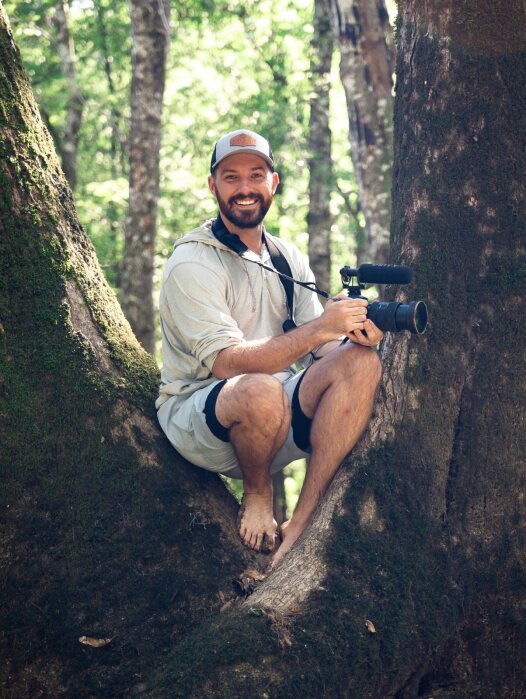
Marsh Deane is a filmmaker, photographer, and outdoor educator based in Pawleys Island, SC. Through his business ML & L Media, he captures South Carolina’s hidden stories and landscapes with heart and purpose.
Interview
Transcript
Creative Careers – Marsh Deane
Lexi Raines 00:00
So, first, just give a little introduction of yourself. What do you do for work and where are you currently working from?
Marsh Deane 00:09
So, my name is Marsh Deane. I’m a photographer and filmmaker, and an outdoor educator, and I’m based out of Pawleys Island, South Carolina. I own an independent media company called ML & L Media.
Lexi Raines 00:26
That’s awesome. So how long have you been doing this?
Marsh Deane 00:30
Well, I’ve been into photography since I was in middle school. So, really, probably 20 years as a photographer, but as a career, I only started in 2019 when I graduated from Coastal Carolina, so I’m in my sixth year in this career.
Lexi Raines 00:52
Yeah, that’s amazing. So, you said you work in Pawleys Island. What’s one thing that you love about working as a creative in South Carolina?
Marsh Deane 01:01
Well, for me, it’s definitely the access to nature, the access to the outdoors. Here along the coastline, we have, of course, amazing beaches that everyone knows about, but we also have amazing river systems. We have Cypress forests; we have remote barrier islands. We have a lot of special places that have been conserved and are kind of off the beaten path.
And a big mission of mine as a creative is I try to document, and I try to showcase our heritage. I try to showcase the parts of South Carolina that visitors don’t see and really, as an outdoors enthusiast, it’s a playground for me. I’m a boater, I’m a kayaker, and that’s kind of what I’ve become known for.
Lexi Raines 01:53
I would completely agree on that. I think that a lot of people, whenever they think of South Carolina, only think of the super touristy parts. And yeah, we do have that, but we also have a lot of other stuff. So, what do you think South Carolina brings to your work, and what is its unique influence on you compared to being anywhere else?
Marsh Deane 02:15
Well, I’m born and raised here, and a kind of unique part of my story is that I grew up in historical locations. My parents were antique dealers, and they purchased old plantation properties, and so I was very, very lucky to grow up on 50-acre properties by the river in 150-year-old former plantation houses.
And when you grow up in a place like that, on one side, I had the natural beauty, I had access to that which really shaped my development and my interests. And then there also is a negative side to our history, and I learned about that at a young age. We had slave cabins on the plantation that I grew up in, and so I learned about that history, and I learned about, you know, the dark truth of the South Carolina story. And that also shaped my interests, and it shaped the stories that I wanted to tell. And so, for me it’s a very personal journey as a proud South Carolinian, I hope to tell our story. I hope to share our heritage.
Also, in this area, we have a lot of tourism and a lot of development, and so I see a unique opportunity that as this region changes, part of my job is that I can capture moments in time, and I can tell these stories while we have them, because I know that down the road, this area is going to change so much, and I feel a little bit of a weight on my shoulders that as a South Carolinian, I’m trying to preserve some of our heritage for the future generations to enjoy.
Lexi Raines 04:05
I think that’s definitely an amazing thing to do, for sure. How would you describe your local professional community?
Marsh Deane 04:13
Very giving. I live in Pawleys Island, and we’re a little tourist town, and when I started out, I was with the Georgetown RISE program at Coastal Carolina. And from there, I was connected with the nonprofit world. We have a lot of nonprofits in this region, and I started marketing for the nonprofits. And I found out that this area is just so giving, from churches to school groups, just to community groups.
I mean, there are, I believe now, in Georgetown County there are 90 different individual nonprofits that you know have community missions. And so, I’m heavily involved with that. Southern hospitality, that is alive and well down here. And that can really impact your career, you know, especially as a creative finding ways to share the positive stories and the positive giving nature of this region.
Lexi Raines 05:12
One thing I’ve noticed is that everyone who moved here from the north, their number one thing they always say is everyone’s just so friendly, so like, I’m glad to hear that it’s the same in the professional community as well. So how would you define professional or personal success in your creative endeavors?
Marsh Deane 05:29
For me, it’s really about having a tangible impact that you can see. In the creative industry, there’s many, many different paths you can take. And nowadays we get sidetracked by social media. We get sidetracked by, you know, followers and views and short form media, right? And that gets a lot of attention, you know? So, you can focus on, “I am really going to try to focus on social media, Instagram, YouTube, and get those high views?” And there’s certainly a great career in that, being an influencer, but there’s also other things.
For me, it was more getting involved in local communities, creating short films that were, you know, supported initiatives that I’m interested in. So yeah, as a creative our work is individualized to us. It is an expression of us and our energies and our efforts and our interests. And so, no matter what it is, whether it’s on social media or whether it’s in the local community, there’s so many ways to feel justified and fulfilled in your time spent in this creative industry. And there’s so many different niches. There are so many different things that you can do nowadays, and it’s very rewarding. Once you find that path that’s working out, and you find that that job or that that gig or that niche that satisfies you, it’s just extremely rewarding, in my opinion, more so than any views or really any dollar amount, is just the satisfaction of being an artist and knowing that I’ve done something that has created a ripple.
Lexi Raines 07:11
Yeah, I completely agree with that. I feel more like long form content has definitely been lost with the rise of social media. So, I feel like it’s awesome that you are still finding beauty in that, because I think there is a lot of value in it. What was your biggest fear when you first decided to pursue the arts professionally?
Marsh Deane 07:33
Definitely the biggest fear is, you know, going out on a limb by yourself, not having a boss, not having a company that you’re working for, not having a guaranteed paycheck when you start a business as a creative.
The great thing about it is that you can shape it to what you want to do and have not having a boss is great, right? Setting your own schedule is great. But there’s also immense pressure with that, because you realize you are the one responsible for the income. And so, it definitely is; it’s taking a leap. It’s taking a leap of faith, if you really commit to it, I think anyone that takes that leap is going to find success, especially because right now, it’s a digital world, and so the world is just an open oyster for a creative, you know?
And again, whether you’re going to focus on social media or you’re going to focus on the business side of it, there’s just every company, every industry, every business needs marketing, needs to tell their story. And so, there’s just so much out there you might not even know when you take that leap. You might not have a clue what you’ll be doing next year, but you have got to take the leap to find out.
Lexi Raines 08:47
I think that is definitely one of the most important things. I’ve talked to a lot of creatives, and they have all said that you just got to take that leap. I agree that it’s very important. Can you describe a defining moment in your creative journey? Was there a particular project that made a significant impact on you?
Marsh Deane 09:09
I would say probably my internship with the Village Group started it off for me. I had been doing some real estate photography, and so I knew that I could make money doing real estate photography. I knew that there was some potential there, but it didn’t fulfill a lot of satisfaction. It was a great career to be in.
I started my internship with the Village Group, and I was doing marketing, showcasing what this nonprofit is doing for children in a rural Plantersville community. And through that nonprofit, first I was doing marketing, but then they found out, “Oh, well, you like the outdoors? Hey, would you like to take our students on an outdoor walk? “
And then that outdoor walk began, I brought my cameras along, and I let the students use my cameras. Then that became a Media Club, and we got a grant, and we got 20 cameras for the students. It quickly went from a marketing internship to a teaching opportunity, and it was just this eureka moment, because I loved it. I mean, taking these, these kids, out into the woods on a nature trail, giving them cameras, and kind of teaching them photography, and just seeing how just how interested the kids were, it’s a fun class to teach, and so I get the best out of the students.
And that was the moment where I was like, I definitely want to do this for the rest of my life, if I could just keep doing this, finding an avenue to, you know, combine my camera, the outdoors and people having a good time, and the Village Group having that internship through the Georgetown RISE program. Had I not done that, I have no clue what I would be doing today.
Lexi Raines 10:58
That’s so special, like, I’m sure you made so many special memories for those kids, and you also showed them that you might have given them something they really love too. So that’s actually awesome. So, what’s the best and worst advice you’ve ever received?
Marsh Deane 11:15
I guess the best advice I’ve received in many ways over the years, the Nike slogan, “Just do it”. Just do it!
It’s so easy. Nowadays we’re surrounded by comfort, and it’s so easy to put things off. It’s so easy in the evening to, you know, sit down and turn on the TV. But if you have any goal, you have to just do it. You have to… sometimes you have to give yourself that little kick in the pants to get up and chase that dream, to make that project that you want to make. Otherwise, it’ll just stay in your head. You have to just do it.
You know, action, and especially nowadays, I think a lot of my generation and younger, with all these distractions around us. I think a lot of us do struggle with procrastination. And so, really, the best thing is you have to get up and do it. You know, you got to be moving, momentum.
The worst advice being opinionated online, I tell students, just to be careful with, you know, online right now, there’s so many different things going on in the world, and we’re all very passionate about many things, and online discourse, as we all know, gets very… it’s easy to misunderstand, it’s very easy to misunderstand people, and then it gets Negative pretty quickly, right? And so, I’ve learned just that you put something out there, and you really need to take the time to make sure that your thoughts are understood by the reader in the way you intend.
And let’s say, if they’re not understood the way you intend, don’t take it personally, and don’t get in those comments. And you know, it’s easy to get even a little triggered online. And that goes for all of us, and I admit to that. And you know, sometimes you can turn away viewers. You can turn away the audience you’re supposed to reach, just with online misunderstanding. Not bad advice that I’ve received, but I do just that’s, I know that that’s advice I try to give my students of things not to do is just take a little slower online when dealing with other people and just understand communication. We’re meant to communicate face to face and see each other and hear each other’s tone, I don’t know if that really answers the question.
Lexi Raines 13:49
It does. I think that. I think that is good advice, because I feel like if you don’t listen to that, there is so much that could go wrong in that situation. So, can you walk me through a typical workday? What does your process look like and what is expected of you on a daily basis?
Marsh Deane 14:07
Well, so the cool thing as a creative and owning my own business is that I am my own boss, and so I get to wake up when I like, usually, I’ll wake up between eight or nine, but it depends really, you know what’s on the schedule.
I have set up my business, so that most of the work I like to do after 10am, I like to give myself that extra time in the morning to kind of wake up and have a slower pace. So usually during the day, after 10am it’s meetings, I’m going out into the community to different locations for photo shoots or video shoots, interviews, and then the afternoons and the evenings are usually set aside for editing time and editing as a creative that’s one thing.
Yeah, we work a lot. We work a lot behind the scenes. Often, I’ll be editing until 11 or 12 o’clock at night, and so I’ll tell some people that I work 80 hours a week, but those 80 hours aren’t what you would typically think of as work. You know, because sometimes I’m sitting at the computer, I’m working on a project, but I am also, as the computer is rendering, I’m pulling out my phone and on social media, or I’m multitasking, I’m bouncing around.
My days are very, a little disjointed, you know, I’ll spend an hour working on something, and then I’ll get up and walk around my yard for a little bit, do some yard work. I’ll go inside, you know, make a meal. So, I don’t really have a set schedule. I don’t have a nine to five, and I love that. But also, again, sometimes it is annoying, you know, when you find yourself at midnight still editing and working on that project.
So, for creatives you kind of have the power to be as structured as you want or as unstructured as you want. I’m unstructured by nature. I’m ADHD. But I would definitely say being a creative, you do have that power to structure your life, whatever way you wish. And I think that’s amazing. I tell many people that I get up when I want to, I go to sleep when I want to, and I schedule work when I want to, but of course, you schedule your work around your client and when they’re available, and so really, on a week to week basis, it changes.
I travel a lot for work, which is great, and there’s also a lot of time spent, though people don’t see this as a photographer or any creative, there’s a lot of time spent packing gear, charging batteries, processing data on the computer, and if for painters or other you can translate that into dealing with, you know, the paint or your canvas, there is a lot of unseen It’s not as glorious as you think, being a creative, there’s a lot of time doing busy work in between to get everything lined up so that you can create.
Lexi Raines 17:09
I feel you have already explained this a little bit, but how do you create a work life balance where you’re able to maintain, like your professional creativity, your personal creativity, and what are some habits that you have that you think would be beneficial to others wanting to pursue the arts?
Marsh Deane 17:26
For me, having a work life balance, there really is no, well, it’s unbalanced, but that’s a little bit of a good thing for me, because it is my passion. All my time, every day, I’m working on projects. Some days that’s a project for a paid client, so it’s work. But then there are other days when I’m working on a personal project. And those personal projects, it might be a video going out into the swamp and showing people a really cool tree, right, or YouTube videos.
So, my balance is that I’m balancing the professional work and then personal work. The passion work, right, the work that I want to be known for, the work that I enjoy. I’m not getting paid for it, like the YouTube videos, or the swamp adventure videos. That’s not my career, but I do see it as work, because I see it as my portfolio, I see it as my legacy. And so, for me, it’s having that passion and doing what you love. If I didn’t have the time to do those personal projects that I enjoy, I probably would be miserable.
And so, I think, for any creative just make sure that, yes, you’re doing a lot of work for clients that are going to get you paid but make room for the personal work that you want to do. I feel that most creatives are always working on something, and so just be sure that some of that is giving you enjoyment. It’s for you, it’s for your soul, it’s for your satisfaction as an artist, because you can get burnt out really easily. And I certainly got burnt out about a year or two into my journey, because all I was doing was working for money, working for other people’s vision, and I wasn’t doing things for myself.
Lexi Raines 19:19
I think that’s honestly really, really amazing advice, because, as you’re saying, it is so easy to get burnt out as an artist.