“Focus on what you love, focus on what makes you happy. What makes you wake up in the morning?”
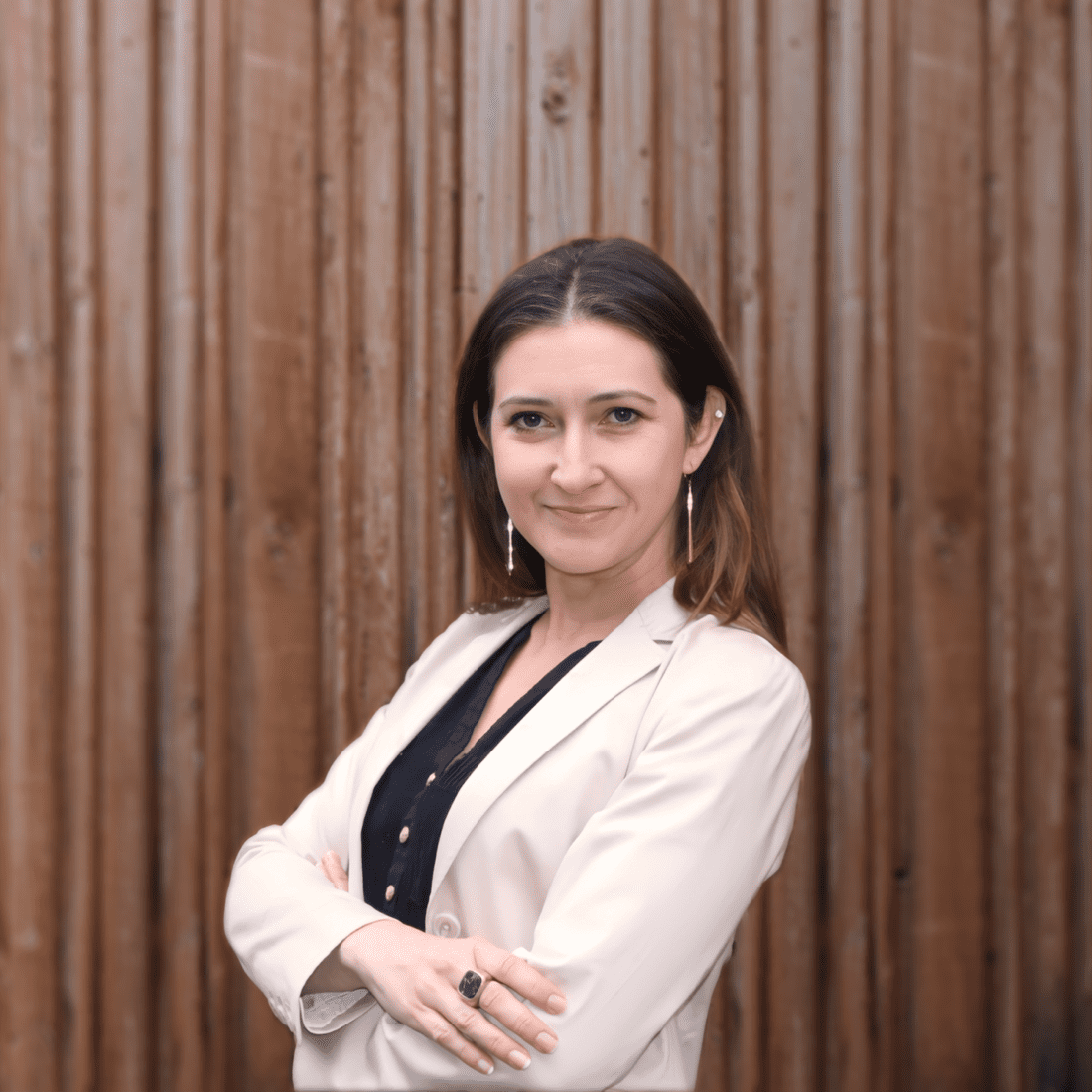
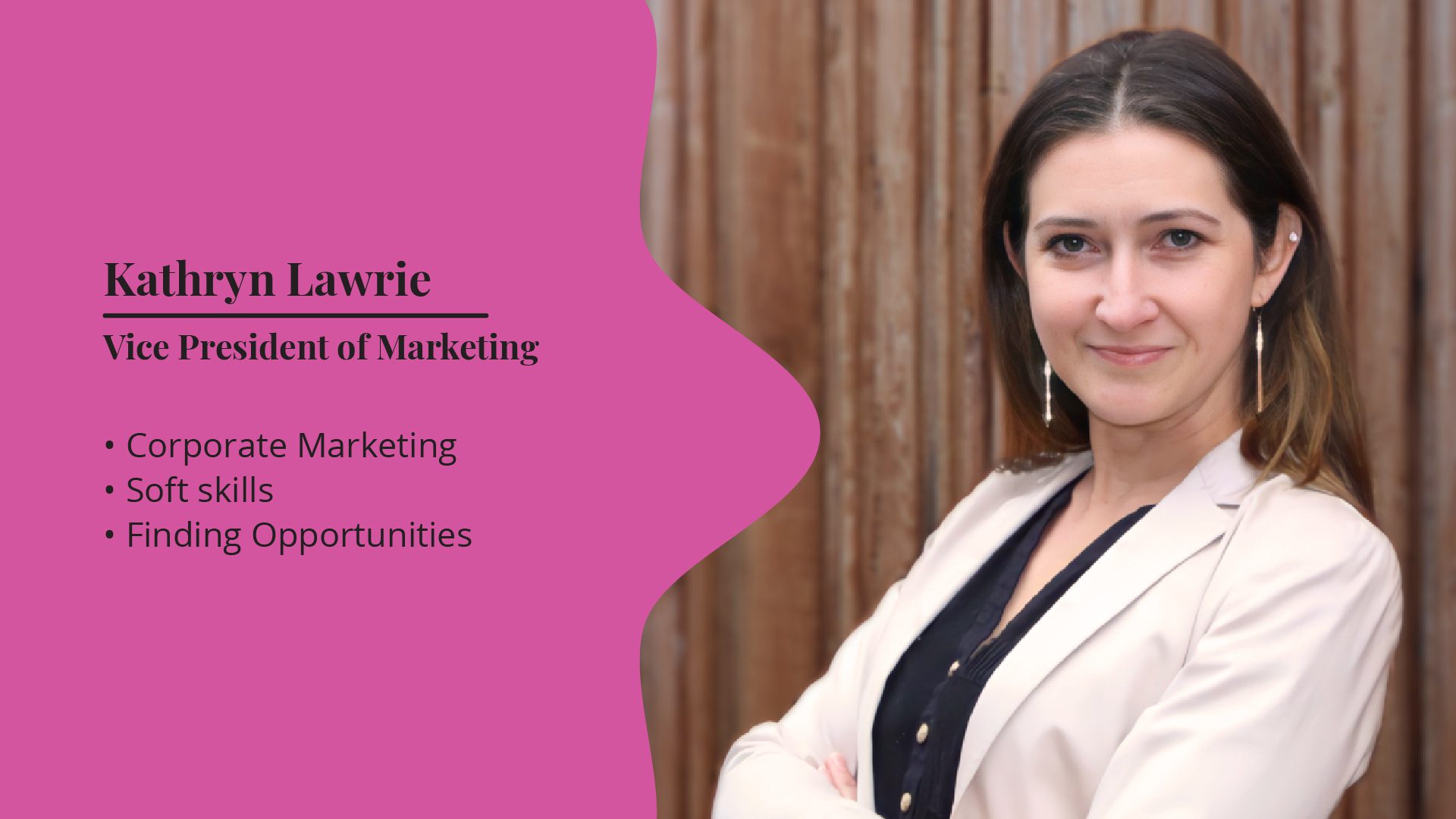
Kathryn Lawrie is the VP of Marketing at Springs Creative, and their newly spun-out company Springs Digital. She focuses on leads and revenue generation and handles corporate marketing and corporate communication for the company.
About
Kathryn Lawrie studied art at Winthrop University, with a double minor in art history and psychology. She originally planned to be an art therapist. After graduating, she moved to Columbia, where she worked retail at a jewelry store while learning from the jeweler behind the scenes. She spent months giving her resume to every arts-related employer she came across. Lawrie recalled, “To be quite honest, for a couple of months there, I was walking around town handing out my resume to every art gallery and museum and graphic design contact that I could make, and basically saying, ‘I have a degree in unemployment, can you help me?’” Her persistence paid off when one of her contacts helped her get a position at Scene Weaver, a subsidiary of Springs Creative,
Lawrie has been working at Springs Creative, across multiple positions, for eighteen years. She started out in product development in the graphics department, “really focused on the metadata and the tagging of all of the graphic files and how to resize and rescale things. Just maintaining that graphics archive.”
She branched out into marketing, and while keeping her “hand on the pulse” of product development, was able to improve her e-commerce skills, teach herself cinematography for marketing purposes, and take several trips to China while growing her department. Now, as VP of Marketing, she works with her content development teams and maintains communication between different segments of Springs Creative, and the newly spun-out company, Springs Digital.
When asked what skills young people aspiring to her role should acquire, Lawrie immediately answered, “I think soft skills are essential,” saying that they aren’t something taught in schools. She advises students to be their authentic selves, and “focus on what you love, focus on what makes you happy… what makes you wake up in the morning, and hone those skills.”
She also recommends students check out the designer-guided tours Springs offers of their textile archive, saying it’s “a great place to be inspired.” She promises that “it’s okay to be an aspiring artist,” and that students should never feel like they have a degree in unemployment like she did.
“Go for it,” she says. “Don’t let people shy you away from it.” She also says, “Springs Creative is always open to internships, and so anyone who’s in a creative field can definitely contact us with their resume and portfolio, and we could discuss opportunities for interning here at Springs.” To check out the work of the newly spun-off Springs Digital, follow this link: https://springs-digital.com/creative-services-1.
“I would rather fail at pursuing a passion that I love rather than playing it safe, and never truly pursuing it.”
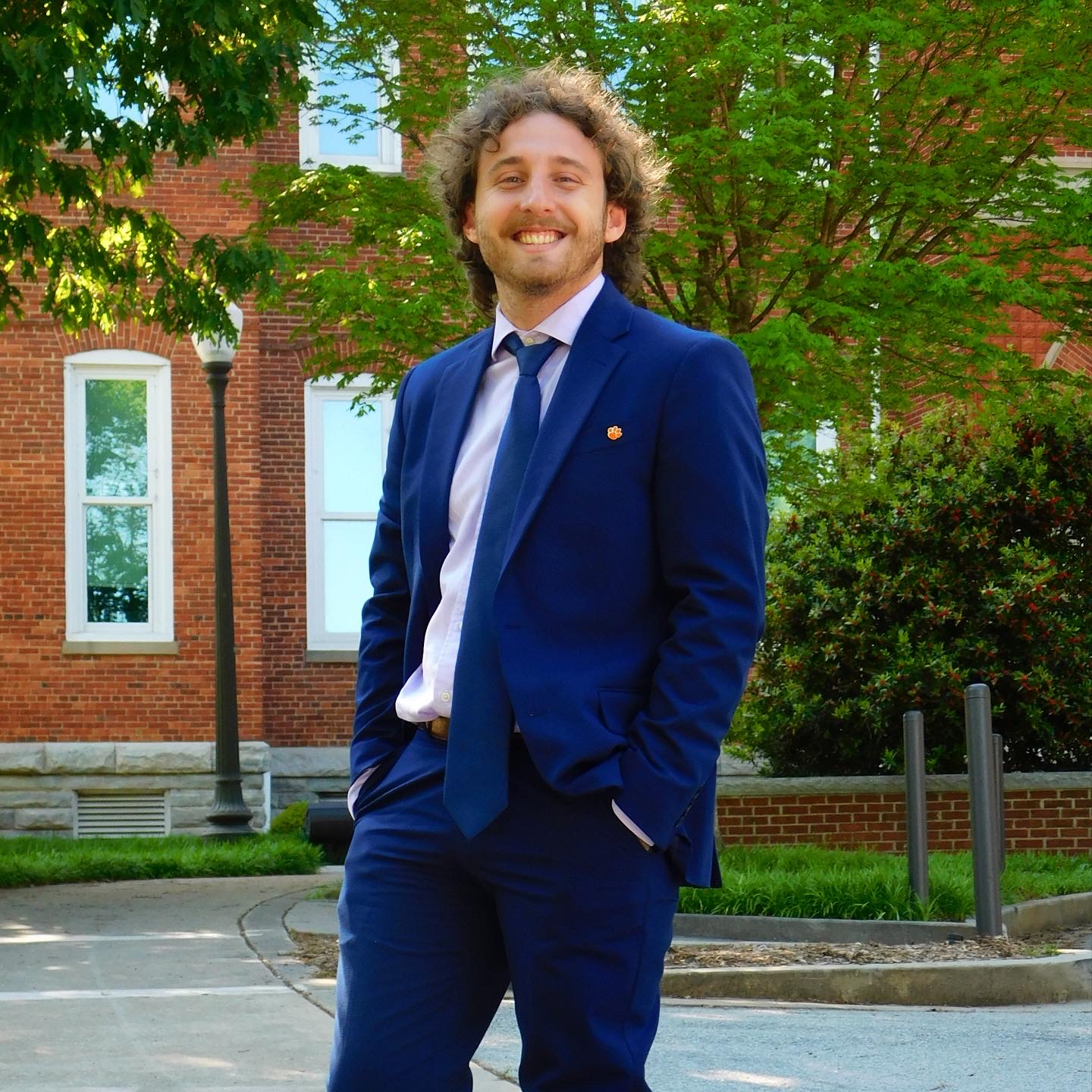
Eugene Rocco Utley is a freelance creative professional based in Myrtle Beach. By day, he manages marketing and advertising for Coastal Carolina National Bank (CCNB), blending strategic communication with local insight. Outside his 9-to-5, Utley pursues freelance work in film production, with experience in both commercial and narrative projects.
About
After studying at Clemson University, and shortly at Coastal Carolina, Eugene Rocco Utley now splits his time between a 9-to-5 role in marketing and advertising at Coastal Carolina National Bank (CCNB) and a robust freelance career in film production. From commercial shoots to creative narrative projects, he’s carved out a path that balances the professional with passion.
Though the freelance world can be uncertain, Utley embraces its challenges. “I would rather fail at pursing a passion that I love,” he says, “than play it safe and never truly pursue it.” His creative journey began right out of college, working on low-budget films and slowly building his network in South Carolina’s creative community, a space Utley describes as both “versatile” and “closely knit.” For Utley, success is defined not just by recognition but by collaboration: “If someone wants to work with you again, that’s a real success.”
A defining moment came when his short film A B gained significant recognition, marking as a pivoting point in his personal and professional career. The project, which explores the balance between mental health and artistic identity, reinforced Utley’s belief that “Failures are something to learn from, not just failures.”
Whether writing scripts or handling design work at the bank, Utley stresses the importance of time management and living a life outside of work. “You have to experience life to reflect on it,” he emphasizes. “You can’t define yourself only by your art.” His advice gives creatives to give yourself freedom in the process, use note cards, not full pages and face your fears head-on.
“Try to get as many different kinds of experiences as possible. I think a wealth of experiences is really valuable.”
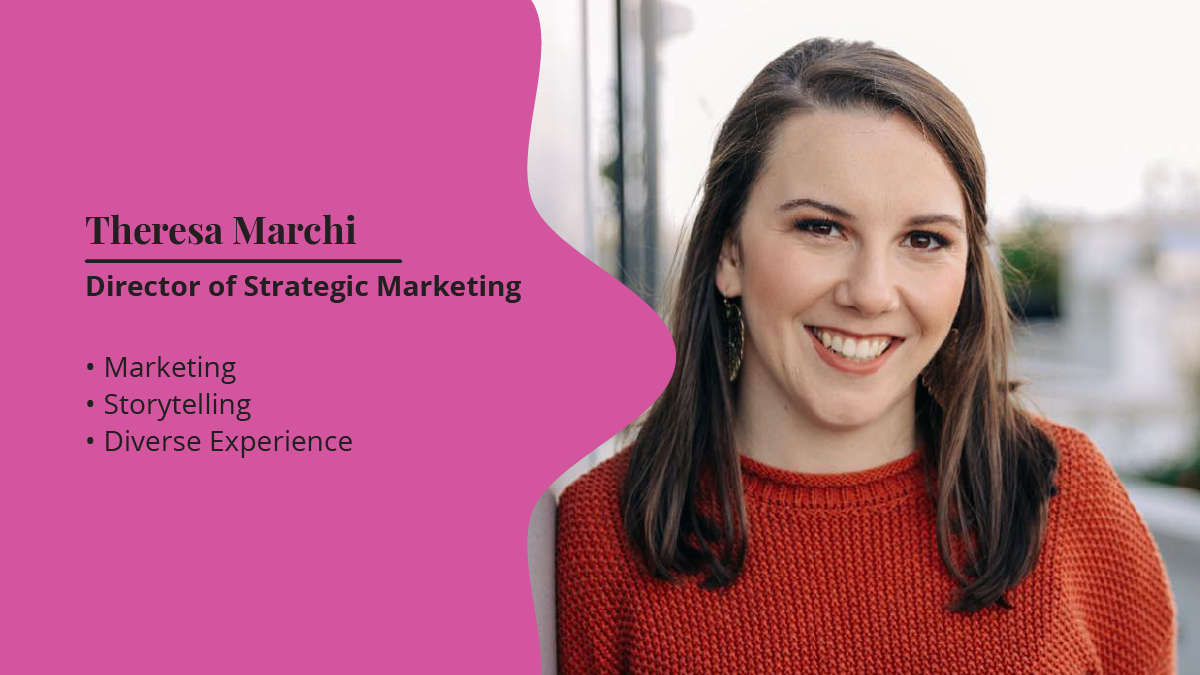
Theresa Marchi was the Director of Strategic Marketing at the charity United Way of Greenville County. She takes a holistic approach to marketing, working to engage the community in different ways.
About
“When I was growing up and realizing I sucked at biology, I was just like, ‘What am I going to do with my life? I want to make something matter… I want to have a purpose, and I’m good at art,’” Theresa Marchi says. Now, as the Director of Strategic Marketing at United Way in Greenville, she’s found a way to use her artistic skills to help her community. Marchi graduated from Coastal Carolina University in 2017 with a degree in graphic design. She worked at an ad agency in Myrtle Beach and went from there to a company in Greenville that designed college athletic spaces. “At the time, that was my dream job,” she says, describing how enthusiastic she was about integrating brands into physical spaces. Her experience designing a museum exhibit with The Athenaeum Press, the student-driven publishing lab at Coastal, helped her get the job. “They saw that on my resume, and they were like, ‘You already have some of these skills that a lot of students don’t,’” she says. She went from there to United Way to try to help her community.
Marchi started as a graphic designer, but her current role involves planning out her whole year. She collects data about what marketing approaches are reaching donors and community members, and which ones aren’t. “A lot of the time we see that there’s a very high alignment that community members have with our work, they just don’t know it. They just don’t know what we do,” Marchi says. “So part of my role is really figuring out what’s the best avenue to reach them.” She says that marketing for a nonprofit is more difficult than marketing a product or service. “What we’re selling is not tangible,” she says. “So, it’s really laying into the storytelling, the impact, the strategy of how we’re doing this work that is most important in this space.” She says that seeing successful community events is the most rewarding part of her job. “The lives that are changed and the other resources that they’re connected to, that has been really special and really fulfilling.”
Marchi recommends that students who are interested in her role should diversify their educational and work experiences. “I think a wealth of experiences is really valuable,” she says, and describes that working in customer service helped her learn the lingo necessary for successful marketing. She says that the connections she made by being an active volunteer with the Rotary Club helped her get further than she would have otherwise. She also tells students to be curious. “It sounds overused, but I think curiosity, trying to understand why we’re doing these things that we’re doing, how is it going to further the mission, that is something that is really hard to find in others,” she says. “If you really want to be a standout, for me it’s that attitude.”
“Try to get as many different kinds of experiences as possible. I think a wealth of experiences is really valuable.”
Theresa Marchi was the Director of Strategic Marketing at the charity United Way of Greenville County. She takes a holistic approach to marketing, working to engage the community in different ways.
Interview
Transcript
Theresa Marchi My name is Theresa Marchi, originally from Connecticut.
Emma Plutnicki Perfect. And can you tell us what you do for work, and where you’re currently working from?
Theresa Marchi Yeah, I am the Director of Strategic Marketing here at United Way of Greenville County. So located in the upstate of South Carolina, Greenville.
Emma Plutnicki Perfect! How long have you been working there?
Theresa Marchi Yeah. I’ve been here two years.
Emma Plutnicki Okay. And your official job title is…
Theresa Marchi Director of Strategic Marketing.
Emma Plutnicki Perfect. Well, how did you end up in the job that you have today?
Theresa Marchi
Yeah, so I got my degree from Coastal [Carolina University] in graphic design, in 2017. And then from there, I had been working at an ad agency in Myrtle Beach, which was a fantastic opportunity. But at the time, my dream job was to create college athletic spaces. And there was a company in Greenville, South Carolina that was doing that, and I was just obsessed. And so at the time, that was my dream job. And I wanted to go into that field, because it kind of blew my mind that there are designers that design beyond this flat surface of logos and videography and pieces like that, elements of advertising like that. And they really are almost like engineers and architects where they design a whole facility, and they help tell a brand’s story, an athletic’s story about what makes their space special, and why athletes should be part of their program and the history and the legacy that they get to be a part of. And so that was really intriguing to me, that kind of storytelling.
Theresa Marchi
And I had moved up to Greenville to accept a role there as a designer and learned a lot. What helped me at the time was, the Athenaeum Press program at Coastal Carolina had, I had been part of helping develop a museum exhibit. And so this company in Greenville, they’re called Jack Porter, they saw that on my resume, and they were like, “you already have, like some of these skills that a lot of students don’t.” So that really helped me start thinking about design differently and storytelling, a lot different than, I think, a lot of other designers at the time. And from there, I just got really interested in marketing as a whole, how we’re telling stories and this holistic piece of the journey that people learn about a brand and get engaged in it. And so I had an opportunity to work at United Way of Greenville County, I started as a graphic designer here, and just asked a lot of questions, and then kind of seeing that potential and that, like, quality in me, and poking holes in things and trying to understand and build something really meaningful and intentional with our community, they asked me to take this role, which is, takes a holistic approach to that to our marketing efforts. And we just figure out how to engage the community in different ways. So kind of how I got to this role.
Emma Plutnicki
Nice, amazing. So nowadays, what do your day to days look like? What are you responsible for? And what are you working on?
Theresa Marchi
Yeah, so, day to day looks a lot different than it did when I first started. So as a designer, I used to be in the art aspect of things and making sure that the art pieces kind of resonate and tell the story that way. And now my role is a lot more different, and it’s a lot more planning, and it’s fighting for the whole year of all of these touchpoints that we’re going to have with community members, special segments, doing a lot of data interpretation. So collecting all the data, what’s reaching our donors, what’s, what’s not, what’s reaching our community, what’s not. Figuring out what’s working, a lot of A/B testing, and just trying to figure out the best messaging positioning for different groups to try to engage them in the work. And a lot of the times we see that there’s a very high alignment that community members have with our work, they just don’t know it, they just don’t know we do. And so part of my role is really figuring out what’s the best avenue to reach them, and to get them plugged into our work.
Emma Plutnicki
Nice, that’s awesome. So you mentioned the project at the Atheneum Press. And is there any other like defining moment in your journey so far, whether it’s at your job now, or just a project that you’ve worked on, that kind of sticks with you as something like meaningful to you?
Theresa Marchi
Yeah, I think there are a lot. I work in a nonprofit space. And so, truly, what’s been special is seeing pieces come to life and see– it sounds cheesy, but the lives that are being changed because of it. So one of the projects that we have here at United Way is this event called School Tools. And it’s hundreds of people lined up starting at four in the morning, and they will line up and get a backpack full of school supplies. And it’s not just school supplies that are just from all over the place. We work with Greenville County schools to make sure that these backpacks are full of items that the students are actually going to need. They’re organized by elementary school, high school, middle school and families who come and get backpacks they need. And I think you know, there are a lot of really great pieces of my job, but the moments where I get to go to School Tools and see the work really play out and people that have been waiting there since 4am to get a backpack and the lives that are changed and the other resources that they’re connected to, that has been really special and really fulfilling in my work. Because when I was growing up and realizing I sucked at biology, I just was like, “What am I going to do with my life? I want to make something matter in our community, in this world, I want to have a purpose. And I’m good at art. And so, how does that translate into the work?” And I think I’ve really found that here working in the nonprofit space and using the skills that I do have to help change lives. So that’s been really special to me.
Emma Plutnicki
Amazing. So working in the nonprofit, is it challenging? Like, what challenges do you face that you might not see in other areas?
Theresa Marchi
Yeah, I think what’s so challenging being in marketing in a nonprofit space, compared to the for-profit, is usually there’s a product in the for-profit. You are selling, you know, a better experience or something. And in the nonprofit space, what we’re selling is not tangible. So it’s really laying into the storytelling, the impact, the strategy of how we’re doing this work that is most important in this space. Whereas with the for-profit side, you can use a lot of different marketing tactics to sell a product, and its physical, and someone’s going to get it. And then the other side of it in the nonprofit space is, it’s just a lot more complex, and trying to find these allies and cheerleaders for your work, and really figure out how to engage them, it just really feels like a completely different ballgame. You use different kinds of tools. Some things are very similar from a marketing perspective, but I think it’s, to me a lot more challenging, in a good way.
Emma Plutnicki
Yeah, that makes sense. So you also mentioned that one reason that kind of helped you in the job process was having that real world experience. Are there any other skills that an applicant should have that would increase their chances of getting a job in a field similar to yours?
Theresa Marchi
Yeah, I think, you know, in the marketing field, one of the skills, traits, that I find most valuable, especially where I’m at in my career is curiosity. And it sounds, I think, overused, but truly, when you’re in marketing, I really feel that everything needs to have a reason, especially in the nonprofit space, when you’re having to utilize resources very intentionally, I think curiosity, trying to understand why we’re doing these things that we’re doing, how is it going to further the mission, what is that experience that people are going to get when they interact with our brand, with our work? That is something that is really hard to find in others, in candidates? And if you really want to be a standout, for me, it’s it’s that attitude, that, you know, always striving for more. Asking questions. And I think as you get into adulthood, and the space is is different from college, it’s not as like, safe, still keeping curious. And asking the questions and trying to make the work better, is really something that I second guessed a lot early in my career that I just at this point, I just am who I am. I’m going to ask the questions. And that’s how I think you can make the most difference in your your work.
Emma Plutnicki
Yeah, perfect. And within South Carolina, have there been any programs or organizations or events that you’ve gone to that have helped like progress your career, either that’s like through making connections, through specific clubs or groups or organizations? Can you think of any events like that?
Theresa Marchi
Yeah, I think there are a lot. So to begin with, rotary was a very pivotal organization that I was involved with in college and transitioned into, you know, my adulthood and real girl career. And that had really helped me network with a lot of people that got me into the rooms where I had a lot more options than I probably normally would have. And I just think taking the leadership opportunities in rotary helped me work through managerial challenges and working with others that kind of helped push my work forward some more. Another one is the association, or American Marketers Association, that one is full of resources and tools that has really helped me and kind of shaped my strategy process and what those materials look like, and the training opportunities. That’s been huge. And then, recently, I’ve started working on my MBA, and that’s kind of furthered a lot of my thinking, as far as marketing goes, and kind of the business end of things. So those are a few areas that have worked really well for me. I’m a big learner. So I’m game for all of it.
Emma Plutnicki
Yeah. Perfect. So just as we wrap up, do you have any advice for people who are trying to get into your field?
Theresa Marchi
Yeah, I think try to get as many different kinds of experiences as possible. I think, you know, one thing that, silly in hindsight, that has actually helped me a lot because it was just a different experience, was I spent the summer working for Chant 411 [the university’s information desk] on campus. And it was an opportunity where I learned all about customer service and, that you don’t use the words “I don’t know” you just kind of use other language to kind of work through it. And I think I use that all the time. And I think about that training and really just kind of diversifying your experience in that way is really helpful. Because then when you step into a situation, especially a work situation, you can see different perspectives and new things that you wouldn’t have brought to the table, had you just solely focused on one thing. So I think a wealth of experiences is really valuable.
Emma Plutnicki
That’s great advice. And is there just anything else you’d like to add about anything?
“Focus on what you love, focus on what makes you happy. What makes you wake up in the morning?”
Kathryn Lawrie is the VP of Marketing at Springs Creative, and their newly spun-out company Springs Digital. She focuses on leads and revenue generation and handles corporate marketing and corporate communication for the company.
Interview
Transcript
Kathryn Lawrie
I’m Kathryn Lawrie, and I currently am in Rock Hill, South Carolina, which today is somewhat considered a suburb of Charlotte, North Carolina, and I’m originally from South Carolina. I actually was born and raised in between, well, really, starting in Pawleys Island and then Columbia. And then, I’m a Winthrop University graduate. I moved away from Rock Hill and just happened to be back in my alma mater city, so.
Haley Hansen
That’s really one of the fun things about South Carolina, you ask someone where they’re from and they always have, “here’s where I am now, here’s where I was from originally.”
Kathryn Lawrie
But South Carolina born and raised, I am a Grit and proud of it.
Haley Hansen
Can you please tell me what you do for work and where you are currently working from?
Kathryn Lawrie
Yes. So, I am currently in Rock Hill, South Carolina, I am the VP of Marketing for, really my focus is on leads and revenue generation, but I handle all the corporate marketing, corporate communications and everything for the company as well.
Haley Hansen
And the name of the company is…
Kathryn Lawrie
Springs Creative, Springs Creative. But interestingly enough, we just spun out a separate company. So Springs Creative is a very robust moniker with a very long history in textiles. The Springs name has been around for more than 120 years. And it’s still a family owned and run business. There’s many divisions underneath that Springs Creative moniker, and just recently, we spun out one of those divisions into a totally separate company. So now I’m really kind of straddling two separate companies, if you will, and that includes Springs Creative and Springs Digital. And you could almost talk about one of our divisions, the Baxter Mill Archive Design Center as a separate company as well. So it’s kind of an umbrella of brands, if you will.
Haley Hansen
Yeah, I saw on your guys’s website that you were started in like, the 1800s by Samuel Elliott White, I think it was?
Kathryn Lawrie
Right.
Haley Hansen
I remember reading about him in my history class.
Kathryn Lawrie
Really?
Haley Hansen
Yeah.
Kathryn Lawrie
Very cool. Yeah, we are, we are right here in cotton country on the textile track, no doubt.
Haley Hansen
How long have you been working there?
Kathryn Lawrie
So in one seat or another, one hat or another, about 18 years. I actually started with a different division that was a subsidiary of Springs, it was called Scene Weaver. And it was a textile business, but very, very much based on like, gift and specialty independent accounts. So we sold to, like, 5000 mom and pop shops, like Main Street stores, gift stores and boutiques around the US, and did some private label development for some of the major outdoor companies like Bass Pro Shops and Cabela’s, Gander Mountain and Tractor Supply and those guys. So that’s really where I began my career in textiles, in product development and in marketing. And over the years, that business was slowly consolidated into Springs as the parent company, and then I’ve assumed multiple roles and kind of gone up, down, and sideways across the ladder over those years.
Haley Hansen
How did you end up in that field? You said that was where you started in textiles, how did you get there?
Kathryn Lawrie
So that’s an interesting story. I actually studied art at Winthrop. And I had a double minor in art history and psychology, I was very interested in pursuing a career in art therapy during the time that I was in school. But when I got out of college with that student loan debt, it was quickly time to go to work. So when I moved away from Rock Hill I went back to Columbia, and was kind of working some different jobs here and there, I was in a jewelry business for quite a while, which I really loved because I loved the customer interaction of just, you know, being customer facing. But there was also a full time jeweler at this particular retailer, and so I was really able to learn a lot from him and bring some of my skills from college to that opportunity.
Kathryn Lawrie
I realized that I liked working with my hands and liked that creative practice and almost wanted to sit in the jeweler seat more than I wanted to be on the sales floor. So I just decided that I wasn’t really using my degree to its full potential and that there was something else out there for me and I walked away from the jewelry job. And, to be quite honest, for a couple of months there I was walking around town handing out my resume to every art gallery and museum and graphic design contact that I could make and basically saying, “I have a degree in unemployment. Can you help me?” Because I wasn’t sure where I was going next. And I wasn’t sure what my niche was really going to be. And I just happened to meet a fabulous graphic designer who was running her own studio and she said “well I don’t need any help right now, but I’ve actually got someone that I’m doing some work for who may be interested.”
Kathryn Lawrie
And that’s how I got connected at Scene Weaver, I started in the graphics department and was really focused on the metadata and tagging of all of the graphics files, and how to resize and rescale things and just maintaining that graphics archive. And slowly but but surely, I got more involved and ingrained and like the graphics aspect of it. And that kind of came to developing logos and branding and packaging. And along the way, I really honed my skills in Adobe Photoshop and the Adobe Suite. And yeah, that just kind of like, set the trajectory for my career. So I mentioned I’ve kind of climbed the ladder, the old American Dream way, and just started in product development. But then that evolved into this packaging and more of a marketing role. And then I established a marketing department for that small company. And that gave me the experience of building e-commerce websites, both B2B and D2C, and then what those marketing strategies looked like, and with my hands still on the pulse of product and product development, I was able to take multiple trips to China and visit factories, and it’s been a very lucrative and fulfilling career for me. And I never knew this was where I would be, nor that it would bring me back to Rock Hill, South Carolina, but I couldn’t be happier to be here.
Haley Hansen
It sounds like a really good mix of the customer facing stuff and the hands-on art stuff you said you enjoyed.
Kathryn Lawrie
Absolutely, absolutely. I found my happy balance.
Haley Hansen
That’s awesome. What was the biggest adjustment or challenge that you faced in starting your current role?
Kathryn Lawrie
Current role, like present day, I would say it’s probably just the, you know, as I described this company earlier, it’s somewhat segmented. I don’t really want to say fragmented, but definitely segmented. And so there’s a lot for me to, there’s a lot going on in the company, for me to really keep my hand on the pulse and make sure that, you know, as my role in Shared Services, that I am connecting the dots between the divisions and keeping everyone engaged in communication and keeping our communication flowing to all of those respective teams, versus having these very siloed departments. So I would say that that’s probably my greatest opportunity in the seat I’m in today.
Haley Hansen
Making sure no one’s wandering off on their own.
Kathryn Lawrie
That’s right.
Haley Hansen
Can you please walk me through, like, your typical workday? Like what you did yesterday, maybe?
Kathryn Lawrie
I don’t know if I even remember what I did yesterday! I think half of my to do list from yesterday moved over to today. So it’s been one of those weeks. Let’s see, this week, we have been focused on relaunching our websites. So if you went to springscreative.com, you should definitely check out springs-digital.com.
Haley Hansen
That was the one that you emailed us?
Kathryn Lawrie
Yes, I think so.
Haley Hansen
Yeah, I checked that.
Kathryn Lawrie
We just launched that one last week, just in time for really follow up to High Point Market and our team going to the Interwoven Market, which they just returned from today. And then simultaneously, been running kind of parallel path, have had a team in the digital division working on that website build. And we also have a team working on the Springs Creative rebuild, because now that Digital is a separate company, we’re really able to clean up and get much more intentional about our communications and messaging on each one of those platforms. So that has been the bulk of my work this week, I would say. It was just working with my content development teams, building our go to market strategy, working with the other stakeholders in the company, in terms of what content and call to actions are most important for those websites and what events we want to feature and how we’re building community and in some cases, reestablishing or re-engaging community now that we’re splitting that into multiple directions. So that has been quite consuming this week.
Haley Hansen
Sounds like it. Do you have a defining moment in your creative journey, such as a particular project that made a significant impact on you, or something you produce that really showcased your creativity?
Kathryn Lawrie
I would say that over the past 10 to 12 years, I’ve had the opportunity to really be the lead and creative director on a number of videos. And those are in some cases like product release videos, but they were filmed almost like a commercial, an advertisement that we used in our trade shows and in our permanent showrooms as well as shared them with retailers. Oftentimes, it was to showcase, you know, the functions and the features of a product, but there’s a little more storytelling that goes into it than that. So I’ve really enjoyed being that creative director behind the scenes in terms of the videography work that we’ve done across the different business units. And that storytelling journey is something that I’m very passionate about. So I think that would be a highlight.
Haley Hansen
That’s also really cool. That’s even different from the graphic design stuff, that’s awesome. Do you have any cinematography training? Or did you kind of figure that out as you went along?
Kathryn Lawrie
Kind of figured it out as I went along. So as I kind of molded into that marketing role, with Scene Weaver, I was actually working with some contract photographers. And so I was overseeing, you know, still shots, lifestyle shots, contracting models, doing the set staging, and that sort of thing. And I think that having that one on one with professional photographers, and just being on set really opened my eyes to opportunity of, you know, how to, how to better showcase a product detail, or how to get the warm and fuzzy from this baby picture. And, you know, engaging with the talent as well as with the product was something that I really loved. And the more I got involved in the photography aspect of it, I did more and more with like the full catalog layout and design. And, so from there, I started doing the photography myself, I just read about it, studied about it, and started doing all of the product flat shots, but was still calling in external help for videography, because there’s only so many hours in the day. Just you know, getting to I guess, interview different videographers look at their portfolios and understand, you know, kind of their style. And what style fit the message that we were trying to utilize in our campaign was always a good process, a fun process that I enjoy just finding the right match. And still to this day, that’s really how I work through videography.
Haley Hansen
Can you recommend any specific skills or skill set that someone aspiring to your position should acquire, if they want to land a role in your field?
Kathryn Lawrie
I think soft skills are essential, and I think they’re harder and harder to come by today. Because it’s not really something that we can train ourselves on, or that we study in school. But I think just to be your authentic self is so important. And especially when you’re storytelling, or you’re looking to be in a marketing field or a branding field, I am very passionate about defining the why behind the what. I always want to know what the purpose is, and I look for a greater good or a greater reason to come to work than just for a paycheck. So I would say just honing those skills in the areas that you enjoy, like, do what do what is fun to you. Because if you’re having fun, then you’re not really working a day in your life, right?
Kathryn Lawrie
And for me, that looks like a lot of different roles and responsibilities, which I love about my current job, because I am kind of all over the place. But when it’s time to focus, you know, I can sit down and focus in those areas that I have strengthened and know that I can sit down and get the job done versus hiring out other help, you know? So I would say that, you know, just focus on focus on what you love. Focus on what makes you happy, like you know what makes you wake up in the morning and hone those skills. And then, just be true to yourself and be true to the people you encounter. And that will help you get a long ways in a career.
Haley Hansen
All right. Sounds like great advice. Are there any organizations or programs or events that you would recommend for young people interested in your field in South Carolina?
Kathryn Lawrie
Absolutely. I don’t know if you’ve spoken to anyone from South Carolina Manufacturers Alliance, but it would be great to tap in there and I’d be happy to make an introduction because, the video clip that I sent you? I don’t know if you noticed, but that was actually sponsored by the SCMA and the South Carolina Arts Commission. And they are starting a new website. I don’t know the exact name but it’s something along the lines of Future Creative Workforce. And their mission is really to share with middle school, high school and college level students that there are creative jobs in South Carolina, and when you drive past a manufacturing plant, don’t just think about the folks that are running the machinery and working on the manufacturing line. There are designers, graphic designers, illustrators, all types of creative brains within those manufacturing roles. So I would say that that would be a good connection for you and they do a lot of events and things as well. And I know that there’s going to be, you know, a big push with their new website and other videos of other creative companies that they have interviewed around South Carolina. I think they may still be in the process of that.
Kathryn Lawrie
Additionally, I would say that Springs Creative is always open to internships. And so anyone that’s in a creative field, you know, could definitely contact us with their resume and portfolio. And we could discuss opportunities for interning here at Springs. And we are getting ready to relocate, in Rock Hill still, literally just across the street from where we’re sitting today. We are moving our 1 million piece textile archive and our offices. So we will have a new headquarters not far from where we’re sitting today, but in a much more creative building, it’s going to truly be a world class facility, and a great place to just be inspired to look at the history of textiles, dating back to the 1800s and see how our teams scan those original vintage textiles and then recreate them by re-coloring or changing the scale and motif. And then we digitally print textiles today that mimic that original from, you know, 1819 or whatever the year may be. So there will be several release parties and opening celebrations. We’re not doing a huge grand opening, but there will be multiple opportunities on the horizon for students to come through to tour and we actually do student guided, er, we do designer guided tours through the archives today for student groups, especially those that are in the study or practice of like interior design and product design.
Haley Hansen
Final question: do you have any advice for current students or young adults who are pursuing a career in the creative world?
Kathryn Lawrie
Go for it. Don’t let people shy you away from it. Right? Like, that whole younger me walking around saying “I have a degree in unemployment. Can you help me?” It’s so not true. Don’t ever feel that way. Don’t think that. It’s okay to be an aspiring artist. There are ways to make money, there are ways to utilize your skills and your talent and find a lucrative career. Especially in the state of South Carolina with all of the manufacturing that’s coming to the state. So I would say just go for it, you know? Don’t don’t feel like you’re going to be a starving artist, because that’s a cliche term. Like there are numerous ways to make money as a young professional with a creative talent.
Haley Hansen
Is there anything else you think that you should share while you’re here?
Kathryn Lawrie
Come see the Baxter Mill Archive, whenever you can! Come be inspired!
Haley Hansen
All right! Well, thank you so much for taking the time to speak with me.