Career Area: Editor

  • Yvette R. Murray

    Yvette R. Murray

    Audio

    Transcript

    Sarah Jane Thomas  00:00 

    Hi, my name is Sarah Jane Thomas, and today we are talking with Yvette R. Murray, a professional creative working from and within South Carolina. As we get started, can you tell us your current career and where you’re from? 

    Yvette Murray  00:13 

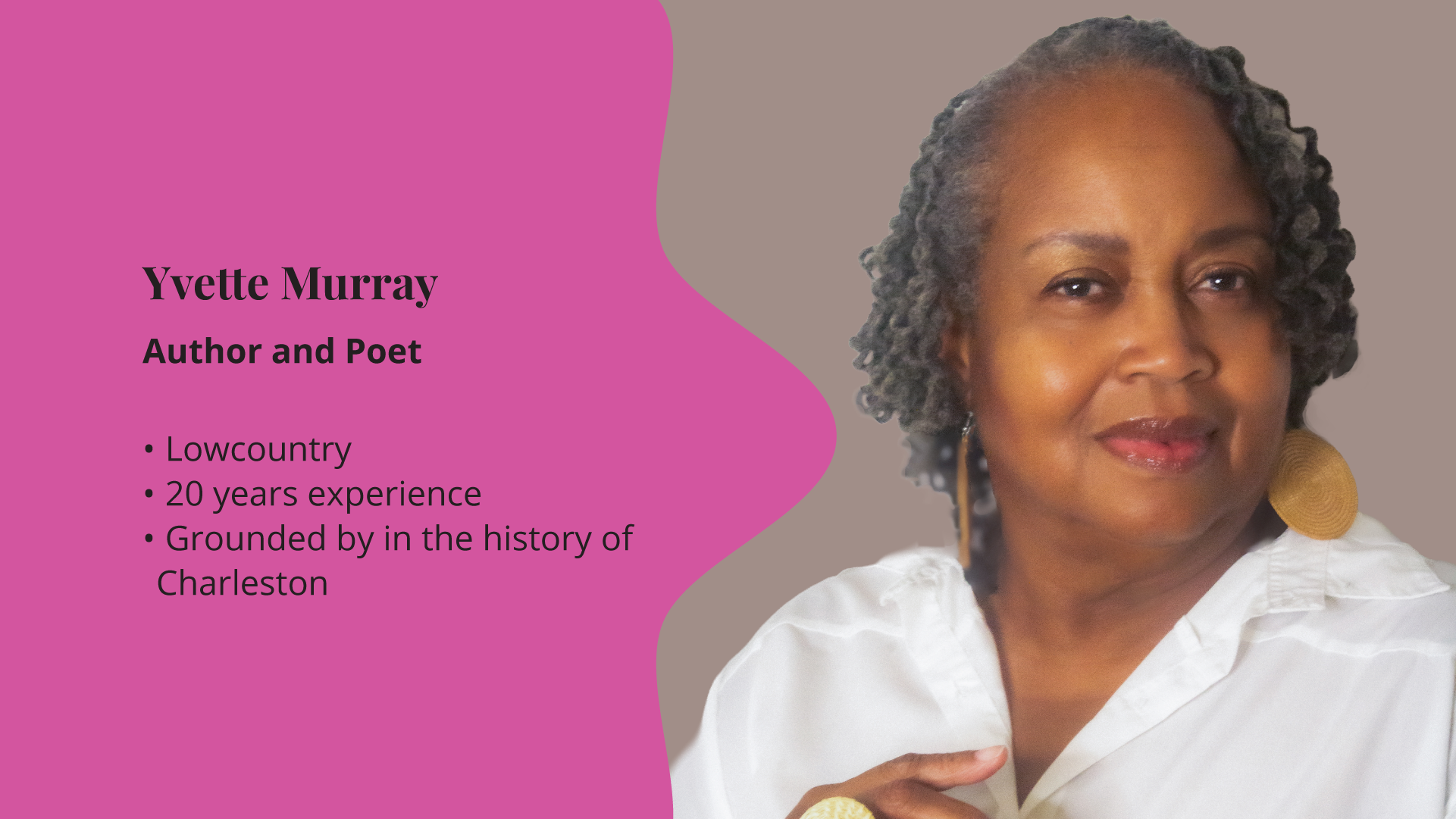
    I’m from Charleston, South Carolina, and currently I have a full-time job, as most of us creatives do, but right now I’m a children’s book author and poet. 

    Sarah Jane Thomas  00:26 

    Before we go into the details of your profession, we have a brief section of the interview called “One Career, 60 Seconds,” where you describe your job in 60 seconds or less, similar to an elevator pitch. Okay, ready? 

    Yvette Murray  00:41 

    Yes. 

    Sarah Jane Thomas  00:42 

    Okay. Start whenever you feel comfortable. 

    Yvette Murray  00:44 

    Okay. I’m responsible for everything: curating, finding the material, creating it, and at that point, that’s where an editor comes in. But I’m I’m responsible for turning what I see and what I hear into art. 

    Sarah Jane Thomas  01:05 

    Well, that was perfect. So, what would you consider your official job title? 

    Yvette Murray  01:14 

    An author. 

    Sarah Jane Thomas  01:15 

    Author. Okay. So, as an author, is there anything in South Carolina or where you grew up, that you bring into your work 

    Yvette Murray  01:25 

    everything. My first book of poetry was literally about the neighborhood that I grew up in, and neighborhoods I grew up in downtown Charleston, and neighborhoods in downtown Charleston, and my children’s book is called “Celebrate We Galagici. So it’s all about everything that children can see. The book is my publisher is an educational publisher, so the book teaches little ones about their five senses through things that they know and recognize and and have seen and experienced. So it’s it’s all about the Low Country. 

    Sarah Jane Thomas  02:12 

    Do you think that this brings a diff different aspect to your work compared to people that maybe don’t live in South Carolina, 

    Yvette Murray  02:21 

    yes, because what they what they bring is research. What I bring is experience. There’s a section in the book. It’s on smells, and I am literally describing my mother’s garden from when I grew up, literally the plants, everything. So it brings a level of authenticity that can’t be duplicated. It can’t be recreated. They may write a nice book. They may write an authentic book, a book that’s full of facts that are true, but they don’t bring the the love and the timing of having been here, having walked these streets, experiencing the dismay when you see neighborhoods destroyed. They don’t. They don’t have that, and you can’t. You can’t teach that. 

    Sarah Jane Thomas  03:25 

    That’s very beautiful. 

    Yvette Murray  03:26 

    Thank you. 

    Sarah Jane Thomas  03:27 

    Do you think there was a defining moment in your life that had such a big impact on your creative journey? 

    Yvette Murray  03:35 

    Actually, a conversation that I overheard at a poetry reading, we were-they were discussing downtown, and the person said, “Don’t you think it’s better than just a bunch of burnout old buildings? And that really struck me because he thought that’s all these neighborhoods were. That’s all that was here. Not even understanding the businesses. The I called my neighborhood an enchanted urban forest, and I said that because the neighborhood had everything. You know how a forest is an ecosystem, and all the little animals, the little bugs, everybody works together to make it work. And that’s how the neighborhood was, and that’s how all the neighborhoods were. There are tons of businesses that used to be there, and they created an environment where everything you needed was there. There was a lawyer. There was-I am old enough to know there was a fish man that would come by. There was a lady down the street that did. The lady next door made quilts. Everything. There was actually a school right across the street from me, and I just wanted to capture that. I wanted to capture what was in those neighborhoods and speak up for those neighborhoods, just because you know that person said that. 

    Sarah Jane Thomas  05:22 

    That’s cruel, honestly. It is. It 

    Yvette Murray  05:25 

    is because no neighborhood is that. No neighborhood that becomes a blight, torn down. No neighborhood was always that. People live there. They raise their children there, and that was just really short-sighted, and I couldn’t let that pass. 

    Sarah Jane Thomas  05:48 

    Well, that’s a very good head mindset that you have to do that. Do you think that there was a? I know you’ve talked about your book about the five senses. Do you think there was a particular project that you produced that really showcased your creativity. 

    Yvette Murray  06:05 

    Yes, the book started as just the first chapter. It was a board book, and it won a contest. And part of winning the contest, you got to meet with publishers that would consider maybe publishing your book. So when I met with the publisher, you know they were excited. They want to move forward, but because my publisher is an educational publisher, they wanted to. At first, they were going to do five different books with the five senses, and then they combined it into one book with a different trim. Born books are little like this, and they wanted to combine it, and so we did. But the creativity, I guess, the authenticity showed through. They could see that I really knew what I was talking about, and I cared about it. See, that brings back to your other question. That brings a level of care and concern and diligence, attention to detail that somebody else wouldn’t be able to duplicate. Someone not from here. They didn’t really care. 

    Sarah Jane Thomas  07:20 

    It’s unique to you. 

    Yvette Murray  07:22 

    Yeah, we had some really interesting conversations. Me trying to explain what the fiddler crabs sound like, what pluff mud smells like. We have a pretty unique area of the country here. 

    Sarah Jane Thomas  07:39 

    Yeah, I’m not native, but I’ve been I grew up in the South all my life, so I love hearing all of the little niche uniqueness that South Carolina has, specifically South Carolina. It’s beautiful. 

    Yvette Murray  07:55 

    Absolutely, I’m glad that you’re 

    Sarah Jane Thomas  07:57 

    bringing that into your work. 

    Yvette Murray  07:59 

    Thanks. 

    Sarah Jane Thomas  08:00 

    Before entering your field, did you have any fears about becoming a creative professional? 

    Yvette Murray  08:06 

    Oh yes, yes. We all suffer from imposter syndrome. Even after I’ve seen authors that have numerous, numerous books, numerous prizes, still get nervous. Still be afraid. You you don’t know how to make it. You don’t know what to do. A lot of creatives teach. In addition, because you know they get the summer off, so it kind of works. They have time, but you just you don’t know how to do it. And the interesting thing that I’ve learned is that everybody does it differently. You have creatives that they may be a poet, but they also paint. They also make jewelry. They also sell soap. They, you know what I mean. So there’s so many different ways to do it. They make films. I have a couple of really wonderful poet friends of mine that have made films, short films. So it’s you can explore all of your creativity, all of the things you figure, oh well, maybe I could try this. Yeah, you sure can. You can try it all, do it all, and still stay true to what your main love is. 

    Sarah Jane Thomas  09:33 

    What inspired you to move beyond these fears? If you have, 

    Yvette Murray  09:39 

    you almost have to. People talk about the muse inspiration. I’m not a person that believes that I can only write when I feel inspired. I believe that you can get yourself into that state of being able to hear the muse. So to speak, at any given time, you just need some quiet and little little time to get yourself into it. But it’s almost like the stories have to be written. I like to say the ancestors want their stories told, so you will just. I know for me, sometimes I’ll hear a line. 4o’clock in the morning is a good, good creative time for me, and I’ll hear a line if I’m kind of awake. That in between wake and sleep state, I think it’s the theta state that you’re in just super creativity, and it’s just coming. That’s why you see so many creatives. They always have a notepad, or they’ve got tons of notes in their phone. It’s like the stories want to be told, and we’re just the vessels of the story. Whatever creative endeavor, if it’s art, if it’s poetry, like I write children’s books, short stories, whatever it is, it it wants to be written, and we just have to be open. We have to be open to what’s coming to us. I know that sounds really woo woo, but 

    Sarah Jane Thomas  11:20 

    you just gotta listen. 

    Yvette Murray  11:22 

    Absolutely, absolutely gotta listen. 

    Sarah Jane Thomas  11:26 

    Well, do you have any advice for young adults or students who also want to pursue poetry? 

    Yvette Murray  11:33 

    Oh, I got lots. The first one is do it. Whatever you want to do, do it. But always be a student. Always be willing to learn and to listen. You know, everybody’s got this idea of an artist, a flaky artist. But we have to. We are flaky. That is who we are because you know we are who we are. But Always learn, never stop learning. And I had a teacher in college that gave me the best advice. He said, “Yvette, a writer writes, and you write, write, write, and you cut, cut, cut, which is true. And just just keep at it, keep learning, explore different genres, different art forms, but just stay at it and develop a thick skin. Yeah, it’s it’s a numbers game as far as submitting. It’s a numbers game, and I still remember the moment when my book of poetry, which came first, was accepted for publication, and in my head it was like, well, there it is. It just happened, and it’s like that. You do and you do and you do and you do, and then one day you get accepted. One day you get into the fellowship, one day somebody wants to buy your artwork. You just got to keep at it. 

    Sarah Jane Thomas  13:06 

    Do you think there’s a particular skill one should learn before stepping into something like that? 

    Yvette Murray  13:12 

    I would say learn the business. Whatever, whichever part you’re, whichever art form you’re pursuing, learn the business, learn how much people do charge, learn how get your speak with an accountant so you understand what receipts you need to keep, how you need to do things. Because when it all boils down, it is a business, art, creativity. It is a business, and look for grants. Don’t be afraid to look for grants. 

    Sarah Jane Thomas  13:46 

    Yeah, there’s lots 

    Yvette Murray  13:48 

    out there. 

    Sarah Jane Thomas  13:49 

    Wonderful advice. I just want to thank you so much for sitting down and talking with me and offering your insights. Would you be open with talking to somebody from our team again? 

    Yvette Murray  14:01 

    Sure. 

    Sarah Jane Thomas  14:02 

    Perfect. Well, thank you. I hope you have a good rest of your day. This one, I hope you do. Okay. We’ll send over a transcript for your approval, and somebody will be in contact with you soon. 

    Yvette Murray  14:15 

    All right. Sounds good. 

    Sarah Jane Thomas  14:17 

    Thank you so much. 

    Yvette Murray  14:18 

    Enjoy your time off. Thank 

    Sarah Jane Thomas  14:20 

    you. You too. 

    Yvette Murray  14:21 

    Thanks. 
  • Megan Koon

    Megan Koon

    “Everything I produce could only come from me, and so it is a personal contribution.” 

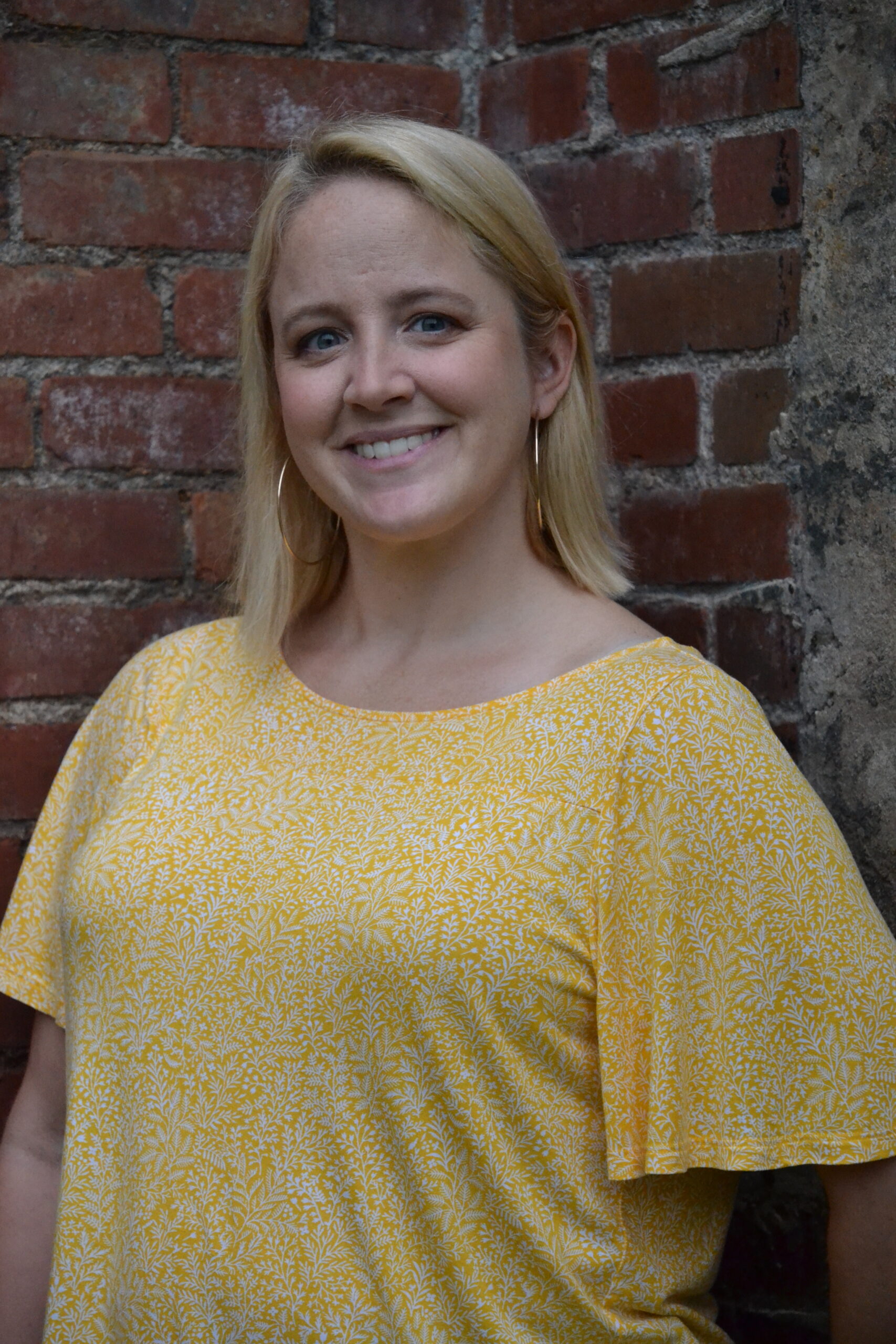
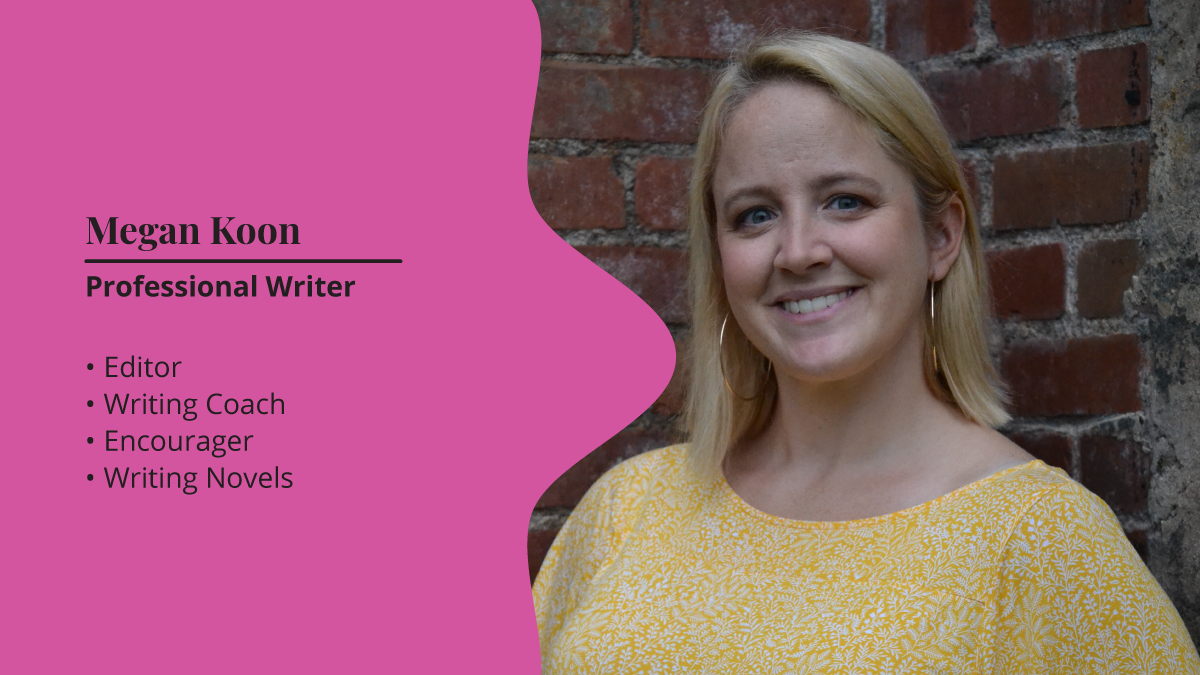
    Megan Koon is an editor, coach, and author Megan Koon is on a mission to help others tell the stories only they can write. 

    Interview

    Transcript

    Megan Koon  00:02 

    So to start, what do you do for work and where are you currently working from? So for work, I am a professional writer, a writing coach and an editor, and I work from Simpsonville, South Carolina. 

    Emma Plutnicki  00:18 

    Nice and how long have you been doing that for? 

    Megan Koon  00:21 

    Well, I’ve been a professional writer at least part time for I guess, I published my first novel in 2019 so around that time, and then I recently in November, decided to go full time with professional writing, writing coaching and editing and all the good storytelling stuff. Nice, exciting. So what is a typical day look like for you? What’s expected of you, and what do you got into on a daily basis? So a typical day for me is, well, I have children too, so I get up going, but then when it becomes time for professional work, I find a place to work that is not my house, because I am not a productive person in my home. So I like to work from coffee shops as a writer. It’s great to be immersed in different kinds of people and hear conversations and see dynamics. So I really like to work from coffee shops, sometimes the library, if I need to lock in, but so I’ll go to wherever it is I’ve decided to work that day, sometimes outside as well, and then I usually spend a couple of hours working on a piece that I’m editing. Often that’s followed by a meeting with whoever I’m editing for. I just recently finished editing a or- developmental editing a young adult novel. So I met with the writer recently, and then I take a break for lunch, and then I like to spend my time writing my own stuff or working on podcast ideas, because that’s something new that I’m working on and yeah, and then often in the late afternoons, after school. I also work with kids. So I will go and work with kids. I work with kids who who have dyslexia and dysgraphia, so they struggle to read and write and so I’ll work with them after school, typically. So that’s, that’s my day. It’s a whole bunch of words. 

    Emma Plutnicki  02:21 

    Yeah amazing. And so you put on a lot of hats throughout your day and have to deal with your family and everything. So how are you able to maintain a healthy work life balance? Because I’m sure also creativity strikes at different times. So how are you able to manage that? 

    Megan Koon  02:38 

    Yes, that’s a really good question. And honestly, that is an acquired skill that takes time to figure out, because you’re right. Like creativity strikes at random and often inconvenient times, which is one reason I always have my notebook with me. I have a notebook with me at all times, everything, everything’s in here, and so that way I can scribble down or write something or make notes as I go, no matter where I am. But I think that most importantly, when I first started doing this work, I really overbooked myself. I was taking on clients right and left. I was so concerned about making enough money to support myself, that I was just like grasping for people, and then I realized that that was taking a toll just on me and my mental health and all of that. And so I keep a pretty standard schedule every day, like there are blocks of my time, just like anybody else would go to work, I block off segments of my time. This is when I work on this. This is when I work on that, and I try to keep to those unless something comes up. So I think that having a regular schedule, even though this kind of work is more freelance and, you know, I report to myself, I still block off those times, and that’s been really helpful. 

    Emma Plutnicki  04:02 

    Yeah makes sense. And is there any like local professional community in South Carolina that you lean on? Is there like a group of authors or anything like that? 

    Megan Koon  04:12 

    Yeah, so, so there are, there are many groups here. I have just a group of local writers that I have a writing partner who I’ve been writing with for years. She writes screenplays and does short films. I write novels, but we, I mean, we both, we’re both storytellers, so I’ve been working with her for years. And then I also am part of a local group with poets, novelists, playwrights, who just get together, and support and accountability is important too. So there is a lot of local support here. There are certainly national organizations that I could belong to and subscriptions that you can have, but I’ve really found so much validation and support just here in the community, you just have to, you have to seek it, because sometimes these kinds of of groups are not advertising themselves out in the community. So. Yeah, makes sense. And along the way, have individuals in that community, or maybe family members or any other mentors given you any advice along the way, whether positive or negative? Yeah, so so both I have certainly being in a creative field. There are plenty of folks who, for whatever reason that I certainly will never understand, don’t see this kind of work as as valid as something like I was a teacher for 20 years, so as something like that, or where I go somewhere else, and I report to someone, and I do my work. It’s hard for people who are not creatives to conceptualize what it is that I do and and why it’s important and like how I support myself. So certainly over time, I’ve had people give advice out of the goodness of their hearts, but with an obvious non understanding of what I do, why it’s important. But also, I’ve gotten some great advice from those that I’ve worked with, whether it was my novel that I published, and I knew something was missing from it, and I had a friend read it and said, “Oh, well, obviously it needs this”. And I’m like, oh yes, obviously it does. And then I put it in, and then we got published. And then also friends in the writing world who are also more astute in like, marketing areas who have said, “Yeah, you should absolutely start this podcast”. Here’s how you should do it. Here’s how. There’s some tiers. So the thing about creatives, too, is that we bring a lot to the experience, beside, just, besides, just whatever our creative ability, like our creative talent, is. I mean, I’m a writer, but having been a teacher for years, I’m a great communicator. I can help explain things. Some of my friends who are writers have marketing backgrounds or, you know, all kinds of things. And so that’s the nice thing about a community of creatives, is that we bring a whole lot of experience to each other. 

    Emma Plutnicki  07:21 

    Yeah, for sure. And so when you you were a teacher, and then you decided to become a full time author. Did you have any fears when you made that switch? 

    Megan Koon  07:29 

    Yes, it was terrifying, because as sure, you know it’s it’s regular hours, it’s a regular paycheck. I loved teaching. I loved what I was doing. I taught English, surprise, surprise, and I loved doing that work, but I also realized that I was so busy and I committed so much of myself to that work that there was no time for this part of who I am, and I have, since I was teeny tiny, I have known that I am a writer, it is what I am supposed to do. I’m supposed to help other people write, and I did that as a teacher. But, you know, in addition, there were so many other responsibilities. So really, I feel that I was really nervous, but I was taking the bits of my teaching career that I loved the most, and I think are the most important, and deciding to make all of that the absolute focus of my time, and also to be able to devote more time to my own creativity, which just makes me a happier, healthier person. But I was certainly afraid, because it sounds and to my family, it also sounded like this unstable thing, because there are no set work hours. There’s no cont- like one contract that I sign, and so there was some nerve in that. But I’m a person who- I truly believe that if you know yourself and you know what gifts you’ve been given, and you feel compelled by those and you’re using them for good, then the universe will help you make your way. And so I took the leap and and I mean not to say that there haven’t been bumpy times where I’m like, “oh gosh, really is that that’s that’s the amount of income I brought to our family this month”  or “why can’t I find more clients right now?” And there’s certainly those moments, but I have learned through this experience that because I am doing what I am supposed to do, things are shaking out, and not even just shaking out, but thriving now, so yeah. 

    Emma Plutnicki  09:34 

    Amazing. So although you may have those bumps in the road, has there been one project that you’ve worked on that has had a significant impact on you, whether it showcased your like, peak of your creativity, or just continues to leave a lasting impact on your life? 

    Megan Koon  09:52 

    Yeah, that’s a great question. So there are certainly projects that I’ve worked on just my own writing novel writing that I, I love them, I haven’t complete. They’re finished, but not finished. So I have not submitted them for publication or anything, but I I feel very they feel very organic for me and very defining. But I would also say that part of what I do with as a writing coach to help other people write their novels or poetry collections, all kinds of things. Is a book that I just finished, I just finished doing an edit, and now the author has hired me into a writing coach retainer. And as I was working on this book, I this was when I was certain, like, this is exactly what I should be doing besides my own writing, I already know I should be doing that, but I love this work. I loved reading his work, and I loved being able to being able to make big suggestions. It was developmental editing, so I basically went in there and said, “Hey, you have two books here. It’s not one book. You’ve written two, and so we need to chop it in half and do all this”. And I felt so- it made me feel very confident myself, because I was certain that I was correct in all of these things, and I knew that I was helping, and he was so receptive, and so that that project was very affirming, that I not only do I know that I have gifts for writing and I know that I can help people write, but that I really can help people with their their their own career and life defining projects, and that’s awesome.  Yeah and so do you feel, I mean, in a creative field, it’s hard sometimes to know what success looks like. So how do you define professional or personal success? Is it moments like that where you just feel fulfilled helping somebody? Is it more financial, ideological? How do you define success in a creative career? That’s such a great question. I’m really glad you asked that, because having taught for many years, I taught high school, and you would ask the students what success was, and they would always say, you know, it’s this income, or it’s being able to live in this kind of neighborhood. And while, of course, there is a part of success that’s able to independently support yourself, for sure, in the creative field, I would say that for me success, I see success in many different ways, but it usually has to do with- either conveying my story and having someone respond to it, and it meant something to them. So, you know, I publish a book, and people read it and they’re like, “oh, this reminded me of, you know, where I grew up”, or “this was so relatable”, like that success. When I’m helping someone with their writing, they’re- they come back with a revision, and they’re so excited, because they really have accomplished this big thing, and that is success to me, because if nothing, I mean, I I’m, I think I’m a pretty good editor, but I, by all, I am an encourager and cheerleader for everybody to tell their story. I was at a career day for an elementary school recently, and I told them all like the most important thing in life to me is storytelling, whether that whether you and and we do that in many different ways. I do it with words. Some people do visual arts. I mean, some people vocally give talks and whatever it is, but everybody has their own individual story. No one could have ever told your story. No one else will ever be able to tell your story, and the world needs stories. So success, to me, is in any way helping to put stories into the world, whether it’s through my own writing, or helping someone else do it, because I really feel like that. That’s what we need as people, is to have those kinds of connections that we can only get through stories. 

    Emma Plutnicki  14:02 

    Yeah I love that. That’s a great perspective to have. Amazing so just as we wrap up, is there anything else you’d like to add, any advice or anything like that? 

    Megan Koon  14:13 

    I would just say that I am in my 40s now. I’ve been writing for a really long time, and I’ve done some other things in the meantime. Teaching, actually worked in IT for a little while, which is very funny, but I was doing communications, so um, and all of that has been well and good, but I am so grateful that I’ve come to the place where I can make space in my life to pursue these creative pursuits, and I wish that I had had more support for it earlier, like when I was growing up from my family or, you know. And so my advice to folks is that if they want to pursue a career in something creative, then know that this is in fact a career. It’s a career it is just as valid as any other career, and it’s, it is one of the most important careers, because we do need stories and we need things of beauty in the world and the the wonderful thing about being a creative is that everything I produce could only come from me, and so it is a personal contribution, but I would just say that if you’re going along and you want to pursue a creative career, and people are acting as if it’s not as valuable, or what does that really mean? If I hear the phrase starving artist one more time, I’m going to just start screeching, but just ignore the naysayers, like you know what you were created to do. You know what your gifts are, and go for them. It’s a legitimate career field, and you should spend your career doing something you love, because that’s how we all spend most of our day as you know, adult, grown up people so do what you love and don’t let detractors try to tell you that it’s not significant, because it really is. 

    Emma Plutnicki  16:03 

    Yeah, thank you. That’s great advice. I really appreciate you taking the time to speak about your career, and you clearly love it. So it’s really refreshing to hear. 

    Megan Koon  16:13 

    Yay! Thank you. [inaudible ] ask me!  Of course! 

  • Megan Koon

    Megan Koon

    “Everything I produce could only come from me, and so it is a personal contribution.” 

    Megan Koon is an editor, coach, and author Megan Koon is on a mission to help others tell the stories only they can write. 

    About

    Megan Koon, who lives in Simpsonville, South Carolina, is a writer, editor, and writing coach passionate about turning her love for writing into a full-time gig. After spending 20 years teaching high school English, she took the plunge into freelance writing in 2023 and hasn’t looked back. With a sharp eye for detail and a love for storytelling, Megan spends her days writing novels, coaching new authors, and helping students with dyslexia and dysgraphia. 

    “Since I was teeny tiny, I have known that I am a writer, it is what I am supposed to do,” she says. “I’m supposed to help other people write.” For her, it’s all about connection, whether she’s working with a client to tweak their manuscript, creating a podcast, or jotting down her own ideas at a coffee shop. She gets a real kick out of seeing others grow through storytelling: “When I’m helping someone with their writing, they come back with a revision, and they’re so excited, because they really have accomplished this big thing, and that is success to me.” 

    Even though she admits it can be scary to leave a traditional job, Megan truly believes in the importance and value of creative careers. She gives a shoutout to her local writing community and her teaching years for boosting her ability to support others while also developing her own writing skills.