Career Area: Dancer

  • Angela Yemi Gibson

    Angela Yemi Gibson

    “A closed mouth doesn’t get fed. You gotta ask.”

    Angela Yemi Gibson is a medical biller by day and an arts visionary by night: founder of a nonprofit African Dance Company in Spartanburg, SC.

    Audio Interview

    Transcript

    00:02 

    Emma Plutnicki:  So to start, what do you do for work and where are you currently working from? 

    00:07 

    Angela Yemi Gibson: I work from home. I am a medical biller, and I work for a billing company called Medical Billing Center Incorporated, 

    00:16 

    Emma Plutnicki:  Okay, amazing. How long have you been working there? 

    00:18 

    Angela Yemi Gibson: Six years. 

    00:20 

    Emma Plutnicki: Okay, amazing. And that’s based in South Carolina?  

    00:23 

    Angela Yemi Gibson: Yes, it is in South Carolina. 

    00:25 

    Emma Plutnicki:  Okay, how does working in South Carolina specifically influence your work, if at all? 

    00:32 

    Angela Yemi Gibson: Well, I have a nonprofit that I do outside of this, but, you know, being a nonprofit, you have to at least have some type of stream. So I do both. I don’t know, I moved here from Colorado, so it’s a little different, 

    00:48 

    Emma Plutnicki: Okay, yeah. And what is your nonprofit? 

    00:52 

    Angela Yemi Gibson: My nonprofit is an African Dance Company.  

    00:54 

    Emma Plutnicki: Okay, amazing and how long have you been doing that for? 

    00:57 

    Angela Yemi Gibson: Over 20 years! 

    00:59 

    Emma Plutnicki: Wow, and you started that? 

    01:01 

    Angela Yemi Gibson: Yes, I started dancing with other companies in Ohio, and then I moved to Colorado, and now I’m here. So I have my own nonprofit here in South Carolina. 

    01:11 

    Emma Plutnicki: Yeah, what made you want to start that? 

    01:14 

    Angela Yemi Gibson: It’s something different. It’s always changing. It keeps people engaged and it also brings a sense of community to everyone that’s involved. 

    01:27 

    Emma Plutnicki: Yeah, for sure. So what does a typical work day for you look like these days? What’s expected of you on a daily basis? What are your responsibilities 

    01:36 

    Angela Yemi Gibson: For my primary job? 

    01:38 

    Emma Plutnicki: Both. 

    01:40 

    Angela Yemi Gibson: So I work every day, Monday through Friday, from 7 to 4:30. Iam responsible for making sure that claims are clean when they go out of the system. I am responsible for fixing denied claims and rebilling those claims, patient statements, speaking to patients about their balances, communicating with the clinics and the owners about any account issues thatI have. Teamwork. and in my nonprofit, I am responsible for all the choreography, all the booking, all the costumes and the musicality. 

    02:21 

    Emma Plutnicki: Wow. And how are you able to manage both at the same time? Because I’m sure both of them are pulling you in different directions. 

    02:27 

    Angela Yemi Gibson: Yes, I’m not able to manage at all. I’m not good. I’m not able to manage it all. Since I work from home, I hop from one thing to another. So it’s one moment I’m here, then the next minute I’m there. So fortunately, I have the flexibility with my job to be able to do that. 

    02:43 

    Emma Plutnicki:  Yeah, and are you able to manage a healthy work life balance, or is that difficult to manage? 

    02:50 

    Angela Yemi Gibson: It’s difficult to manage most of the time because most of our- I teach classes during the week and we perform and rehearse during the week or during the weekend, so it was kind of wherever. But fortunately, I have a good support system within my family, so I’m able to juggle both pretty, pretty good. 

    03:09 

    Emma Plutnicki: Amazing, and within both of your jobs, how would you define success? I feel like it’s difficult sometimes with creative careers, especially, you know, some people say it’s monetary, some people say it’s more ideological. So how do you define success in your professional career and also just in your personal life? 

    03:30 

    Angela Yemi Gibson: In my- my professional career, I would label success financially, because as much work as you do, you want to getpaid for the work that you do. But as far as my nonprofit work, I label success by the people’s response. So if no one responds when you’re doing something, that means you’re really probably not doing a good job. So if it’s- I’d rather deal with customer engagement and the responses of people in order to garner my success for my nonprofit. 

    04:02 

    Emma Plutnicki: Yeah, makes sense. And did you have any fears when you started your nonprofit? 

    04:07 

    Angela Yemi Gibson: Oh absolutely. Whether I will be successful in doing it correctly, and will it be sustainable? 

    04:17 

    Emma Plutnicki: Yeah. And how were you able to kind of overcome those fears? 

    04:21 

    Angela Yemi Gibson: Just keep going. I have a team of 10 so far, and we have been going strong for these past few years, since we started the nonprofit, so it’s been pretty good. So I mean, dealing-working with people that you trust and that are dependable is key. If you don’t have those types of people involved, then you probably won’t be successful. 

    04:46 

    Emma Plutnicki:  Yeah, no, that definitely makes sense. And overall, have you been able to get advice from anybody? Is there any advice that stands out as either exceptionally good or just terrible advice that you received along the way? 

    05:02 

    Angela Yemi Gibson: I have received a mixture of both. I’m online a lot, so I tend to research more than anything else. So I’ve received a mixture of good and bad advice. Some people say, you know, don’t- What do people say? Don’t confide so much in the people that you work with, because the more that they know, the more that people can possibly use against you, so to speak. But I think that if you are more transparent with people, people are more- tend to either appreciate you or to be more understanding if you’re a little bit more transparent. But I’ve also learned that a closed mouth don’t get fed. You gotta ask. Sometimes it’s okay to ask for help if you need it. 

    05:57 

    Emma Plutnicki:  Yeah, I love that. No, that’s great advice. And throughout your career, has there been any specific projects that you’ve worked on that kind of stand out as having a significant impact on you, or just something that you know is something that has kind of been the pinnacle of your career? Anything that stands out? 

    06:18 

    Angela Yemi Gibson: This year we did, for- this is for my nonprofit, I can’t really say for my my primary job, because we do the same thing every day. 

    06:26 

    Emma Plutnicki: Yeah, okay. 

    06:28 

    Angela Yemi Gibson: But as far as my nonprofit, we successfully completed our very first residency- artist in residency. So that was a week long, and it was new, and it was completely different, and it was way out of the comfort zone, but it was successful. It was very successful. 

    06:48 

    Emma Plutnicki: Amazing. Congratulations on that. And what was that? Where did that take place? 

    06:53 

    Angela Yemi Gibson: It was in Monks Corner, South Carolina, and we taught fourth grade kids and kindergarteners for five days. 

    07:01 

    Emma Plutnicki: Amazing. And how has the community reacted to your projects and just overall, your nonprofit? 

    07:08 

    Angela Yemi Gibson: Wonderfully. They’ve been very supportive here where I am, because I live in Spartanburg, so they’ve been very supportive here. Also, I am a dance teacher at one of the ballet centers here, and they have been so supportive to where they’ve written grants to be able to get make sure that myself and my two drummers are paid for our classes. So the we’ll be able to offer the classes for free to the community. So they’re free to the community, but yet we get paid for our time. 

    07:41 

    Emma Plutnicki: Amazing. And have you seen the community, like the local professional community in South Carolina, generally helping?And is it tight knit, or is there any gaps in it? 

    07:51 

    Angela Yemi Gibson: It’s tight knit. I really think that if you don’t know the right people, you’re not in specific circles. So I think that it’s really click-ish, so you just gotta know the right people. And unfortunately, I don’t know a lot of people, so I just stick to where I’m at work, who I know. 

    08:09 

    Emma Plutnicki: Yeah, how are you able to have those conversations with people? Are there any, like, networking events or anything within South Carolina that you’d recommend for people if they’re trying to get in the door with people. 

    08:21 

    Angela Yemi Gibson: I honestly have no idea. I really need to know those things myself, because I need to get out there and network a little bit more. 

    08:30 

    Emma Plutnicki: Yeah, I’m sure at some some points, it’s just being in the right place at the right time. 

    08:34 

    Angela Yemi Gibson: Yeah, and it’s just finding those right places in the right time, that’s the problem. 

    08:38 

    Emma Plutnicki: Yeah, exactly. Amazing. Well, thank you so much for your time. Just as we wrap up, is there anything else you’d like to share any advice for future people looking for a career in your field? 

    08:52 

    Angela Yemi Gibson: Keep swimming. What I can say is, honestly, don’t waste your money on college, unless you’re going to do something specific to that particular major that you’re going for. If you go to trade school, go to trade school, but stick to your guns and just remain positive. 

    09:17 

    Emma Plutnicki: Yeah, I love that. Well, thank you so much. I really- You’re welcome! 
  • Angela Yemi Gibson

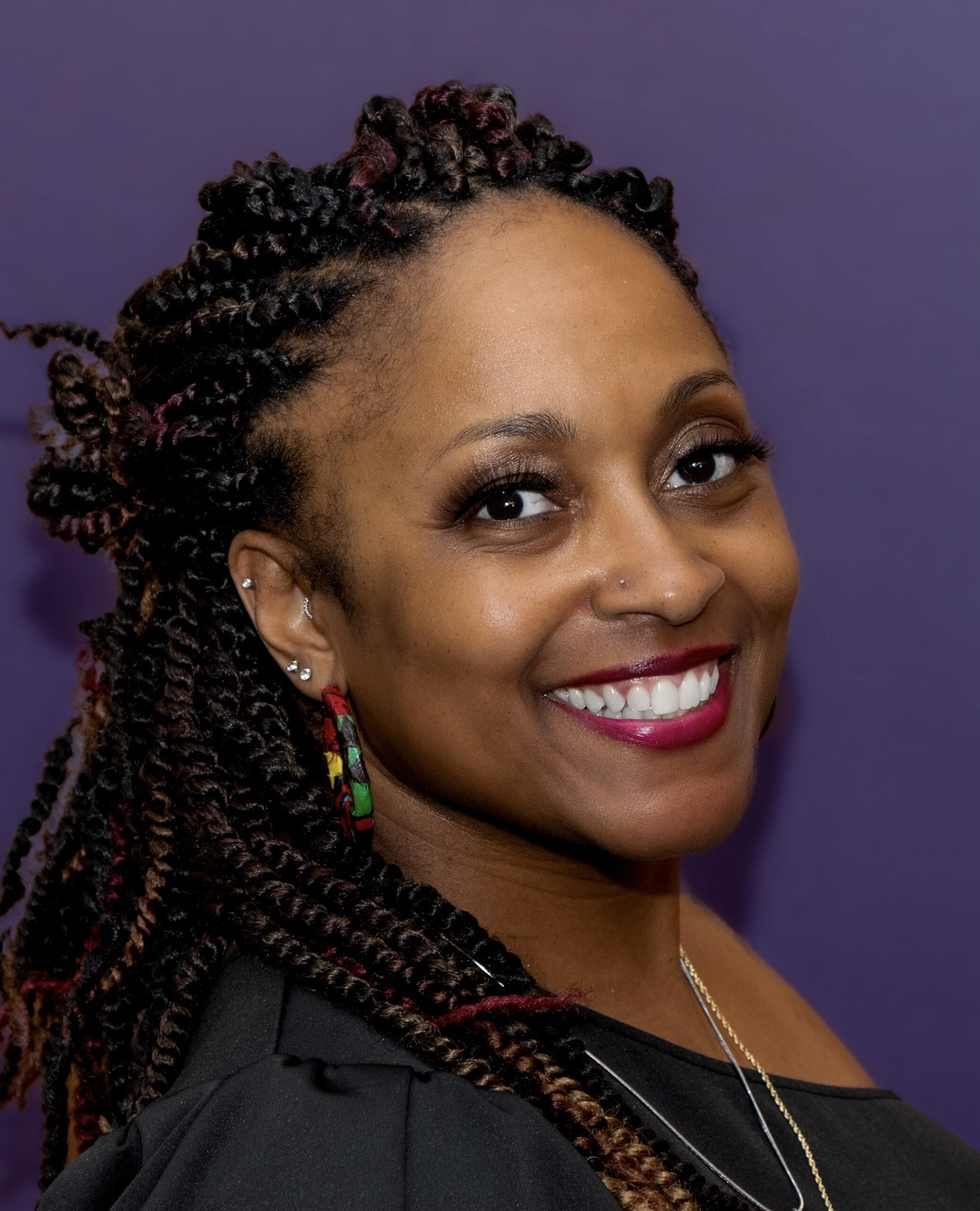
    Angela Yemi Gibson

    “A closed mouth doesn’t get fed. You gotta ask.”

    Angela Yemi Gibson is a medical biller by day and an arts visionary by night: founder of a nonprofit African Dance Company in Spartanburg, SC.

    About

    Angela Yemi Gibson seamlessly bridges her dual passions: healthcare administration and African cultural arts. Based in Spartanburg, South Carolina, she works full-time as a medical biller while managing her nonprofit, an African Dance Company she founded over 20 years ago.

    Angela’s days are long and varied claim filing and patient communication by day, choreography and performance prep by evening. Her recent highlight: successfully leading an artist residency in Monks Corner, where she and her team taught African dance to local elementary students. “It was way out of the comfort zone, but it was successful,” she recalled.

    Angela measures success differently depending on the hat she’s wearing. In billing, it’s financial stability. In dance, it’s audience engagement and community response. Her nonprofit recently secured grants that allowed her to offer free community classes while ensuring her team is compensated.

    Angela believes in transparency and resilience. “Sometimes it’s okay to ask for help,” she says. She encourages aspiring creatives to surround themselves with trustworthy collaborators, remain positive, and keep showing up. Her advice is simple and clear: “Keep swimming.”

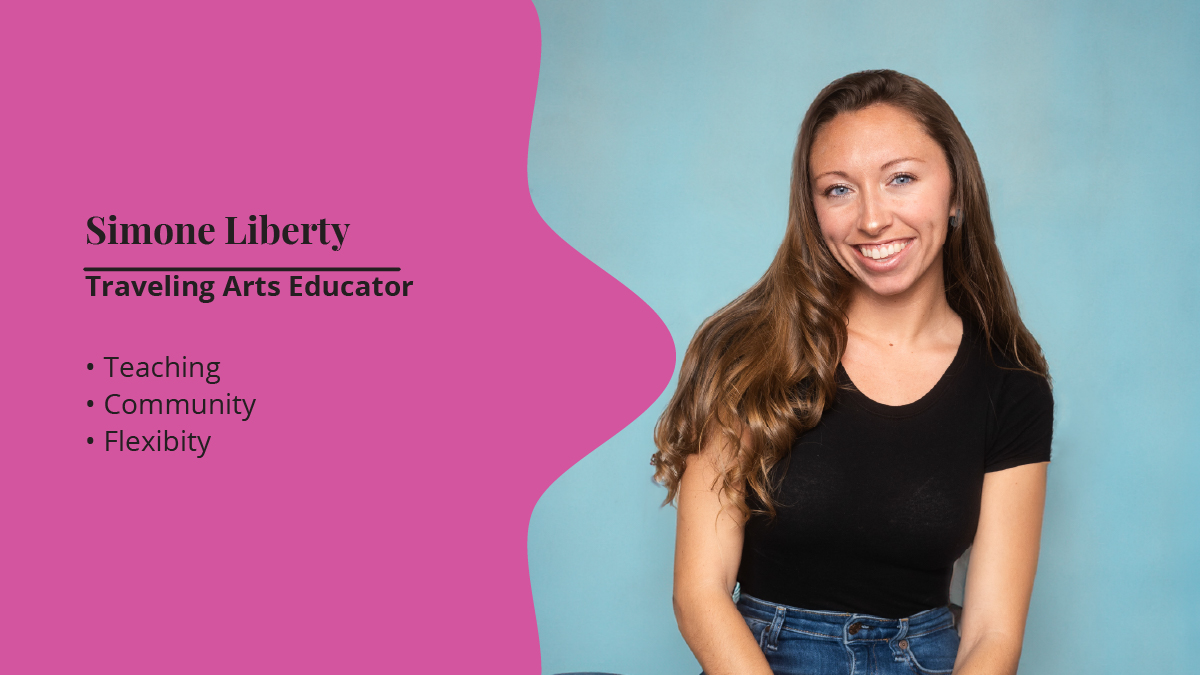
  • Simone Liberty

    Simone Liberty

    “I really love to extend art and creativity for everyone. Art for all. Art for everybody.”

    Simone Liberty is a full-time Teaching Artist based in Charleston. As a Teaching Artist, or traveling arts educator, Liberty teaches Arts Integration in schools throughout Charleston, Dorchester, and Berkeley counties. Arts Integration uses visual and performing art forms including dance, art, and theatre, connecting them to core curriculum subjects such as math, science, and ELA. 

    Interview

    Transcript

    Simone Liberty 0:00  

    I’m Simone Liberty. I’m from Connecticut originally- but I’ve been down here in Charleston since fall 2015. 

    Emma Plutnicki 0:06  

    So, can you please tell us what you do for work and what your official job title is? 

    Simone Liberty 0:10  

    Yeah, sure. I am a Teaching Artist, and this would be my official job title. I’m a traveling arts educator. I go to lots of different schools at this point. Although a teaching artist doesn’t have to be just confined to schools; they are community art educators, so they could go and do workshops for adults or other communities as well. Right now, my work has me going into schools all over Charleston, Dorchester, and Berkeley counties. 

    Emma Plutnicki 0:41  

    Very cool. How long have you been doing that? 

    Simone Liberty 0:43  

    I’ve been a full-time Teaching Artist for about two years now. 

    Emma Plutnicki 0:48  

    So, how did you end up doing this? How did you know that it was a profession that you could actually pursue? How did you know that you wanted to do this? 

    Simone Liberty 0:53  

    Yeah, so. It was kind of funky. So, I have to go back to tell you about my undergraduate degree at the College of Charleston. I was an Arts Management Major, and I graduated in 2019 with my bachelor’s degree. And while I knew that I wanted to roll right into a master’s program. I also had a desire to start connecting with some of the organizations around Charleston in the arts. 

    So, the best thing about my arts Management experience undergrad was that we had some great adjunct faculty members, and one of my professors was Catherine Brack, who at the time was the Director of Development at the Gaillard Center. So, I went in, and I was just kind of trying to pick her brain about what she does for work. And while I was there, she invited me to go and see their youth theater program in the summertime.  It was a summer camp. And she said, “You know, it’s going to be super cute.” They do every summer. So, would you, you know, just come and check it out? And totally adorable. I fell in love with just watching the kids on stage. And it reminded me of some work that I had done in the summers during my undergraduate experience. 

    So, I met Sterling DeVries, who is the Director of Education at the Gaillard Center, and still is, and just told her how interested I was in arts education. We talked for a while about that. And I ended up actually writing a letter in email form- to both Catherine and Sterling. I’m basically creating myself a position at Gaillard. I ended up getting that position, but the catch was that what I really wanted to do was work part-time in the Education Department and part-time in the Fundraising and Development Department. And instead, what they could offer me because of budgetary needs, was a full-time or it was still a part-time position in development while I was in graduate school. And I ended up raising funds for specifically the education program at the Gaillard while I was there for about two and a half years and absolutely loved the work that I was doing because I got to raise the funds that were supporting the arts education. But I wasn’t doing it myself. I really wanted to be with the kids specifically. So, I started to talk to Sterling more about that. And she eventually ended up asking me to be one of their teaching artists for the summer camp that I went to and saw originally. So, that was kind of my bridge into teaching artistry. 

    It started out as just teaching summer camps. And increasingly as I got my name out there and started to network myself a little bit harder and got connected with some other community partners, I’m now able to say that I’m full-time as a teaching artist. 

    Emma Plutnicki 3:46  

    Amazing. That’s a great story. So, nowadays, how would you say the split is between working in schools and working behind a desk? What does your typical day look like? 

    Simone Liberty 3:58  

    Yeah, so it really depends. I used to love my routine. Unfortunately, this job has no routine. So, if I’m in school, it’s either in school after school, or maybe summer camp. 

    Let’s take today, I am going to be in a school, but my school time doesn’t starts until 12:45 And from 12:45 until the end of their school day, basically, I’ll be teaching different classes, and then I will do an after-school program. So, that meant that I had a couple of hours this morning to be on my laptop. And that’s what I have been doing and will continue to do after we get off this zoom call. This I would say, looks like a pretty typical day. If there were such thing as a typical day, where you know, it’s a balance between computer work and then being face to face with students for me, but like I said, a teaching artist can also be face to face with adults in the community or anything like that. 

    Emma Plutnicki 4:53  

    Yeah, so do you think it’s been I mean, you said that you kind of paved your way to find this position, but has it been challenging to work within this field? What kind of challenges do you see on a day-to-day basis? And how do you kind of overcome those? 

    Simone Liberty 5:07  

    Yeah, so it has been difficult to call this a full-time career path. As I mentioned before, you really must be intentional with networking and getting yourself out in the community, so that people know who you are and what you do. And what I have found is that I’ll speak specifically to the Charleston area. Lots of people have questions or are generally confused about what a teaching artist does for their work, and I think that has to do with the broad nature of the role. You know what age range do you like to work with? Or what’s the style of your workshops? Sometimes, when I’m working with different community members when I am going into schools, specifically, I’m doing arts integration. And so that’s making sure that it’s not just a dance or theater, workshop, I’m teaching dance and theater things, but it’s also teaching a core curriculum subject like Math, or Science or ELA. 

    So, all those moving pieces make a teaching artist change how they describe themselves. And it’s just this really vast thing that hasn’t really been nailed down, nor do you want it because we’re creative individuals. So, all, it’s tricky to keep having the conversation of who are you and what do you do? And you know, what are your credentials? Because there’s not real credentials in Geometry, there’s no certificate, and there’s no degree in teaching artistry. But you know, that’s, that’s kind of the tricky part of it. And with that comes, where do you find your peers? You know, it can be a little bit isolated if you don’t have community partners that you’re really in contact with. It’s just that it requires lots of self-initiation. 

    Emma Plutnicki 6:51  

    Yeah, and so far, as networking goes, how have you been able to network with people? Are there any events that you’ve gone to? Or is there anything within South Carolina programs or communities that you’ve found to kind of build those connections? 

    Simone Liberty 7:05  

    Yes. So, first and foremost, I will need to tell you about Engaging Creative Minds, which is one of my community partners, and one of the organizations that I work for. They’re kind of like a booking agent for Teaching Artists, and they have a whole roster of artists. All these artists go into schools as well and do very similar things to what I’m doing, but just maybe in a different discipline or the same. So, I focus on dance and Musical Theater. And so lots of those teaching artists I’ve been able to connect with through engaging creative minds, even if it’s just on an email basis, some of them I’ve been able to meet in person, even, you know, get coffee with and pick their brain about how they run their workshops. But that’s been a great help. 

    I should also call out professional connections that aren’t teaching artists have been very helpful in just understanding the field more broadly. And I would like to stay well connected with the South Carolina Arts Commission and the South Carolina Arts Alliance, two separate things. The Arts Alliance is a non-profit that is a statewide Arts Advocacy Organization. So, that, those two organizations or the agency and that organization have been great to relate to so that I understand more about the South Carolina Arts field at large. 

    And then I found a lot of my personal connections to be a part of my graduate program. So not only did I do the master’s in public administration, but the College of Charleston also offers a certificate in Arts and Cultural management. So, a lot of the individuals from my cohort and I are still quite close. So, I would say that those are a couple of events and organizations that I stay connected with. 

    Emma Plutnicki 8:48  

    Perfect, and so throughout your journey so far, has there been any particular project or, I don’t know, a program that you’ve worked on that has had a significant impact on you, or that you hold, like, close to your heart, anything that stands out as being like a highlight of your career so far? 

    Simone Liberty 9:05  

    Yes. And it’s kind of a new one. But I’ve been happy about this past couple of months now. So, I for the past couple of years, have struggled with the question of what my why is. And I think that’s a really important question, especially for young professionals to ask themselves when they’re going through, trying to find what they love to do for work. What you know, makes their workday feel like it’s fun, rather than work. And what I’ve been working on is, I really love to extend art and creativity to everyone, art for all, art for everybody. And one thing that had been kind of gnawing at me for a while is that I love tap dancing. I’m not a ballerina, but I do love tap dancing, and I can’t teach that in most of the schools that I go into because there’s a prohibitive cost to tap dancing. Those tap shoes they start at $65 dollars. So, that’s just not possible for a lot of the students that I teach. 

    So, what I created last fall, I’m calling them Tip Taps. It is a low-cost tap accessory, I’ll call it. It’s not a replacement for tap shoes. But it’s simply just a piece of metal that you can strap to any shoe. And I can now go in and teach tap dance workshops. Now it’s just one tap, it’s not the heels, but I can teach tap dance workshops to kids who might not have ever had a tap shoe on their feet before. So, this has been a highlight. And it’s really brought me back to that, what’s your why? Because, like I said, my why is art for all and making sure that there are accessible ways to bring art into our community, even if it’s not in a traditional way. 

    Emma Plutnicki 10:48  

    As far as the skills that you possess, what do you think has helped you in this role? Clearly, you have ingenuity and creativity with projects like that. But are there any other skills that you’ve had that you think really advance your role? 

    Simone Liberty 11:02  

    That’s a good question. Yes, I want to say flexibility and not in the dance way. But being flexible in your schedule, in your idea of what your day is going to look like in your goals, even. You know, sometimes you end up either under or overshooting a goal that you have at, say, the beginning of the year or the beginning of a school year or semester, whatever it might be. Whether that’s a financial goal, a mindset goal, or a life, a work-life balance goal, whatever it is, there’s an element of entrepreneurship in craft. And it takes some flexibility. 

    There was another thing that I was thinking of well, ah, curiosity would be another one. That’s been a skill that I’ve had to flex quite a lot, you know, ask lots of questions and kind of dive into who might be potential partners for you to go in and offer your teaching artistry to. I would say, Yeah, curiosity and flexibility. Those would be the two skills. 

    Emma Plutnicki 12:03  

    Yeah, great. And so, just as we wrap up, do you have any advice for young professionals and college students who are trying to make a path in the creative world and looking for a job similar to yours? 

    Simone Liberty 12:15  

    Stay connected to what brought you to the arts in the first place. This has been something that I’ve been trying to get back to the last year, I would say, you know, we probably all landed in arts management or arts administration or wanting to be in the creative field because we are creatives, and we are artists, or at least we say like, oh, I used to be. 

    It’s not gone, and it doesn’t need to be. So, my advice to young professionals is to find that adult dance class, down here in Charleston, we’ve got Redux that offers adult art workshops. Find those opportunities to stick with your craft and make sure that that stays in your practice. So, I think the reason that I’m saying this is because it really does help you to fill in that work-life balance, and at the same time might let you draw some connections towards your why, why you’re doing this. 

    Emma Plutnicki 13:09  

    Great. That’s such good advice. Okay. So, thank you so much for joining us. Is there anything else you’d like to add about your profession, your career, or anything else? 

    Simone Liberty 13:18  

    Oh, my gosh, we need more teaching artists please. You know there is no lack of demand. I think that the field of teaching artistry is growing at just an exponential rate in South Carolina at large. I do know that there’s planning to be a teaching artists forum in the fall by the South Carolina Arts Commission. And I think they always have community partners on things like that. So yes, you know, look out for things like that if the idea of teaching artistry is interesting to you. I also would say to get connected with Tag, which is the Teaching Artists Guild. There’s other national and even international resources for teaching artists to kind of connect with so that you can explore the field more and of course, if you have anyone up your way that would like to connect with me about teaching artistry with more questions, feel free to send them my way.