Career Area: Culinary Artist
-
Tina Spaltro
“Sometimes, flexibility in this field is everything. Some people are very particular about what they want, and you have to use your creativity within the guidelines they give you. You have to realize it’s not all about you, but you can still use your creativity to put out something amazing.”
Tina Spaltro, originally from Philadelphia, is a pastry chef at the Dunes Golf and Beach Club. Spaltro earned a degree in interior design at Radford University in Virginia and moved to Myrtle Beach 35 years ago. After working different jobs, she entered the International Culinary Institute of Myrtle Beach at Horry Georgetown Technical College (HGTC), graduating in 1997, and began her career as a pastry chef.
Interview
Transcript
Tina Spaltro 0:00
My name is Tina small town I am from Philadelphia originally. I’ve been living in Myrtle Beach for about 35 years. I moved here after college.
Sara Sabota 0:10
So where did you go to college? Was it up in Philadelphia or down here?
Tina Spaltro 0:14
No! actually, I went to Radford University in Virginia. I graduated there with a Bachelor of Science and interior design, not from culinary at all. I came down here and found a job in that field. And basically, it was all it was all on commission. And I wasn’t a salesperson. So, I kind of really realized that I was about halfway through my career. I wanted initially to start with going to culinary school, but my parents were like, No, absolutely not.
But I came here, and I worked for a little while and I waited for tables. Thats where I met your husband (interviewer and interviewee met through interviewer’s husband) and I decided I wanted to go to culinary school. Down here and I ended up graduating, I think in the 97’s, at Ori Georgetown Tech.
Sara Sabota 1:02
Tell me a little bit then where you got from there. How has your culinary career developed?
Tina Spaltro 1:08
During school, I did a couple of internships. With some small places around town, really the first job that I had was with the island Vista, or actually with the Sea Island Inn. I learned a lot, there it was like a fixed price menu, so it rotated on a two-week rotation. And that’s where I started baking. Because really, initially, I was hired to bake. Although I didn’t have any baking background at school. We haven’t had that program set up yet. But I’ve only taken a couple baking classes.
But Mike, the chef there, was really into having fresh desserts, and fresh bread. So, that is where my love started with it. I did learn a lot there by you know, working the line and doing prep work and ordering and stuff like that. But basically, I went from there to a small place like NYX on the 61st. It was like the old Latiff’s. I went there, worked there for about nine months, and then this job at the Dunes Club opened up, and I moved over there. And that’s where I started as a pastry chef.
Sara Sabota 2:15
So, tell me about your titles from Sea Island inn Island vista all the way up. What was your title?
Tina Spaltro 2:21
Straight out of school I mean, just you know, a little bit everything. I mean, like I said, Baker, you know, line cook.
Sara Sabota 2:29
You were just hired as a cook?
Tina Spaltro 2:31
Yeah, I was just hired as a cook. And I just kind of like learned my way, you know? A little bit more baking over at NYX on 61st. Actually, that was probably my first pastry chef position. And then, when I came here, I was hired as a Pastry Chef.
So, I was here for six years. And then I went over to the Marina Inn for six years and opened that property. And then they sold, and I came to this job and became available again. So, I’ve come back here, so I’ve been here twice.
Sara Sabota 3:06
I’m going to go ahead and go through these questions. What do you do for work and where are you currently working from?
Tina Spaltro 3:18
I’m working at the Dunes Club as a Pastry Chef. I mean, we do pretty much a little bit of everything, a lot of menu planning, a lot of creative wise would be like the menu planning and seeing projects go all the way through. Like coming up with an idea figuring it out and then figuring out how to do it for like 300 people. You know, that’s a lot, I know it sounds funny, but somebody will come to you with an idea and then you have to make it work, you know?
Sara Sabota 3:48
When you say somebody comes to you with you, is that a client? So, do you meet directly with clients?
Tina Spaltro 3:52
Yes but, sometimes not you know, we run off a banquet package too. A lot of times members will come to me saying you know, I really like lemon what can you do for me with lemon dessert, or you know, stuff like that just. Basically, membership or you know, outside clients.
Sara Sabota 4:14
I know you don’t have a typical day but just pick a recent day and walk me through the kinds of things that you do from beginning to end if you can.
Tina Spaltro 4:24
Oh! yeah, sure. Like today, we just opened a new property down the beach club. I don’t know if you’ve been down there yet or not. We have a small menu down there. So, this morning, I went down there to check out what was left over. We prepared a prep sheet for that came back up here and we also had dinner service up here, so we went checked. Wednesday starts dinner service so checked all the desserts up there made another prep list whenever the BEOs for the day to see what we needed. A BEO is a banquet event in order that you know any large banquet that we might have. Like today we have wine tasting for between 70 and 100 people which we have to have many desserts for.
I registered and referred to prep sheets for that got some orders together for what we needed for the weekend. Like what we went over the banquet sheets, we decided what we were going to make for the weekend and what we needed, what we had already on hand and what we needed to use up. We do a lot of like what we call mini desserts, which is just taking any kind of idea, maybe shrinking it down to a bite size portion, like a lemon meringue pie. Like we could buy little tiny tart shells, like when I said, you take an idea and blow it up, you know, and try to feed hundreds of people with it.
Like there’s also all the food purveyors now, and specialty companies provide like either small dishes, what we were going to start small tart shells, or some kind of vessel that you can add, a filling to and you know, top it and you’ve got like 150 in no time, which is great. Also, like making all these mini desserts, we figured out how to take pastry cream and make hundreds of banana puddings. Same thing with a small vessel, just make it really pretty, that would be the creative aspect of it. The rest of today will include us using our prep sheets to try to get as much done as we possibly can obviously set up the launcher tonight for dinner service, in both restaurants. We also have some to go orders to take care of today and get some stuff ready for the weekend.
So, it’s not what I mean, it sounds really chaotic. And as you know, I also have a really great assistant Tricia Green, she’s come to me. You know it’s been a blessing. And she is great. So, with me and her working together we knock it out really quickly.
Sara Sabota 6:52
Does your job feel chaotic, or does it feel scheduled and orderly? Or both?
Tina Spaltro 6:52
A little of both. Yeah, some days are really chaotic. But you know, we managed to get through them. You know, it’s really all about how you organize yourself. It’s just like everything else.
Sara Sabota 7:06
Yeah. Wow. Can you think of a defining moment in your creative journey, either a job that you landed, or maybe something that you made? Was there a point where you realized, this is what I want to do, or look at what I’ve done or something like that?
Tina Spaltro 7:26
You know, I think it was like opening the hotel at the Marina Inn, like I was here for five years, so really opening the hotel, like freed up like a lot of creativity for me. I got to do write menus, write banquet packages, and do more of like, administrative stuff with that.
And that’s where I was able to sit down and really be like, oh, research things and look at ideas, which is also extremely helpful. I think opening gave me more confidence. So, when I came back here, I was definitely more confident than when I left.
Sara Sabota 8:02
That’s awesome. Can you recommend any specific skills that an aspiring applicant should have to increase their chances of landing a role in your field?
Tina Spaltro 8:14
I think the skill that you should definitely have been obviously creativity. But being flexible with your ideas is really helpful. Sometimes, flexibility in this field is pretty much everything, you know, some people are very, like, particular on what they want. And, you know, obviously, you have to go by those guidelines, 0 even the menus that we have here, we have members that really want key lime pie, or like a brownie skillet. So you know, doing that, being flexible with that, you know, not realizing that it’s not all you, what you want too is a lot of it and just trying to put out, you know, the best possible food that you can.
Also being able to, like, look at stuff, I go through ideas, like from Pinterest, and, like, look at something and just like the way it looks, and being able to, like make it yourself without, like following an exact. After you bake for a really long time, you have ways that you do things you know, there’s a different like, a lot of different ways to make like pastry cream or something like that. But so, you get all these recipes that you keep like your mother’s sauces and like the way you do things. And then you take it from there. I think being able to be creative with that is a big thing because it helps out timewise you know you are if you already know how to do something, you know, and you can change it or alter it to make it work for that situation. It makes it much easier.
Sara Sabota 10:00
Are there any local organizations, programs or events that you recommend for aspiring creatives? In any field? Are you a part of any organization?
Tina Spaltro 10:11
Well, culinary school is great. Okay, school is awesome as far as learning, learning your skills, your skill sets and being exposed to things. There’s also the American Culinary Federation, which is here, which is a group of chefs that get together once a month. I can’t say that I go to all those meetings, but it is a really great way to network with people to find a job or, you know, learn, just sometimes they do a little bit of teaching and stuff there also. There are also some really good events. You know, I think this year, we just did taste the town this year. For a private club. I don’t think it’s a great thing for us. But as you know, ours, like a restaurant or privately on restaurant, might be great.
There’s also this CAM organization (Collaborative Autism Movement) that is for autism. And we did some stuff for this year, that was great. I think really getting involved in the community is like meeting a lot of people at the school, that you can also link up with that. They do events. So, I would say mostly, getting involved in the school would be a great start. And then from there, there’s always something they always have going on dinners and good ways to network with people.
Sara Sabota 11:29
Then before I go to the last question, this will be my last question. But also, I want to back up. I don’t actually know how big Dune’s club is. How many members? Are we talking about that you work for? Or with or whatever?
Tina Spaltro 11:40
I think we’re like somewhere between 800 and 900. Somewhere there.
Sara Sabota 11:46
And then what percentage of your work is for outside clients?
Tina Spaltro 11:50
Not as much I do get, you know, out. I often like birthday cake and stuff or friends and family and stuff. But occasionally I’ll do something like an outside wedding cake, which is great money, and also a big help, but a lot of it is just for members. And you know, our clients come here and they have events there.
Sara Sabota 12:12
So, do you have any advice for current college students or pre-professional young adults who are pursuing a career in the creative world? What is your advice?
Tina Spaltro 12:22
My advice would be when you watch all those TV shows about how like Gordon Ramsay, and all that, it’s, not really like that. Even with culinary students, you know, we get a lot of these students in here, and, you know, it’s great to go to school and stuff, but you really have to have a hard work ethic to be in the restaurant business. It will be long hours. And it’s not as glamorous, there’s a lot of likes, you know, washing dishes, making things that you’ve made a million times. But in the long run, there is a lot of gratification when you present somebody with something and they say, oh my god, that was the best thing of every eaten.
That makes you feel like, you know, wow, I’ve really accomplished things. It’s just, you got to get through the daily mundane stuff. And then you get those highlights that make it all worth it, you know? Yeah, our, our members are very kind and they always, you know, are very grateful, you know, especially on big holidays and functions where, you know, you’ve worked like 14 hours a day before and got in at six o’clock in the morning and worked until four o’clock in the afternoon. And then you have got to go home and do family stuff. That’s rough. But you know, it’s all makes it worth it. Like when somebody says something kind and you’re like, Wow. I just got a card the other day from a member, and it was just really nice. It made me feel good and all the hard work seemed worth it.
Sara Sabota 13:55
Well, that’s everything I wanted to ask.
Tina Spaltro 13:57
Awesome. Sara, thank you so much. Thanks for including me. I appreciate it.
Sara Sabota 14:01
Thank you for spending time with me. It’s been great.
-
Tina Spaltro
“Sometimes, flexibility in this field is everything. Some people are very particular about what they want, and you have to use your creativity within the guidelines they give you. You have to realize it’s not all about you, but you can still use your creativity to put out something amazing.”
Tina Spaltro, originally from Philadelphia, is a pastry chef at the Dunes Golf and Beach Club. Spaltro earned a degree in interior design at Radford University in Virginia and moved to Myrtle Beach 35 years ago. After working different jobs, she entered the International Culinary Institute of Myrtle Beach at Horry Georgetown Technical College (HGTC), graduating in 1997, and began her career as a pastry chef.
About
Tina’s career evolved through a few different key roles. Her first full-time job was with Sea Island Inn in Myrtle Beach, where she discovered that learning on the job is just as important as attending classes. “I learned a lot there,” said Spaltro. “That’s where I started baking, even though I didn’t have much baking background, because Horry Georgetown Technical College didn’t have the baking program yet. The chef, Mike, was really into having fresh desserts, fresh baked bread, so I learned a lot there by working the line, ordering, doing prep work – things like that.”
Another position that allowed Spaltro to grow was opening as a pastry chef at Marina Inn in Myrtle Beach. “Opening the hotel freed up a lot of creativity for me,” said Spaltro. “I got to write banquet packages and do more administrative stuff that allowed me to sit down, research things, and look at ideas. That opening gave me a lot more confidence.”
At the Dunes Club, Spaltro said she does a lot of menu planning and seeing projects through from beginning to end. “We come up with an idea, figure out how to do it, and then figure out how to do it for 300 people,” said Spaltro.
Spaltro said Horry Georgetown Technical College is an excellent school for training and exposure to the industry, and the area offers many opportunities for networking. “The American Culinary Federation is here,” said Spaltro. “A bunch of chefs get together every month, and it’s a really great way to network with people, find a job, and learn.”
Spaltro said her culinary career allows her to be creative, but it is still hard work. “When you watch all those TV shows about kitchens, like Gordon Ramsey, it’s not really like that. You have to have a hard work ethic to be in the restaurant business. It’s long hours, and it’s not glamorous. There’s a lot of washing dishes and making things you’ve done a million times. But in the long run, there is a lot of gratification when you present someone with something and they say, ‘Wow, that’s the best thing I’ve ever eaten.’ That makes you feel good.”
-

Shaquasia Coleman and Labria Strong
“Get used to being uncomfortable. You have to feel uncomfortable to get to new levels, because it’s something you haven’t done before. It’s ok to feel uncomfortable. That means you’re doing something right.”
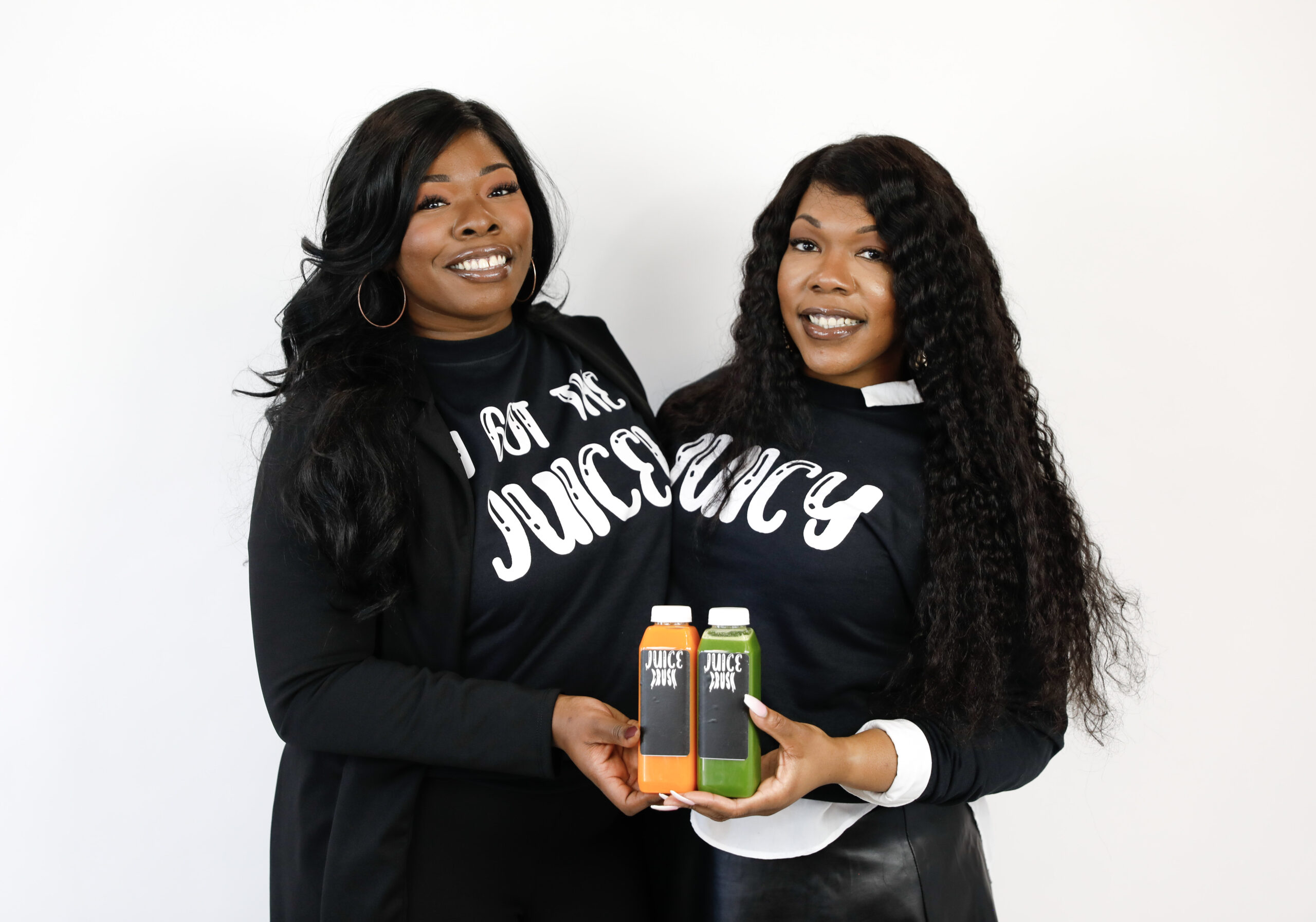
–Labria StrongSisters Shaquasia Coleman and Labria Strong are co-owners of Juice Crush juice bar in Conway. They are both from Myrtle Beach and attended the University of South Carolina (USC). Shaquasia earned a degree in public relations, and later, two Masters of Business Administration degrees, and Labria earned a degree in public health. Labria is also a real estate agent on the Grand Strand.
About
Shaquasia Coleman and Labria Strong originally began mixing juices and smoothies for their mother when she was diagnosed with colon cancer. As a result of chemo treatments, their mother had little appetite. “She would drink but not eat. And we wanted to make sure she was getting her nutrients somehow,” Strong said. After their mother transitioned in 2018, the sisters continued juicing because of all the benefits they had learned about in researching their mother’s needs.
When the COVID pandemic began in 2020, “all our family and friends decided they also wanted our juices and smoothies, so we went from there,” said Strong. The sisters consulted with a sorority sister who is a doctor of internal medicine about how to adapt the recipes, so each juice offers specific benefits. Coleman and Strong opened Juice Crush in May 2020 and moved into their Conway storefront in September 2021.
The sisters’ background in property management, which began when they were attending the University of South Carolina, was a foundation for their careers as entrepreneurs. “I worked my way up throughout undergrad from a maintenance girl outside, to leasing manager, to assistant property manager, to working at the corporate level,” said Coleman.
Strong worked for her sister at the property management company as well, which was the origin of her real estate career. “We were managing million-dollar assets and making sure everything was running smoothly on the property side, so that’s helped us tremendously in business,” said Coleman.
Coleman and Strong said customer service and time management are key to success as an entrepreneur. “People buy people,” said Strong. “People will come back to you if you make them feel good, like you are being attentive to their needs. We make sure we speak to everyone who comes in. We make sure that if they decide to spend their money here, they feel it’s worth it.” Coleman said time management is essential. “We know that time is valuable not only for the customer but for us as well. Make sure you’re getting things done in an orderly fashion.”
Their advice? “Being creative, you can’t worry about anyone judging you,” said Coleman. “You have to push the envelope and continue to do it until it sticks. And extend your grace. Lots of grace.”
-

Ranny Starnes
“If you ever start to feel inadequate at what you’re doing, don’t let that stop you.
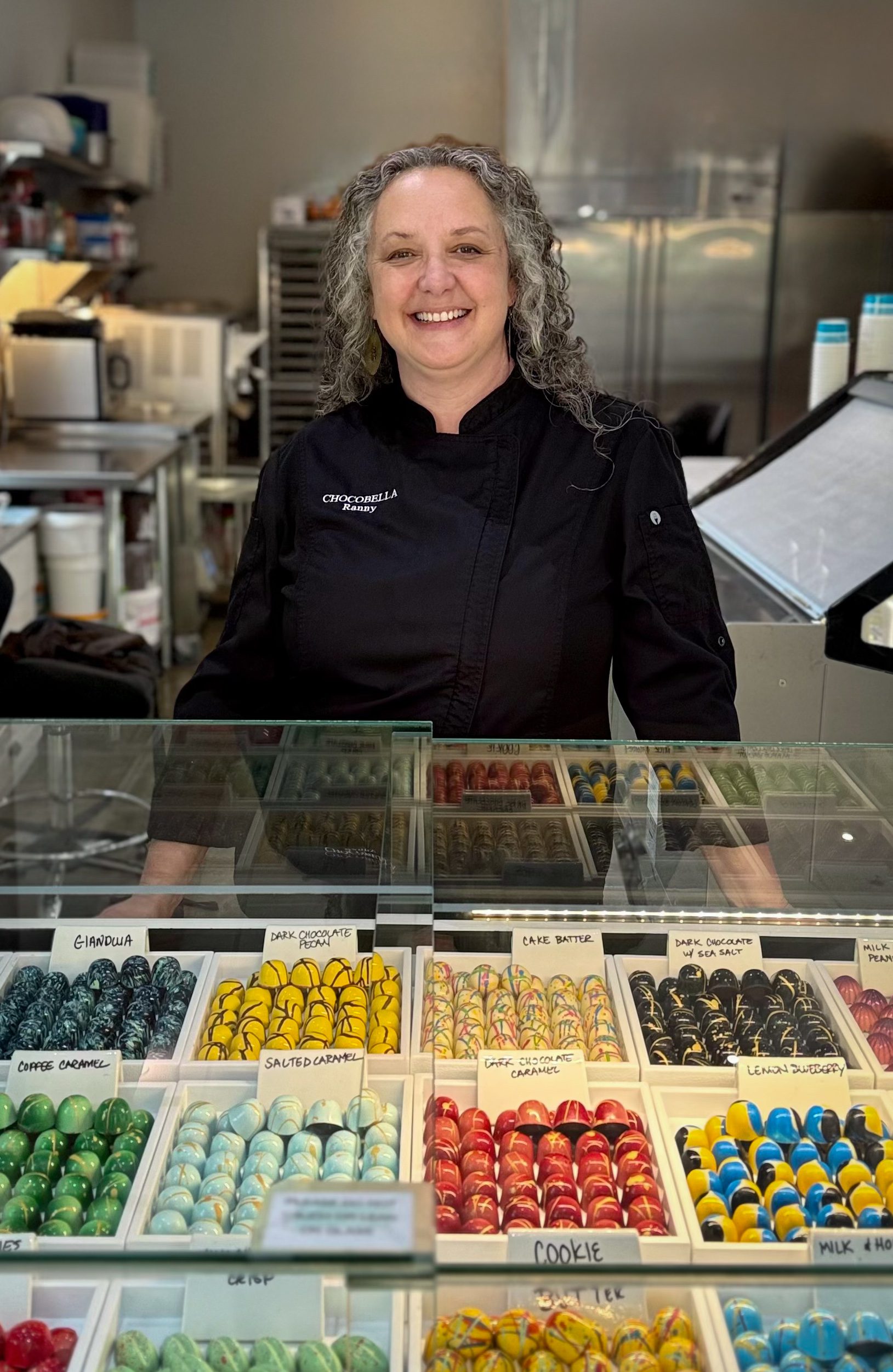
Ranny Starnes is the co-owner and head chocolatier at Choco Bella in Florence, SC. She develops and designs new chocolate bonbon flavors and makes them by hand with her team.
About
“My family owned a restaurant growing up, so I have been in the food and beverage business since I was born,” Ranny Starnes says. “I would have to go to work with my parents at, now, age three, age four, and like, hang out at the restaurant. That’s what we did. So, I knew that food was definitely going to be something that I really enjoyed. I loved it.”
Starnes majored in hospitality management and got the restaurant management job she wanted while she was still in school. After college, she moved to Pennsylvania to be near her brother and ran a deli with him while also working at Starbucks part-time. They decided to move back down to South Carolina, where Starnes became a Starbucks store manager and trainer in Florence. She took those skills to Dolce Vita, a wine and chocolate bar in downtown Florence, where she met their chocolatier and her current business partner. She began teaching herself how to make colored bonbons while also attending professional chocolate school Ecole Chocolat before opening her own business. Starnes’ interest in making chocolate was sparked by the owner of Dolce Vita, Dr. John Keith.
Starnes and her co-founder, Marvin James, opened Choco Bella in November 2020 with Dr. Keith’s investment and blessing. They have a regular weekly schedule for making their painted bonbons. “It’s typically a five-day process,” Starnes says. Mondays are their painting day. “We use colored cocoa butter. They work very much like paint, except for their solid at room temperature,” Starnes says. “We use airbrushes, we use paint brushes, we use gloves, a whole different variety of styles to get the different designs on the different flavors of bonbons.” Tuesdays are their shelling days. Wednesdays are their filling days, and Thursdays and Fridays are finishing. “Every single week we do the same production schedule,” Starnes says. “You can do chocolates without all the paint, but for me, I am already an artistic person… I have to be able to create.”
Starnes advises students who are interested in chocolate making to investigate the many resources available online. She also encourages them to get a job at a restaurant. “I would definitely work in food somehow or another while you’re in school, or when you can,” she says. Most of all, she encourages them to be curious about food. “You have to learn the rules so you can break them,” she says. “Keep being creative, keep being curious.”
To check out Ecole Chocolat, the online chocolate-making school Starnes studied at, follow this link: https://www.ecolechocolat.com/en/ To admire Choco Bella’s painted bonbons, follow this link: https://www.chocobellasc.com/gallery-1
-

Ranny Starnes
“If you ever start to feel inadequate at what you’re doing, don’t let that stop you.
Ranny Starnes is the co-owner and head chocolatier at Choco Bella in Florence, SC. She develops and designs new chocolate bonbon flavors and makes them by hand with her team.
Interview
Transcript
Randy Starnes
Date: Aug 30, 2024
Haley Hansen 0:00
What is your name, where are you from, and what do you do?Randy Starnes 0:00
Randy Starnes. I’m originally from eastern North Carolina, a small town called Ahoskie, North Carolina. I currently live in Florence, South Carolina. I have been here for about 17 years and I’m the co-owner of Choco Bella, a small Belgian-chocolate shop that also sells gelato in downtown Florence.Haley Hansen 0:00
Can you tell me your official job title?Randy Starnes 0:22
I’m a chocolatier.Haley Hansen 0:24
Can you walk me through your typical workday, maybe what you did yesterday or last week?Randy Starnes 0:31
For our bonbons, hand-painted, colorful pieces made in molds. It is usually a five-day process, and our production is broken up by day, very structured: every Monday we do the same thing, every Tuesday the same thing.Randy Starnes 0:52
Monday is our big day and the longest and most artistic part, our painting day. We use colored cocoa butters that behave like paint, except they’re solid at room temperature. So, we heat them in small increments to liquefy and keep them warm. We use airbrushes, paintbrushes, gloves, and lots of techniques to get different designs for each flavor.Randy Starnes 1:23
Tuesday is shelling day. Once the paint sets overnight, we coat the molds with a thin layer of chocolate to pipe fillings into. Sometimes we also make caramels that day. Wednesday is filling or “ganache” day, when we create all the different ganache’s. Thursday is free-for-all: we put the bottom layer of chocolate on the bonbons to seal them and crack-and-dump. Either Thursday or Friday, depending on the volume. That is our schedule for every week.Haley Hansen 2:08
How did you wind up working in that field?Randy Starnes 2:11
I grew up in food, my family owned a restaurant, so I’ve been in food and beverage since childhood. I always worked in front of the house, majored in Hospitality Management in East Carolina, and managed fine-dining restaurants through college. After relocating to Pennsylvania, I co-ran a deli, needed benefits, and took a part-time job at Starbucks, which led me into coffee management. Eventually, corporate life burned me out, and with two small kids I needed better quality of life.A friend told me about Dolce Vita- a wine-and-chocolate bar in Florence, adding coffee. I launched a coffee shop. Their chocolatier (now my partner, Marvin) intrigued me, so I asked to learn chocolate. After a one-day crash course, I dove in following chocolatiers on Instagram, reading forums, experimenting with colors. That led us to open Choco Bella in November 2020, right in the pandemic, with investment from Dr. Keith and downtown-renovation grants.
Haley Hansen 7:58
Oh, wow. The timing is crazy.Randy Starnes 8:01
Yes, the pandemic delayed equipment and plans. Once we opened, I taught myself airbrushing cocoa butter and took the three-month École Chocolate online program: videos, tutorials, tasks, lots of tempering practice. It filled the gaps proper chocolate and cocoa-butter tempering, troubleshooting, the works.Haley Hansen 9:17
What was the biggest adjustment or challenge when you started Choco Bella?Randy Starnes 9:23
Timing really COVID-19. Opening cafés is familiar to me, but the pandemic added unknowns: social distancing in our 750-sq-ft shop (only three customers at a time), supply-chain delays, and wondering if Florence would support $20 boxes of chocolates or $5–$7 gelato. It was scary, but the community rallied around local businesses, which was a blessing.Haley Hansen 11:12
If someone wants a role like yours, what skills should they acquire?Randy Starnes 11:19
First, curiosity about food. Experimenting with flavors and having a good palate are essential. Also, creativity if I were not making chocolate, I’d be painting at home. Pastry-school training can help with recipe science, because chocolate work is precise and math-heavy. Above all, keep learning; after six years I still learn every week.Haley Hansen 13:32
Any organizations or programs in South Carolina you would recommend?Randy Starnes 13:43
I can’t speak to pastry schools; I didn’t go that route but there are many online chocolatier programs with live classes and minimal startup costs. Everyone begins by hand-tempering chocolate; you can upgrade to a tempering machine later.Randy Starnes 14:30
Pastry school might have sped me up, but I tend to explore and find my own path.Haley Hansen 14:53
Advice for students pursuing creative or culinary careers?Randy Starnes 15:02
Stay creative and curious. Failure, especially in recipe development, teaches you to succeed. Learn the rules so you can break them. Work in food service to see back-of-house reality; it’s repetitive and physically demanding, so be sure you love it. Programs that place students in kitchens for short stints are great for trying it out.Haley Hansen 18:07
Anything else you would like to add?Randy Starnes 18:10
You know, like I said, we love what we do. It is a labor of love. But if, if you truly love it, which we do, it makes it worth coming back here every Monday painting and shelling. When it gets to the point where it is in your customers’ hands, and they light up, that is what it is all about for us.I’m mostly back of the house now, but I get that reassurance from the customers when they are like, oh my God, my daughter loved this gift and was such a great gift. Or these chocolates at the wedding, everybody was oohing and aching so that is what it’s all about. Sharing our passion through food.