Career Area: Creative Director

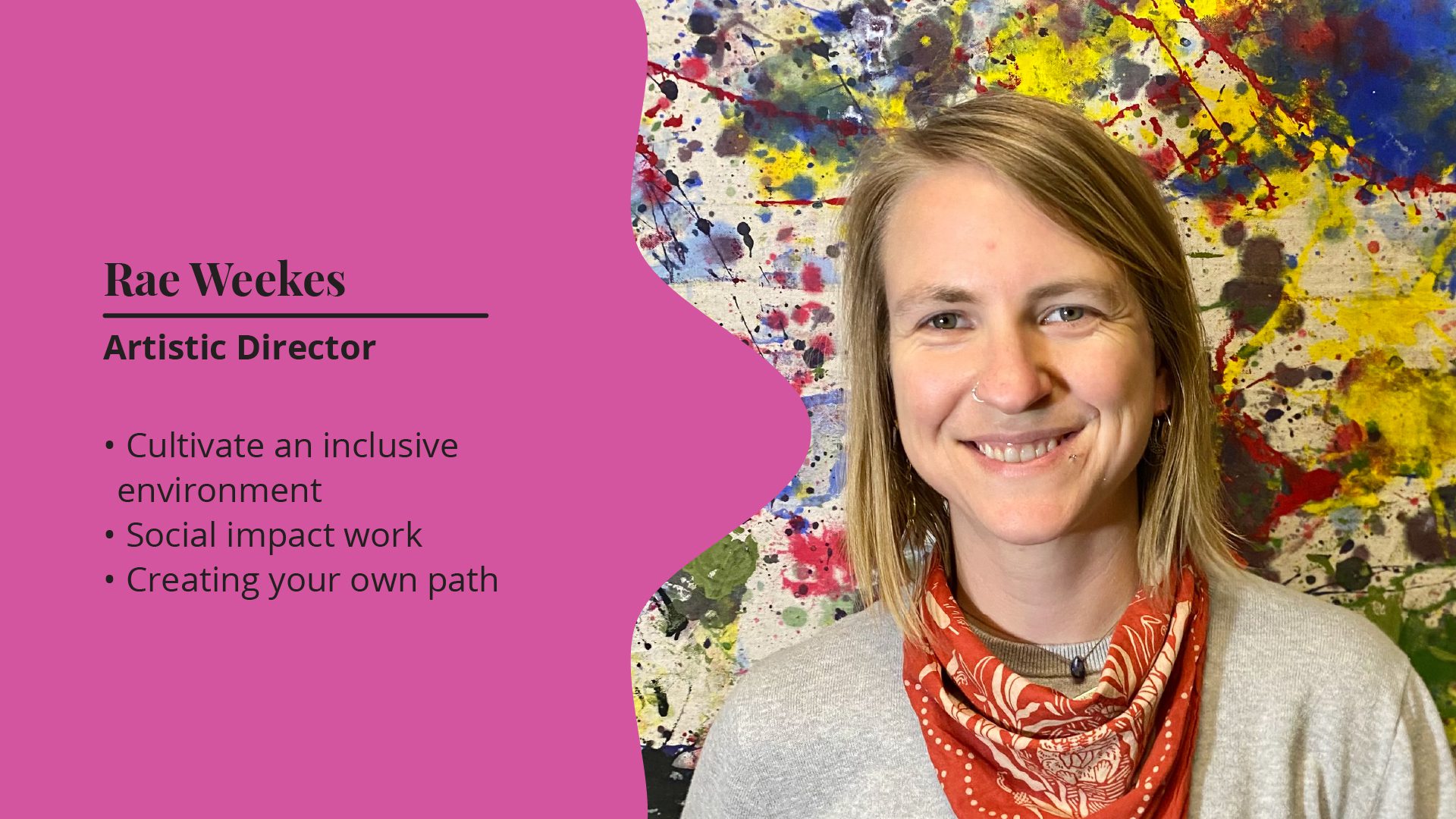
  • Rae Weekes

    Rae Weekes

    “Pave your own path, make your own way, it can look anyway you want it to.”

    Rae Weekes is the Artistic Director at the Hearts Inclusive Arts Community in North Charleston, South Carolina.

    Interview

    Transcript

    Emma Plutnicki  00:00 

    Okay, so to start, what do you do for work and where are you currently working from? 

    Rae Weekes  00:06 

    I work for a nonprofit called Heart Inclusive Arts Community, and we are a visual and performing arts studio for adults with disabilities who want to grow as artists. And, I am currently working or, yeah, I’m currently working from my office that is in our studio building in North Charleston. 

    Emma Plutnicki  00:26 

    Amazing. And how long have you been working there?  

    Rae Weekes 00:29 

    I’ve been here since it started 10 years ago in 2014. 

    Emma Plutnicki  00:34 

    Wow. And what’s your official job title? 

    Rae Weekes 00:36 

    I am currently the artistic director. 

    Emma Plutnicki  00:39 

    Okay amazing. So, what is one thing that you love about working in South Carolina specifically? 

    Rae Weekes  00:48 

    I really don’t have any experience elsewhere. So, this is really, I’ve lived most of my life in South Carolina. I grew up in Greenville and then moved to Charleston for college, and then just have stayed here ever since, and Heart has kept me here. So, I mean, it’s, it just kind of is, I think we have a lot of opportunities here. I think what’s also special about our organization, specifically being here is that I think our state tends to lean in a direction that is not very supportive of who we work with and what we do and who we are. So, it feels good to be doing something that takes up space and lets our artists be seen in a different light.  

    Emma Plutnicki  01:39 

    Amazing. And how would you describe the local professional community in South Carolina? Are you able to collaborate with other groups? Or how’s the professional community?  

    Rae Weekes  01:50 

    Absolutely. I’d say within the creative community here, it’s pretty tight knit. We’re always trying to connect and figure out ways that we can collaborate together. I think at times, well, at times it can be, it can feel a little competitive, I guess, just because we’re all kind of trying to fight for our way to exist, but, but it all in all like we acknowledge that and realize that that’s not beneficial to anybody. And so yeah, we all try to work together as much as we can, and that opens up new opportunities that you wouldn’t really imagine or think of before, and also just kind of pulls from all different disciplines. 

    Emma Plutnicki  02:31 

    Yeah perfect. So you know, in a creative career, it can be kind of difficult to figure out what success looks like. So how do you define personal or professional success in your career. Do you have any metrics, or how do you kind of calculate that?  

    Rae Weekes  02:51 

    That’s a big question for me. I guess I would say social impact, community impact and those kinds of things, awareness. How many people can we affect? Are we changing things for the better? So I try to stay on that track, and that’s, I guess, kind of my focus for success. 

    Emma Plutnicki  03:14 

    Yeah, amazing. And did you have any fears when you were looking into a career in kind of off the beaten path, any careers that came up?  

    Rae Weekes  03:27 

    No I guess I’d say no for me personally, no, I think my parents did. I’m probably, like a lot of other folks in this field, was kind of the black sheep of the family. So was paving my own path. Was doing things that my parents didn’t really, I mean, I’m super grateful they were super, super supportive, but they were definitely nervous. And my dad gave me like a book when I was a senior in high school that said what to do with an arts major, and I probably thumbed through it once or twice. It’s like, well, I don’t know. I’m probably not going to follow any one specific path. And I didn’t. Here I am. 

    Emma Plutnicki  04:11 

    Yeah there you go. And along the way, throughout your career, and when you were looking into this career, was there any advice that you were given along the way, good or bad, either from family or mentors or anything that stuck with you? 

    Rae Weekes  04:27 

    I can’t, I guess I can’t really say any one thing that sticks out, I think, kind of at large it was to pave your own path, make your own way, and that can, that can look any way you want it to. And yeah, I think that was just comforting to be able to hear that, especially from somebody who’s older, and it wasn’t any one person that said that. It was kind of like, once I got into this field and into the arts, it was kind of like a, surrounding advice from mentors within the community, teachers… 

    Emma Plutnicki  05:07 

    Yeah that makes sense. So now, on a typical day-to-day basis, what does your work look like? What’s expected of you on a daily basis? What kind of tasks do you get into? What does your day look like? 

    Rae Weekes  05:20 

    It can differ from day to day, which is something that I really enjoy about what we do. So, I guess a typical day we would come in, everybody, all of our artists would, well, let me backtrack a little bit. So, our artists are only in our studio two days a week. The other two days we do all of the behind the scenes. We’re a very small staff. Do all of the emailing, scheduling, things like that. So that’s more of like the boring, like computer stuff, I guess, and then. But when our artists are in the studio, that’s when we all are very energetic, and personalities are just bouncing off the walls. So, I’ll talk about that kind of day. We all come in, and all of our artists just kind of trickle in for the first, like 30 minutes, hour of the day. We’re together for eight hours, and we start our day with a daily draw, which is led by a volunteer. And that kind of gets our creative juices flowing. And just kind of, it’s not expected to be a masterpiece by any means, just a creative activity to get the day started, and then we’ll jump into our main activities for the day. And that can typically start with a couple hours of Visual Arts, where everybody is working on their own, their own projects, their own ideas, brainstorming, everybody’s at different stages. And then staff is there to just help facilitate any needs or wants or thoughts or questions and help just kind of build and strengthen whatever they’re working on. And then we’ll break for lunch. And then after lunch, we dedicate the afternoon to, well, maybe, like 30 minutes of, like movement, or just kind of meditation, yoga, and then after that, a couple hours of Performing Arts, and that could be whatever we’re working on at the time. Maybe we have a small performance that’s coming up and we’re going to do a couple songs, or we have our big summer production, and we’re doing full rehearsals, but that time would be dedicated to that, and then at the end of the day, we just kind of chill while everybody’s leaving, but we do pepper in a lot of outings within our community. We go see shows and events. We go have fun and go to the beach or go to the pool. We take a family vacation every year. And so, yeah, it really just kind of varies week by week. 

    Emma Plutnicki  07:48 

    Yeah, amazing. Sounds like busy days. And so, you mentioned that there are some shows for the Performing Arts, kind of side of your days, but for the art, like portions of the days, are there ways for the art to be exhibited? Or do you have exhibits? Or do the artists take the works home with them? Are there any ways of showing their work to the community?  

    Rae Weekes  08:11 

    Absolutely, we do a number of markets throughout the year, so we’ll have, like, a vendor table, and those markets can vary as well. We’re part of an arts festival some other like holiday markets. We also have been or the past couple of years, have had an exhibition and a professional gallery, one at one in Somerville at the Public Works Art Center, which was incredible, and then one in the Park Circle gallery, we try to have an art exhibition that coincides with our show or its own exhibition at a gallery. I’m not explaining this very well. Yeah, we try to take whatever opportunity we can find, but that also puts us in the same playing field as any other artist. We don’t want to be secluded, we don’t want to be set aside, pushed to the side. We want to hang on the same walls that another artist would, and that’s important to me, personally and for our artists as well. And then we do have an online store. It’s a little messy right now, but that’s another space that we try to showcase their work and on our website, and try to make that accessible to folks who can’t physically come to our shows.  

    Emma Plutnicki  09:44 

    Oh, great, great. And so throughout your career, has there been a particular project that has really resonated with you, or one, one single moment that you really reflect on as being kind of a defining moment in your creative journey? 

    Rae Weekes  10:07 

    Oh, every single day you see something that, yeah I try to see every moment, or try to use every moment as a learning opportunity through and through. So, I mean, there’s been a lot of big moments. I mean, that feeling you get after a production. All of our productions are original, and so there’s a lot, a lot of work and effort put into it. I mean, across the board, within our gallery exhibitions as well, there’s just so much work put into it. And so I feel, I mean, I’ve never been disappointed after a show or after an exhibition, opening. Never been disappointed. We’ve been disappointed in rehearsals like, What the hell are we doing? You know, but, but everybody just shows up and shows out for everything, every performance and exhibition that we do, and I think those are just big moments that you know, you feel accomplished, you feel pride, you’re there with your people. And you can, I mean, you see it on everybody’s face, it’s oh. So, I guess collectively, those moments of just being able to take a breath and be like, Look what we just did. Look what we accomplished, and all together, we did it together. So those are, those are the moments, I guess.  

    Emma Plutnicki  11:31 

    Yeah, that’s very sweet and I’m sure when you know performances happen, that’s taking up a lot of time in your life. So how do you manage the life-work, balance? And you know, just have space for personal creativity, while also managing that in a professional setting? 

    Rae Weekes  11:49 

    I wouldn’t say I’m a poster child for work life, for a healthy work life.  

    Emma Plutnicki  11:54 

    Why not? 

    Rae Weekes  11:57 

    Because, I mean, I’m getting, I’ve gotten better over the years, but I think a big thing that defines my life is my work and because we’re so close knit, we consider ourselves a family. So it’s, I mean, I hang out with some of our artists outside of our studio hours. We go to shows together. We go to dances together. So, it’s not necessarily all work. I also feel it’s kind of difficult to get things done when our artists are in the studio. So, anything like, we’ve done the computer, I could be like, Yeah, well, I’ll just do that later tonight, or, like, I’ll look up that later tonight. I can do it on the couch. And I also, I mean, I’m a single person with a dog living alone, and so I have, I mean, I’m able to do all those things, and it doesn’t really affect my life too much, but also it’s all kind of I know, but that’s okay. And then in terms of personal creativity, it really is just whenever it strikes me, it’s not a regular thing that happens. Because we’re so creative all the time in our studio, I feel like I do get that creative—that scratches that creative itch very quickly. By just being here. I tend to get more personal work done, I guess, around the holidays and stuff, because I make most of my gifts. So, when there’s a need for a gift or something like that, I can get a little bit more creative and get more work done. But really, if I other than that, if I’m out, or if I’m inspired by something, or if I want to try new material, like I’ll do it pretty quickly, and then it’ll just kind of sit on my coffee table for a while, and then I’ll pick it up again, and then I’ll put it away. So, it just varies. But I think everything’s kind of intertwined for me. 

    Emma Plutnicki  13:45 

    Yeah, no makes sense. So just as we wrap up, is there anything else you’d like to add, or anything else you may have wished that I asked that I didn’t? 

    Rae Weekes  13:54 

    Not that really comes to mind. Remind me, how are you guys using these interviews again? So, I know you’re pulling the information for folks who want to, like, maybe gain some insights and things like that. But is it going to be like, written or like, our video is going to be posted? 

    Emma Plutnicki  14:15 

    Yeah, so it’ll be a little bit of both. Mainly, we are having a professional directory on the Uncharted initiative of the Creative Career Studio, and then I’ll send you the link to the South Carolina Arts Commission Creative Career Studio website. It’s very cool, very intuitive, and offers a lot of great information, but we’ll be collaborating with that, kind of cross-referencing the interviews that we’re doing here with them, so there’ll be a little bit of back and forth on their website. And then we’re also starting a podcast and having video guides to just give more information for young professionals. So, getting the word out there,  

    Rae Weekes  14:54 

    Yeah, it’s so awesome.  

    Emma Plutnicki 14:59 

    Yeah, no, it’s a great resource. And everybody we’ve been talking to has been amazing. So, I really hope that a lot of young kids are able to utilize this and really work toward a future career doing whatever they want to do.  

    Rae Weekes  15:08 

    That’s amazing, exciting. 

    Emma Plutnicki  15:10 

    And is there anybody else that, either a coworker or somebody else that you know, in a creative field that you think we should interview? 

    Rae Weekes  15:21 

    I mean, I have a number, like, just like artists and teaching artists. 

    Emma Plutnicki  15:27 

    Amazing, yeah, I can send you a follow up email. We’ll we ask for, like, a headshot of you. And then also just sign-up permission form, and then I’ll also send a nomination link. If you think of anybody, you can put them there! 

    Rae Weekes  15:44 

    Well, thank you so much for doing this. I know I, when I found out about the—sorry reminder—the Creative Career Studio, I immediately send it to my mom, because I was like, I think this would have just been so helpful for you guys, just to feel like, okay, look at all this, the variety of opportunity that people can have, and because they just could, you know, they’re creative, in a sense, but like they probably wouldn’t consider themselves like creatives, and so they just were so unaware. And my mom was also a guidance counselor after I was in school and everything. And I just think that would be such an important tool for all of those people to have who are guiding young people, and especially, yeah, just families, parents who are scared that, like, you can’t make a life out of something like that. And it’s so, so not true. Collecting all this data and information and having real people, real voices is, it’s really important stuff you’re doing. So again, yeah, just super great. It’s awesome.
  • Cole Bullock

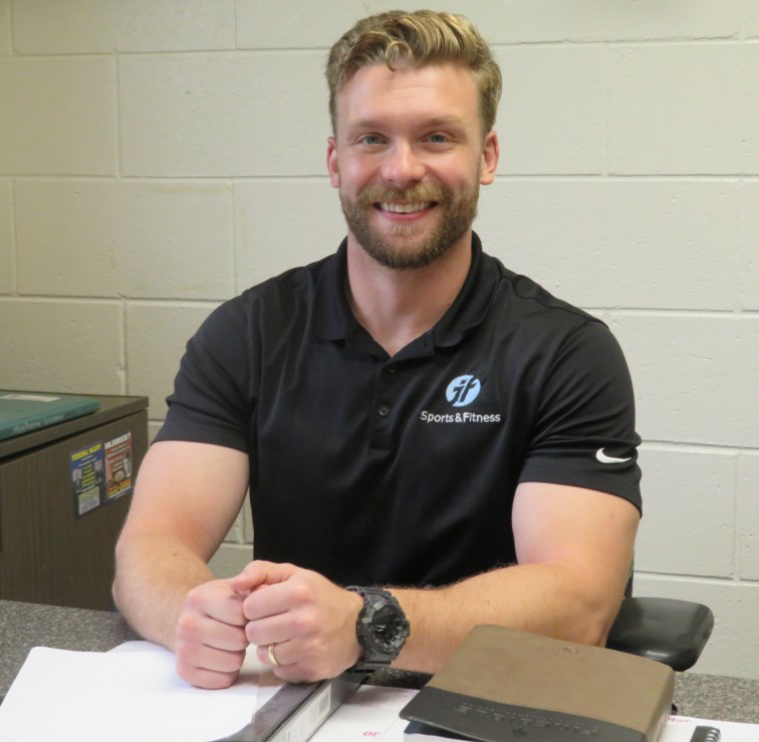
    Cole Bullock

    “You just gotta get your feet wet.” 

    Cole Bullock is a Recreation Specialist at Perry Correctional Institution in Greenville, SC, where he runs creative and athletic programs for inmates. With a background in Bible theology and sports and fitness, he sees his work as a form of ethical service fostering discipline and confidence through healthy expression. 

    About

    Cole Bullock didn’t grow up imagining he’d work in a prison, but today he finds deep purpose designing and running recreation and hobby-craft programs for inmates at Perry Correctional Institution in Greenville, SC. A double major in Bible theology and sports and fitness, Bullock says his degree helped him understand why the work matters but not what it would feel like. 

    He works with long-term, often violent offenders, and believes that structured recreation especially creativity and physical fitness leads to better security, better behavior, and even better mental health. “I’m creating confident individuals that exert their energy in a healthy way.” New employees are often stunned by the quality of the art they see inmates produce art that’s photorealistic and precise. “It looks machine-made.” 

  • Kathy Phillips

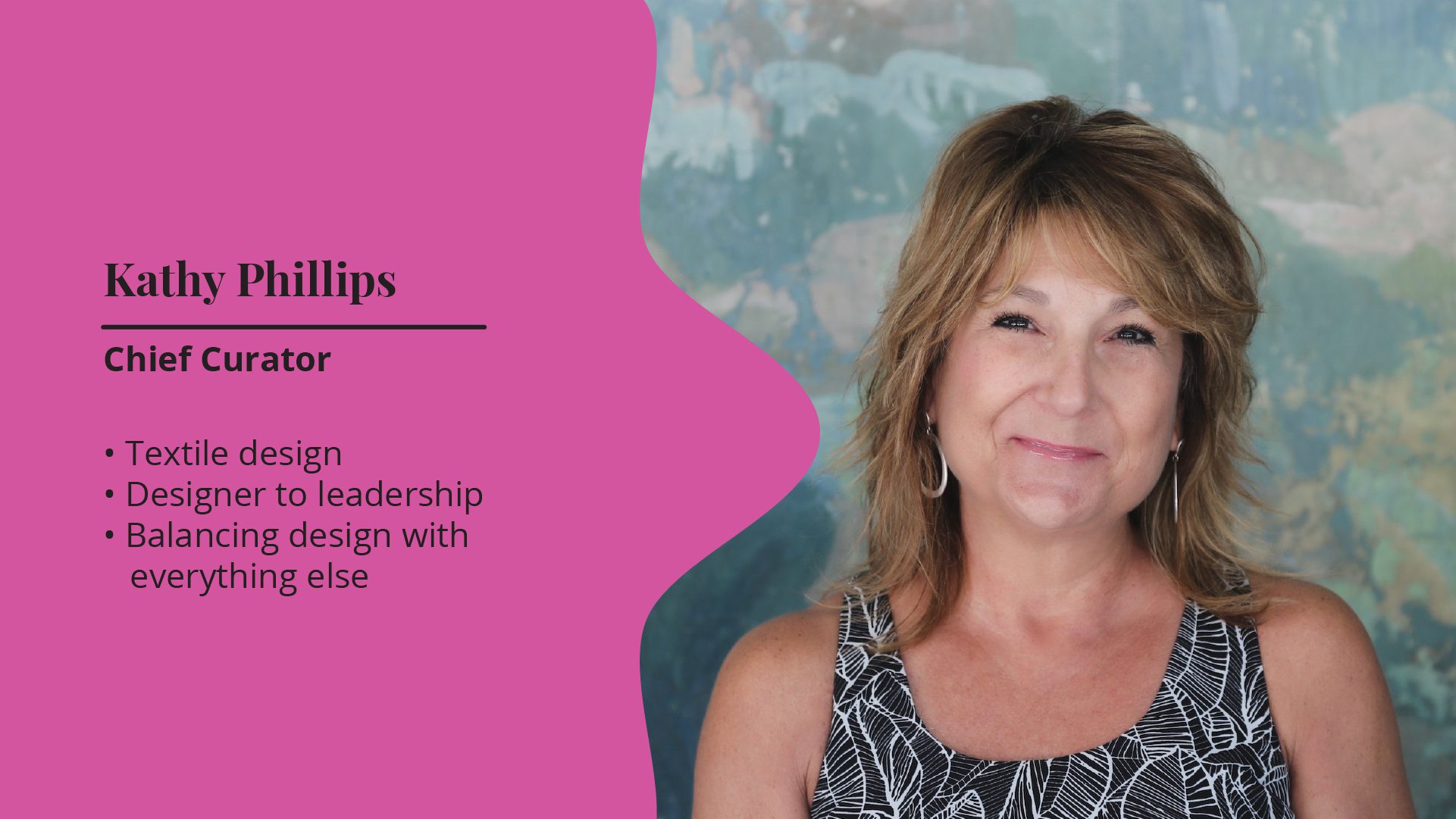
    Kathy Phillips

    “Stay true to your creative path—there are remarkable opportunities waiting for those who persevere.” 

    Kathy Phillips is an accomplished Creative Director, Chief Curator, and textile expert with over 25 years of experience in the home, apparel, and quilting/craft industries. Currently serving as the Chief Curator at Springs Creative’s Baxter Mill Archives, Kathy leads the creative development of a vast collection of over 1 million antique documents, textiles, hand-painted artwork, and rare European textile books.

    Interview

    Transcript

    Kathy Phillips 0:00 

    Hi, I’m Kathy Phillips. I’m originally from Pittsburgh, Pennsylvania. But I have been down in South Carolina since 1998. So, I am now living in what’s called Indian Land, which is like 20 miles south of Charlotte. 

    Emma Plutnicki 0:12  

    Perfect. So, what do you do for work? What is your official job title? 

    Kathy Phillips 0:16  

    So, I was thinking about that because I got a couple of jobs going on right now. As you know, in the career field, I think nowadays, you end up having more than one job title. So, I’m actually a Chief Curator. Well, I’m a creative director for the retail side of Springs Creative because we only manufacture fabric for like the big retail shops, like Joann Fabric, Walmart, and Hobby Lobby. And then I’m also the Chief Curator over Baxter Mill Archive. I look over and I can tell you what that’s all about us. But that’s pretty much what you could say Creative Director/ Chief Curator. And then anything else? 

    Emma Plutnicki 0:56  

    Yeah, amazing. So, how long have you been doing that or something like that? 

    Kathy Phillips 1:00  

    So, I moved down here in ‘98. So, I would say I’ve been, you know, I started off as a textile designer here in South Carolina working for the Springs Creative family, which is one of the largest manufacturing companies, like I said, the textile industry, creating textiles for the home industry. So, I would say, like I would design shower curtains, towels, rugs, tops of beds, bedding, pillows, everything you name it, we created. And then I guess I left for like four years because I went to China when everything went over to China, I had left and went to work for a Chinese company and worked with them for four years. And I designed textiles there. And I was the creative director for them. JLA Home. And I did that for about four years. Then I begged for my job back because working for a Chinese company was really rough. And then I came back here. And so now I’m working with Springs Creative doing the same thing, textile design, and a little bit of everything, but I am kind of done. I mean, I still do textile design. But I do that now on my side, but I’m more of a director now. What, like giving everybody direction on how to start for the product. 

    Emma Plutnicki 2:08  

    Yeah, amazing. So how did you end up in this field? How did you know that it was a field that you could enter? 

    Kathy Phillips 2:15  

    Yeah, it’s funny because I was born in a creative family. So, my mother was, I guess, what you would call now a maker, creative. Like, think of her as like she was Martha Stewart in her time. She always encouraged me with my artistic ability to pursue something artistic. And, I had a brother who was an architect, my other brothers are fine artists, and my sister is an interior designer. So, we’re all, and my father’s a chef. So, we’re all kind of very creative, but I love to sew. So, I’ve been sewing all my life. And I took all these sewing classes, you know, back in the day when they had [home economics], and so I love fashion, so I was gonna get into fashion design. And when I went to school, I felt like I didn’t fit into the fashion design students. And I wanted something a little bit different. And I found out about costume design and theater. 

    So, I majored in Costume Design. And I have a Master’s in Costume Design. And so, I worked in Connecticut for about 10 years in that field of designing costumes for, like, Off-Broadway and stage theater in Hartford Stage Company. And so, I worked in that field, and I loved it, absolutely loved it.  

    And then Casual Corner, which is a fashion company, found me, and they said, it was a job opening for textile design, which I didn’t even know what that was. But what they did was they said, this is a computer; it’s a Wacom tablet, and we’re going to show you how to do textile design on a computer. Because, before that, we were called board artists; we would literally paint and everything textile design. So that’s how I kind of got into textile design. I also did sweater design with them. I think that’s what’s really interesting. I felt like, you know, as a designer, as an artist, once you know that you’re good at it, I guess you can design anything as long as you know what the parameters are, you know, and say okay, this is a sweater, you have to, you know, this is how you have to design for a sweater, this is how you have to design for a shower curtain, you know, certain scales and for a window. And once you know all the, you know, the, I guess the, the rules, you know, you can basically design anything but textile design. I didn’t even know this existed. And it’s funny because a lot of students today I’ll have come in here, a lot of college students, even high school students, they’re artists, they want to be artists, designers, and they didn’t even know textile even existed or surface design. So, they don’t really teach it or you don’t learn a lot about it. And so people just fall into it. 

    And so a lot of my interns ended up taking this career because I hired a girl who was an illustrator for, you know, who studied to be an illustrator. And then I taught her, you know, the rules of textile design, and now she’s been hired here and she’s been doing textile design. And one of my graphic designers actually does sign designs. He was craving designs for, you know, large signs for corporations, and I was looking for somebody who knew [Adobe] illustrator really well. And so now he is my designer for, like, Marvel, we have those licenses. So, we have Marvel, Disney, Nintendo, you name it, so we design fabrics for that. So again, I taught Nate the rules of learning textile design in Illustrator. And you know, this is Disney, this is what they need. Now he’s a textile designer, you know, so, a lot of people were surprised, like, I didn’t even know this existed. 

    Emma Plutnicki 5:30  

    Yeah, that’s cool. So, nowadays, what is your typical day look like? Are you more managing or what? What is typical? 

    Kathy Phillips 5:38  

    Every day’s a different day, and that’s what I love about it. It’s not so corporate, you know, I’m still in the corporate world. But every single day is different. Actually, the Baxter network, I’ve opened Chief Curator with that it’s over probably 1 million pieces of antique archives of like from all over the world. And we use it as a library, we invite designers, retailers, like, anthropology, to come here and post things for their art and for their line, you know, whether it’s apparel or home. It’s like kind of just a really big inspiration library. And we’re in the move. We’re in the middle of a move across the street. And so, I’ve been packing, I’ve been organizing, that’s like that part I’m also working with I don’t know if you guys know Fashion Snoops. It’s a trend forecasting company. And so they’ll give me all the trends that they’re working on. And I’ll go into the archives, and I’ll pull things for them for the Trend Report. So I’ve been working on that, like for the last three days in that. And then, on the other side of retail, we have big Hobby Lobby meetings. So, working with the designers there, making sure you know the designs look good and printing out everything that we’re going to present to the Hobby Lobby customers. So yeah, it’s different every day, which I love. Yeah. 

    Emma Plutnicki 6:48  

    Keep it exciting. 

    Kathy Phillips 6:50 

    Yeah. 

    Emma Plutnicki 6:51  

    So, throughout your career, have you had a specific moment or project that you’ve created that kind of resonated with you or had a significant impact on your life? Maybe it’s a design. Maybe it’s a project. 

    Kathy Phillips 7:04  

    Oh, a little bit of everything. So there’s, it’s called the Spring Maid. It’s a brand that Springs Creative owns. And the challenge was how to revamp it because it was like 1940’s and was kind of old, you know, and they wanted to kind of revamp it and rebrand it and make it something special. So, I was on a team of three other people. So, I was the creative director. We had salesperson, marketing and merchandising. And the four of us came up with what the plan was to do this. And it was fun because I got to go and photograph all the designs. So, I was overall about designs, and it ended up in Target, and it was just like literally a 24-foot modular, so it was kind of neat, taking my family, my kids and go, Mom did this, you know, and so that was really neat. And it ended up being in Target all, all doors of Targets, so it landed there. So that was that was pretty cool. 

    And then I guess what ended up happening, was this was all designed down in South Carolina. And then they wanted to move the brand to New York, they were moving everything to New York, because New York designs better than anybody else or something. But anyway, when that happened, Target said, this doesn’t look like what it was because they hired all the new people. And then, it just didn’t go anywhere after that. But so, launching that Spring Maid brand was pretty cool. I really enjoyed that. And I think my other things are, so I do my own fiber art. I designed art quilts, but they’re so like a cow, for instance. And I’ll paint it and then a thread painted on the on the sewing machine. And when I did that, I actually I entered it in a contest; I won first place in the quilt show. So, that was pretty cool. So you know things like that. Modes of accomplishments. But that’s just something I like to do on the side. When I get home at night. I still create and do my own stuff. 

    Emma Plutnicki 8:48  

    Yeah, that’s awesome. I love that. And so, you said you moved to South Carolina in 1998, right? So, when you first came, how did you kind of get into the scene? Were there any like events that you went to or organizations that you joined to network and kind of build yourself in the area or anything that you know of today? 

    Kathy Phillips 9:07  

    Yeah, well, you know, today, it’s so different in ’98 compared to now because now there’s so much more social media, there’s a lot of things that you can follow and listen to a lot of podcasts and things like that. Back then. I think I was more driven by my career. I kind of like that I just worked a lot like that. That was your way into getting to know people. We traveled to a lot of shows I would go to New York and set up showrooms, and so I think it was just knowing other people in the business, you know, and I only have I had a two-year-old child then, so it wasn’t really I wasn’t able to really get out into the scene. But nowadays, what I do, I definitely follow a lot of things on Instagram I follow. I listened to a lot of podcasts and read a lot of books. And kind of just like I like to say I find my tribe. Uh, you know, I like to look for my tribe and kind of, like, follow groups that are, I mean, at the fiber arts group, and I’m going to knit Quilt Guild a couple of those. And I go to those now all the time and things like that. And I’m always taking classes I still, I just feel like you never stopped learning. I recently… there’s a fiber arts class in Stuart, Florida, Aya Fibers Art Studio. And I’ve tried to take one of those once a year, and I learned shibori dyeing, I’ve learned indigo pruning, I’ve learned surface design, and it just I’m always trying to, like improve my skills. Even at this stage, I just love doing it, you know. 

    Emma Plutnicki 10:39 

    Oh, that’s perfect. So, along with continuing to educate yourself and learn new skills. Is there any other skills that you think that you have that really help you in your job? Maybe it’s like organization or creativity, like specific skills that help? 

    Kathy Phillips 10:53  

    Yeah, creativity is the number one thing. I think everybody is creative. I think it’s also organization-like; it’s funny because I remember my professor back in grad school, and I didn’t get it then. And I kind of was mad when she said; she had this little accent, she would be she’s Argentina, she goes, Kathy 80%- 20% is design. 80% is everything else. And I’m like, what, you know, I want 100% design. But, when you get into corporate and when you start going out there and making your own career, I realized she was so right, because like 20% is really designed. 80% is marketing. It’s organization; it’s just communication; there’s so much more, and really, 20% is designed. 

    And then I was listening to podcasts, and they were saying that you know, when you look on online, or like when you look at Instagram, or you see these artists who really, really are not good, but they’re so well known, like how they, how they get there, and when you have a really good artist, but they’re not well-known something like that, but it’s really marketing, and like if, if you have good marketing skills, and you want to become a designer, you want to become an artist, you have to know how to sell yourself. So, I think, and I love marketing, you know, and so I think marketing is a really good skill to have. And I encourage students who are artists to take a marketing course because I think that’s very important for anyone to know because now, I have to market. You know, I have to sell our product to different designers in this Backstream archive, I’m in the middle of trying to market it, and trying to find my customers. And so, I’m trying to figure out unique ways to do Instagram and social media. I’m starting to write blogs, you know, and Chat GPT is my best friend. Yeah, love that person. 

    Emma Plutnicki 12:38  

    Amazing. So, just as we wrap up, along with marketing yourself and learning that background, is there any other advice that you can recommend to people who are trying to break into a field like yours? 

    Kathy Phillips 12:50  

    Yeah, I feel like it, whether it’s this field or any kind of creative or artistic field, I feel, you know, going through the years, I always hear people’s stories about always, like I would do. I always liked I would go to high school, and they would let me speak in front of the art students. And I said that I’m here to say that you can make a living being an artist and, and successful and I guess some people think success is being famous, or how many likes and all that kind of stuff. But I feel like it’s not really that it’s; I have a really big paycheck, raised a family, and my son’s graduated from Vet school. I mean, I make good money, being through the career that I have as an artist, and I feel that you can be an artist; you have to work very hard at it and be passionate about it. But if you’re passionate, and you’re driven. 

    I just feel like, like, there’s so many paths of being an artist or designer in the creative field that you do your research and look, you know, especially nowadays, you can look online and read good books, and I have a good book art that we are by Marian Showman. It’s about making your life as an artist, you know, making a living and making a good career, and I just feel like, you know, you just follow your path, and there’s some, there’s good opportunity out there for creative and artistic people. And it’s not just art, you know, you can be a shoe designer, you can be a surface designer, you can create art that’s on any surface, you know, whether it’s like calendars and in, I don’t know, like paper goods and wrapping paper. And that’s all surface design, like anything that has a pattern on it was created by somebody and if you want that field, then I would say no Photoshop and Illustrator and know how to create a repeat, you know, pattern. That’s probably your top thing. You know, you just have a good portfolio to show customers. 

    And I think, one of the good things to tell somebody is I would be persistent when you if you’re really interested in a company that you want to work for and you kind of send them your resume. You send them your resume, and you talk to them or whatever. Follow up. Be a pain in the butt. Because I, you know, as a creative director, I get so busy, and I’ll forget about somebody, and then all of a sudden they’ll send me an email and then I might have a project going oh, again, well, hey, are you available right now? Can I use you right now? It is about being persistent in front of that person as much as you might think you’re being a pain. I think I love seeing somebody be persistent, because then that tells me that they’re passionate about what they want. I had one girl who couldn’t get a hold of me in my email. So, she just showed up. I mean, she just showed up in my office. And I was like, someone says, so, and so is here, and I’m like, I don’t even know who this girl is, and she goes, I was trying to get in touch with you. And I really love working here. Do you have any kind of internship or something like that? And I was like, oh my god, I’m so impressed that you just showed up, you know? And so anyway, so she comes in every like, now she’s at SCAD (Savannah College of Art and Design). And now, she’ll come on Christmas break and things like that. And help in turn, you know, so? Yeah. 

    Yeah, and don’t compare yourself to anybody. Just be you. That’s one thing. I think about social media because I like it. I look. Oh, that person is so good. Like, I’ll never be like that. And like, that’s the only downfall I think social media is like you got to just like I tell my kids, you be you. You are you, and that’s all you should worry about. Not worry about whatever anybody else thinks; you just have got to do you and find you. So yeah. 

    Emma Plutnicki 16:23  

    For sure. That’s great advice. Thank you so much.